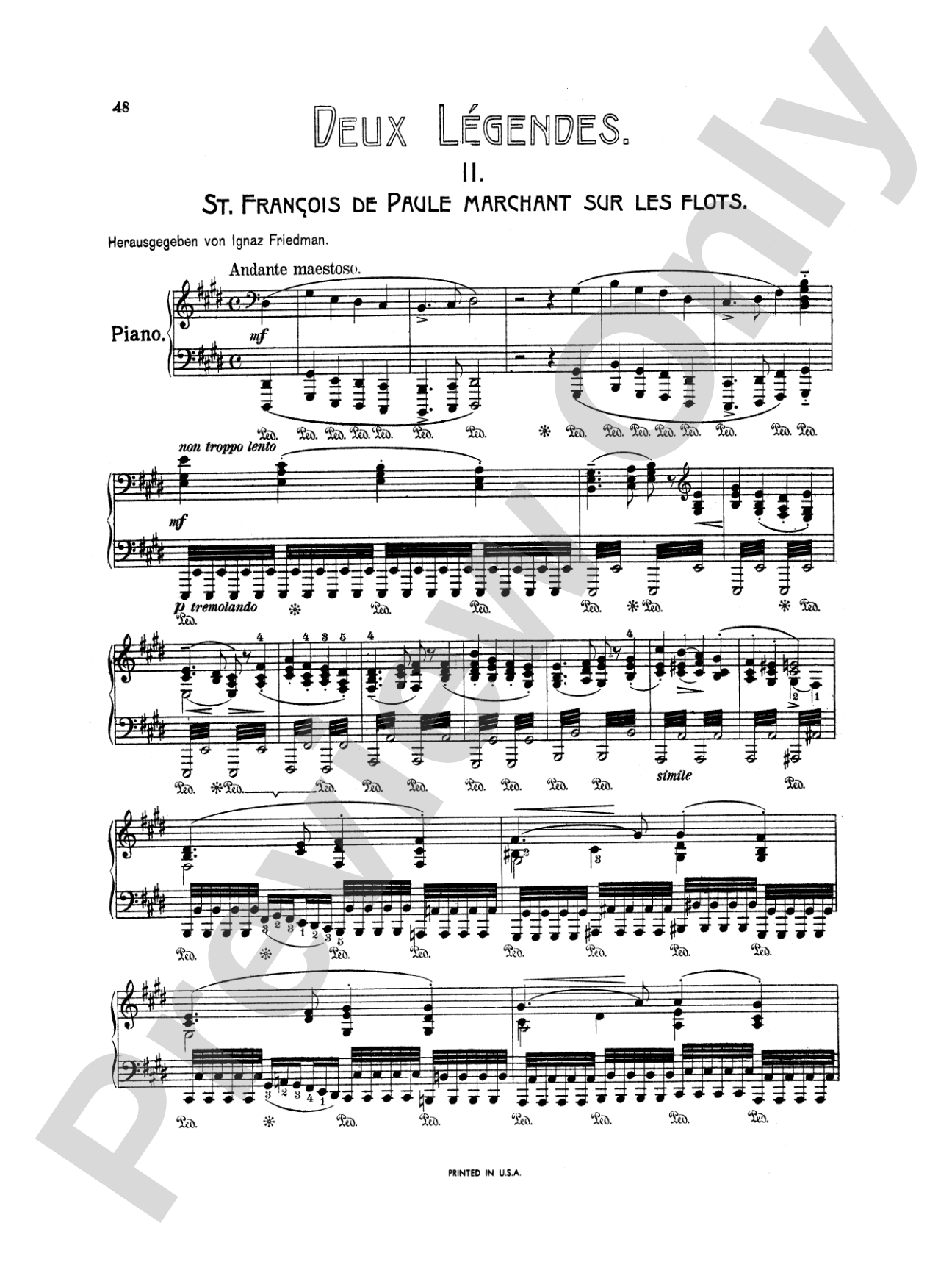
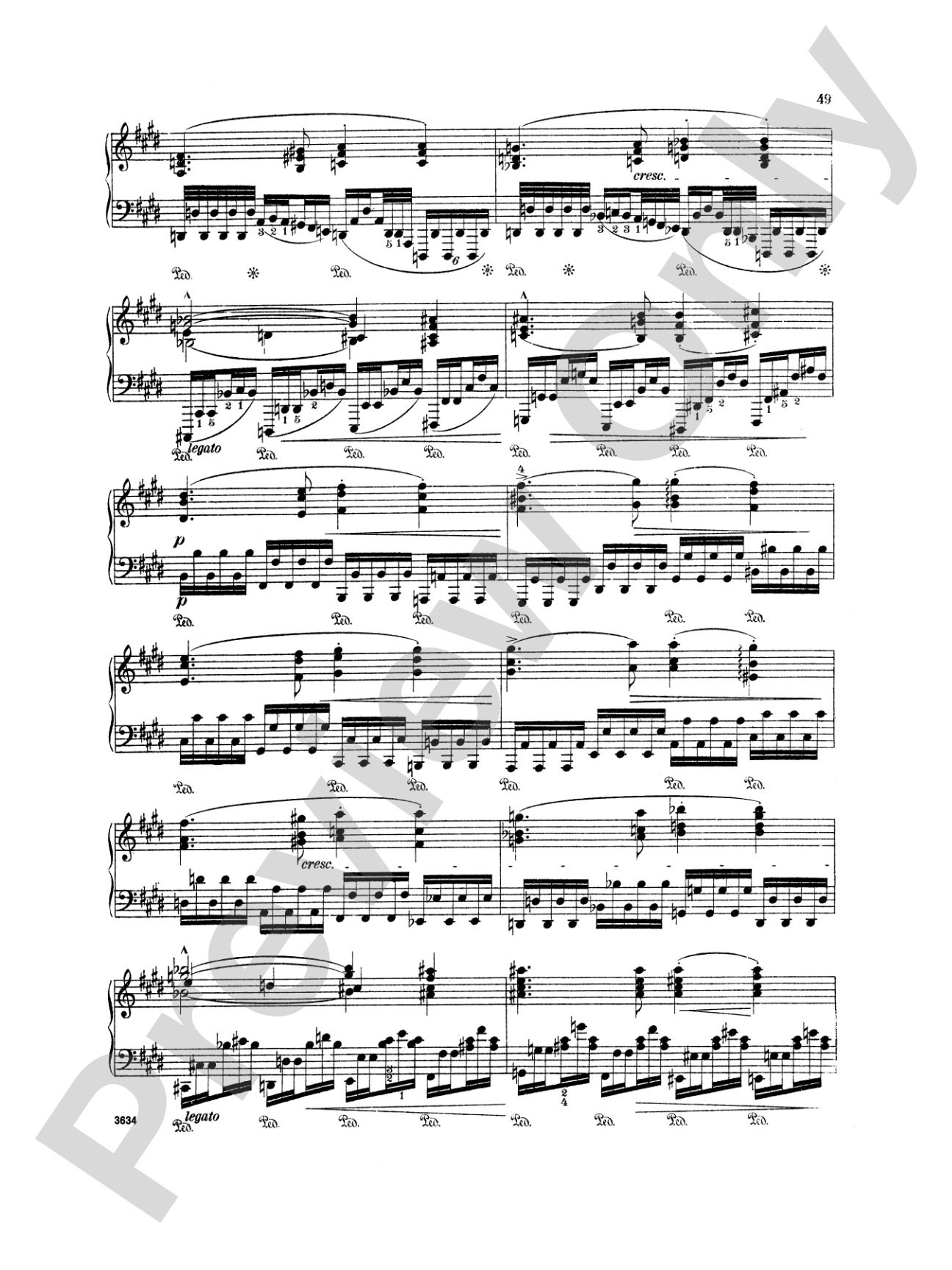
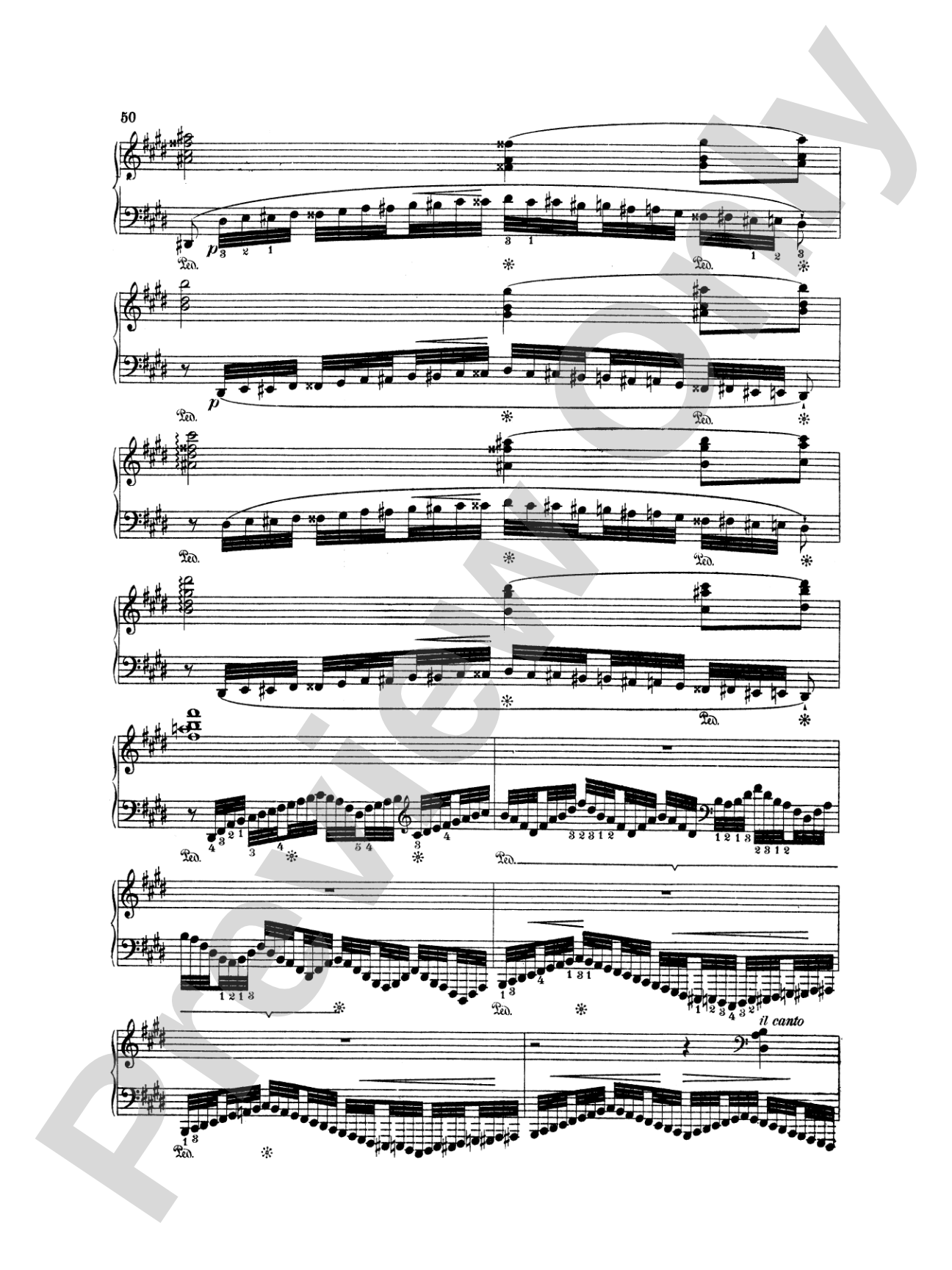
Liszt: Legend-- St. Francis Walking Over the Waves Sheet Music Preview

Liszt: Legend-- St. Francis Walking Over the Waves

By Franz Liszt

Level: Advanced

Item: 00-PC-0008274

Digital Download
$6.99
Description
Expertly arranged piano solo from our Kalmus Edition.

Don't just read it, hear it, play along with it, and watch your students grow with it. In MakeMusic Cloud, Liszt: Legend-- St. Francis Walking Over the Waves comes alive with professional accompaniment, adjustable tempo, and built-in practice tools that turn solo practice into real progress.

Sample Audio
No sample audio found.
Sample Video
Additional Details
Series: Kalmus Edition
Publisher: Alfred Music
Page Count: 16
SKU: 00-PC-0008274

More about this title

About the Composer: Franz Liszt

Franz Liszt (1811-1886) was a Hungarian pianist and composer whose technical innovations and harmonic daring shaped the trajectory of Romantic music. His piano works demand virtuosic command and musical maturity; they expand what the instrument can express, bridging virtuosity with genuine spiritual and emotional depth. Liszt's later works, including the Legends, reflect his turn toward sacred subjects and introspective writing after taking minor orders in the Catholic Church.

Why we love this

This Legend distills Liszt's gift for merging technical brilliance with contemplative spirituality. The imagery of St. Francis walking on water invites pianists to create both textural shimmer and profound reverence, making it a rewarding choice for advanced players seeking repertoire with genuine artistic substance. It sits comfortably in recital programming where you need a substantial, character-driven piece that showcases command without relying on empty virtuosity.

What to expect

The piece evokes both the miraculous and the intimate, beginning with luminous figurations that suggest water catching light, then unfurling into soaring, hymn-like melody that speaks to spiritual wonder. There is spaciousness to the harmonic language, a sense of moving through something vast and transcendent, yet the emotional core remains direct and human. The work asks the pianist to hold reverence and technical brilliance in the same breath.

Who it's for

This piece is written for advanced pianists with solid technique, musical maturity, and comfort with Romantic-era harmonic language and extended passages of lyrical writing. It suits recital pianists, conservatory students, and accomplished amateurs who relish character pieces with both technical and interpretive challenges. Teachers often program this for students ready to explore Liszt's output beyond the virtuosic showpieces.

How to get the most out of it

  • Cultivate the distinction between the shimmering water effects (often in the middle registers and accompaniment) and the melodic line; clarity of texture prevents the piece from becoming muddy despite its harmonic density.
  • Shape the long lines by thinking through phrase direction rather than relying on individual note articulation; let the harmonic progression carry the melody forward.
  • Attend to the soft dynamic markings as scrupulously as the dramatic passages; the pianissimo moments require genuine control and tone production, not just finger work.
  • Balance the demands of the pedal with the need for harmonic definition; Liszt's sonorities require careful pedal changes, especially in slower sections where sustain can obscure voice-leading.

How to use it

Program this as a centerpiece recital work, perhaps in a group with other Romantic character pieces or sacred-themed music that explores similar emotional terrain. Its length and spiritual character make it an effective anchor in a program exploring Liszt's later aesthetic, or as a standalone statement of the composer's maturity. It works particularly well on recitals themed around spirituality or nature imagery in music.

Skills your students will build

  • Sustaining long melodic lines across register changes and harmonic shifts
  • Managing dense Romantic-era harmonies without loss of clarity
  • Pedal technique for creating shimmering textural effects while maintaining voice independence
  • Interpreting sacred imagery through pianistic color and rubato
  • Reading and performing extended passages at varied dynamic levels with consistency

You May Also Like