

Liszt: Legend-- St. Francis' Sermon to the Birds
By Franz Liszt
Item: 00-PC-0008273
$4.99
Pickup currently not available
Description
Expertly arranged piano solo from our Kalmus Edition.


Don't just read it, hear it, play along with it, and watch your students grow with it. In MakeMusic Cloud, Liszt: Legend-- St. Francis' Sermon to the Birds comes alive with professional accompaniment, adjustable tempo, and built-in practice tools that turn solo practice into real progress.
Open in the Player
Jump straight in and assign it today.
Start Your Free Trial
Open this title and explore the full library in minutes.
Sample Audio
No sample audio found.
Sample Video
No sample videos found.
Additional Details
Series:
Kalmus Edition
Publisher:
Alfred Music
Page Count:
16
SKU:
00-PC-0008273
More about this title
About the Composer: Franz Liszt
Franz Liszt (1811–1886) was a Hungarian virtuoso pianist and composer who fundamentally expanded the technical and expressive possibilities of the piano. A central figure of the Romantic movement, he created works of extraordinary ambition that demanded new levels of keyboard mastery while exploring profound spiritual and poetic themes. His late sacred works, including the Legend cycle, reflect his deepening interest in religious subjects and showcase his ability to blend virtuosic display with intimate, contemplative expression.
Listz's influence on music education remains substantial. His transcendental technique and willingness to draw on literary and visual inspiration opened pathways for generations of composers and pianists to think beyond traditional forms. Teachers and students continue to study his works to understand Romantic aesthetics, harmonic innovation, and the relationship between technical brilliance and emotional depth.
Why we love this
This Liszt masterwork sits at the intersection of virtuosic display and genuine spiritual reflection, making it an essential recital piece for advanced pianists ready to engage with Romantic idealism. The narrative depth—based on Saint Francis preaching to birds—gives students a tangible emotional anchor while they navigate passages that showcase the full range of the Romantic piano. It's a work that demands serious technical preparation but rewards that investment with moments of transcendent beauty.
What to expect
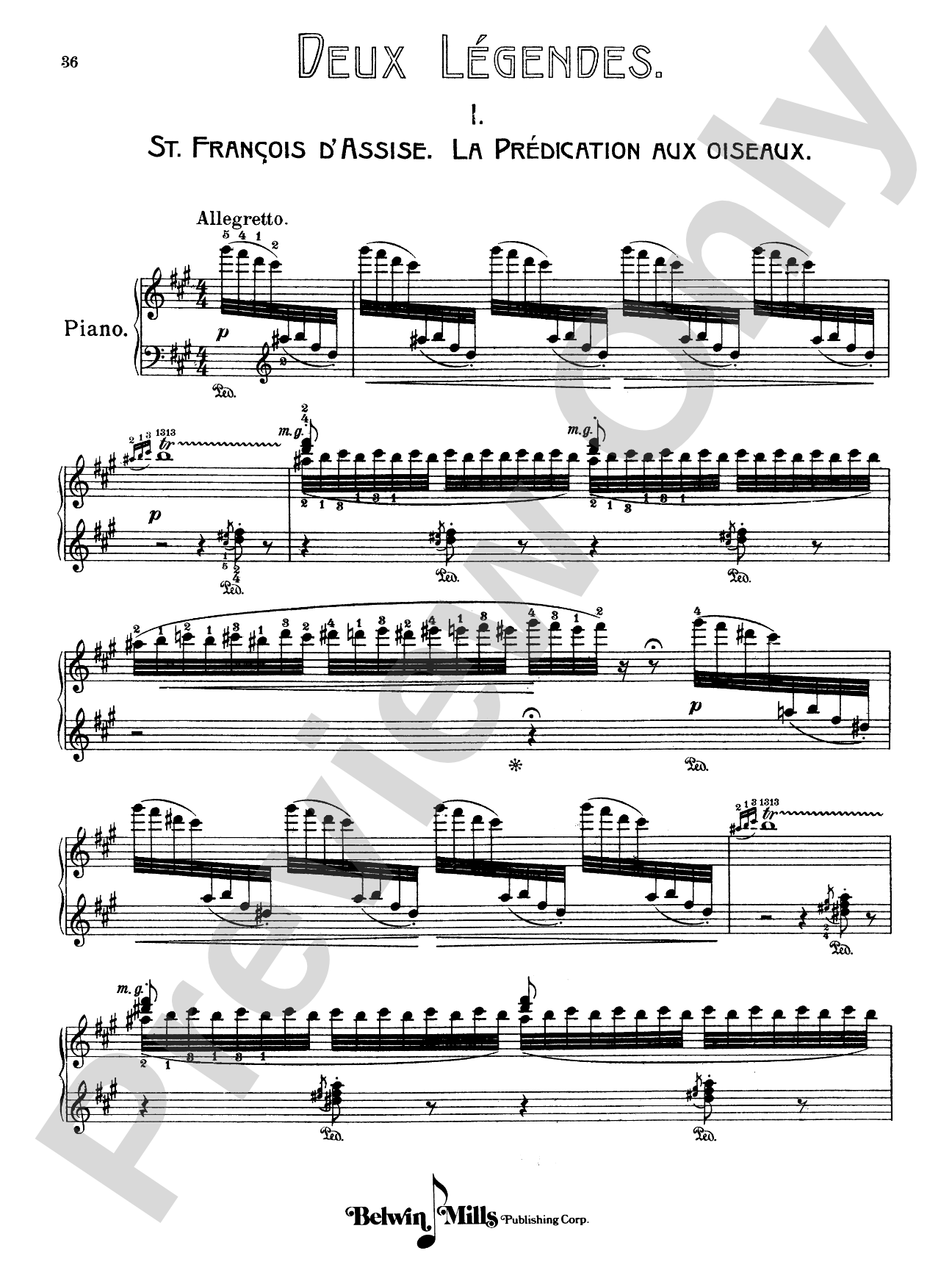
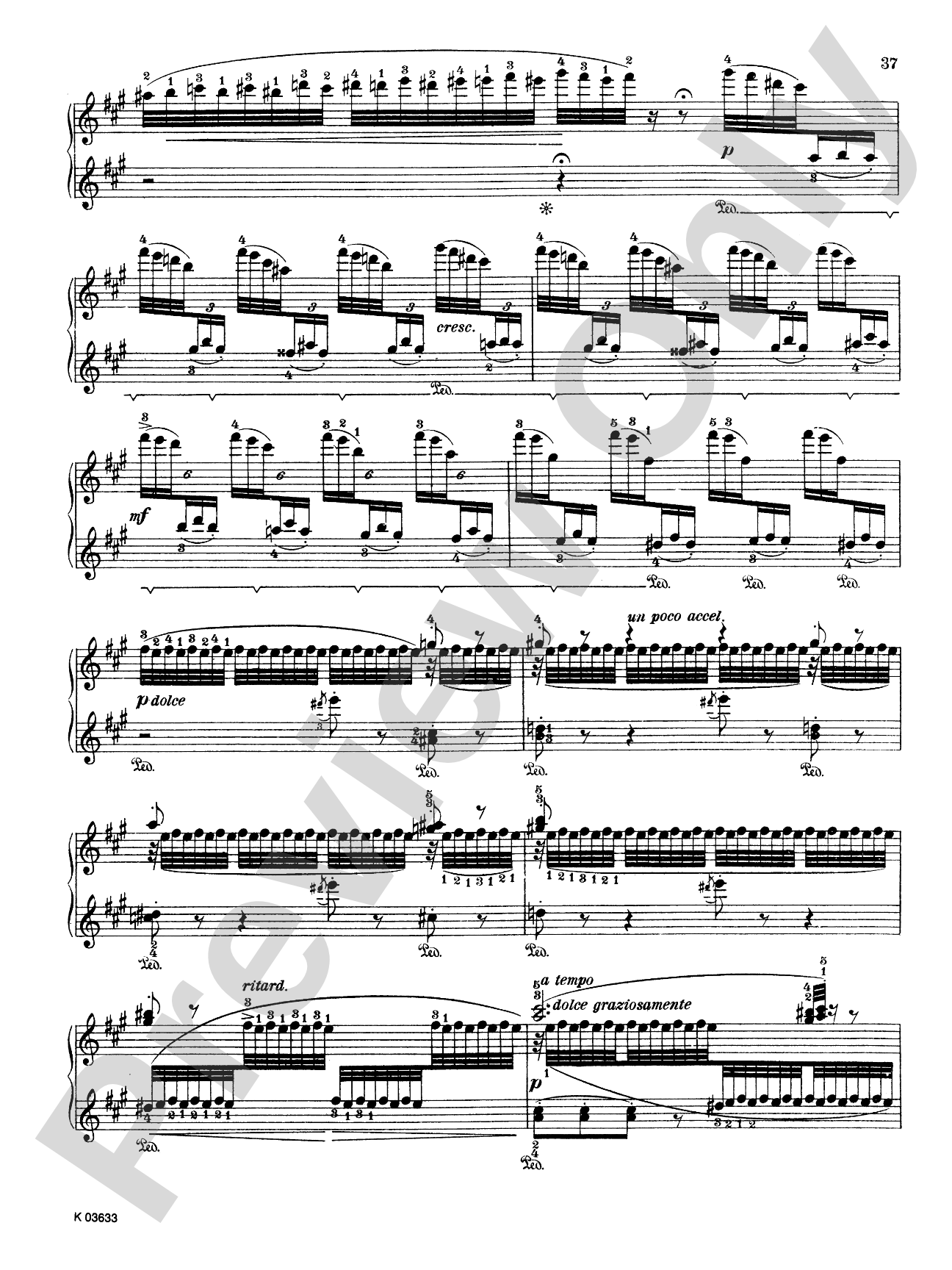
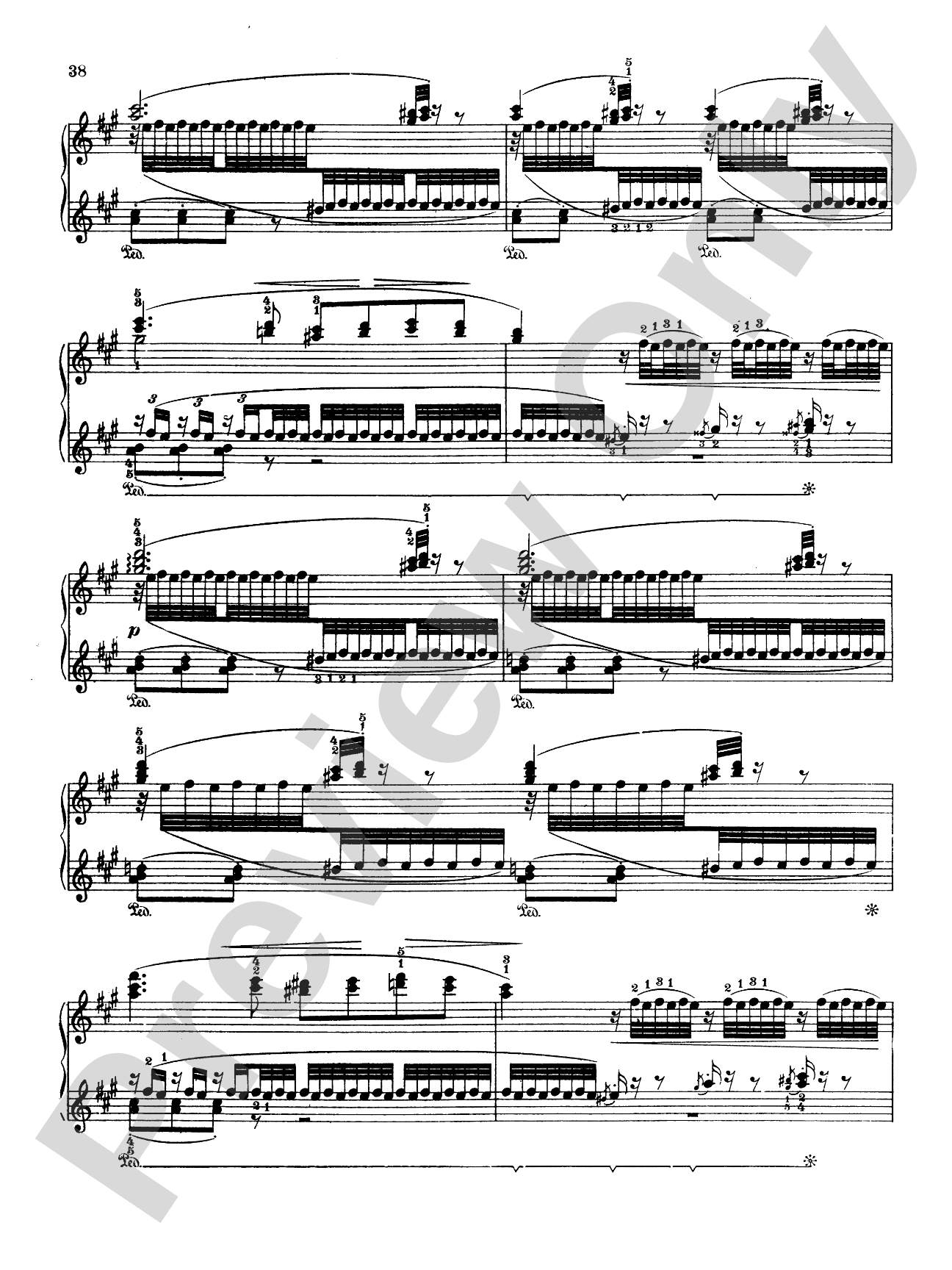
A hushed, reverent landscape opens as Francis approaches his animal congregation, the music unfolding with ornamental delicacy and wonder. Passages of dancing, birdlike figurations answer the saint's gentle words, creating a conversation between human voice and natural world. The overall arc moves from narrative detail toward transcendence, culminating in moments of serene acceptance that feel both intimate and vast.
Who it's for
This piece is written for accomplished pianists with strong command of Romantic-era keyboard technique, substantial experience with rubato and pedaling, and the interpretive maturity to sustain a narrative arc across 16 pages. It suits advanced students preparing for competition, recital repertoire at the college level, or pianists building a personal performance library of sacred masterworks. The score's complexity and poetic demands make it unsuitable for early-intermediate players but essential for those ready to explore Liszt's spiritual and technical legacy.
How to get the most out of it
- Attend carefully to the contrast between the ornate, rapid figurations and the lyrical passages that represent the saint's voice. The clarity of these two musical languages will shape the listener's engagement with the narrative.
- Explore the sustain pedal with intention in the reflective sections. Liszt writes densely voiced textures that can blur without precise pedal changes; clarity often serves the spiritual character better than wash.
- Let the right hand lead melodically even in passages layered with accompanimental figures. The birds' responses to Francis must emerge from the texture, not compete with it.
- Balance technical security with interpretive generosity in tempo fluctuations. Liszt's late music benefits from subtle rubato that honors the prose-like quality of the musical narrative rather than metronomic rigidity.
How to use it
Program this as a recital centerpiece for a program exploring spiritual music or Romantic character pieces. Its length and interpretive demands make it ideal as the anchor of an advanced student recital rather than one item among many. Alternatively, pair it with other Liszt solo works or with French or German Romantic character music that shares similar harmonic language and poetic intent.
Skills your students will build
- Navigating rapid passagework with clarity and control across extended sections
- Pedal management in dense, harmonically complex textures
- Sustaining narrative coherence and emotional arc across a lengthy single-movement form
- Executing subtle tempo and rubato adjustments to support interpretive choices
- Balancing multiple textural layers (melody, accompaniment, decorative figuration) with appropriate voicing and projection