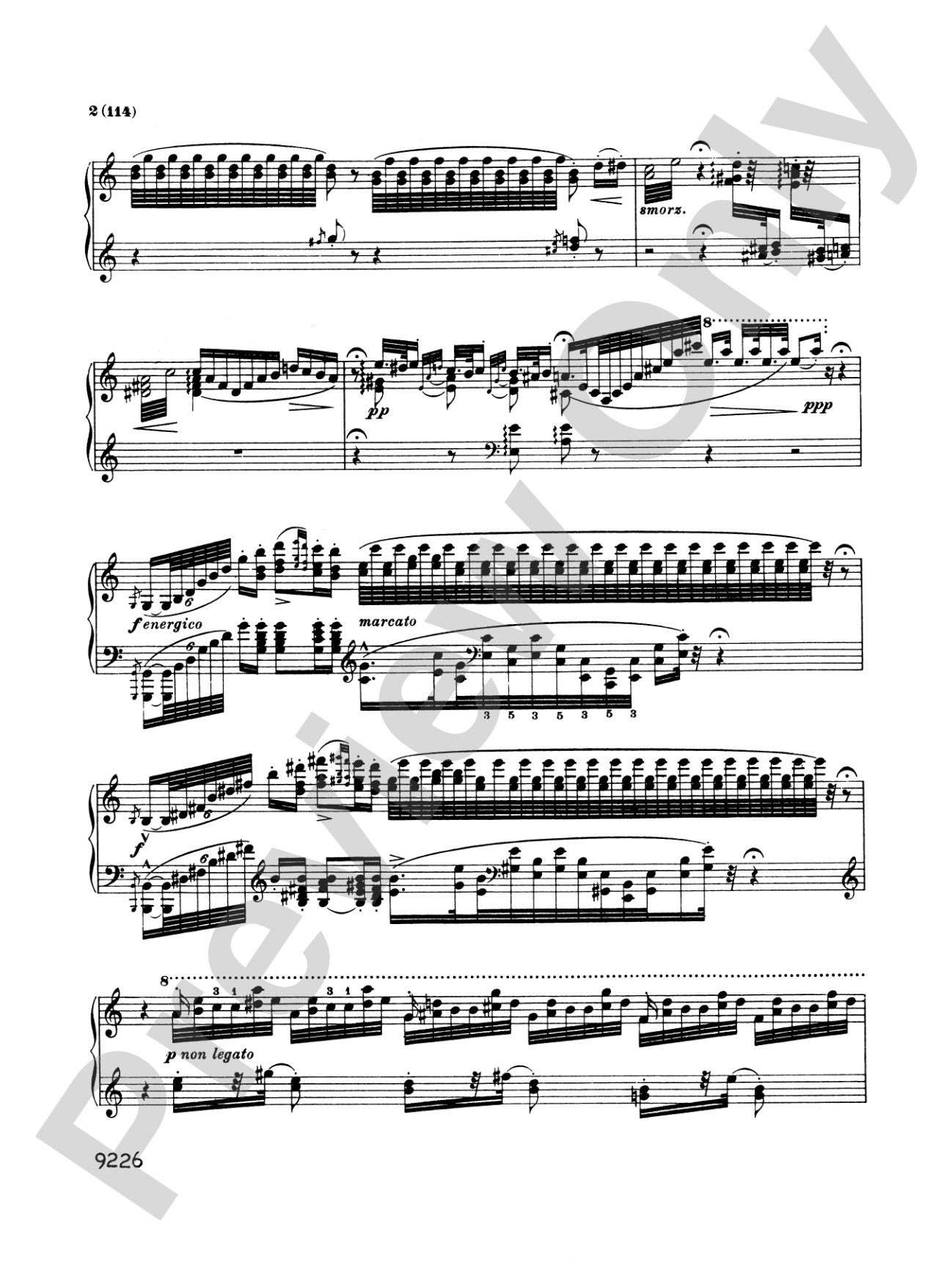
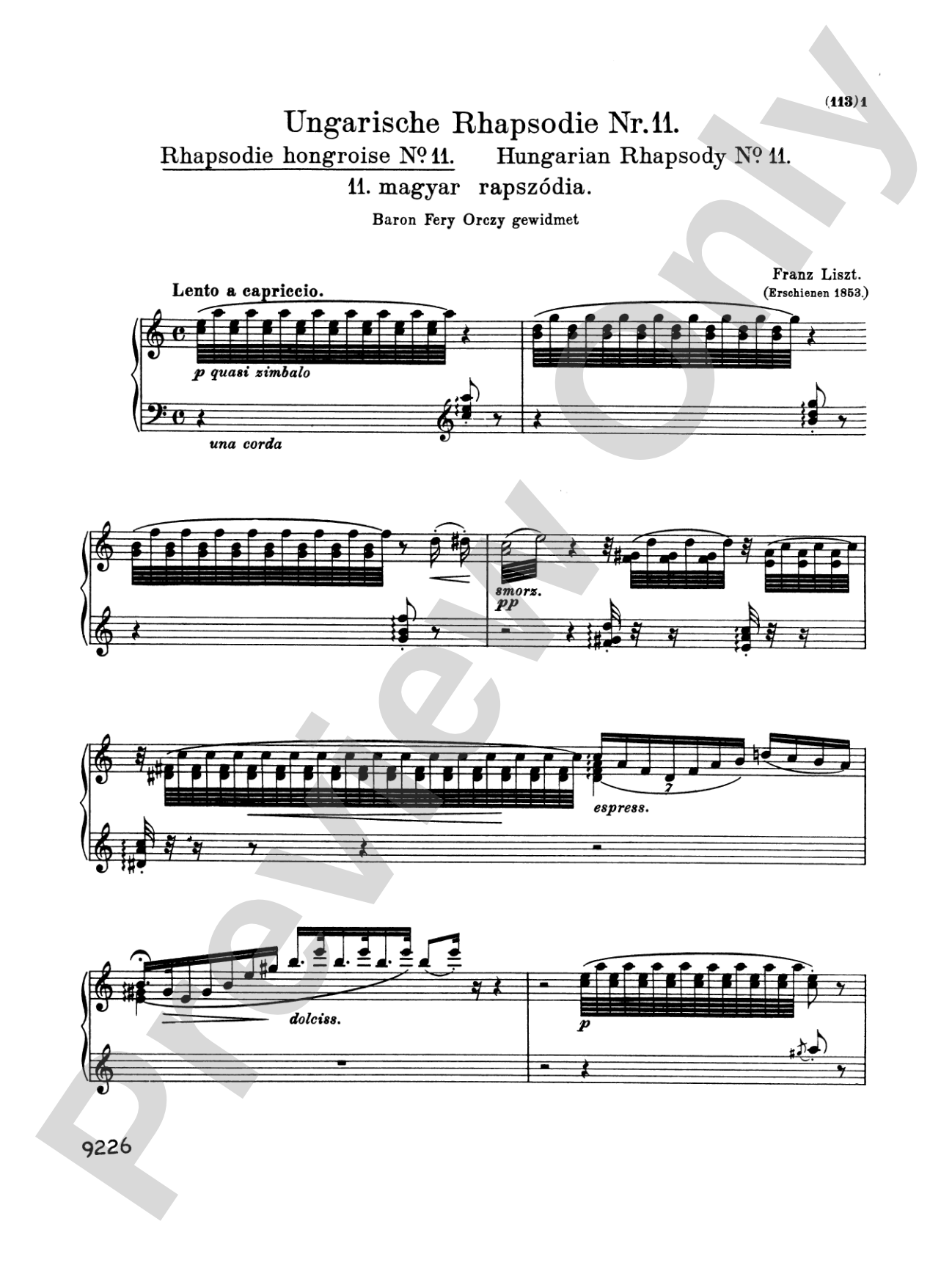
Liszt: Hungarian Rhapsodies (Volume II, Nos. 10-19) Sheet Music Preview

Liszt: Hungarian Rhapsodies (Volume II, Nos. 10-19)

By Franz Liszt

Item: 00-PC-0011910

Digital Download
$1.99
Description
Nos. 10-19

Don't just read it, hear it, play along with it, and watch your students grow with it. In MakeMusic Cloud, Liszt: Hungarian Rhapsodies (Volume II, Nos. 10-19) comes alive with professional accompaniment, adjustable tempo, and built-in practice tools that turn solo practice into real progress.

Sample Audio
No sample audio found.
Sample Video
Additional Details
Series: Kalmus Edition
Publisher: Alfred Music
Page Count: 120
SKU: 00-PC-0011910

More about this title

About the Composer: Franz Liszt

Franz Liszt (1811-1886) stands as one of the nineteenth century's most influential pianists and composers. His Hungarian Rhapsodies represent a pinnacle of Romantic keyboard writing, combining virtuosic display with genuine musical substance and a deep engagement with Hungarian folk idioms. Liszt's technical innovations at the piano shaped the instrument's possibilities for generations of composers who followed.

Beyond his role as a composer, Liszt was a transformative pedagogue. He taught at the Weimar court and later in Rome, mentoring students from across Europe and establishing principles of artistic interpretation that prioritized both technical mastery and emotional depth. His legacy extends far beyond the concert hall into how we approach music education itself.

Why we love this

These rhapsodies demand interpretive commitment and reward it generously. Liszt writes with genuine structural logic beneath the flashy passagework; pianists who dig into the harmonic language and rhythmic subtlety find pieces that feel both virtuosic and profoundly musical. Volume II offers substantial repertoire that builds technical command while remaining deeply engaging to perform.

What to expect

These rhapsodies pulse with rhythmic vitality and emotional generosity. You move between moments of fierce virtuosic display and passages of lyricism that feel almost improvisatory, as though Liszt is thinking out loud at the keyboard. The music captures the spirit of Hungarian folk music without ever becoming naive; it's sophisticated, structurally coherent, and intensely pianistic.

Who it's for

Advanced pianists seeking substantial Romantic repertoire will find these pieces both challenging and deeply rewarding. Studio teachers preparing students for recitals, competitions, or upper-level performance study benefit from Liszt's range of technical demands across these ten works. Pianists interested in nineteenth-century Hungarian musical nationalism and its influence on European composition will find this collection essential.

How to get the most out of it

  • Shape the rubato intentionally rather than indulgently. Liszt's written tempo markings and harmonic rhythm guide you; resist the urge to stretch every phrase equally. The music breathes best when you follow the underlying pulse even as you flex the surface.
  • Differentiate between the folk-derived melodies and the virtuosic figurations. Bring warmth and directness to thematic material, then let the technical passages serve the architecture rather than dominate it.
  • Work section by section before attempting full pieces. These rhapsodies reward detailed structural analysis; identify the key moments of repose, understand harmonic progressions, and practice transitions where the writing shifts dramatically.
  • Balance the romantic rhetoric with clarity of articulation. Rapid passage work stays musical only when each note is distinct; avoid muddying the texture with overly generous pedal, even when the expression feels intense.

How to use it

A single Hungarian Rhapsody works well as a substantial solo recital offering, showcasing both romantic warmth and technical mastery in a compact format. Pairing two contrasting rhapsodies from this volume creates a compelling program segment that demonstrates range and interpretive depth. These pieces also serve excellently in a concert exploring nineteenth-century nationalism or the development of Romantic keyboard writing.

Skills your students will build

  • Managing rapid passagework and octave figures with clarity and control
  • Interpreting rhythmic freedom and rubato within structural frameworks
  • Reading and executing complex harmonic progressions typical of advanced Romantic writing
  • Balancing virtuosic display with musical coherence and thematic development
  • Understanding Hungarian folk idioms and their transformation in art music

You May Also Like