
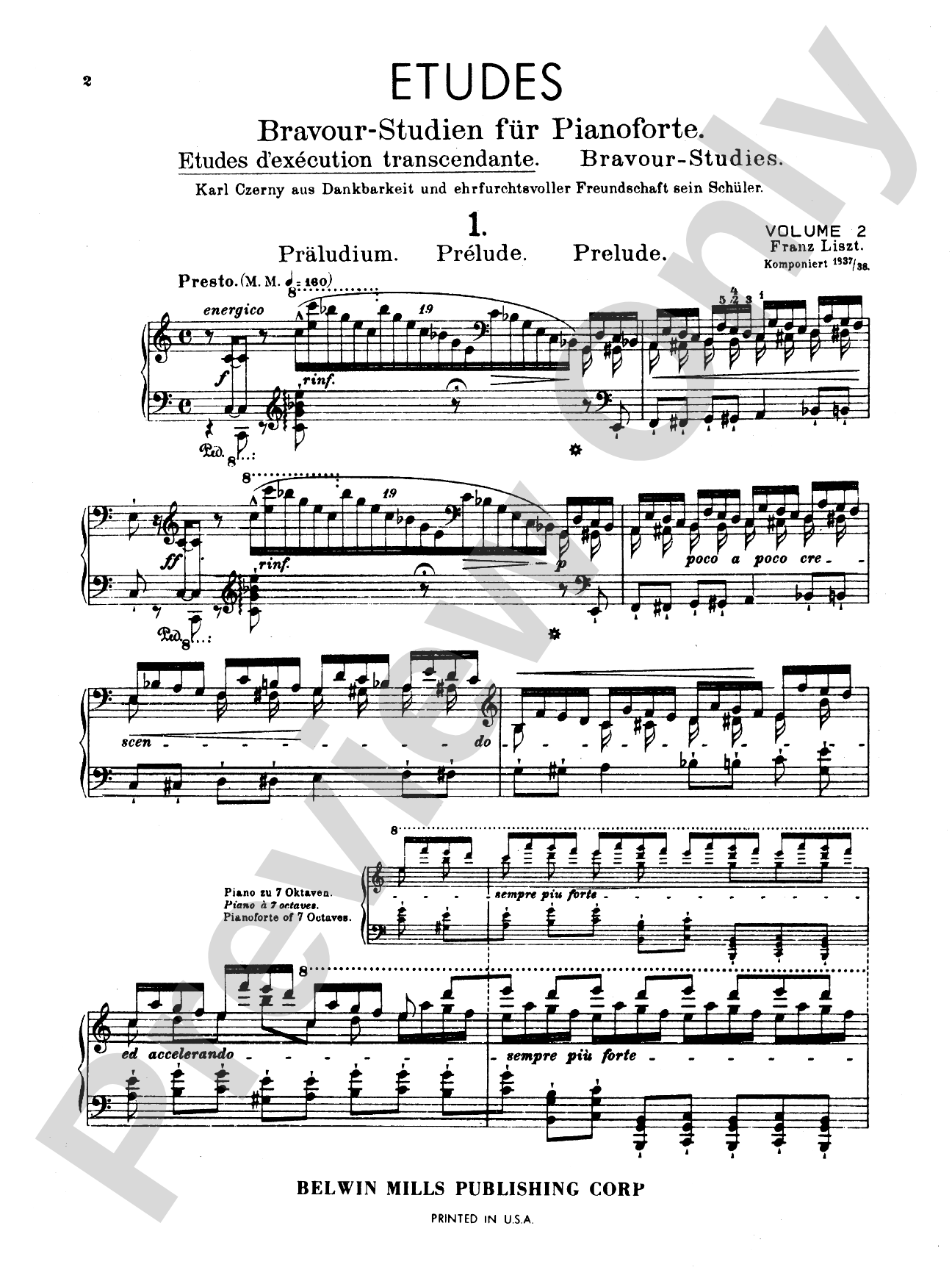
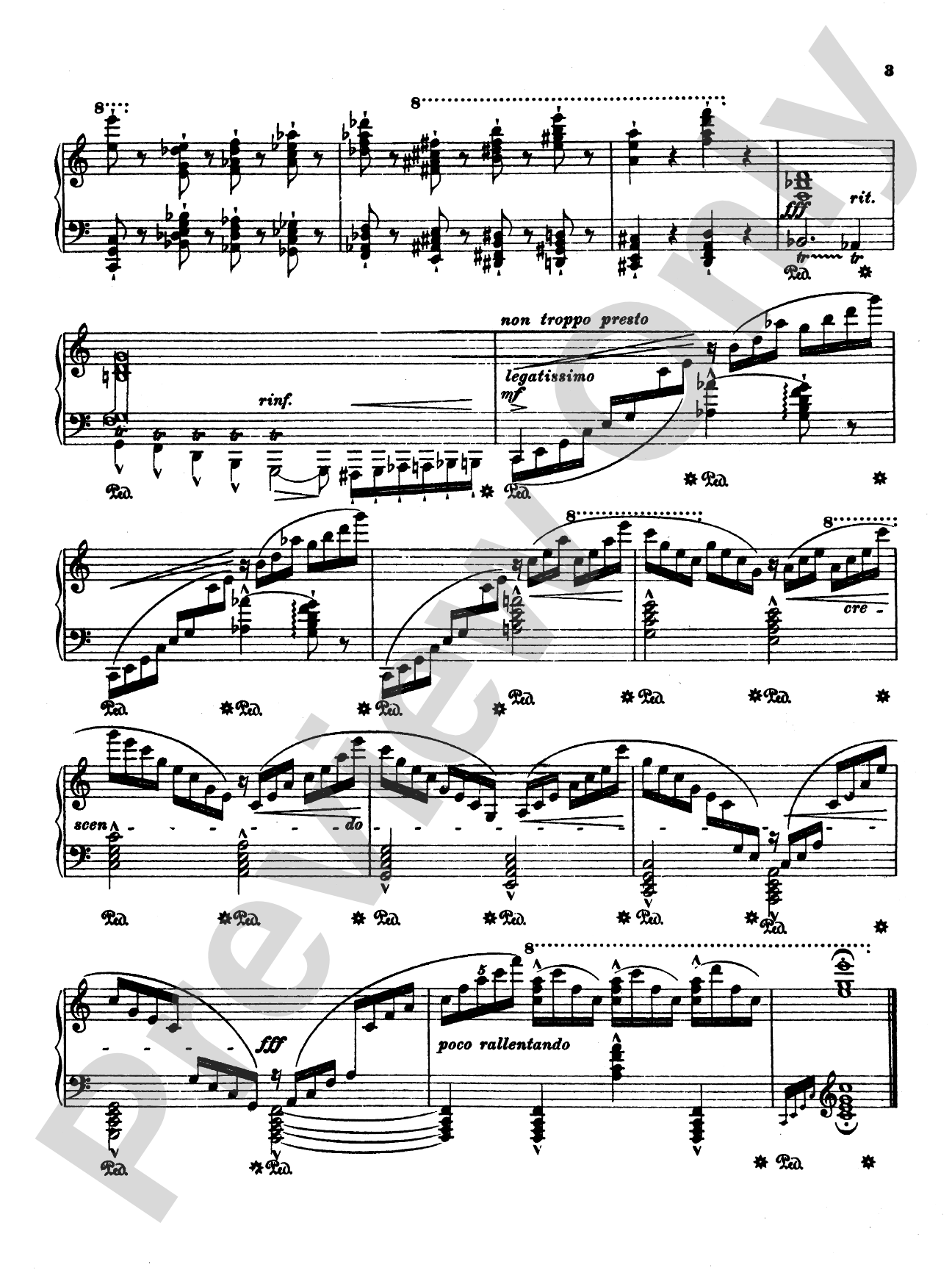

Liszt: Etudes (Volume II): Piano Book
By Franz Liszt
Level: Advanced
Item: 00-PK-0003905

$17.99
Pickup currently not available
Buy Extra Parts (Digital PDF Download)
| Product | Price | Quantity |
|---|---|---|
| Liszt: Etudes (Volume II) | $0.99 | |
| Liszt: Etudes (Volume II) | $0.99 | |
| Liszt: Etudes (Volume II) | $0.99 | |
| Liszt: Etudes (Volume II) | $0.99 | |
| Liszt: Etudes (Volume II) | $0.99 | |
| Liszt: Etudes (Volume II) | $0.99 | |
| Liszt: Etudes (Volume II) | $0.99 | |
| Liszt: Etudes (Volume II) | $0.99 | |
| Liszt: Etudes (Volume II) | $0.99 | |
| Liszt: Etudes (Volume II) | $0.99 | |
| Liszt: Etudes (Volume II) | $0.99 | |
| Liszt: Etudes (Volume II) | $0.99 | |
| Liszt: Etudes (Volume II) | $0.99 |
Parts Added to Cart!
Related Items
Etudes, Volume II: Piano Book |
$17.95
|
View |
Description
A collection of Piano Solos by Franz Liszt.


Don't just read it, hear it, play along with it, and watch your students grow with it. In MakeMusic Cloud, Liszt: Etudes (Volume II): Piano Book comes alive with professional accompaniment, adjustable tempo, and built-in practice tools that turn solo practice into real progress.
Open in the Player
Jump straight in and assign it today.
Start Your Free Trial
Open this title and explore the full library in minutes.
Sample Audio
No sample audio found.
Sample Video
No sample videos found.
Additional Details
Series:
Kalmus Edition
Publisher:
Alfred Music
Page Count:
132
SKU:
00-PK-0003905
More about this title
About the Composer: Franz Liszt
Franz Liszt (1811-1886) was a Hungarian composer and virtuoso pianist whose technical innovations and compositional ambition fundamentally reshaped the piano repertoire. His études represent some of the most demanding writing in piano literature, designed not merely as pedagogical exercises but as concert works that demanded unprecedented levels of technical mastery and musical interpretation from performers.
Listz's approach to the étude form elevated the genre beyond mechanical finger work. His études explore extreme registers of the piano, experiment with harmonic language rooted in Romanticism, and demand that pianists solve complex musical problems through technical brilliance. His influence on how we understand advanced piano repertoire and the relationship between virtuosity and artistry remains central to conservatory training and concert programming.
Why we love this
Liszt's études occupy a unique position in advanced piano repertoire: they are simultaneously technical challenges and genuine artistic statements. Advanced pianists return to these works repeatedly throughout their careers, discovering new interpretive possibilities with each engagement. Programming Volume II signals serious pianistic ambition and gives your students access to literature that professional pianists study and perform.
What to expect
Liszt's second volume of études radiates Romantic virtuosity, sweeping the player through passages of brilliant technical display interspersed with moments of lyrical depth and harmonic sophistication. These are works that make the piano sing across its full range, requiring equal measures of mechanical precision and expressive conviction to bring their ambitions fully to life.
Who it's for
This collection serves advanced pianists preparing for conservatory auditions, graduate-level study, or concert performances. Serious students pursuing professional piano training will find études that demand technical facility, musical sophistication, and interpretive maturity at an uncompromising level.
How to get the most out of it
- Approach each étude as a composition first and a technical study second. The musical architecture matters as much as the passagework.
- Map out the harmonic structure before drilling technical sections. Liszt's harmonic language often obscures traditional progressions, and understanding the underlying harmony clarifies finger patterns.
- Balance velocity with tone production. Liszt frequently demands speed across wide dynamic ranges; resist the temptation to sacrifice color for tempo.
- Practice sections in varied tempos and rhythmic groupings. Breaking passages into unexpected rhythmic patterns builds security and reveals the voice leading within dense textures.
How to use it
Feature individual études on recital programs where they can anchor a themed set around Romantic virtuosity or piano technique. These works function well in master classes and performance seminars where advanced students benefit from observing peers tackle ambitious technical and interpretive challenges.
Skills your students will build
- Managing rapid passagework across wide dynamic ranges
- Interpreting dense harmonic language characteristic of late Romantic style
- Balancing technical demands with artistic expression
- Building independence between hands in texturally complex writing
- Developing endurance and focus across extended virtuosic sections