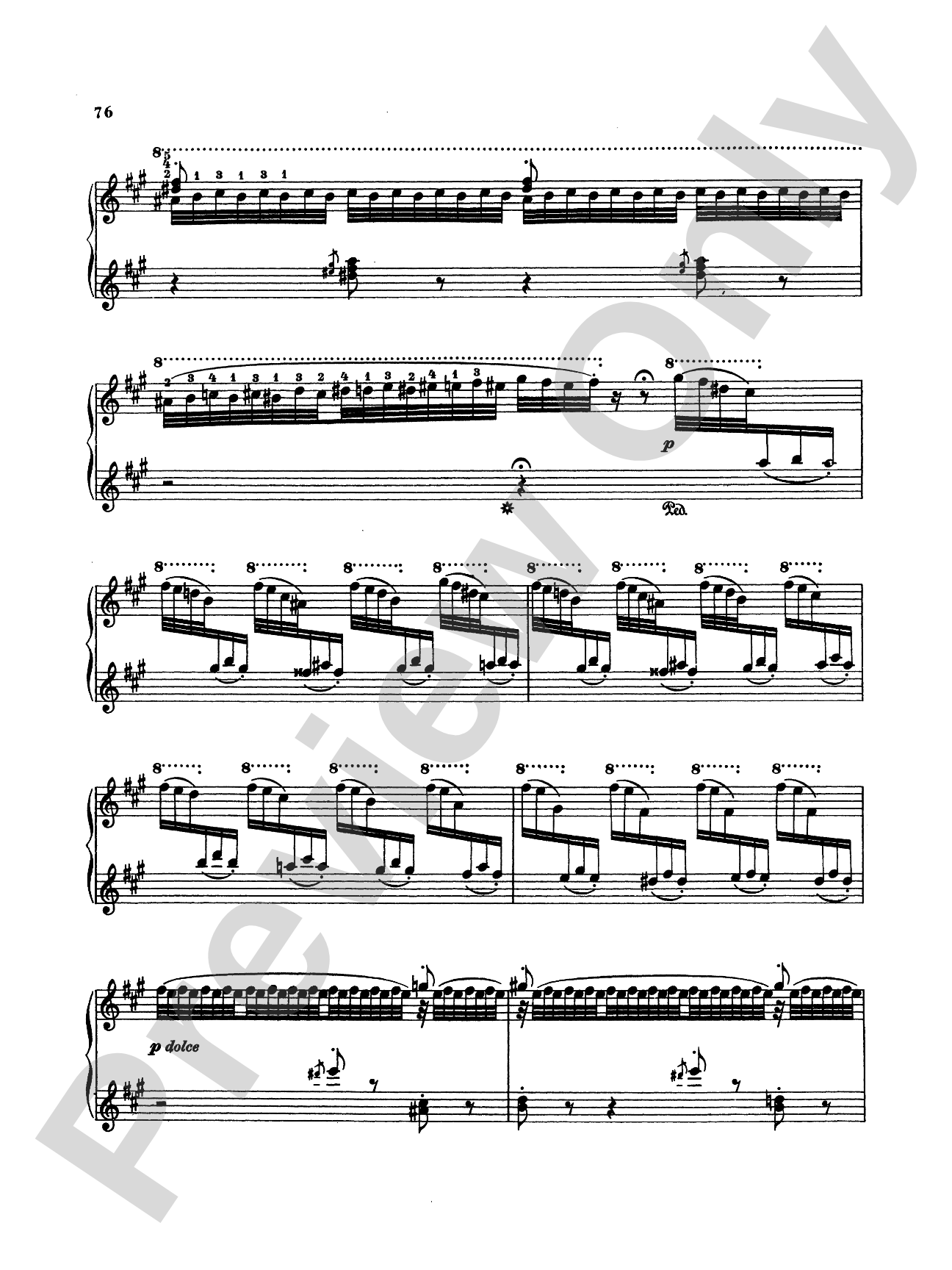
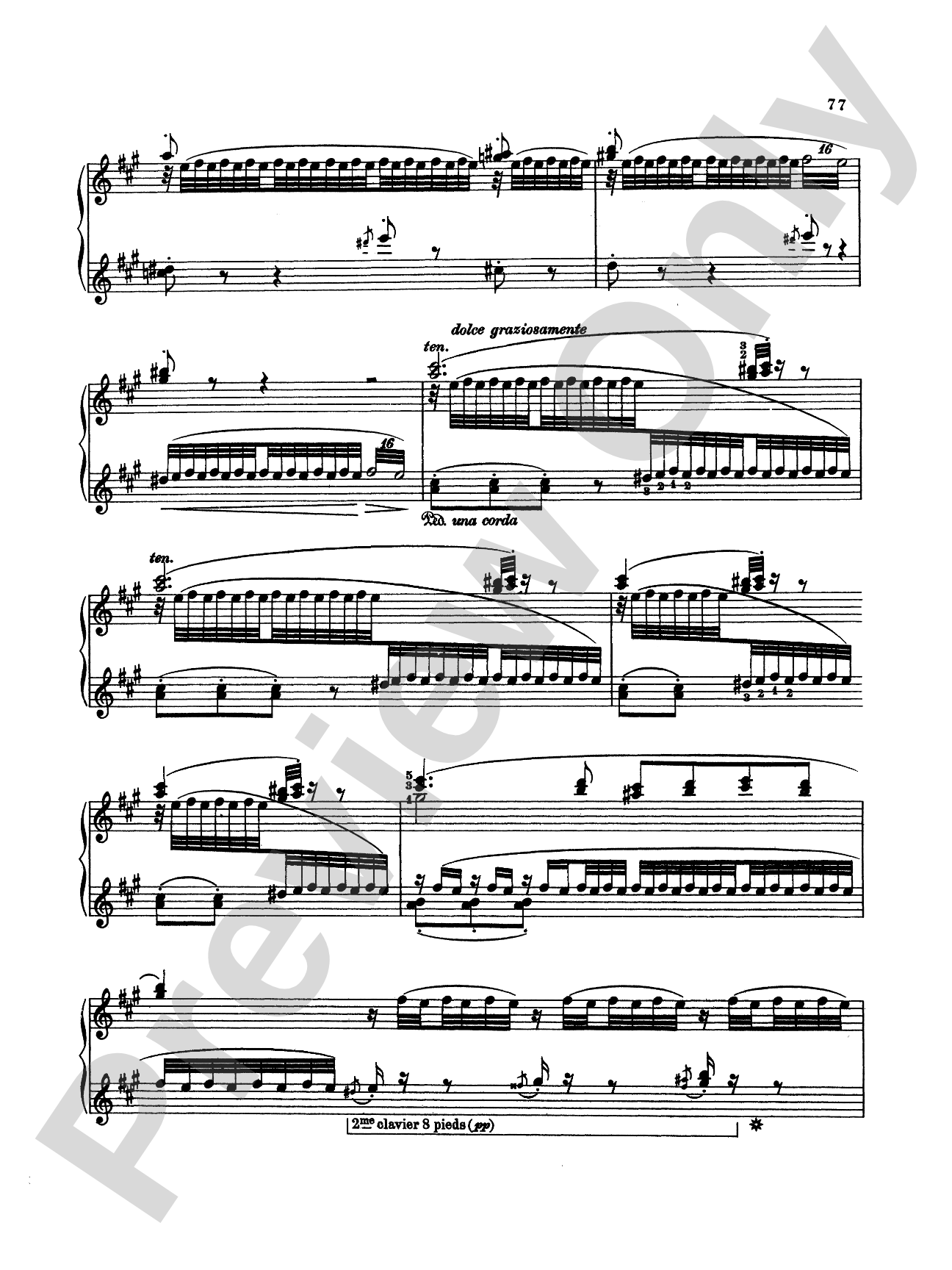
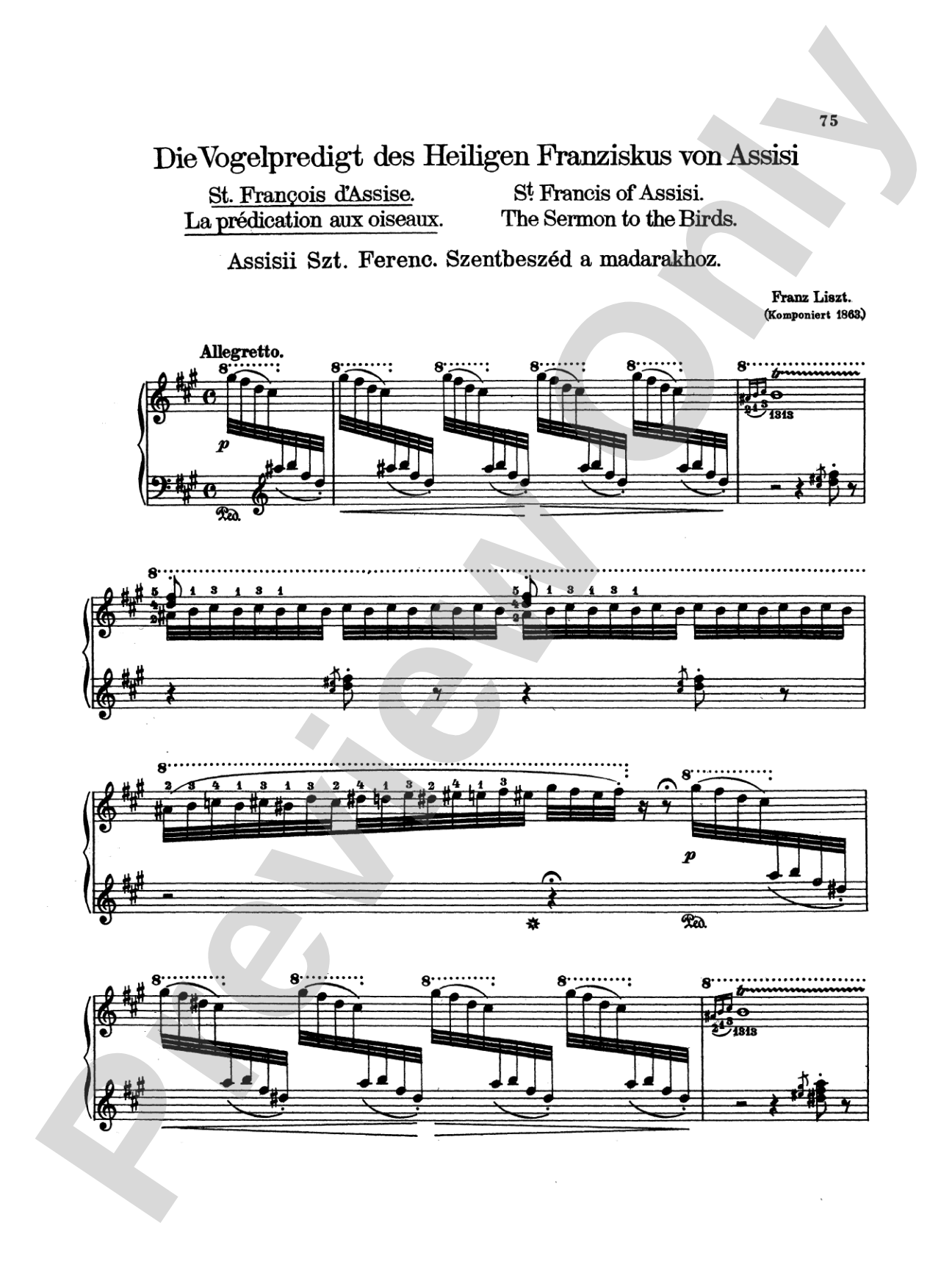
Liszt: Album II Sheet Music Preview

Liszt: Album II

By Franz Liszt

Item: 00-PC-0008239

Digital Download
$0.99
Description
Three Liebestraeume * Nuages Gris * La Gondole Lugubre I, II * Hungarian Rhapsody II (Easy) * Valse Melancholique * Waldesrauschen: Les Jeux d'eau a la Villa D'Este * St. Francis' Sermon to the Birds * St. Francis Walking Over the Waves

Don't just read it, hear it, play along with it, and watch your students grow with it. In MakeMusic Cloud, Liszt: Album II comes alive with professional accompaniment, adjustable tempo, and built-in practice tools that turn solo practice into real progress.

Sample Audio
No sample audio found.
Sample Video
Additional Details
Series: Kalmus Edition
Publisher: Alfred Music
Page Count: 108
SKU: 00-PC-0008239

More about this title

About the Composer: Franz Liszt

Franz Liszt (1811-1886) was a Hungarian composer and virtuoso pianist whose technical innovations and emotional depth transformed what the piano could express in the 19th century. His ability to write for the instrument drew from his own extraordinary performing gifts; he understood intimacy and spectacle with equal command, making him a natural guide for pianists seeking to bridge lyrical expression and technical brilliance.

Liszt's later works, represented strongly in this collection, reveal a composer increasingly interested in spiritual and philosophical themes. The "Légendes" (St. Francis pieces) and the more introspective works here show an artist moving beyond showmanship toward introspection, making these pieces vital for advanced students learning that maturity in pianism means serving the music's deeper intentions.

Why we love this

This collection captures Liszt at his most versatile. The range here spans from the universally beloved Liebestraeume through virtuosic display pieces to genuinely profound spiritual meditations. Advanced pianists appreciate collections like this because they demand both technical command and interpretive maturity; you cannot play Liszt successfully by technique alone, and that requirement is exactly what makes teaching from these works so rewarding.

What to expect

These works pulse with 19th-century Romanticism: yearning melodies that seem to strain against their own measures, lush harmonic colors that shift unexpectedly, and moments of technical display that feel less like showing off than like passion breaking through conventional boundaries. Some pieces cradle you in warmth and memory; others sweep you toward ecstasy or contemplation with almost orchestral breadth.

Who it's for

Advanced pianists with solid technique who are ready to engage with Romantic-era interpretation and character writing. This collection also serves teachers building repertoire for students preparing for competitions or advanced recitals where a mix of lyrical and brilliant pieces creates strong programming.

How to get the most out of it

  • Treat the three Liebestraeume as miniature tone poems rather than salon pieces. Each has a distinct character; spend rehearsal time discovering what emotional color Liszt intended before polishing technique.
  • In Nuages Gris and La Gondole Lugubre, resist over-pedaling to blur the harmonic progressions. Liszt's chromatic language needs clarity to register its emotional weight.
  • Approach the St. Francis pieces with awareness of their programmatic intent. The imagery of nature and spiritual experience should guide your phrasing and rubato choices.
  • Use the Hungarian Rhapsody II cadenza as an opportunity to show technical security, but remember the folk-dance sections demand rhythmic vitality over mere speed.

How to use it

Program individual pieces from this collection across different recitals rather than performing it as a complete set. A single Liebestraum or the St. Francis pieces can anchor a mixed-repertoire recital; the Hungarian Rhapsody works as a finale when you need virtuosic impact. The more introspective works pair beautifully with 20th-century pieces exploring similar spiritual or impressionistic themes.

Skills your students will build

  • Chromatic voice leading and harmonic analysis in late Romantic context
  • Pedal control and coloristic sound production
  • Rubato and expressive phrasing informed by poetic intent
  • Virtuosic passagework and cadenza preparation
  • Character differentiation across contrasting Liszt styles (lyrical, virtuosic, spiritual)

You May Also Like