Liszt: Album I Sheet Music Preview

Liszt: Album I

By Franz Liszt

Item: 00-PC-0008219

Digital Download
$0.99
Description
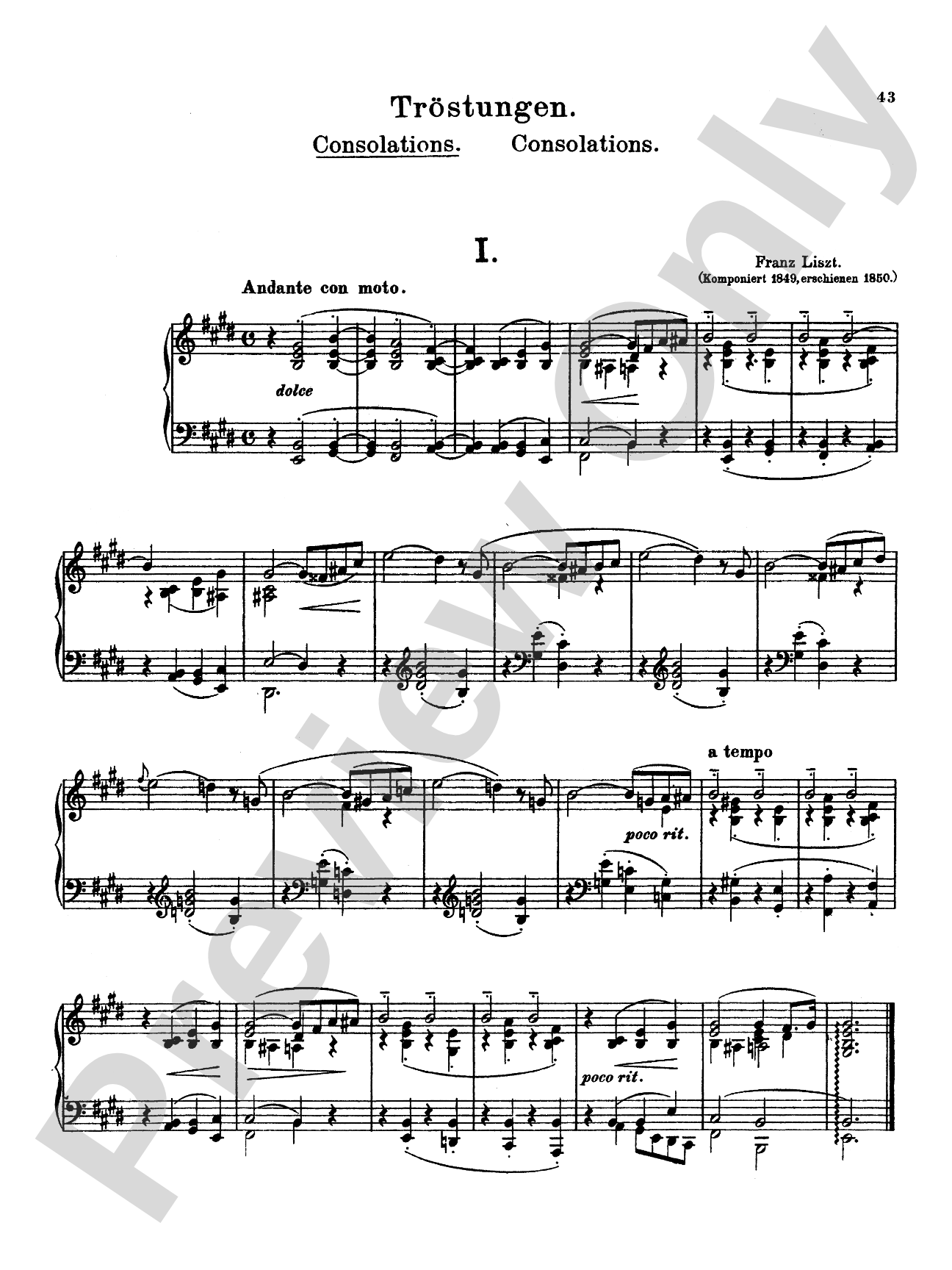
Sonata in B minor * Mephisto Valse No. 4 * Six Consolations * (Lamento, La Leggierezza, Sospiro) * La Campanella

Liszt: Album I isn't in MakeMusic Cloud just yet...but it could be. Let us know you'd like to see it, and you'll help shape what comes next. In the meantime, start a free trial and dive into thousands of interactive titles your students can play along with today.

Sample Audio
No sample audio found.
Sample Video
Additional Details
Series: Kalmus Edition
Publisher: Alfred Music
Page Count: 96
SKU: 00-PC-0008219

More about this title

About the Composer: Franz Liszt

Franz Liszt (1811-1886) fundamentally expanded the technical and expressive possibilities of the piano. A virtuoso performer of legendary skill, he composed works that demanded unprecedented command of the keyboard while exploring the instrument's capacity for orchestral color and dramatic storytelling. His influence shaped how pianists approach both technique and interpretation across the nineteenth century and beyond.

Listzt's compositional voice bridged Romantic passion and formal innovation. He pioneered the symphonic poem, experimented with harmonic language that pointed toward twentieth-century music, and created piano works ranging from transcendental display pieces to intimate character studies. His output remains central to the advanced piano repertoire, offering performers the chance to grapple with music of genuine substance and originality.

Why we love this

This collection balances showpieces with substance, pairing virtuosic display in La Campanella and Mephisto Valse No. 4 alongside works of genuine emotional depth like the Consolations and the monumental B minor Sonata. Advanced pianists get to explore Liszt's full range in one volume, moving between technical fireworks and introspective writing without leaving the same artistic world.

What to expect

The music swings between intimate confession and virtuosic assertion. Lyrical passages bloom with Romantic warmth and harmonic color; virtuosic sections demand precision and athleticism while remaining musically purposeful. Throughout runs an undercurrent of nineteenth-century passion, whether expressed through soaring melody, elaborate figuration, or the darkly dramatic sweep of the B minor Sonata.

Who it's for

Advanced pianists with solid technical foundation and interpretive maturity. This collection requires secure command of extended techniques, stamina across large-scale forms, and the musical judgment to balance virtuosity with structural clarity. Advanced students preparing for competitions, recitals, or college auditions will find substantial repertoire here.

How to get the most out of it

  • Approach the Sonata in B minor as a unified architectural work rather than a series of sections; mapping the thematic relationships across its substantial length clarifies structural momentum and guides interpretive choices.
  • In La Campanella, establish the hand independence required for rapid figurations early in practice; separate the melodic line from accompanying patterns before bringing them together at performance tempo.
  • The Consolations reward careful voicing and pedal control to clarify the polyphonic textures beneath lyrical surfaces; record yourself to identify spots where the harmonic progression obscures rather than supports the melodic line.
  • Mephisto Valse No. 4 demands absolute clarity about rhythmic subdivisions in passages that blur metric boundaries; lock the underlying pulse internally so rubato serves expression rather than replacing structural clarity.

How to use it

Program these works across multiple recitals rather than one sitting; the emotional and technical range of even a single piece like the B minor Sonata justifies its own half-program. La Campanella and Mephisto Valse No. 4 work as show-closers or dramatic midpoint shifts, while the Consolations suit smaller recitals or intimate chamber contexts.

Skills your students will build

  • Large-scale formal architecture (sonata form, thematic development, harmonic journey across extended structures)
  • Rapid hand independence and independence of fingers in virtuosic passage work
  • Pedal control and voicing clarity in polyphonic and harmonically rich textures
  • Stylistic navigation across character pieces and grand-scale works within a single composer's idiom
  • Rubato and rhythmic flexibility in passages that blur metric boundaries
  • Interpretive maturity in balancing technical display with structural coherence

You May Also Like