
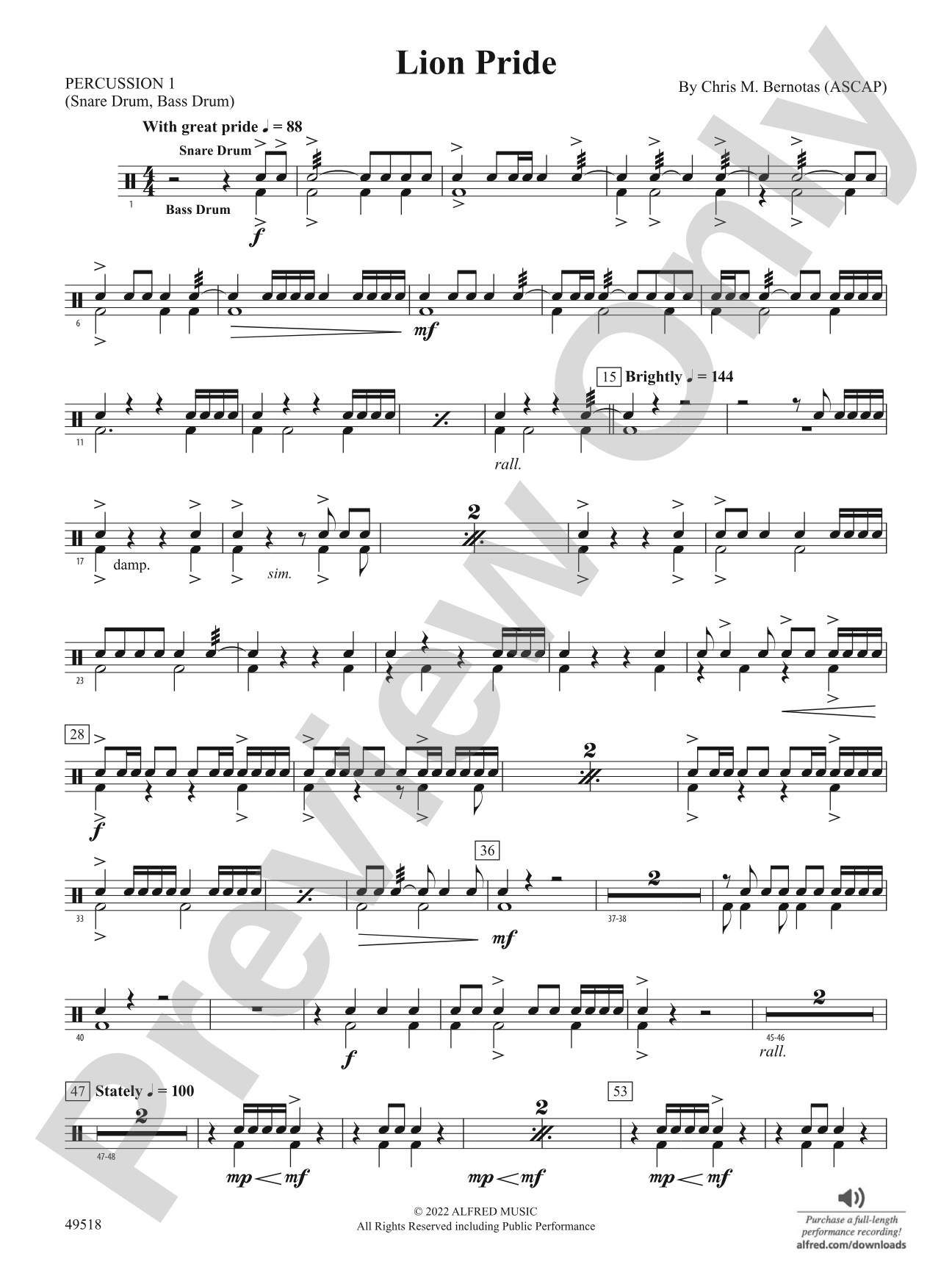

Lion Pride: 1st Percussion
By Chris M. Bernotas
Grade: 2.5
Item: 00-PC-0018811_PC1
$3.00
Pickup currently not available
Description
Lion Pride is an imaginative overture by Chris M. Bernotas and is full of majesty and pride. Beginning with a strong and dramatic statement that gives way to a bright melody, the pride of the lion shines through. A stately section represents the power of the mighty lion before returning with the spirited and exciting theme, then coming to a rhythmic and energetic conclusion. (3:32) This title is available in MakeMusic Cloud.


Don't just read it, hear it, play along with it, and watch your students grow with it. In MakeMusic Cloud, Lion Pride: 1st Percussion comes alive with professional accompaniment, adjustable tempo, and built-in practice tools that turn solo practice into real progress.
Open in the Player
Jump straight in and assign it today.
Start Your Free Trial
Open this title and explore the full library in minutes.
Sample Audio
1
Audio File
--:--
0:00
0:00
Sample Video
Additional Details
Series:
Young Symphonic
Publisher:
Alfred Music
SKU:
00-PC-0018811_PC1
More about this title
About the Composer: Chris M. Bernotas

Chris M. Bernotas brings over 25 years of music education experience to his work as a composer and conductor. As Director of Instrumental Publications for Alfred Music, he has shaped band and orchestra resources used in classrooms worldwide, creating compositions known for their accessibility and emotional resonance. His pieces span from early-level student repertoire to advanced concert works, all grounded in his deep understanding of what young musicians need to grow.
Bernotas' background as a classroom teacher informs every note he writes. He knows the real constraints and possibilities of rehearsal time, student ability levels, and the rewards that come from performing music that challenges and inspires simultaneously. Beyond the page, he works regularly as a guest conductor and clinician, leading honor ensembles and presenting on conducting and composition pedagogy. His published works include several co-authored educational resources that have become foundational texts in instrumental music programs.
Why we love this
Lion Pride captures everything a Grade 2.5 ensemble needs: a strong, confident opening statement that hooks performers and audiences immediately, followed by material that sits comfortably in young musicians' ranges while never feeling simplified. The arc from drama to lyricism to energetic finale gives directors a complete concert opener that holds attention without overextending rehearsal resources.
What to expect
The piece opens with theatrical confidence, as if a pride emerges from the savanna with purpose and presence. A warm, singable melody follows, expressing both strength and nobility, before building into a section of dignified power. The concluding section crackles with excitement and motion, leaving audiences energized and ensembles satisfied.
Who it's for
Concert bands at the early intermediate level (Grade 2.5) looking for an opening piece that commands the stage without excessive technical demands. Directors who want material that teaches musicality and dynamic shaping while allowing students to feel the success of a confident performance.
How to get the most out of it
- Plant the opening statement with full ensemble unity. The dramatic opening works only if brass, reeds, and percussion lock onto the same attack and release; this moment establishes the piece's majesty.
- Let the bright melody sing without pushing tempo. Young musicians often rush through lyrical passages, so establish a solid pulse and allow the melody room to breathe.
- Build the dynamic shape carefully through the stately section. Resist the urge to jump straight to full volume; gradual growth creates more impact when the spirited theme returns.
- Clarify the rhythmic precision in the conclusion. The energetic closing demands clean articulation and tight section balance; mark a few rehearsals specifically for rhythmic accuracy here.
How to use it
Open a concert or festival performance with this piece to establish energy and focus from the first note. Its 3:32 length and complete dramatic arc make it ideal for competitions or showcase concerts where you want to present a polished, full statement of your ensemble's abilities without consuming excessive program time.
Skills your students will build
- Dynamic contrast and shape (dramatic forte to lyrical passages to energetic conclusion)
- Ensemble balance and unified attacks across full band
- Sustaining lyrical lines with consistent air support
- Rhythmic precision and articulation in fast-moving sections
- Understanding overture form (contrasting themes, development, return)