
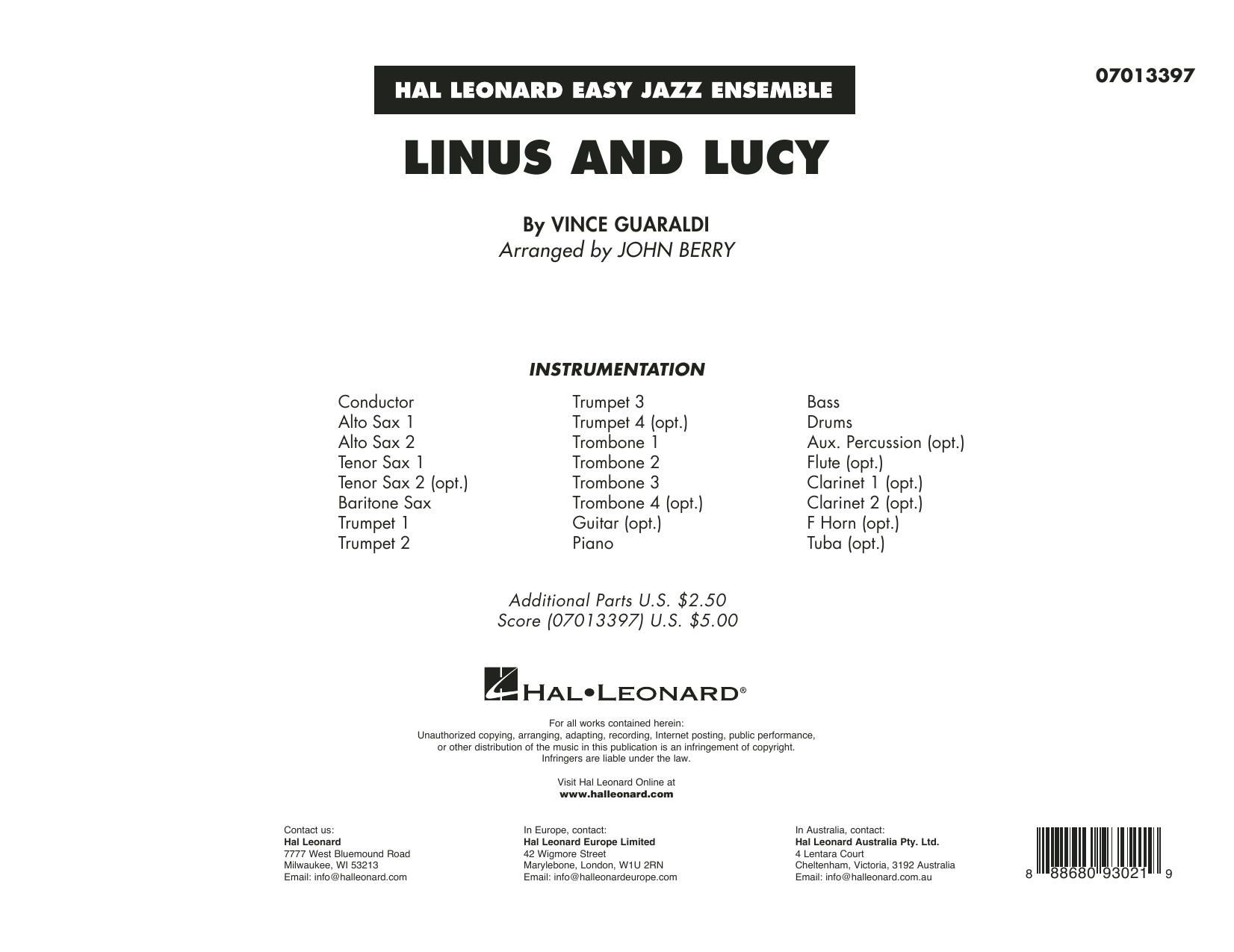

Linus and Lucy (arr. John Berry): Jazz Ensemble Conductor Score & Parts
As performed by Vince Guaraldi / Arranged by John Berry
Grade: 2
Item: 35-PK00441482
$40.00
Pickup currently not available
Buy Extra Parts (Digital PDF Download)
Parts Added to Cart!
Description
Here's the familiar main theme from the "Charlie Brown" TV specials that everyone is sure to recognize. Carefully arranged for younger players, this great sounding chart maintains all the charm and style of the original. A written or ad lib. alto sax solo is featured in the middle swing section.


Linus and Lucy (arr. John Berry): Jazz Ensemble Conductor Score & Parts isn't in MakeMusic Cloud just yet...but it could be. Let us know you'd like to see it, and you'll help shape what comes next. In the meantime, start a free trial and dive into thousands of interactive titles your students can play along with today.
Request This Title
Tell us you want it.
Start Your Free Trial
Explore everything that's ready to play right now.
Sample Audio
No sample audio found.
Sample Video
No sample videos found.
Additional Details
Publisher:
Hal Leonard
SKU:
35-PK00441482
More about this title
About the Artist: Vince Guaraldi
Vince Guaraldi (1928–1976) composed the score for the beloved "Peanuts" animated television specials beginning with "A Charlie Brown Christmas" in 1965. His jazz compositions became iconic through these programs, blending sophisticated harmonies with accessibility that appealed to children and adults alike. Guaraldi's gift was creating memorable melodies that could sustain repeated listening while maintaining genuine musical substance.
Guaraldi studied composition and piano at Mills College and worked as a pianist before turning to film and television scoring. His "Linus and Lucy" theme epitomizes his approach: instantly recognizable, rhythmically engaging, and grounded in real jazz vocabulary rather than simplified imitations. For music educators, Guaraldi's catalog offers a direct path to teaching jazz fundamentals through material students already know and love.
Why we love this
Berry's arrangement strips away nothing essential while keeping the technical demands appropriate for Grade 2 ensembles. The featured alto sax solo (with a written alternative) gives your section leaders a moment to shine without overextending their abilities. Students recognize this tune the moment they hear the first few bars, which transforms what could be a basic reading exercise into genuine musicianship from day one.
What to expect
Bright, playful, and infectiously groovy. The tune bounces with the optimism of childhood while the jazz voicings bring genuine sophistication. It feels like humming along to something you already love, except now you're playing it yourself.
Who it's for
Grade 2 jazz ensembles ready to work with swing style and basic combo arrangement principles. Younger players gain exposure to a legitimate jazz standard without confronting excessive ranges, fast passages, or complex harmonies. This arrangement also serves experienced elementary or middle school jazz bands looking for crowd-friendly material that doesn't sacrifice musicianship.
How to get the most out of it
- Shape the main theme with light, bouncy articulation rather than heavy tonguing; let the melody dance rather than trudge.
- Balance the solo section so it sits forward but doesn't obliterate the ensemble comping underneath; this teaches section players to listen and adjust.
- Nail the tempo before rehearsal starts and hold it steady through the head. Even small wavering on such a recognizable tune becomes immediately noticeable.
- The original recording is worth playing for your ensemble; let them hear what Guaraldi intended before they learn to execute it themselves.
How to use it
Program this as an opener to a jazz concert where it immediately connects with your audience and sets a joyful tone. It also works beautifully as a feature during a "Music in Film and Television" concert or as an accessible entry point in a unit on jazz history and the Peanuts legacy. Include it early in the season when you're building ensemble cohesion and confidence.
Skills your students will build
- Swing articulation and rhythmic interpretation
- Reading and playing from lead sheets and written solos
- Section balance in a small combo texture
- Blues and jazz harmony recognition
- Listening to and supporting a featured soloist