
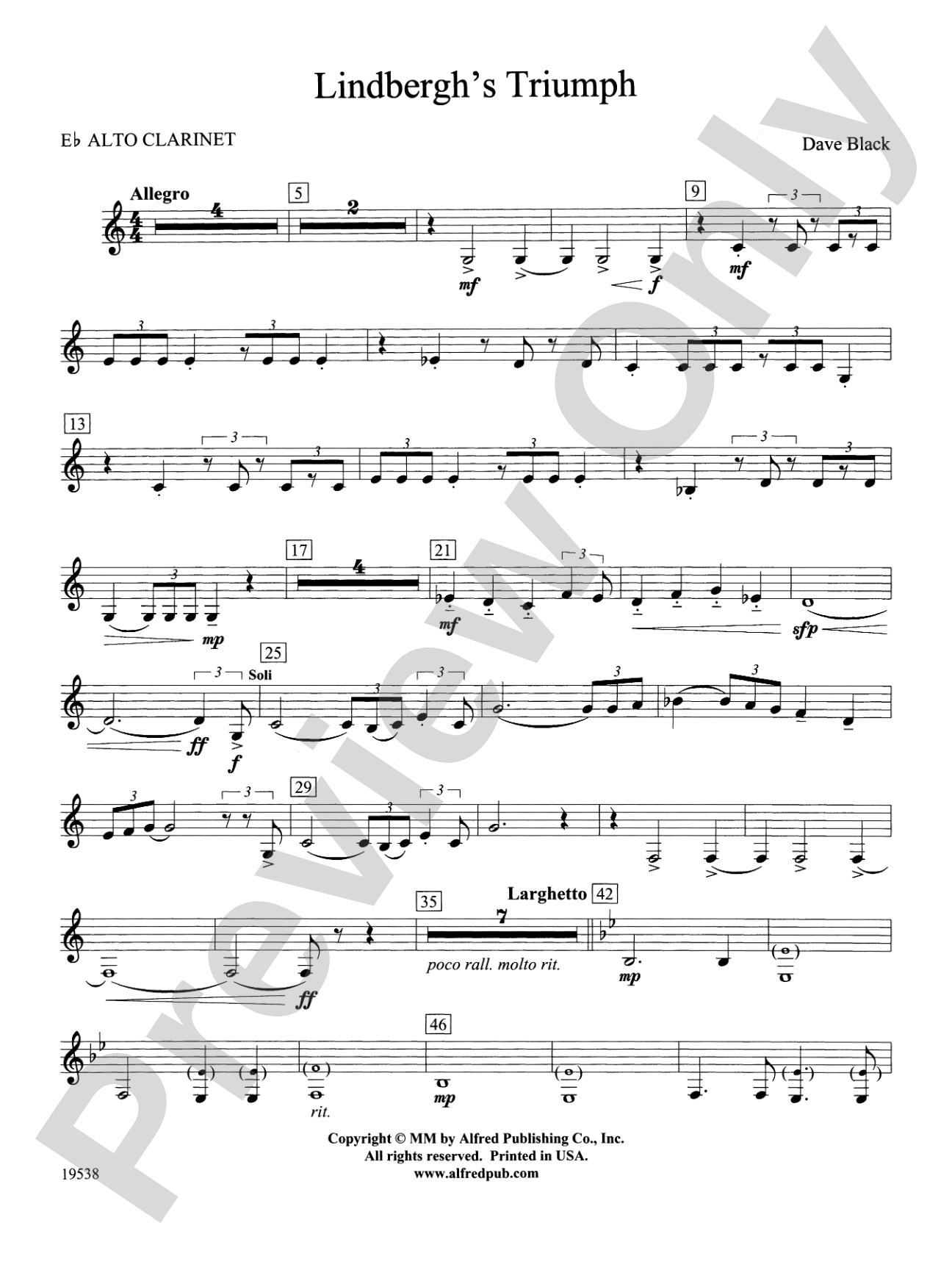

Lindbergh's Triumph: E-flat Alto Clarinet
Music by Dave Black
Grade: 3 (Medium)
Item: 00-PC-0015274_AC1
$3.00
Pickup currently not available
Description
Lindbergh's Triumph is a musical tribute to the great American aviator, Charles A. Lindbergh. It opens with a powerful "Allegro" section, depicting the flurry of excitement as the Spirit of St. Louis rises from Roosevelt Field in New York. This is followed by the lush and beautiful "Andante" middle section, which represents the quiet serenity and stillness of Lindbergh's 15-hour crossing over the Atlantic Ocean. The anticipation and thrill of the landing at Le Bourget Airfield in Paris is brought to life with a recapitulation of the opening theme, bringing the historic journey to an exciting end. Your next concert will be sure to take flight when you open it with Lindbergh's Triumph!


Don't just read it, hear it, play along with it, and watch your students grow with it. In MakeMusic Cloud, Lindbergh's Triumph: E-flat Alto Clarinet comes alive with professional accompaniment, adjustable tempo, and built-in practice tools that turn solo practice into real progress.
Open in the Player
Jump straight in and assign it today.
Start Your Free Trial
Open this title and explore the full library in minutes.
Sample Audio
1
Audio File
--:--
0:00
0:00
Sample Video
No sample videos found.
Additional Details
Series:
Alfred Concert Band
Publisher:
Alfred Music
Page Count:
272
SKU:
00-PC-0015274_AC1
More about this title
About the Composer: Dave Black

Dave Black brings decades of professional performance experience to his compositions. A percussionist trained at California State University, Northridge, he has performed and recorded with major entertainers and touring productions worldwide, translating that real-world musicality into his writing across multiple genres and ensembles.
With over 60 published works and two million units sold globally, Black stands among the most-performed educational composers today. His accolades include 26 consecutive ASCAP Popular Composer Awards, GRAMMY participation certificates, the Percussive Arts Society President's Industry Award, and recognition from Modern Drummer and Drum! Magazine. His educational materials, particularly Alfred's Drum Method, have become standard resources in music programs everywhere.
Why we love this
Black captures a vivid narrative arc in just a few minutes, giving Grade 3 bands a piece with genuine dramatic stakes and memorable contrasts. The structure (takeoff, crossing, landing) gives conductors clear interpretive handles, and students hear how orchestration and tempo can tell a story without words.
What to expect
The piece captures the romance of early aviation through contrasting musical moods. The driving Allegro crackles with energy and excitement, the Andante settles into quiet reflection and dreamlike serenity, and the final return ignites the triumph of arrival with renewed vigor.
Who it's for
Grade 3 concert bands seeking accessible repertoire with genuine musical substance and a strong narrative hook. Conductors programming concert or festival events will find this appeals to audiences of all ages while remaining well within the technical reach of developing ensembles.
How to get the most out of it
- Bring intensity to the opening Allegro by locking the articulation in the brass and woodwinds; rhythmic clarity in the early measures sets up the sense of urgency as the Spirit of St. Louis launches.
- Shape the Andante with long, connected phrasing to evoke the tranquility of the Atlantic crossing; resist the urge to rush, and let younger musicians experience what sustained lyricism feels like.
- Use the recapitulation as a chance for dynamic lift; students are now familiar with the theme, so push slightly harder into the landing sequence to create forward momentum toward the climax.
How to use it
Open a concert with this piece to establish an engaging theme that immediately draws audience attention. Its moderate length and narrative clarity also make it an ideal choice for festival competitions where you want students to perform something memorable and musically coherent.
Skills your students will build
- Contrasting articulation and phrasing between fast and slow sections
- Dynamic shaping and control during sustained melodic passages
- Reading and executing tempo changes and recapitulation structure
- Ensemble balance when transitioning between thematic material and accompaniment roles