
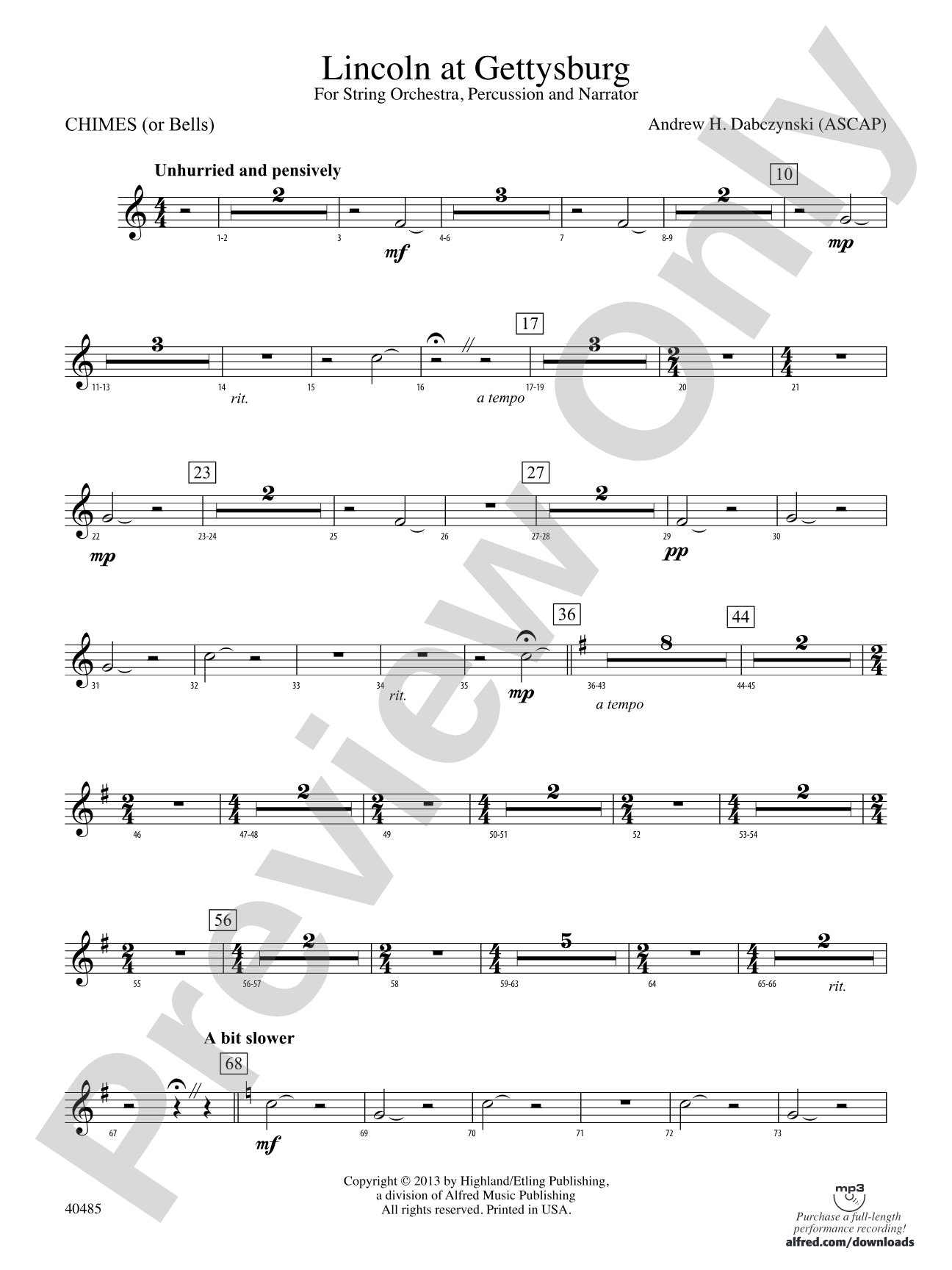

Lincoln at Gettysburg: Chimes
For String Orchestra, Percussion and Narrator
By Andrew H. Dabczynski
Grade: 2.5
Item: 00-PC-0016017_CH
$5.99
Pickup currently not available
Description
Written to commemorate the 150th anniversary of the Gettysburg Address, this piece is a guaranteed centerpiece for any orchestra concert. This imaginative original work for string orchestra, narrator, and percussion conveys the intense emotional and patriotic drama of Lincoln's most famous words, including events leading to the speech. Recalling several Civil War-era melodies, the music complements a richly descriptive narration---offering opportunities to involve guest speakers in the concert---and culminates in a moving finale that will bring the audience to its feet.


Don't just read it, hear it, play along with it, and watch your students grow with it. In MakeMusic Cloud, Lincoln at Gettysburg: Chimes comes alive with professional accompaniment, adjustable tempo, and built-in practice tools that turn solo practice into real progress.
Open in the Player
Jump straight in and assign it today.
Start Your Free Trial
Open this title and explore the full library in minutes.
Sample Audio
1
Audio File
--:--
0:00
0:00
Sample Video
No sample videos found.
Additional Details
Series:
Highland/Etling String Orchestra
Publisher:
Alfred Music
Page Count:
140
SKU:
00-PC-0016017_CH
More about this title
About the Composer: Andrew H. Dabczynski
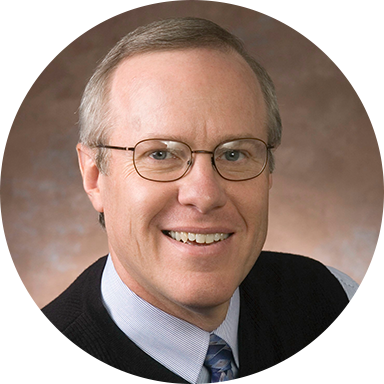
Andrew H. Dabczynski shaped string education across multiple institutions and leadership roles. He founded BYU's "New Horizons Orchestra," a program for adult beginners that became a model for string teacher training, earning him the Joseph E. White Fellowship for Teaching and Learning. His career includes teaching positions at the Eastman School of Music, public school directorships in New York and Michigan, and adjunct faculty work at numerous colleges and national string workshops. He served in various leadership capacities with the American String Teachers Association and received Utah ASTA's "Higher Education Teacher of the Year" award in 2005 and their "Outstanding Contributions to Music Education" honor in 2014.
As a viola performer, Dabczynski played in professional orchestras including the Rochester Philharmonic, Hartford Symphony, Portland Symphony, and Kalamazoo Symphony, and was a six-year member of the Colden String Quartet at Western Michigan University. He holds degrees from the Eastman School of Music (B.M. in viola performance), the University of Connecticut (M.A., where he performed in the graduate string quartet), and the University of Michigan (Ph.D. in Music Education). His pedagogical expertise appears in the widely used String Explorer method series, co-authored with Alfred Music, and his scholarly interests extend to folk music and ethnomusicology, particularly fiddling traditions.
Why we love this
This score balances historical weight with accessible writing for intermediate orchestras. The integration of narrator, Civil War-era melodies, and straightforward string parts creates a concert experience that feels both substantial and achievable, with built-in appeal for community engagement and special programming.
What to expect
The piece unfolds with earnest orchestral storytelling, weaving period melodies into a larger arc that builds toward emotional and patriotic resonance. The narrator's voice becomes a counterpart to the ensemble, lending gravitas to the historical subject, while the strings support the narrative with sympathetic harmonic language and a finale designed to leave audiences moved.
Who it's for
String orchestras at the intermediate level, community orchestras with guest speaker access, and schools seeking substantial patriotic or historical programming for summer concerts. Directors programming 4th of July or Civil War anniversary performances will find this work both musically rewarding and contextually appropriate.
How to get the most out of it
- Coordinate closely with your narrator during rehearsals. Mark conductor cues in the narration script so the speaker understands exactly where orchestral entries and transitions occur.
- Balance the strings' thematic material against the percussion parts, which anchor the piece's dramatic arc. Ensure timpani and other percussion don't overwhelm the sustained harmonic foundation.
- Consider the acoustic demands of your performance space when working with the narrator. A microphone may help blend the spoken word with orchestral sound, particularly for larger venues.
- Use the climactic finale to build genuine emotional momentum. Encourage sustained, expressive playing in the upper voices during the culminating passage to achieve the "moving finale" the score intends.
How to use it
Program this as a concert centerpiece or closing work, where the narrator can introduce Lincoln's words and the historical context. The patriotic theme and guest speaker element make it especially valuable for summer pops concerts, 4th of July celebrations, or school assemblies centered on American history.
Skills your students will build
- Following a narrator's pacing and coordinating ensemble entries with spoken text
- Sustaining emotional intensity across longer formal structures
- Balancing string voices while maintaining clarity alongside percussion parts
- Recognizing and interpreting Civil War-era melodic references
- Performing exposed passages in the first violin section with confidence and expressiveness