Lincoln at Gettysburg Cover Image

Lincoln at Gettysburg: String Orchestra Conductor Score & Parts

$55.00 USD
Sale price  $55.00 USD Regular price 
Skip to product information
Lincoln at Gettysburg Cover Image

Lincoln at Gettysburg: String Orchestra Conductor Score & Parts

For String Orchestra, Percussion and Narrator

By Andrew H. Dabczynski

Grade: 2.5

Item: 00-40485

makemusic Cloud badge

Need it now?

Buy Digital Version
$55.00
Shipped

One moment…

Description
Written to commemorate the 150th anniversary of the Gettysburg Address, this piece is a guaranteed centerpiece for any orchestra concert. This imaginative original work for string orchestra, narrator, and percussion conveys the intense emotional and patriotic drama of Lincoln's most famous words, including events leading to the speech. Recalling several Civil War-era melodies, the music complements a richly descriptive narration---offering opportunities to involve guest speakers in the concert---and culminates in a moving finale that will bring the audience to its feet.

Don't just read it, hear it, play along with it, and watch your students grow with it. In MakeMusic Cloud, Lincoln at Gettysburg: String Orchestra Conductor Score & Parts comes alive with professional accompaniment, adjustable tempo, and built-in practice tools that turn solo practice into real progress.

Sample Pages

Sample Audio
0:00
0:00
Sample Video
Additional Details
Series: Highland/Etling String Orchestra
Publisher: Alfred Music
Page Count: 140
UPC: 038081456416
SKU: 00-40485

More about this title

About the Composer: Andrew H. Dabczynski
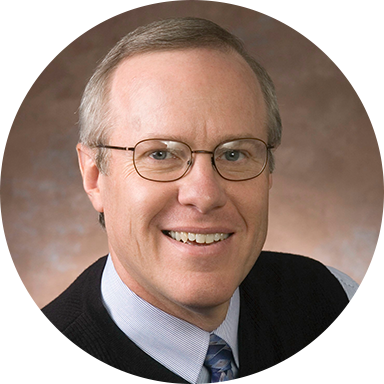
Andrew H. Dabczynski

Andrew H. Dabczynski has shaped string education across multiple institutions and roles. He founded and directed the BYU "New Horizons Orchestra" at Brigham Young University, where he served as Emeritus Professor of Music Education and developed innovative training programs for string teachers. His contributions earned him BYU's Joseph E. White Fellowship for Teaching and Learning, and Utah ASTA recognized him as Higher Education Teacher of the Year in 2005 and again in 2014 for outstanding contributions to music education.

Dabczynski's career spans teaching positions at the Eastman School of Music and public school districts in New York, as well as supervisory roles in Michigan. As a performer, he has played viola with regional orchestras including the Rochester Philharmonic, Hartford Symphony, and Portland Symphony, and was a member of the Colden String Quartet at Western Michigan University for six years. His scholarship focuses on string pedagogy and folk music traditions, and he co-authored the String Explorer method series with Alfred. He holds degrees from Eastman (B.M. in viola performance), the University of Connecticut (M.A.), and the University of Michigan (Ph.D. in Music Education).

Why we love this

Dabczynski crafts a sophisticated yet accessible way to bring American history into the concert hall. The combination of strings, narrator, and percussion creates multiple entry points for student engagement; younger orchestras play meaningful literature while experienced speakers deliver the Gettysburg Address, and the piece naturally invites guest narrators from your community. The musical references to Civil War-era melodies ground the work in authentic historical sound without requiring students to navigate complex contemporary idioms.

What to expect

The music moves between reflective passages that honor the gravity of Lincoln's words and more energized sections that capture the turbulent events preceding Gettysburg. Familiar Civil War-era melodies emerge within the original harmonic language, creating moments of recognition and emotional resonance that build toward a powerful, anthemic conclusion.

Who it's for

This work belongs in the repertoire of intermediate string orchestras seeking meaningful concert programming that engages both musicians and audiences. Directors can use it to involve community speakers and create interdisciplinary learning opportunities that connect music to history and civic engagement.

How to get the most out of it

  • Coordinate carefully with your narrator during rehearsals. The text and music are interdependent, so the narrator must understand the emotional arc of each section and match pacing to the orchestral accompaniment.
  • Balance the percussion strategically; these instruments punctuate key moments and carry historical weight, so they should enhance rather than overshadow the strings during passages featuring the narration.
  • Shape the finale with dynamic control and ensemble unity. The piece builds toward a culminating moment meant to move the audience, which requires precise attention to crescendi and unified articulation across all string sections.
  • Rehearse the Civil War-era melodic references distinctly so the audience recognizes them. These moments are narrative anchors, and clarity here strengthens the historical storytelling.

How to use it

Program this as a concert centerpiece that naturally anchors a thematic evening around American history or patriotic observance. The 140-page full score with parts makes it substantial enough to justify significant rehearsal time, and its Grade 2.5 difficulty allows intermediate orchestras to tackle it as a flagship work without overshadowing lighter opening pieces.

Skills your students will build

  • Ensemble balance between strings and percussion accompaniment
  • Coordination with a non-musical narrator and responding to text-driven pacing
  • Recognition and performance of Civil War-era melodic references
  • Shaping longer phrases with dynamic control and unified articulation
  • Understanding how orchestral music can serve narrative and historical purposes

You May Also Like
