Limehouse Blues: String Bass Sheet Music Preview

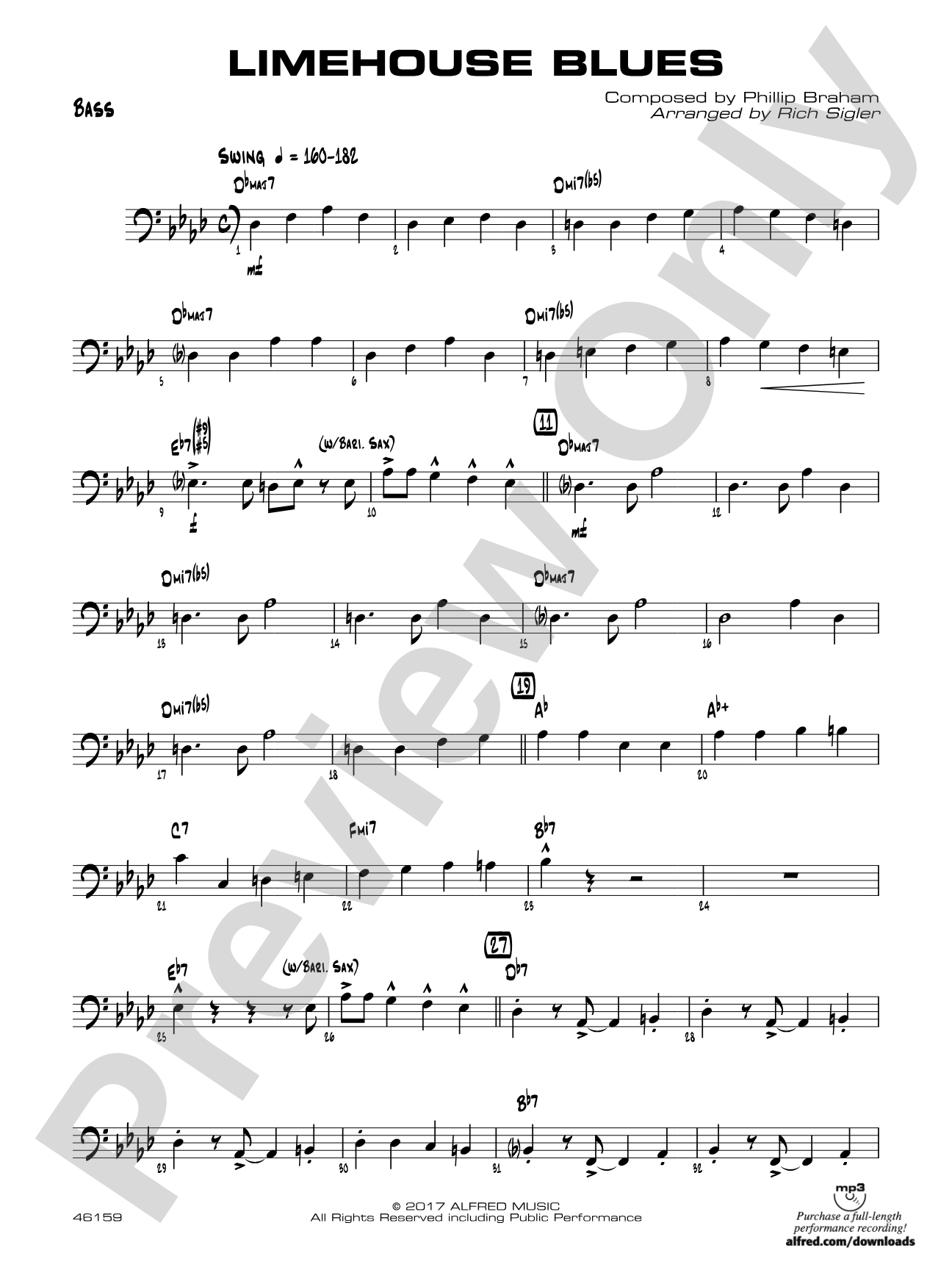
Limehouse Blues: String Bass

Composed by Phillip Braham / arr. Rich Sigler

Grade: 2 (Medium Easy)

Item: 00-PC-0017751_SB

Digital Download
$3.00
Description
A jazz standard scored to swing at around 185 BPM, this clever chart delivers from beginning to end. Interludes, great development, and a variety of nuances sustain interest throughout the arrangement. Add the well-written sample solos for tenor, a sweet shout chorus along with all the optional parts to include vibes---and you have a great chart! (3:50)

Don't just read it, hear it, play along with it, and watch your students grow with it. In MakeMusic Cloud, Limehouse Blues: String Bass comes alive with professional accompaniment, adjustable tempo, and built-in practice tools that turn solo practice into real progress.

Sample Audio
0:00
0:00
Sample Video
Additional Details
Series: Young Jazz Ensemble
Publisher: Alfred Music
Page Count: 102
SKU: 00-PC-0017751_SB

More about this title

About the Composer: Phillip Braham

Phillip Braham was a British composer and pianist active in the early 20th century, known for his work in musical theatre and popular song. "Limehouse Blues," composed in 1922 with lyrics by Douglas Furber, became one of his enduring contributions to jazz and popular music standards, recorded by countless artists across generations.

Why we love this

Rich Sigler's arrangement keeps the melody fresh and the energy propulsive without overwhelming a Grade 2 ensemble. The built-in tenor solo, optional vibes part, and shout chorus give every section something memorable to do, while the interludes and developmental passages prove you don't need advanced harmonic complexity to sustain musical interest over nearly four minutes.

What to expect

A swingin' night out in 1920s London, captured in brass stabs and walking bass. The arrangement balances playfulness with sophistication, moving effortlessly between intimate solo moments and full ensemble shouts, all at a tempo that feels energetic but manageable.

Who it's for

Directors building a Grade 2 jazz ensemble curriculum who want a recognised standard that sounds professional without requiring soloists at the advanced level. The accessible grade makes it ideal for emerging jazz programs, festival seasons, or pop concerts where you need a stylistically authentic piece that students can genuinely groove on.

How to get the most out of it

  • Establish the swing feel early in rehearsal; lock the rhythm section into that 185 BPM groove so soloists have a rock-solid foundation.
  • Balance the tenor solo against the ensemble so the soloist breathes and phrases like a real jazz musician, not a reader playing notes.
  • Use the shout chorus as a chance to build excitement; shape the dynamics so the ensemble pushes without losing articulation clarity.
  • If vibes are available, feature them in the interludes; if not, the arrangement stands completely on its own.

How to use it

Slot this into a jazz-focused concert where you want a crowd-pleasing standard that won't overshadow newer or more adventurous repertoire. It also works beautifully as a festival or contest piece, where the strong melodic material and clear arrangement give adjudicators something satisfying to hear while your students build confidence in the jazz idiom.

Skills your students will build

  • Swing articulation and phrasing in a jazz context
  • Reading lead sheets and improvised solo sections
  • Ensemble balance between soloist and ensemble accompaniment
  • Interpreting jazz articulation markings and style cues
  • Walking bass line execution and rhythm section cohesion

You May Also Like