Limehouse Blues Sheet Music Preview

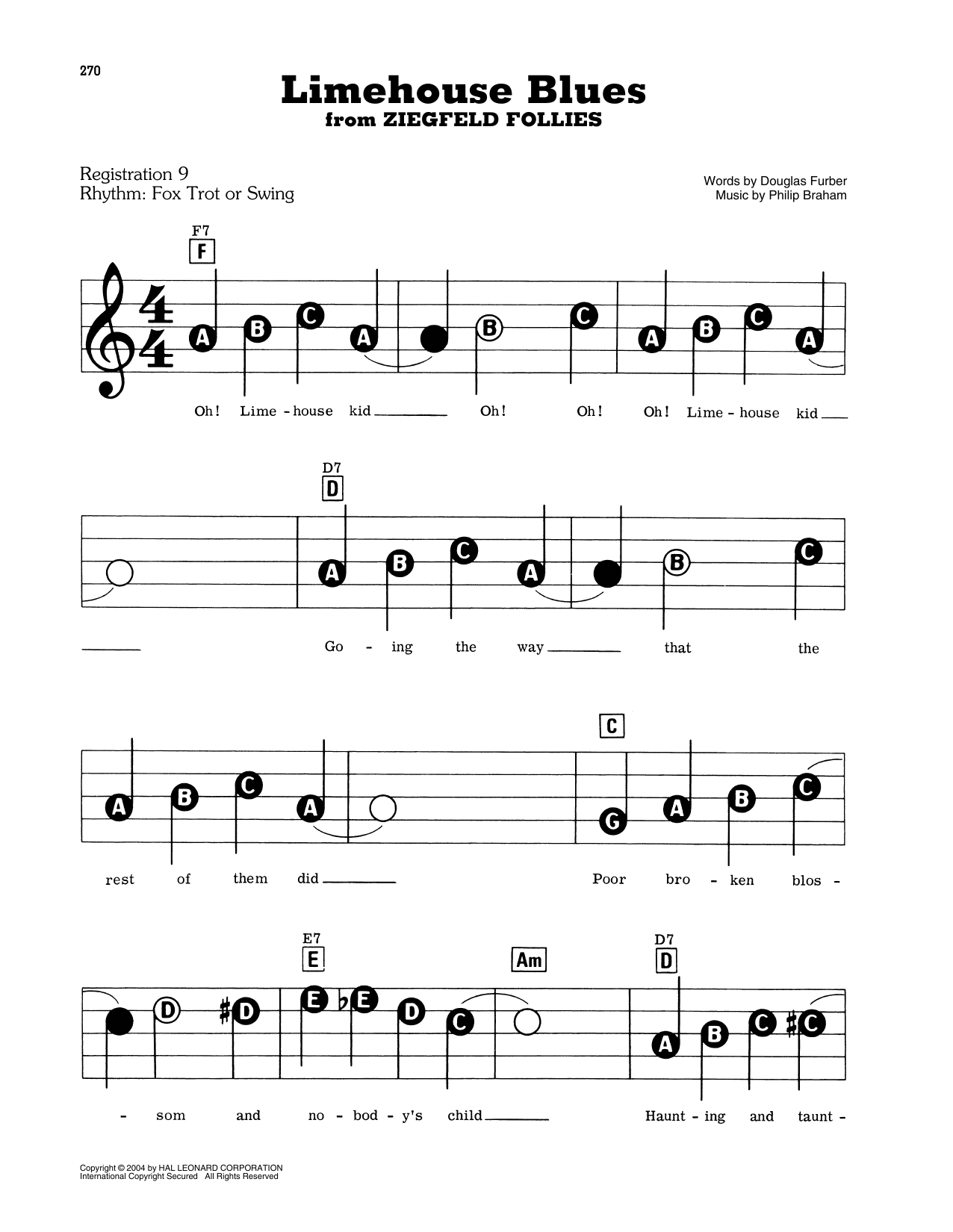
Limehouse Blues: E-Z Play Today

As performed by Douglas Furber

Item: 35-DS00454288

Digital Download
$4.99
Description

Limehouse Blues: E-Z Play Today isn't in MakeMusic Cloud just yet...but it could be. Let us know you'd like to see it, and you'll help shape what comes next. In the meantime, start a free trial and dive into thousands of interactive titles your students can play along with today.

Sample Audio
No sample audio found.
Sample Video
Additional Details
Publisher: Hal Leonard
Page Count: 2
SKU: 35-DS00454288

More about this title

About the Artist: Douglas Furber

Douglas Furber was a British songwriter and lyricist who composed some of the most enduring jazz standards of the early twentieth century. His collaboration with composer Philip Braham produced "Limehouse Blues," a piece that captures the sophistication and swagger of 1920s London jazz culture and remains a cornerstone of the jazz piano repertoire.

Why we love this

This arrangement distills the essential character of "Limehouse Blues" into a manageable two pages, making it genuinely playable for intermediate pianists without sacrificing the tune's chromatic sophistication and rhythmic vitality. The melody sits naturally under the hands while the harmonic language keeps things interesting, giving students a taste of authentic jazz vocabulary in a format that doesn't overwhelm.

What to expect

Sophisticated yet approachable, with the urban energy and chromatic color of 1920s London jazz. The piece swings with ease and carries a slightly edgy, confident character that rewards careful attention to phrasing and dynamics.

Who it's for

Intermediate piano students who are ready to explore jazz standards beyond basic lead sheets, and pianists building a small-ensemble or solo recital repertoire. It works equally well for jazz ensemble pianists needing a reliable comping reference or for serious amateur musicians seeking authentic period material.

How to get the most out of it

  • Let the eighth note feel breathe naturally; resist the urge to rush through the faster passages, as the blues phrasing depends on a relaxed, swinging pocket.
  • Shape the melodic line with deliberate dynamic contrast between the main theme and any accompanying figures to keep the ear engaged across two pages.
  • Treat chromatic passing tones as purposeful voice leading rather than throwaway notes; they're central to the blues idiom here.

How to use it

Pair this with other early jazz standards to build a short jazz history recital or use it as a solo break in a larger ensemble concert. It's substantial enough to anchor a jazz piano set but compact enough to fit naturally between classical or contemporary works.

Skills your students will build

  • Jazz swing phrasing and rhythmic feel
  • Chromatic voice leading and passing tone function
  • Blues harmonic movement and melody interaction
  • Reading and interpreting jazz notation conventions

You May Also Like