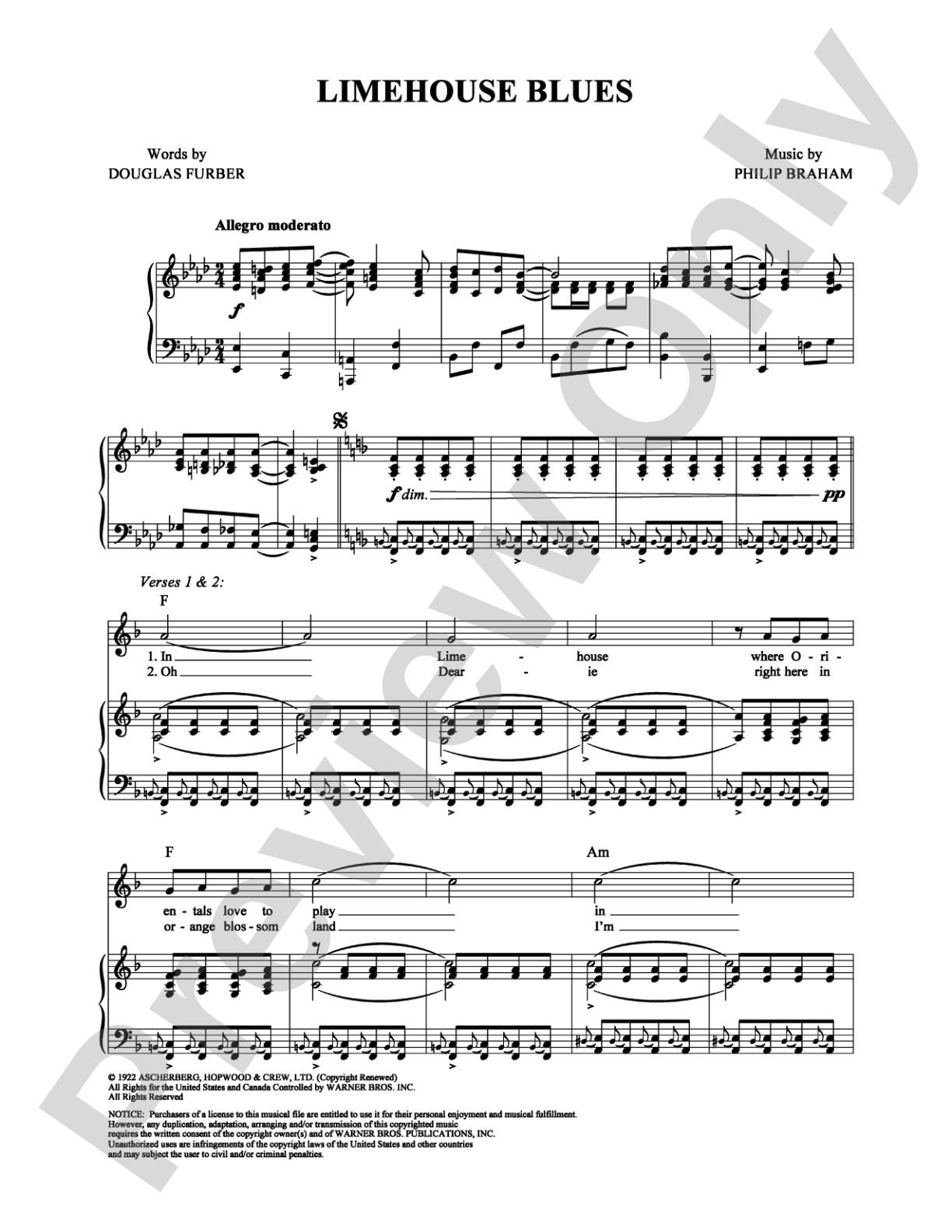
Limehouse Blues: Piano/Vocal/Chords Digital Sheet Music

Limehouse Blues: Piano/Vocal/Chords Digital Sheet Music

Philip Braham

Item: 00-PS-0006282

Digital Download
$3.99
Description

Limehouse Blues: Piano/Vocal/Chords Digital Sheet Music isn't in MakeMusic Cloud just yet...but it could be. Let us know you'd like to see it, and you'll help shape what comes next. In the meantime, start a free trial and dive into thousands of interactive titles your students can play along with today.

Sample Audio
No sample audio found.
Sample Video
Additional Details
SKU: 00-PS-0006282

More about this title

About the Creator

Limehouse Blues emerged from the British musical theater tradition of the 1920s, written by composer Philip Braham and lyricist Douglas Furber for the operetta "The Vagabond King" revival. The song became a jazz standard through instrumental versions and vocal interpretations that transformed its original theatrical context into something more intimate and improvisational.

The composition found particular resonance among jazz musicians who appreciated its chromatic harmonic movement and singable melodic line. What began as a London theater piece became a fixture in American jazz circles, recorded by countless artists across different eras and styles.

Why we love this

This arrangement captures the sultry, gin-joint atmosphere of 1920s London with conversational melody and sophisticated harmonies that sit perfectly for singers who can navigate jazz phrasing. The chord symbols make it instantly usable with rhythm section or as a standalone accompaniment, and the vocal line breathes naturally over a pianistic texture that supports without overwhelming.

What to expect

Dimly lit, smoky, and worldly. The opening pulls you into a scene of quiet intrigue, with the melody moving through blues-tinged phrases and the harmonic language suggesting minor keys and borrowed chords. It's restless and rhythmically clever, never settling into pure sweetness but instead offering urbane sophistication laced with melancholy.

Who it's for

Singers performing jazz standards in recital or cabaret settings, pianists building a repertoire of classic American songbook material, and performers pairing vocals with piano in intimate performance spaces. This works for both serious jazz vocalists and classical singers exploring crossover repertoire.

How to get the most out of it

  • Treat the triplet rhythms as conversational rather than metronomic; slight swing and rubato will bring out the bluesy character without losing shape.
  • The piano part works equally well as full realization or sparse comping depending on whether you're performing solo or with a jazz band.
  • Lean into the lyrical moments with legit singing technique, then shift into a more rhythmically grounded delivery during the syncopated passages to match the song's dual personality.

How to use it

Pair this with other standards from the same era to create a cabaret-style set, or use it as a stylistic contrast in a recital that explores American songwriting across decades. The modest accompaniment demands make it ideal for smaller venues or studio performances where the relationship between singer and pianist is central.

Skills your students will build

  • Jazz phrasing and swing rhythms
  • Reading and interpreting chord symbols
  • Navigating blues-inflected harmony
  • Vocal flexibility across lyrical and rhythmic textures
  • Piano comping and realization of jazz voicings

You May Also Like