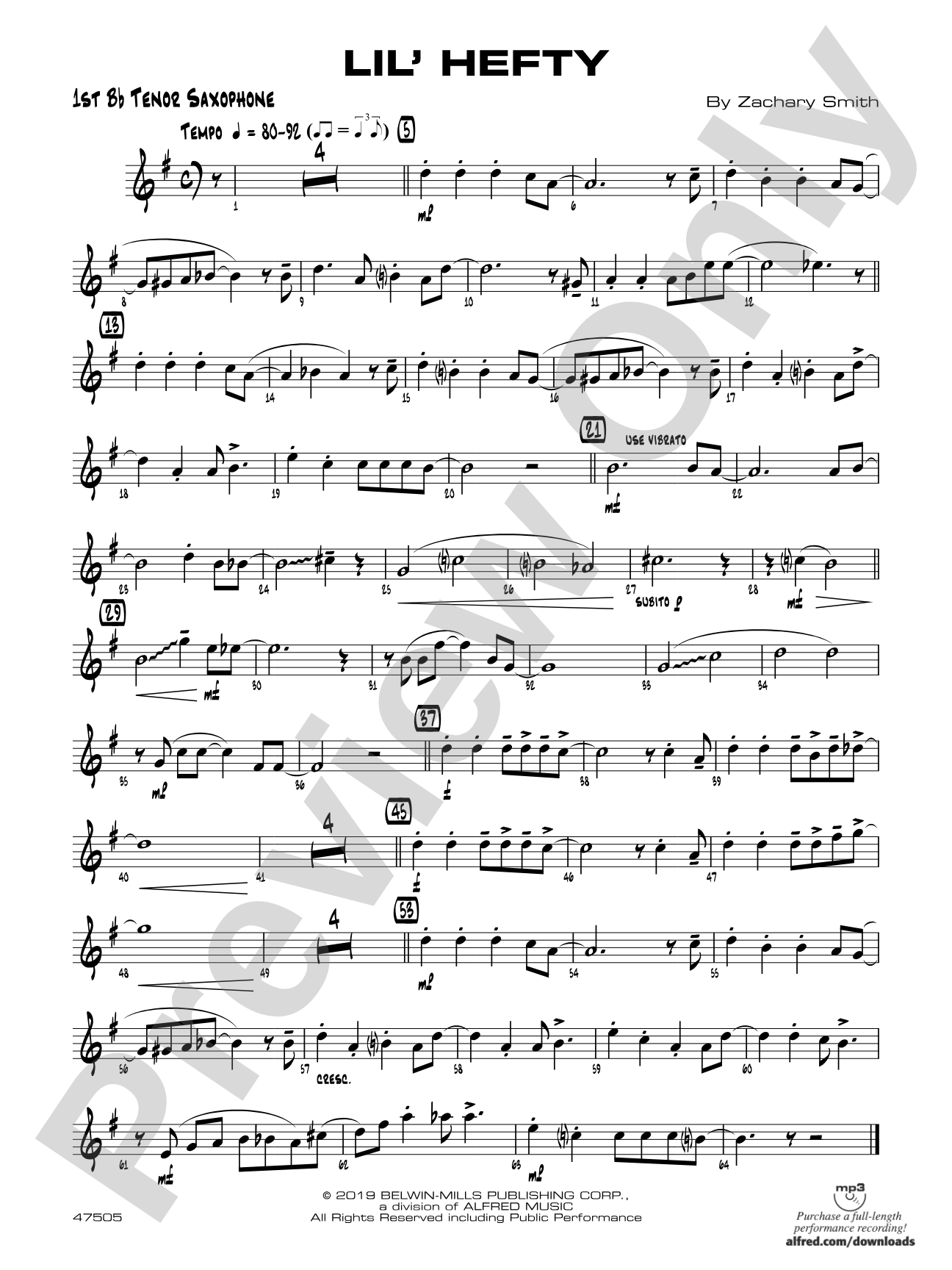
Lil' Hefty: B-flat Tenor Saxophone Sheet Music Preview

Lil' Hefty: B-flat Tenor Saxophone

By Zachary Smith

Grade: 1 (Easy)

Item: 00-PC-0018014_TX1

Digital Download
$3.00
Description
This moderately slow swing tribute is ideal for a young band. A melodic chart with the articulation well-notated, rhythm section parts written out, written melody solos for trumpet and piano. Trumpet 1 range to written G on top of the staff. Optional flute, clarinet, and vibes parts and playable with reduced instrumentation.

Don't just read it, hear it, play along with it, and watch your students grow with it. In MakeMusic Cloud, Lil' Hefty: B-flat Tenor Saxophone comes alive with professional accompaniment, adjustable tempo, and built-in practice tools that turn solo practice into real progress.

Sample Audio
0:00
0:00
Sample Video
Additional Details
Series: First Year Charts for Jazz Ensemble
Publisher: Alfred Music
Page Count: 48
SKU: 00-PC-0018014_TX1

More about this title

Why we love this

Smith writes with first-year jazz ensembles in mind, balancing genuine swing feel against realistic technical demands. The notated articulation does the pedagogical heavy lifting, showing students exactly how to voice this music rather than leaving it to guesswork. You get a chart that sounds confident and swings without asking your rhythm section to carry the whole ensemble.

What to expect

A genuine swing groove that sounds polished without pretension. The moderate tempo gives the ensemble room to breathe, and the written figures in the rhythm section create momentum that younger players can anchor themselves to. It feels like a real chart, not a simplified exercise.

Who it's for

First-year jazz ensemble directors building groups with mixed instrumentation and varied reading levels. Younger players comfortable with basic swing vocabulary but still developing solo confidence will thrive with the written melody parts. The optional flute, clarinet, and vibes parts give you flexibility as your roster evolves.

How to get the most out of it

  • Lock the tempo as a trio first. The rhythm section parts are written out, so work those lines separately before bringing in the horns. A solid pocket here makes everything else settle.
  • Mark the articulation patterns in each part and reinforce them during sectionals. Smith has notated these deliberately, and consistency across the section transforms the sound from tentative to cohesive.
  • Keep the dynamic shape understated. This is a moderately slow swing, not a power ballad. Resist the urge to push; let the rhythm section's written figures carry the momentum.
  • Feature the written melody solos as teaching moments. Have trumpet and piano work those lines separately so they understand the phrasing and landing points before full ensemble rehearsals.

How to use it

Open a winter concert or spring pops program with this one to showcase your ensemble's swing chops early and establish confidence before harder material. It pairs well on a program with blues heads or bebop standards where you want to demonstrate that your young players understand the genre fundamentals.

Skills your students will build

  • Reading and executing notated swing articulation
  • Understanding rhythmic figures in the rhythm section (bass, drums, piano comping)
  • Playing from written melody solos with phrasing and landing points
  • Balancing individual part detail with ensemble blend in a small group texture
  • Intonation in close voicings typical of jazz writing

You May Also Like