
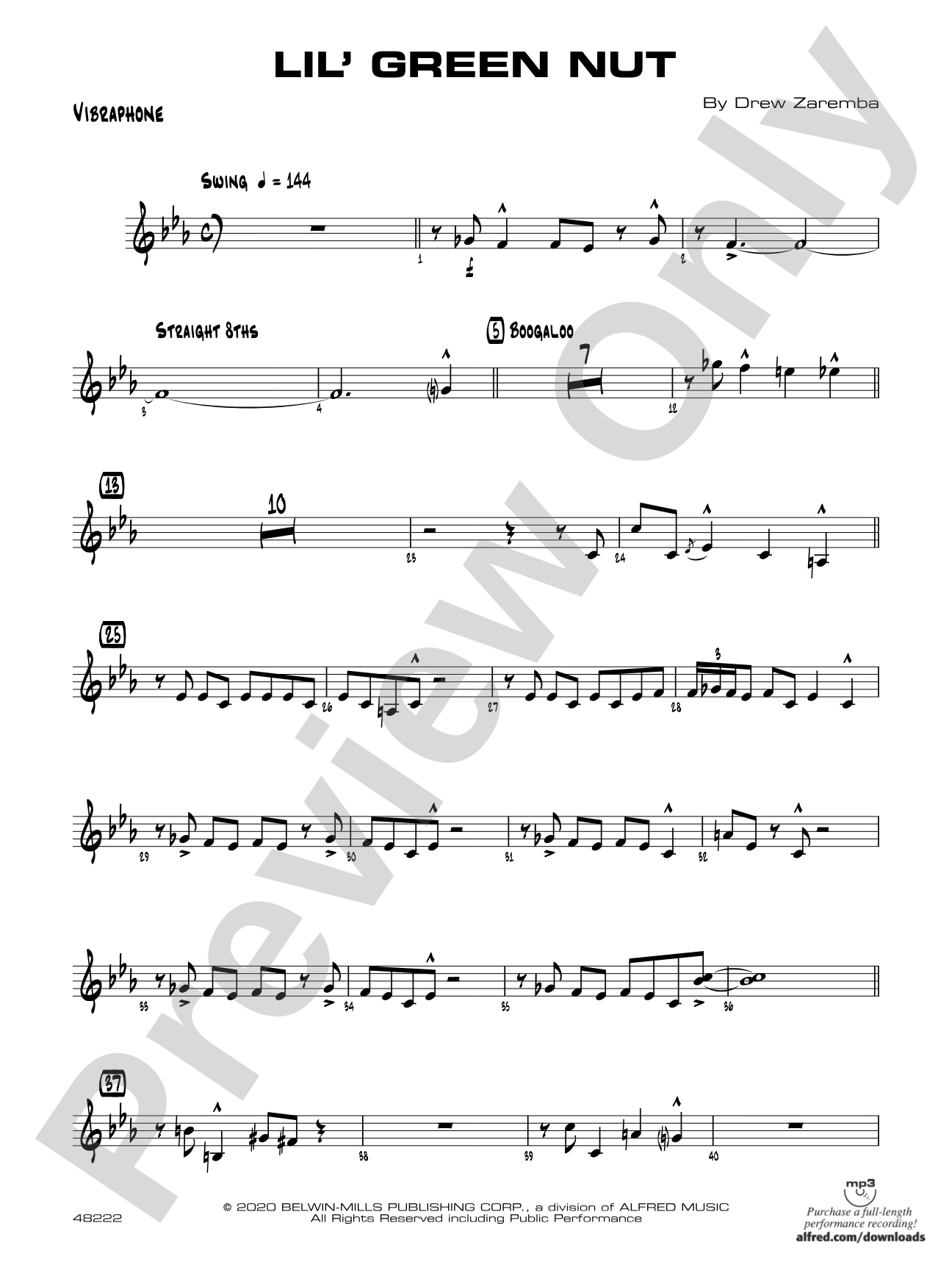

Lil' Green Nut: Vibraphone
By Drew Zaremba
Grade: 3.5 (Medium)
Item: 00-PC-0018595_V
$3.00
Pickup currently not available
Description
Lil' Green Nut by Drew Zaremba is a very exciting chart, alternating between a very funky boogaloo and swing. The tempo is around 144 BPM and the lead trumpet range is to written A above the staff (optional high D). Solos with suggested written lines provided for alto 1 and trombone 2. This chart will please! This title is available in MakeMusic Cloud. (5:52)


Don't just read it, hear it, play along with it, and watch your students grow with it. In MakeMusic Cloud, Lil' Green Nut: Vibraphone comes alive with professional accompaniment, adjustable tempo, and built-in practice tools that turn solo practice into real progress.
Open in the Player
Jump straight in and assign it today.
Start Your Free Trial
Open this title and explore the full library in minutes.
Sample Audio
1
Audio File
--:--
0:00
0:00
Sample Video
Additional Details
Series:
Jazz Band Series
Publisher:
Alfred Music
Page Count:
102
SKU:
00-PC-0018595_V
More about this title
About the Composer: Drew Zaremba

Drew Zaremba has built an international profile as a conductor, composer, and arranger working across classical and jazz idioms. His commissions span major orchestras and ensembles including the BBC Orchestra, Metropole Orkest, Dallas Symphony Orchestra, and the Airmen of Note. He has served on the faculty at the University of Northern Colorado since 2018, teaching jazz composition and arranging, and has recorded over twenty of his works with the University of North Texas Lab Bands.
Zaremba's creative reach extends beyond traditional jazz and orchestral writing. A significant project saw him spend two months in Zhuhai, China, creating a full concert program that merged Chinese opera with jazz idioms. His work has earned recognition including the 2018 Sammy Nestico Award and the Sherman/Barsanti Inspiration Award at UNT in 2015, reflecting both his compositional craft and his ability to inspire others through music.
Why we love this
The alternation between funky boogaloo and swing gives your ensemble two distinct musical personalities to navigate within a single chart, keeping players engaged and pushing their stylistic flexibility. The solo opportunities for alto 1 and trombone 2 come with suggested written lines, which means your section leaders have a secure starting point while still owning room for interpretation.
What to expect
Funkiness meets swing sophistication. The boogaloo sections have an infectious, earthy energy that gets audiences moving, while the swing passages show off cleaner articulation and more traditional jazz sensibilities. The whole piece swings with modern attitude.
Who it's for
Jazz ensembles at the Grade 3.5 level looking for repertoire that balances technical accessibility with genuine groove and style. Directors who want their students to explore the difference between boogaloo and swing feels in a single performance piece will find this chart hits that sweet spot.
How to get the most out of it
- Lock the pocket between rhythm section and melody early in rehearsal. The boogaloo sections demand a specific groove feel that hinges on how locked your drums, bass, and piano are with the front line.
- Check the lead trumpet's range expectations with your player before the first rehearsal. The written A above the staff sits comfortably for many players, but the optional high D cue gives your section a way to voice or flag if they need an alternative.
- Let your alto 1 and trombone 2 soloists own the suggested written lines as a rehearsal foundation, then encourage them to take liberties with phrasing and dynamics once the tune feels secure. These lines are scaffolding, not constraints.
- Mark the tempo shifts between boogaloo and swing sections clearly on all parts. The 144 BPM heading applies, but players need visual cues to anticipate the feel changes and nail the transitions.
How to use it
Perfect for a jazz-focused concert where you want to bookend lighter swing fare with something that has real groove and contemporary energy. It also works well as a feature piece for a spring or festival performance, where the combination of two distinct feels keeps the audience engaged across its nearly six-minute duration.
Skills your students will build
- Distinguishing and executing boogaloo and swing feels at tempo
- Rhythmic precision in a groove-based context
- Jazz articulation and phrasing appropriate to each style section
- Solo construction and interpretation using provided written lines as a foundation
- Section blend and cutoff precision during feel transitions