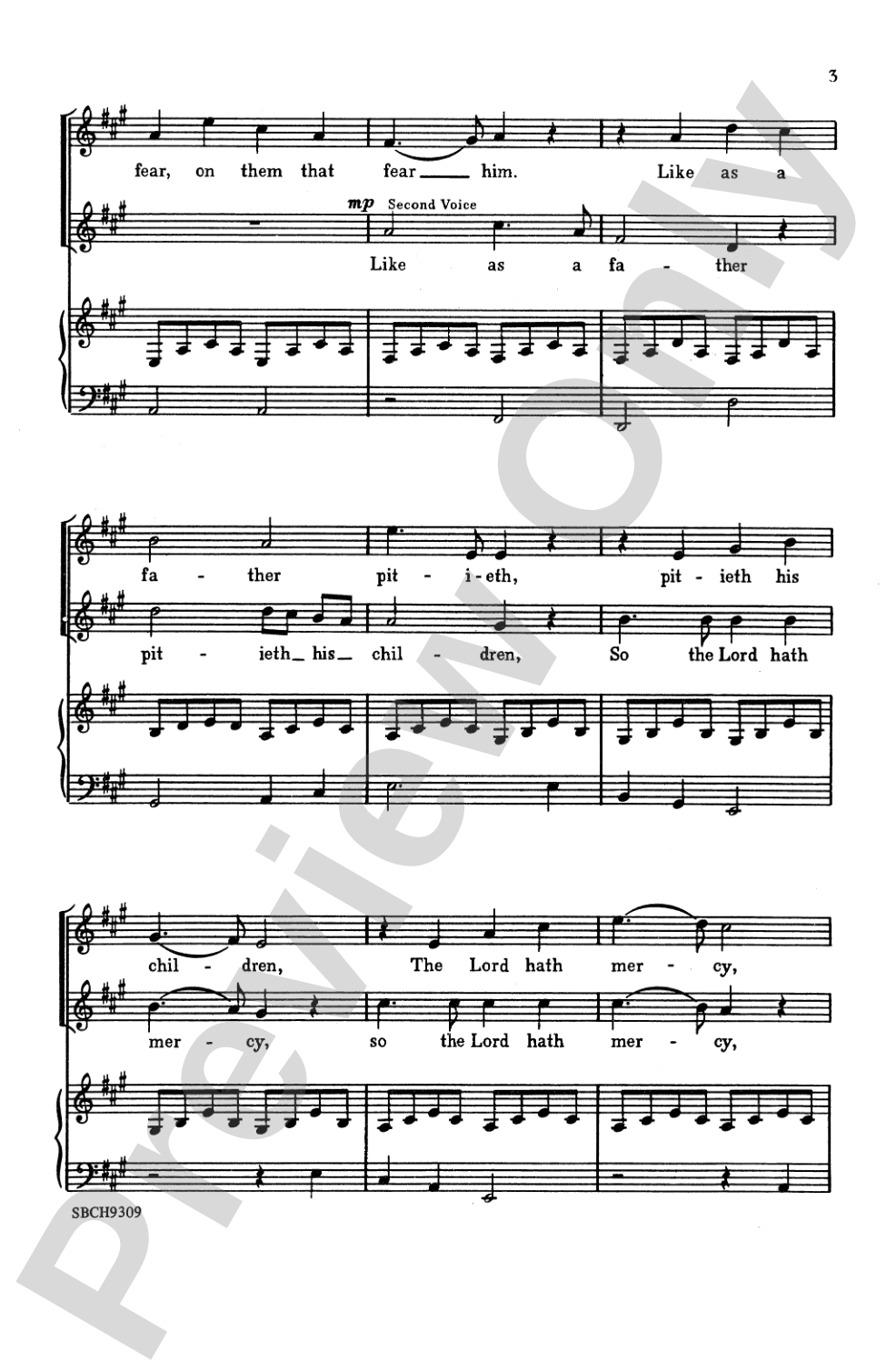
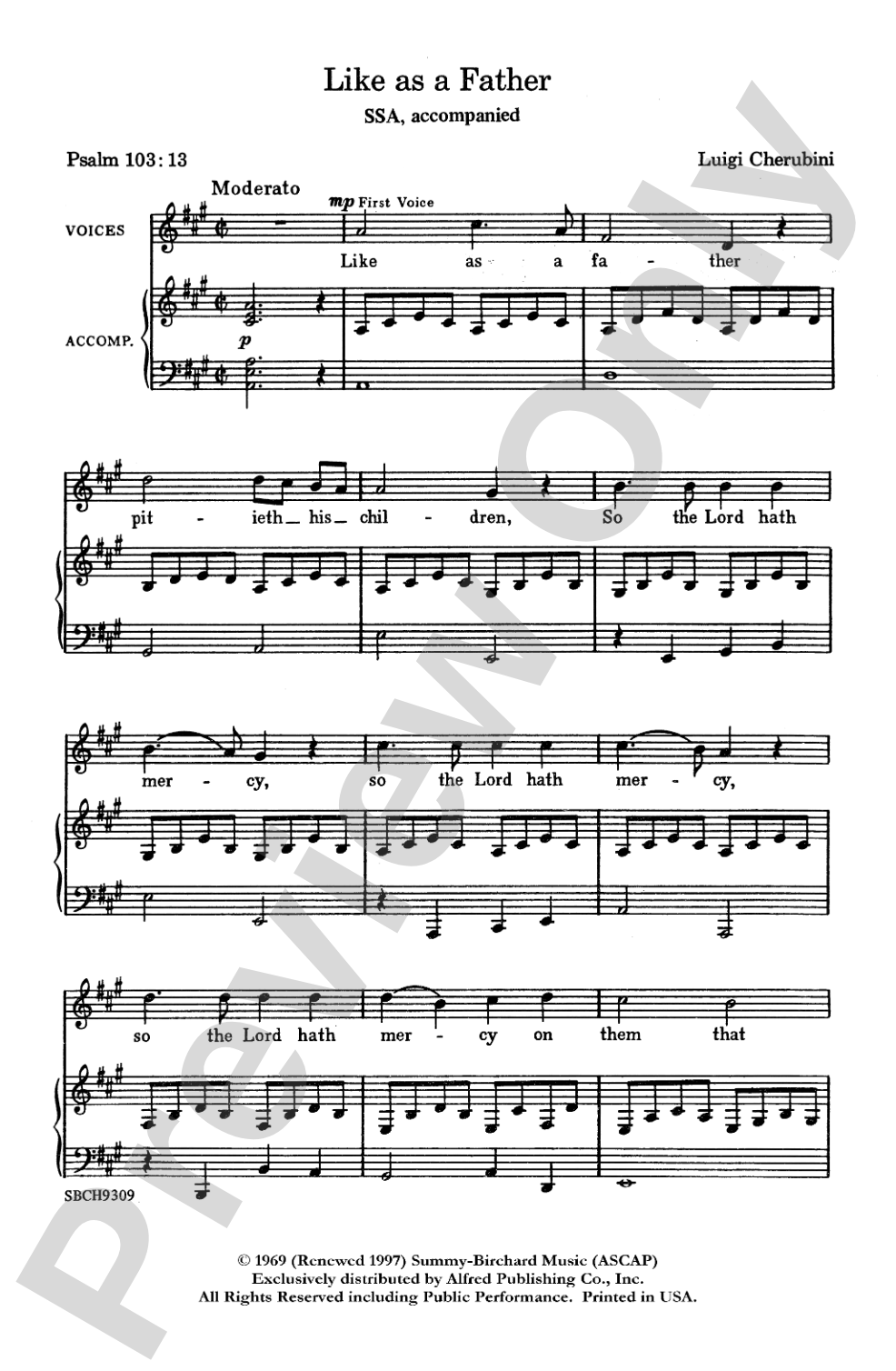
Like As a Father Sheet Music Preview

Like As a Father: SSA Choral Octavo

By Luigi Cherubini

Item: 00-PO-0002721

Digital Download
$2.25

Minimum order quantity: 20 copies

Description
This title is available in Music Prodigy.

Like As a Father: SSA Choral Octavo isn't in MakeMusic Cloud just yet...but it could be. Let us know you'd like to see it, and you'll help shape what comes next. In the meantime, start a free trial and dive into thousands of interactive titles your students can play along with today.

Sample Audio
No sample audio found.
Sample Video
Additional Details
Series: Alfred Archive Edition: Summy-Birchard Catalog
Publisher: Alfred Music
Page Count: 8
SKU: 00-PO-0002721

More about this title

About the Composer: Luigi Cherubini

Luigi Cherubini (1760-1842) was one of the most respected composers of his generation, bridging the Classical and Romantic eras with a gift for dramatic, emotionally direct writing. Born in Florence and trained in the Italian tradition, he achieved international prominence through his operas and sacred works, eventually serving as director of the Paris Conservatoire. His choral writing combines rigorous counterpoint with genuine expressiveness, making his sacred music enduringly valuable for choirs seeking substantial repertoire with real musical weight.

Cherubini's sacred compositions reveal a composer uninterested in surface piety. His harmonies move with purpose, his voice leading rewards singers who listen to each other, and his melodies sit naturally in the voice while avoiding easy sentimentality. For educators, his work represents an opportunity to study serious compositional craft within an idiom students recognize as genuinely sacred.

Why we love this

This octavo delivers authentic Classical-Romantic sacred writing without requiring instrumental accompaniment or excessive rehearsal time for strong results. Cherubini's harmonic language is sophisticated enough to command respect from judges and audiences while remaining accessible to SSA choirs with solid musicianship. The work belongs in festival rotations precisely because it offers substance and distinction rather than familiar comfort.

What to expect

Reverent without sentimentality, the work unfolds with the patient dignity of a Classical prayer. Cherubini's harmonies, neither predictable nor jarring, create a sense of spiritual earnestness. The writing feels inevitable once heard, as if this is simply how the text should sound.

Who it's for

This piece suits advanced secondary and collegiate SSA choirs with secure intonation and the ability to balance three independent lines. It also works well for community and church choirs whose members have prior choral experience and can handle moderate vocal range demands. Directors preparing singers for festival competition or sacred music recitals will find it rewarding.

How to get the most out of it

  • Establish clarity in the soprano line first; it carries the primary melodic responsibility and anchors the other voices' entrances and phrase shapes.
  • Balance the inner parts (altos and second sopranos) equally with the top line. Cherubini expects all three voices to be heard distinctly, not to merge into a single mass.
  • Shape phrases by the text rather than by bar lines. Allow slight rubato and natural breathing room at textual punctuation points to avoid a mechanical, metered feel.
  • Pay particular attention to harmonic rhythm and voice-leading smoothness in slower passages; even small intonation wobbles become audible when vertical sonorities change slowly.

How to use it

Program this alongside lighter, more contemporary sacred works to demonstrate range and historical depth, or feature it as a standalone offering in a concert devoted to Classical sacred repertoire. It also serves as a finishing piece for a set, leaving audiences with something substantial and genuinely musical. Consider it for a festival appearance where you want to distinguish your choir through repertoire choice.

Skills your students will build

  • Independent voice-leading and balance in three-part writing
  • Singing against sustained harmonies without drifting in pitch
  • Shaping long melodic lines with text-based phrasing rather than mechanical breathing
  • Listening to harmonic movement and adjusting vowel placement for blend
  • Reading and interpreting Classical-era musical style and articulation

You May Also Like