

Lift Up Your Voice, Alleluia: 2-Part Choral Octavo
Music by Sally K. Albrecht
Item: 00-PO-0002840
$2.25
Minimum order quantity: 20 copies
Pickup currently not available
Description
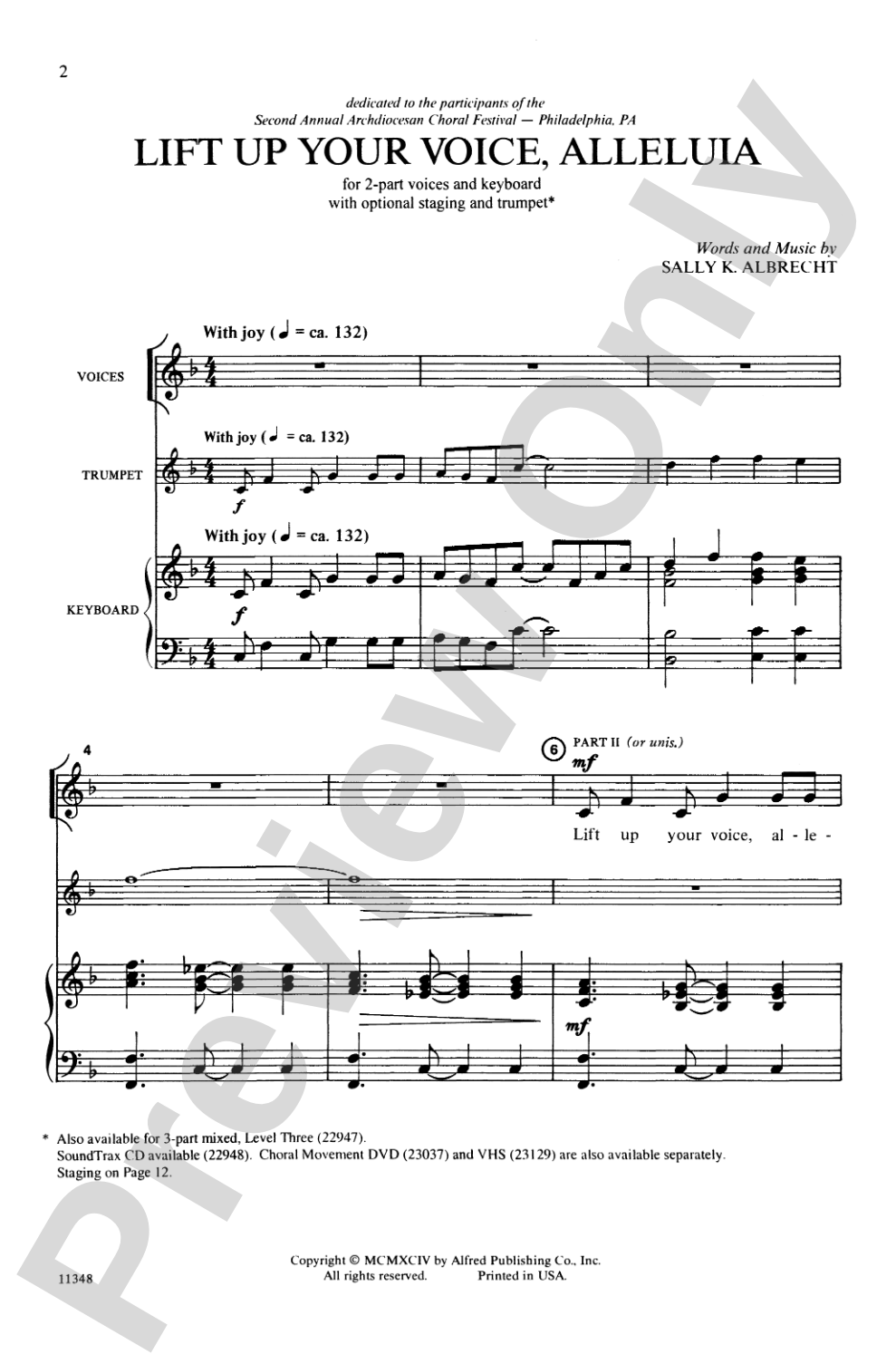
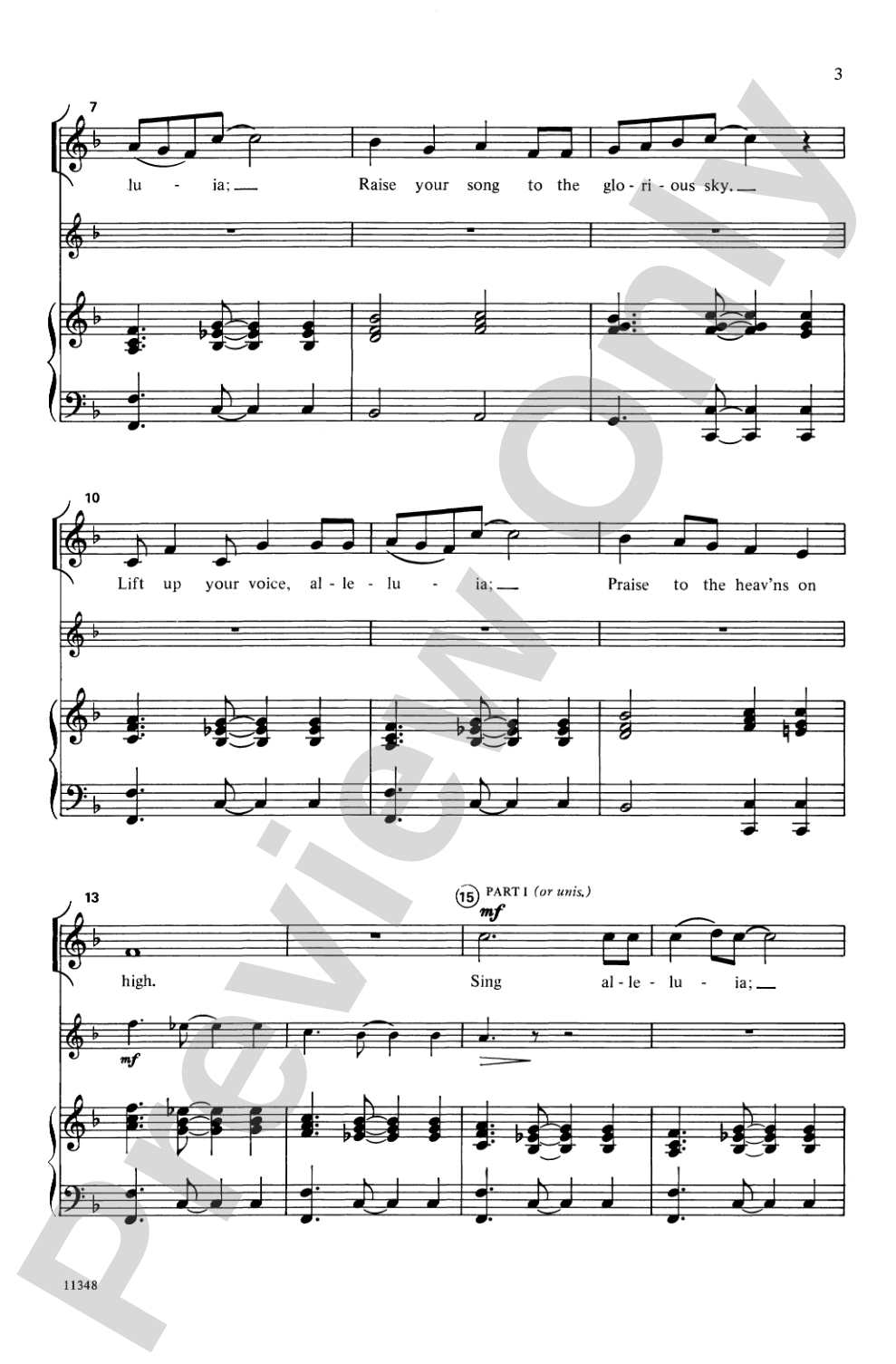
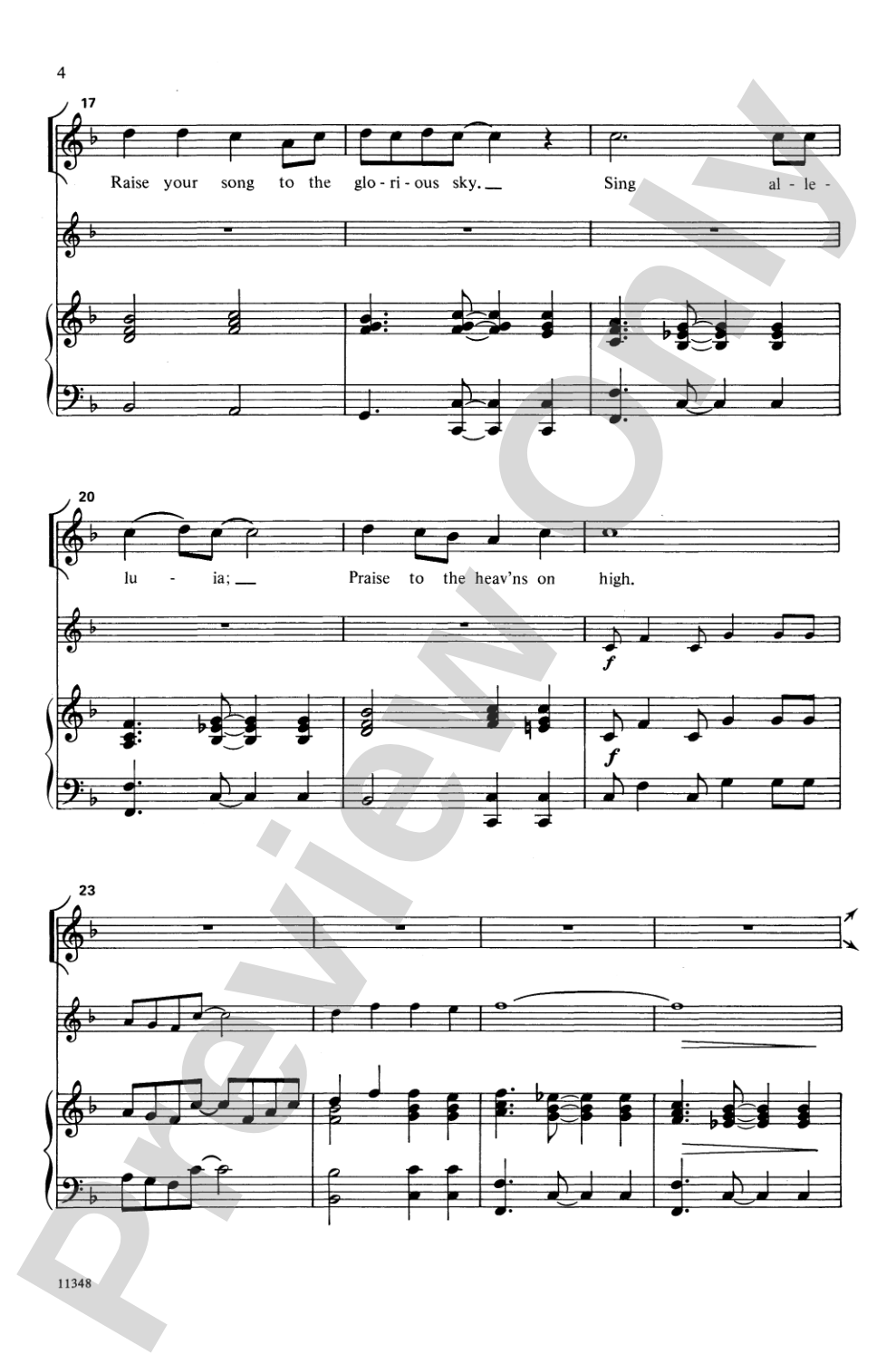
Here's a fine 2-part choral work from Sally Albrecht, written in a partner-song format, which makes it ideal for young choirs. The text is general and secular, but the optional Christmas text makes the piece suitable for concerts year 'round. An optional trumpet part (included in the publication) is easy, but so effective, and there's an optional, lower, third part on the final chorus. Featured on the new staging DVD/Video "On the Stage!" (DVD #23037, Video #23129).


Lift Up Your Voice, Alleluia: 2-Part Choral Octavo isn't in MakeMusic Cloud just yet...but it could be. Let us know you'd like to see it, and you'll help shape what comes next. In the meantime, start a free trial and dive into thousands of interactive titles your students can play along with today.
Request This Title
Tell us you want it.
Start Your Free Trial
Explore everything that's ready to play right now.
Sample Audio
1
Audio File
--:--
0:00
0:00
Sample Video
No sample videos found.
Additional Details
Series:
Alfred Archive Edition: Alfred Choral Designs
Publisher:
Alfred Music
Page Count:
12
SKU:
00-PO-0002840
Instrumentation:
Opt. Trumpet
More about this title
About the Composer: Sally K. Albrecht

Sally K. Albrecht brings three decades of experience as a choral composer, conductor, and clinician to her prolific catalog of over 600 published works. Recognized annually since 1987 with the ASCAP Special Music Award, she has shaped choral music education through her tenure as Director of School Choral, Vocal, and Elementary Publications for major educational publishers, most recently Alfred Music. Her work spans honor choirs at prestigious venues including Lincoln Center, Carnegie Hall, and The Kennedy Center.
Albrecht holds degrees from Rollins College (B.A. in Music and Theater, 1976), the University of Miami (M.A. in Drama, 1977; M.M. in Accompanying, 1979), and has taught at Oakland University, Jersey City State College, and Meredith College. A distinguished alumna of both the University of Miami Frost School of Music and Rollins College, she serves on Rollins' Board of Trustees and currently resides in North Carolina with her husband, composer and arranger Jay Althouse.
Why we love this
Albrecht's gift for writing singable, accessible melodies shines here, and the partner-song format creates natural independence between the two parts without requiring advanced score-reading skills. The optional trumpet part transforms the piece with minimal rehearsal effort, while the optional third part on the final chorus gives you flexibility to expand your voicing for climactic moments. Young choirs benefit from her structural clarity and her understanding of what words and gestures can accomplish together.
What to expect
This piece radiates warmth and invitation. The partner-song melody allows two voices to weave together with gentle independence, creating a sense of dialogue and partnership rather than hierarchy. Whether performed with the general text or the optional Christmas setting, there's a sense of gathered celebration that feels both intimate and joyful.
Who it's for
Young choirs benefit most from this piece, whether in middle school, early high school, or youth ensemble settings where singers are developing independence and musicianship. The 2-part voicing and partner-song structure invite confident participation from learners at varied singing levels while keeping everyone engaged. Directors seeking approachable repertoire with flexible instrumentation and movement options will find this a practical addition to their repertoire.
How to get the most out of it
- Rehearse the two parts separately first, then combine them as a round-style partner song to reinforce that each melody stands on its own and supports the other without doubling.
- If adding the optional trumpet part, have the instrumentalist shadow one of the two vocal lines during rehearsals so the ensemble hears how the brass reinforces rather than overshadows the voices.
- Use the recorded accompaniment as a reference during independent part-building, then remove it in later rehearsals to strengthen the choir's ability to hold their line while others sing a different melody.
- Plan the staging cues early in your rehearsal process; the movement and staging elements work best when singers are confident in their vocal parts.
How to use it
Pair this with other partner songs or call-and-response pieces to build a thematic section on musical conversation and collaboration. Its flexible nature makes it equally at home in a spring concert or holiday program, depending on which text you choose; consider programming it as a transition piece or finale that invites the audience into the spirit of the moment. The optional movement and staging elements also make it strong for educational performance contexts where visual engagement enhances the musical experience.
Skills your students will build
- Singing independent melodic lines in a partner-song format
- Blending with another voice part while maintaining individual line integrity
- Responding to optional movement and staging cues while singing
- Interpretation of optional instrumental accompaniment (trumpet) and how it supports vocal lines