
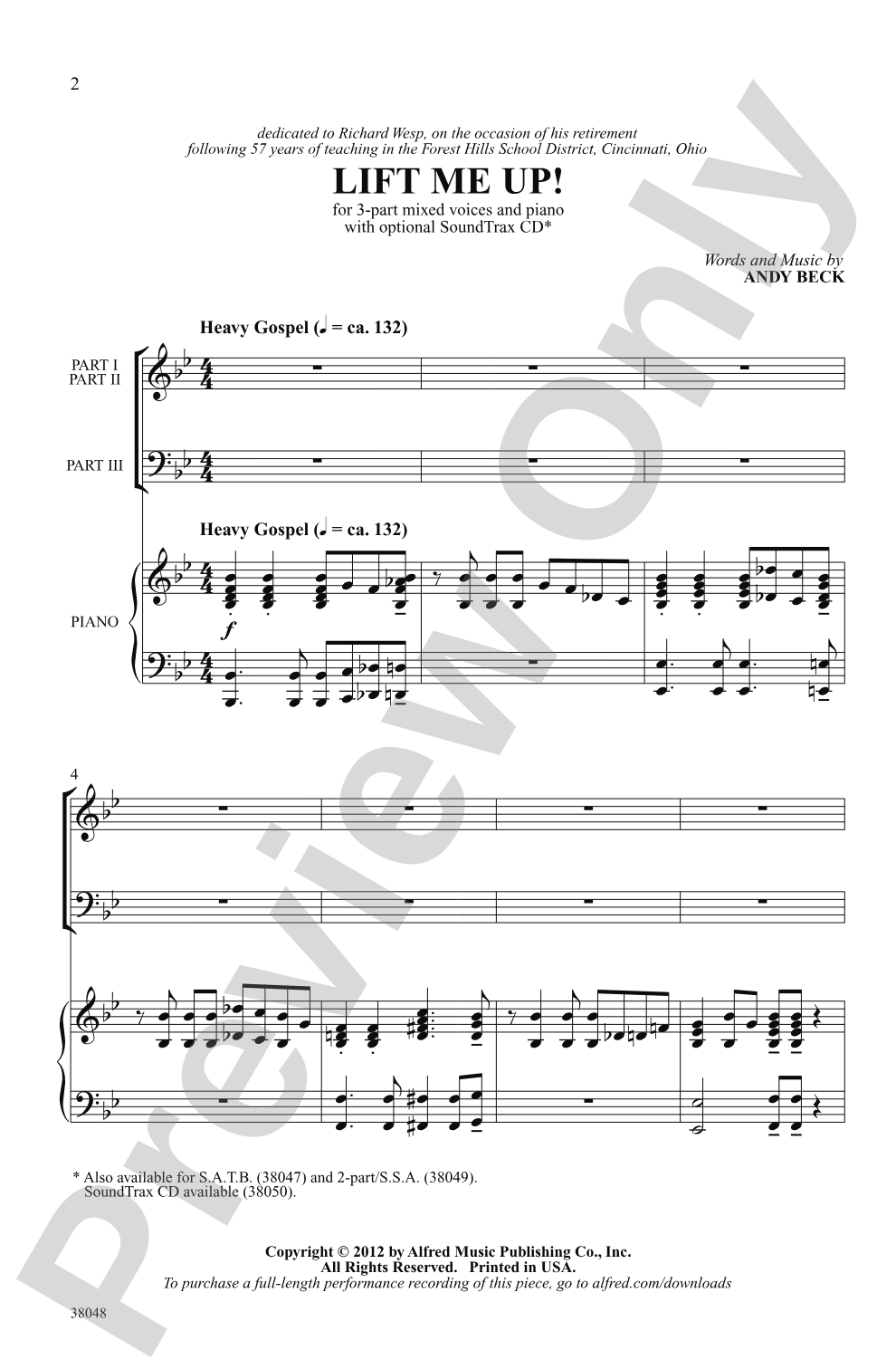

Lift Me Up!: 3-Part Mixed Choral Octavo
Words and music by Andy Beck
Item: 00-PO-0001357
$2.05
Minimum order quantity: 20 copies
Pickup currently not available
Related Items
Lift Me Up!: SoundTrax Digital Audio Download |
$27.99
|
View | |
Lift Me Up!: SATB Choral Octavo |
$1.80
|
View | |
Lift Me Up!: 2-Part / SSA Choral Octavo |
$2.05
|
View | |
Lift Me Up!: SATB Choral Octavo |
$1.80
|
View | |
Lift Me Up!: 3-Part Mixed Choral Octavo |
$2.05
|
View | |
Lift Me Up!: 2-Part / SSA Choral Octavo |
$2.05
|
View | |
Lift Me Up!: Choral Octavo SoundTrax CD |
$27.99
|
View |
Description
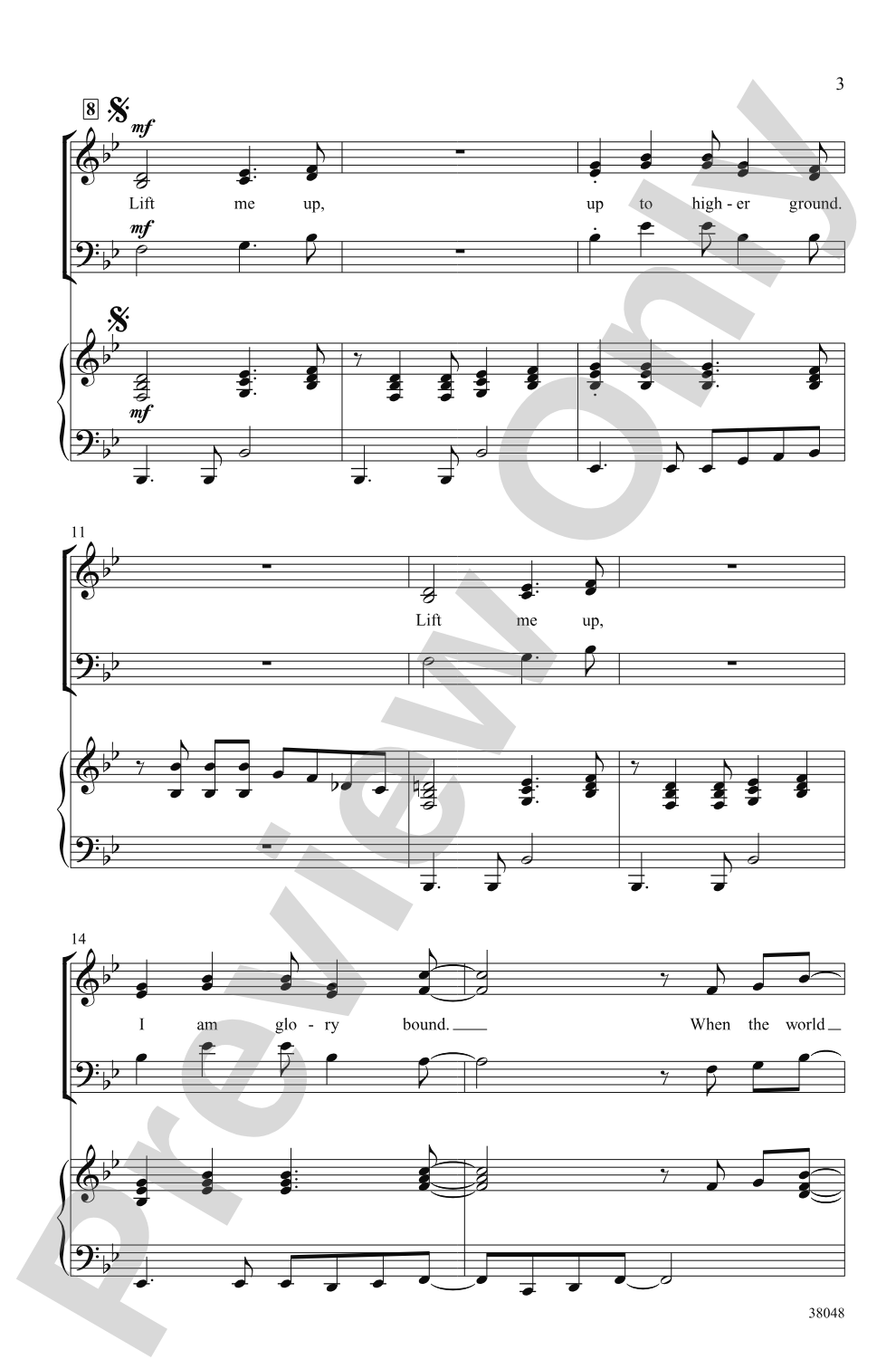
This uplifting, original spiritual makes it easy to discover your choir's best gospel sound. Notated solos sound like improvised riffs and offer the opportunity for additional improvisation as desired. A stylized powerhouse that really delivers! Check this out! https://leapingbrain.com/modshop/product/?shop=9&product=5657


Lift Me Up!: 3-Part Mixed Choral Octavo isn't in MakeMusic Cloud just yet...but it could be. Let us know you'd like to see it, and you'll help shape what comes next. In the meantime, start a free trial and dive into thousands of interactive titles your students can play along with today.
Request This Title
Tell us you want it.
Start Your Free Trial
Explore everything that's ready to play right now.
Sample Audio
1
Audio File
--:--
0:00
0:00
Sample Video
No sample videos found.
Additional Details
Series:
Alfred Choral Designs
Publisher:
Alfred Music
Page Count:
12
SKU:
00-PO-0001357
More about this title
About the Composer: Andy Beck

Andy Beck leads choral publications at Alfred Music, where he oversees a catalog of over 450 choral works, vocal resources, and children's musicals. His compositions and arrangements span multiple genres and difficulty levels, and his instructional resources including Sing at First Sight, Foundations in Choral Sight Singing, and Vocalize! 45 Vocal Warm-Ups That Teach Technique have shaped how many singers learn foundational skills.
Beyond the page, Beck remains deeply active in music education as a guest conductor, choreographer, adjudicator, and clinician across the United States and internationally. He has served as commissioned composer and conductor for honor choirs of all ages, including all-state ensembles throughout the Southeast. A trained tenor with degrees from Ithaca College and Northwest Missouri State University, he continues to perform with the North Carolina Master Chorale Chamber Choir and has been an Alfred Music studio singer since 1992. His work reflects a sustained commitment to choral artistry and music literacy.
Why we love this
Beck's background in vocal pedagogy shows immediately in the writing. The notated riffs sound genuinely improvised rather than overwrought, and the solo passages sit naturally in the voices without requiring extended ranges or technical gymnastics. This piece delivers the gospel energy your choir wants to feel while remaining accessible for singers still building their stylistic fluency.
What to expect
Uplifting and energized without being frantic. The piece breathes with the ease of something genuinely felt rather than performed, inviting singers into the joy of the spiritual while maintaining musical integrity. There's room for spontaneity and joy within the structure.
Who it's for
Choirs at the intermediate level who are ready to explore gospel idiom with confidence. This works equally well for a concert choir seeking to expand their stylistic range or an ensemble already rooted in sacred music looking to deepen their connection to spiritual and gospel traditions.
How to get the most out of it
- Study the solo lines as written first, then encourage singers to experiment with rhythmic and melodic variations once they've internalized the basic shape. This mirrors how real gospel improvisation develops.
- Use the recorded accompaniment to lock the groove, but rehearse the vocal lines unaccompanied occasionally so singers develop independence from the track.
- Highlight the movement and staging suggestions in the score. Gospel style depends as much on physical presence and energy as it does on vocal production, and these elements transform the performance from a choral reading into a genuine celebration.
How to use it
Pair this with other spirituals or gospel-influenced literature to create a set that showcases your choir's range and cultural awareness. It also works beautifully as a closing number for a concert, where its lift and optimism leave the audience with genuine warmth rather than a forced finale.
Skills your students will build
- Gospel improvisation within notated framework
- Swing and syncopated rhythm reading in spiritual idiom
- Blended vocal tone across SAB parts in contemporary sacred style
- Physical staging and movement integration with choral singing
- Solo line confidence and risk-taking in ensemble setting