
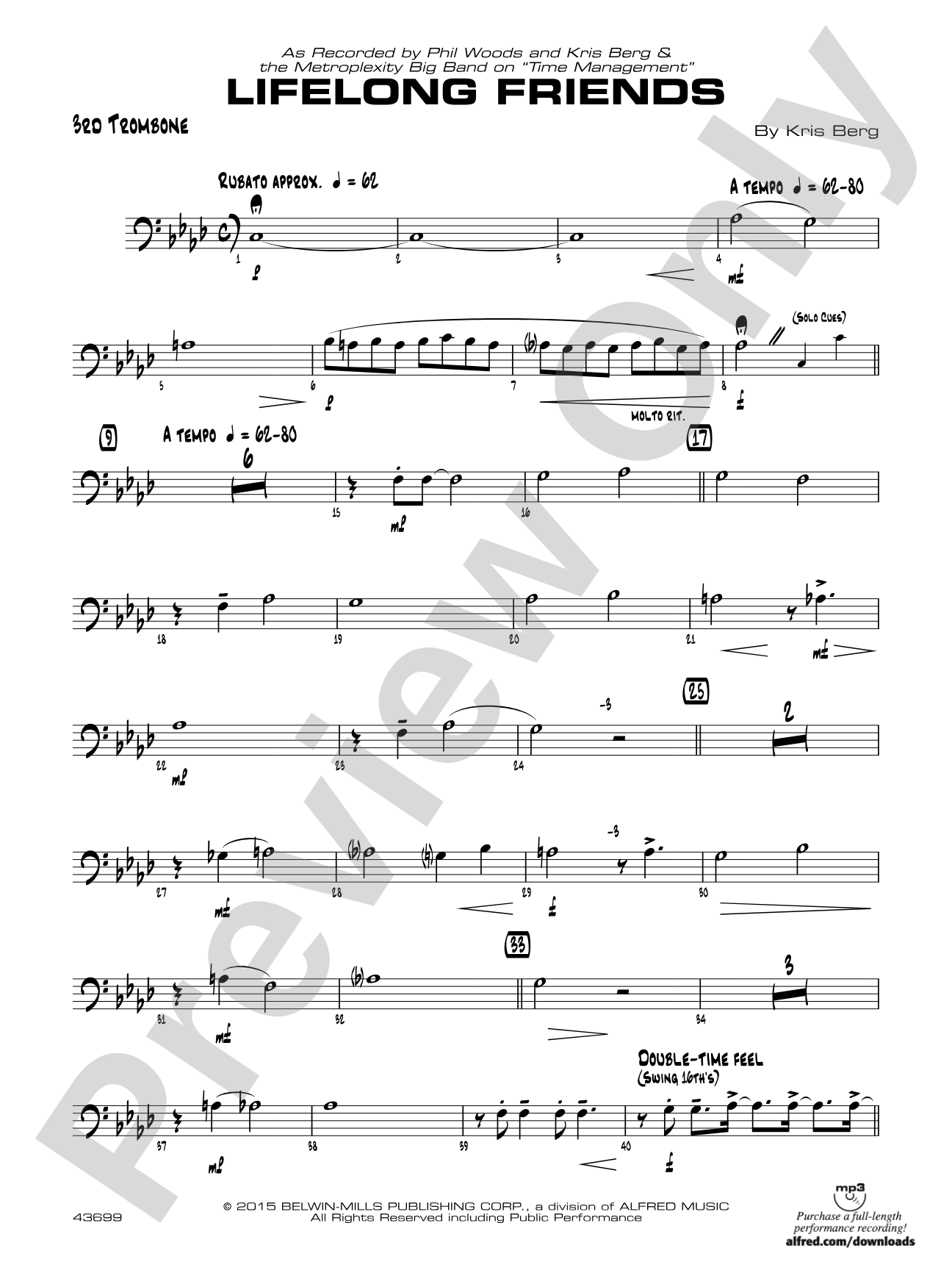

Lifelong Friends: 3rd Trombone
As Recorded by Phil Woods and Kris Berg & the Metroplexity Big Band
By Kris Berg
Grade: 4 (Medium Advanced / Difficult)
Item: 00-PC-0016828_TN3
$3.00
Pickup currently not available
Description
This sensational solo feature is available for B-flat, E-flat instruments, or trombone. Recorded as an alto solo on our demo recording at around 74 BPM, the lead trumpet range is to written high C. This original chart by Kris Berg---Lifelong Friends---is an outstanding chart and ideal vehicle for your soloist. (4:33)


Don't just read it, hear it, play along with it, and watch your students grow with it. In MakeMusic Cloud, Lifelong Friends: 3rd Trombone comes alive with professional accompaniment, adjustable tempo, and built-in practice tools that turn solo practice into real progress.
Open in the Player
Jump straight in and assign it today.
Start Your Free Trial
Open this title and explore the full library in minutes.
Sample Audio
1
Audio File
--:--
0:00
0:00
Sample Video
Additional Details
Series:
Premier Jazz Series
Publisher:
Alfred Music
Page Count:
80
SKU:
00-PC-0016828_TN3
More about this title
About the Composer: Kris Berg
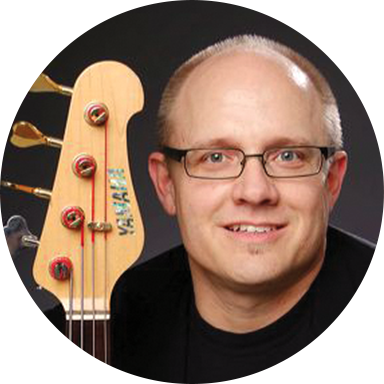
Kris Berg directs the Jazz Studies program at Collin County Community College in Texas, where he earned both his bachelor's and master's degrees in jazz studies from the University of North Texas. His charts and compositions have circulated through jazz programs worldwide and are published by Belwin Jazz, a division of Alfred Publishing. He founded and directs both the Collin Jazz Fest and the Texas All-Star Jazz Camp, and his ensembles have received multiple invitations to perform at the Montreux Jazz Festival.
Berg maintains an active performance and clinician schedule representing Yamaha Corporation of America, working alongside respected artists including Kurt Elling, Randy Brecker, Peter Erskine, Bob Mintzer, and Clark Terry. He authored the widely used method book Bass Lines in Minutes and is endorsed by Walter Woods Amplifiers. His work bridges the classroom and the professional jazz world, grounded in deep pedagogical experience.
Why we love this
Berg understands what makes a feature work at the contest level: a melody that sits naturally in the soloist's voice, changes that challenge without overwhelming, and arrangements that let the rhythm section breathe. The original composition sits at Grade 4 with real sophistication, offering your soloist a legitimate concert piece rather than a simplified head.
What to expect
This original composition balances contemporary jazz vocabulary with accessibility. The 4:33 duration develops a musical story: the head establishes character, the solo space opens for genuine improvisation, and the arrangement closes with ensemble sophistication that reminds everyone this is a composed work, not just a backing track.
Who it's for
Jazz ensemble directors fielding a strong soloist for festival season or concert programming. The piece accommodates B-flat, E-flat, or trombone lead, making it flexible across most jazz ensemble rosters while maintaining Grade 4 technical and harmonic demands.
How to get the most out of it
- Find the pocket at 74 BPM during early rehearsals, then let your soloist explore that tempo window. The feel lives between metronomic precision and conversational swing.
- Balance the solo voice against the ensemble so the lead trumpet lands on top without the band pulling back artificially. Strong section voicings can support, not bury, a quality soloist.
- Work the ensemble figures around the solo passages as interlocking parts, not accompaniment. Berg's writing creates dialogue, so ensemble players need to listen actively for their musical cues.
How to use it
Program this as a centerpiece for a jazz festival entry or as the anchor of a student-soloist spotlight concert. Its original material and Grade 4 demands mark it as a capstone feature, perfect for showcasing ensemble musicianship alongside a featured performer in the spring concert season.
Skills your students will build
- Comping and ensemble listening in a feature context
- Swing rhythm feel and interpretation above written notation
- Section voicing clarity and independence from the solo voice
- Improvisation within a composed harmonic structure (for featured soloist)
- Ensemble musicianship in support of, rather than competition with, a lead voice