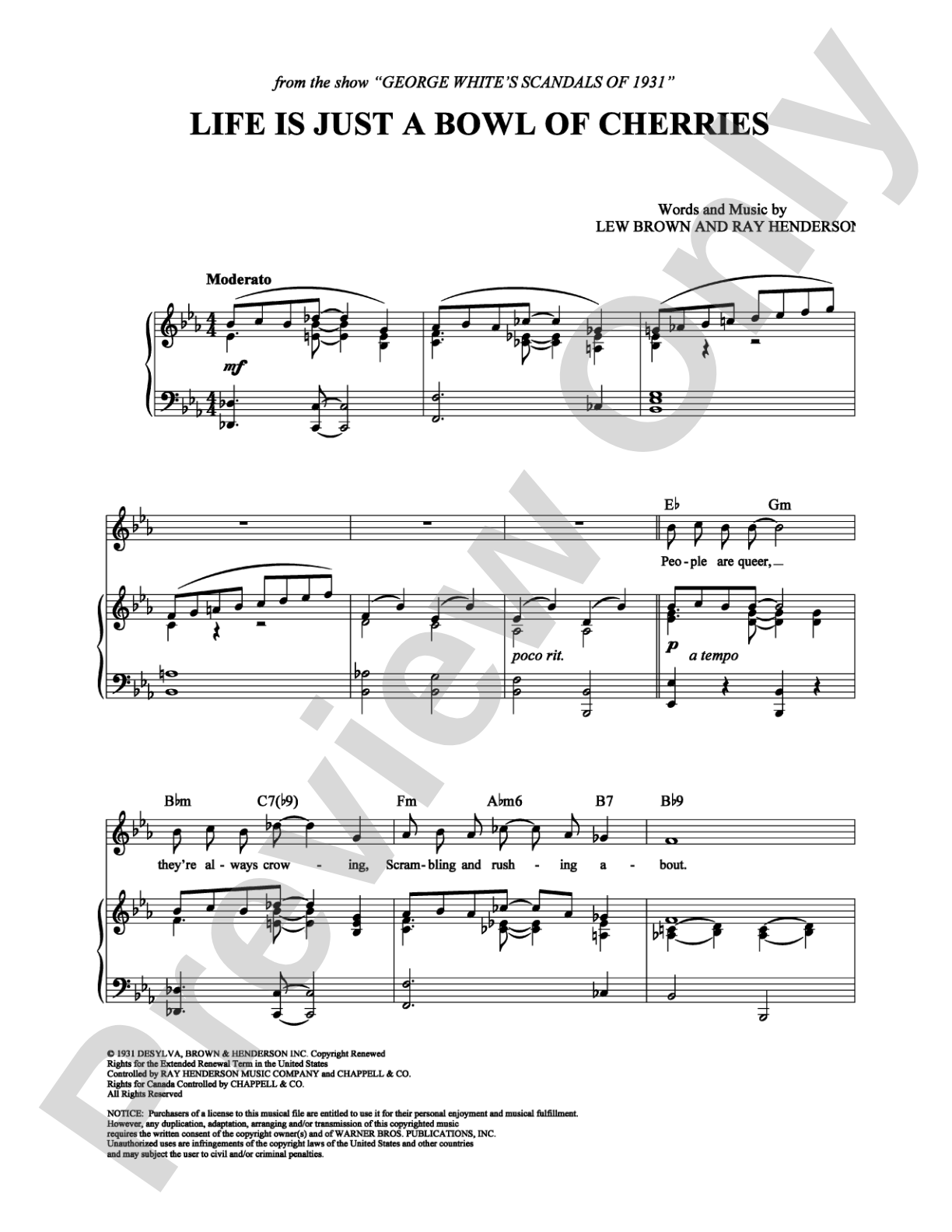
Life Is Just a Bowl of Cherries: Piano/Vocal/Chords Digital Sheet Music

Life Is Just a Bowl of Cherries: Piano/Vocal/Chords Digital Sheet Music

Ray Henderson, Bing Crosby, Ethel Merman, Rudy Vallee

Item: 00-PS-0004205

Digital Download
$3.99
Description

Life Is Just a Bowl of Cherries: Piano/Vocal/Chords Digital Sheet Music isn't in MakeMusic Cloud just yet...but it could be. Let us know you'd like to see it, and you'll help shape what comes next. In the meantime, start a free trial and dive into thousands of interactive titles your students can play along with today.

Sample Audio
No sample audio found.
Sample Video
Additional Details
SKU: 00-PS-0004205

More about this title

About the Artist: Bing Crosby

Bing Crosby (1903, 1977) was an American singer and actor whose smooth baritone and relaxed phrasing shaped popular music for nearly five decades. His influence extended beyond recordings into film, radio, and live performance, where his interpretive sensibility and technical command made him a model for singers navigating jazz-inflected popular song.

For music educators, Crosby's catalog offers essential teaching material in American popular song. His recordings demonstrate how to balance lyrical clarity with rhythmic flexibility, making him invaluable for students learning to sing standards with authenticity and ease.

Why we love this

This standard captures the playful irreverence of early American musical theater, with a melody that sits naturally in the voice and chord changes that feel organic rather than precious. Pianists appreciate the straightforward accompaniment texture, which supports the singer without demanding technical fireworks, making it ideal for teaching partnership and balance.

What to expect

The song radiates optimism with a touch of nostalgia, built on a simple philosophical acceptance that life's pleasures are often small and ordinary. The melody sits comfortably in the middle voice, allowing singers to focus on clarity and warmth rather than dramatic range.

Who it's for

Vocalists preparing for recitals, auditions, or informal performance settings will find this standard accessible yet musically substantial. Pianists and singers working together on chamber music skills benefit from its straightforward harmonic language and conversational texture.

How to get the most out of it

  • Shape the melodic line with gentle dynamics rather than aggressive accents; let the text rhythm guide your phrasing naturally.
  • Keep the piano accompaniment light and conversational, resisting the urge to fill space. The voice is the focus.
  • Treat the lyrical sentiment with sincerity rather than kitsch. The song's charm lies in its earnestness, not in winking at the audience.
  • Coordinate breath points between voice and piano so accompaniment figures feel like responses rather than interruptions.

How to use it

Program this alongside other American standards from the 1930s for a program exploring the era's vernacular song tradition. It also works beautifully as a palette cleanser after more demanding repertoire, or as part of a celebration of classic American song.

Skills your students will build

  • Interpretation of American popular song idiom and phrasing conventions
  • Piano/vocal collaboration and balance
  • Reading lead-sheet harmony symbols and realizing chord charts
  • Legit vocal production for theater and standards repertoire

You May Also Like