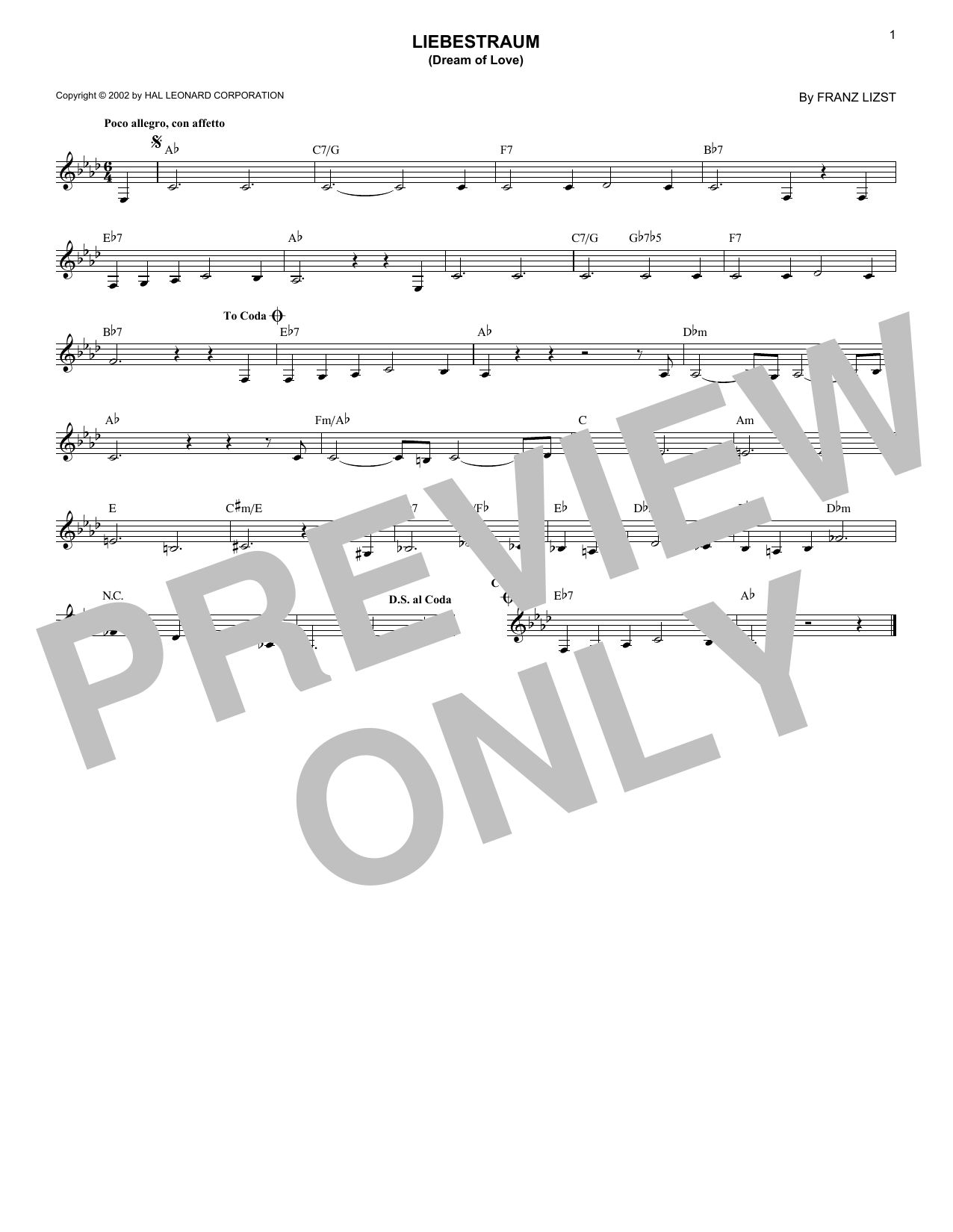
Liebestraum No. 3 (Dream Of Love) Sheet Music Preview

Liebestraum No. 3 (Dream Of Love): Lead Sheet / Fake Book

Item: 35-DS00429546

Digital Download
$3.99
Description

Liebestraum No. 3 (Dream Of Love): Lead Sheet / Fake Book isn't in MakeMusic Cloud just yet...but it could be. Let us know you'd like to see it, and you'll help shape what comes next. In the meantime, start a free trial and dive into thousands of interactive titles your students can play along with today.

Sample Audio
No sample audio found.
Sample Video
Additional Details
Publisher: Hal Leonard
Page Count: 1
SKU: 35-DS00429546

More about this title

About the Creator: Franz Liszt

Franz Liszt (1811-1886) was a Hungarian virtuoso pianist and composer who fundamentally expanded what the instrument could do. His technical innovations and romantic sensibility made him one of the most influential figures of the 19th century, reshaping both keyboard technique and compositional language.

Liebestraum (Dream of Love) represents Liszt at his most approachable. Written late in his career, these three nocturnes showcase his gift for melody that sings even under the fingers of an amateur pianist. The third and most famous of the set captures the essence of Romantic lyricism without demanding technical wizardry from the performer.

Why we love this

This lead sheet version strips away the pianistic fireworks and leaves you with pure song. It's an ideal entry point for jazz and contemporary pianists who want to claim this standard, and singers find in it one of the most naturally beautiful melodies in the vocal repertoire. The fake book format makes it playable in any setting from solo recital to ensemble arrangement.

What to expect

This melody arrives like a memory half-remembered, tender and inevitable. It moves through harmonic turns that feel both familiar and delicately surprising, creating an atmosphere of wistful affection without sentimentality. The overall effect is one of quiet confidence in beauty itself.

Who it's for

Pianists learning to work from lead sheets and jazz musicians expanding their standard repertoire will find immediate use here. Singers performing art song and contemporary popular artists seeking a classical touchstone benefit from having this melody in a stripped-down, readable format.

How to get the most out of it

  • Let the melody breathe naturally rather than rushing emotional phrases. The harmonic language is rich enough to support space.
  • If accompanying a vocalist, stay responsive to their phrasing. This arrangement serves the line, not the other way around.
  • Consider what color your voicings bring. Simple triads can sound stark; richer jazz voicings can obscure the melody's clarity. Find your balance.

How to use it

Program this as a solo piano interlude during a classical concert, or use it as a bridge between sets in a jazz or cabaret context. It works equally well as an accompaniment for a vocalist taking an artistic detour from contemporary material, or as a teaching example when exploring how Romantic melody translates across genres and idioms.

Skills your students will build

  • Reading and interpreting lead sheet notation
  • Voicing chords in support of a melody
  • Balancing accompaniment texture with vocal or melodic prominence
  • Translating classical melody into jazz and contemporary contexts
  • Developing artistic control over tempo and rubato in a lyrical setting

You May Also Like