Liebestraum No. 3 Sheet Music Preview

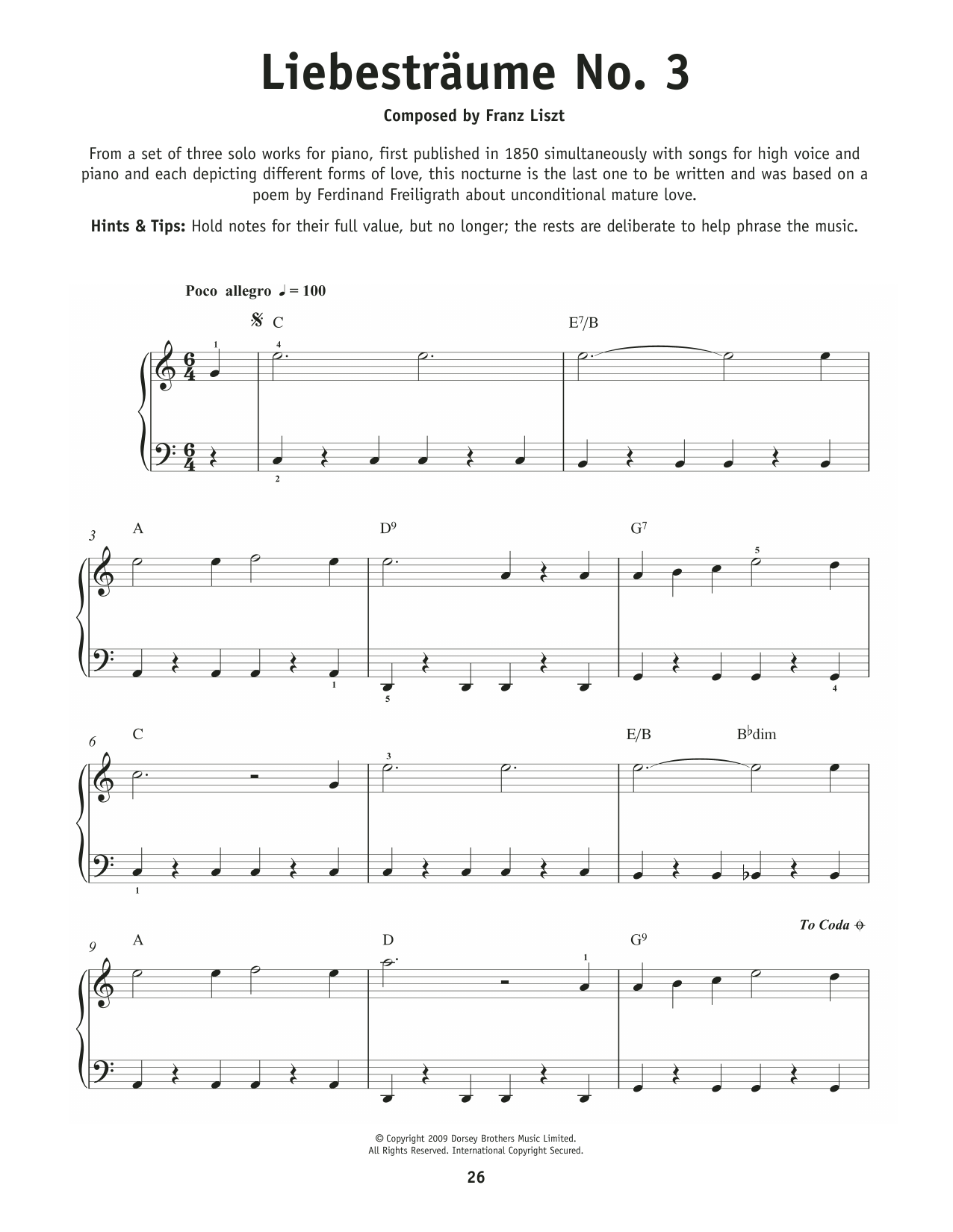
Liebestraum No. 3: Really Easy Piano

As performed by Franz Liszt

Item: 35-DS01587914

Digital Download
$4.99
Description

Discover MakeMusic Cloud: thousands of interactive titles your students can play along with today.

Sample Audio
No sample audio found.
Sample Video
Additional Details
Publisher: Hal Leonard
Page Count: 2
SKU: 35-DS01587914

More about this title

About the Artist: Franz Liszt

Franz Liszt (1811–1886) was a Hungarian virtuoso pianist and composer who fundamentally transformed what the instrument could express. His technical innovations and romantic sensibility made him one of the most influential figures in 19th-century music, bridging the classical tradition and modernist experimentation.

Liszt's salon pieces, including the three Liebestraum works, showcase his gift for melody and accessible beauty without sacrificing harmonic sophistication. These works remain central to piano literature because they balance technical display with genuine emotional depth.

Why we love this

This piece has earned its place in countless recitals for good reason: it's genuinely moving without requiring virtuosic fireworks, and the emotional payoff feels earned rather than manufactured. Students encounter real romantic harmony and expressive depth here, not a pale imitation of it.

What to expect

A gentle meditation on longing and beauty. Liszt wraps the main theme in warm, shifting harmonies that invite the listener into an intimate emotional space. The piece unfolds with the unhurried quality of memory, tender and wistful.

Who it's for

Pianists from intermediate to advanced levels seeking a piece that develops touch, pedal control, and musical interpretation beyond technical mechanics. Suitable for student recitals, competitions, or simply building a strong solo repertoire.

How to get the most out of it

  • Shape the main melody as if singing it; Liszt's Italian title invokes dream-like romance, so resist the urge to make every phrase rhythmically identical.
  • Pedal generously but with purpose, changing at harmonic shifts rather than metrically. The wash of sound supports the piece's character, but clarity matters.
  • Honor the written dynamics and tempo indications without overdoing them; the effect should feel natural, not exaggerated.

How to use it

Place this as a contrasting offering on a recital that otherwise leans toward modern or virtuosic works; it reminds audiences why romantic melody still resonates. It also makes an excellent bridge between classical and contemporary pieces on the same program.

Skills your students will build

  • Pedal technique and harmonic awareness through chord changes
  • Melodic phrasing and vocal-style interpretation at the piano
  • Rubato and expressive timing in romantic repertoire
  • Sustaining tone quality and legato across hand positions

You May Also Like