
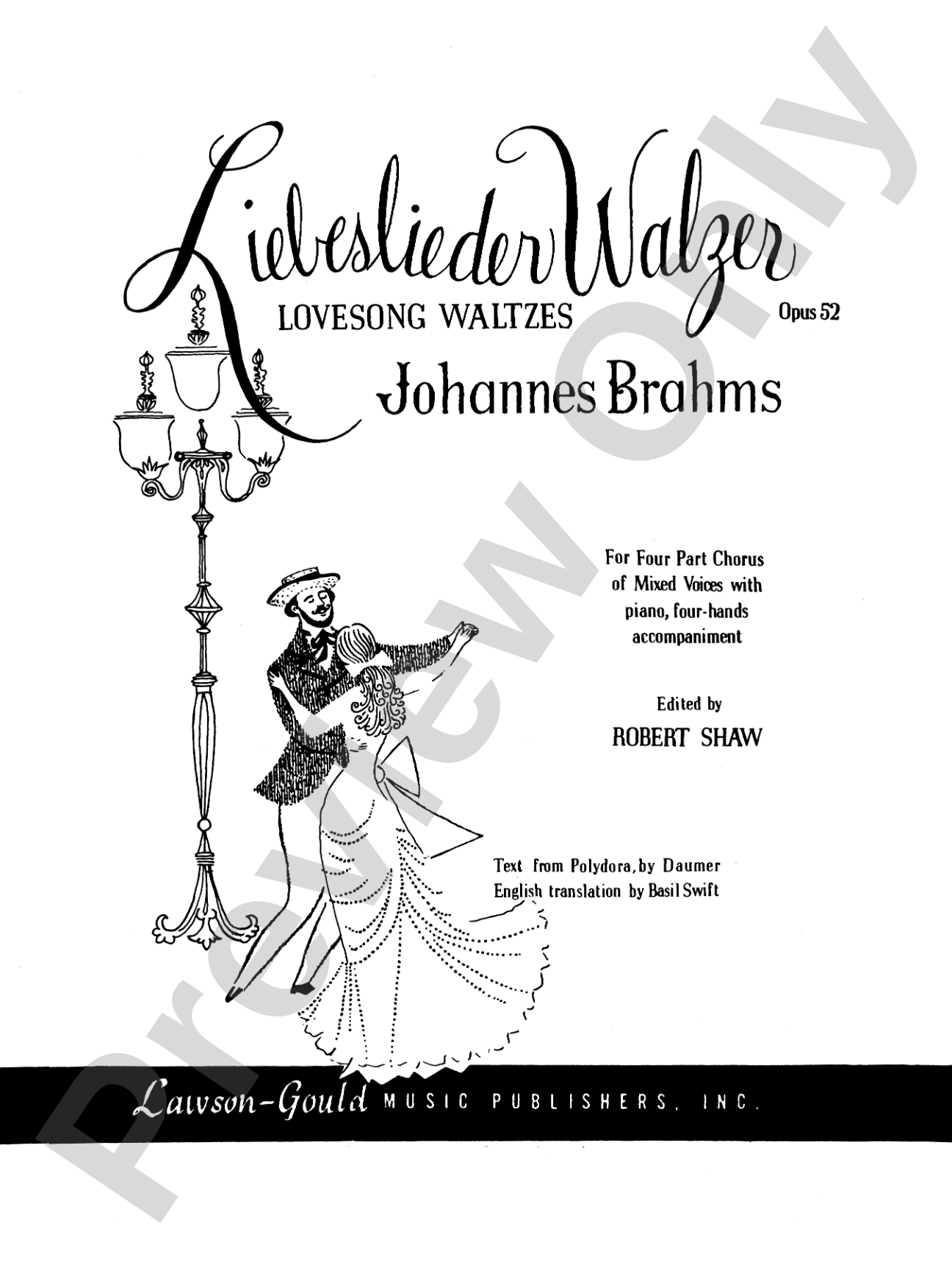


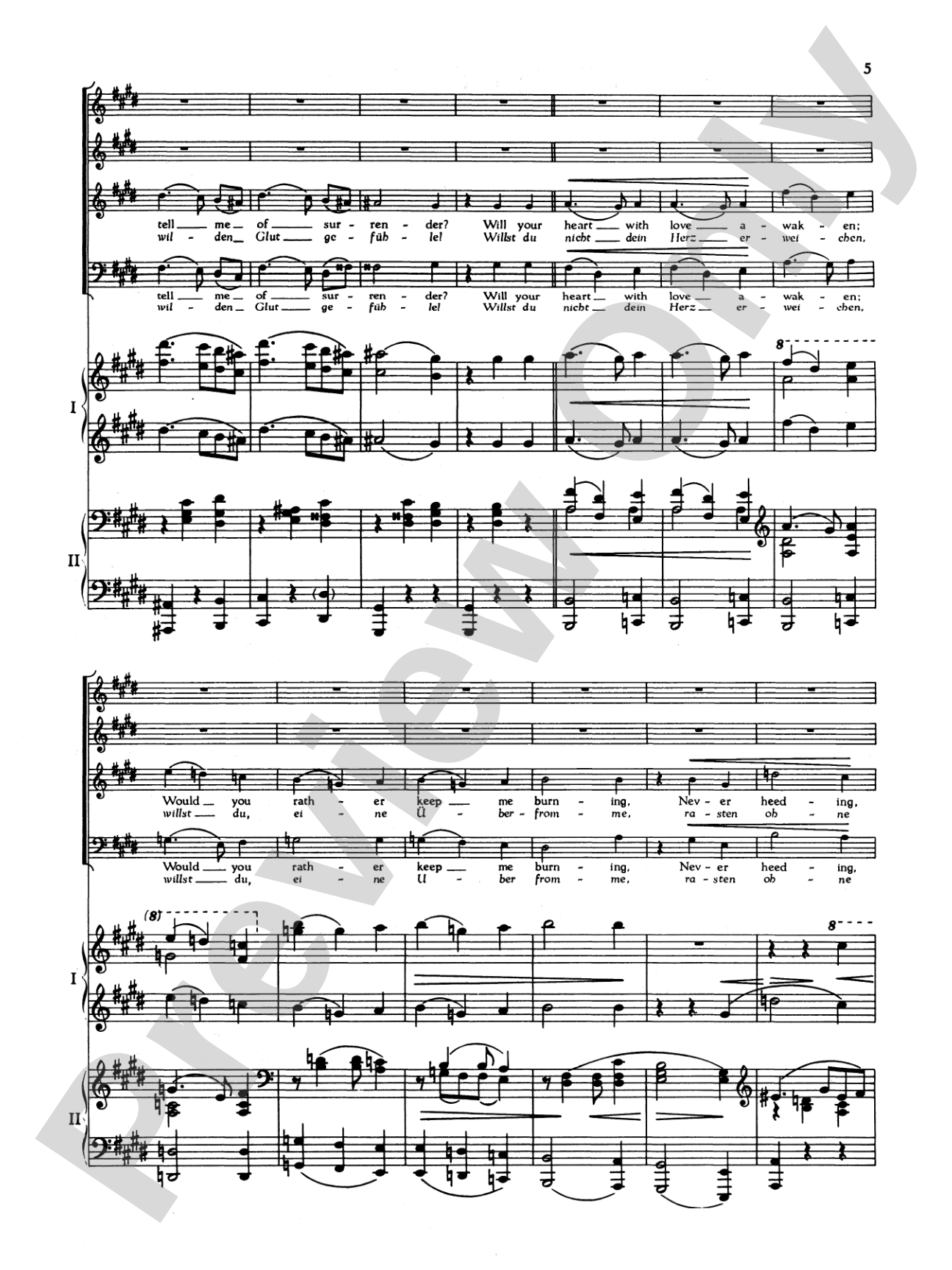
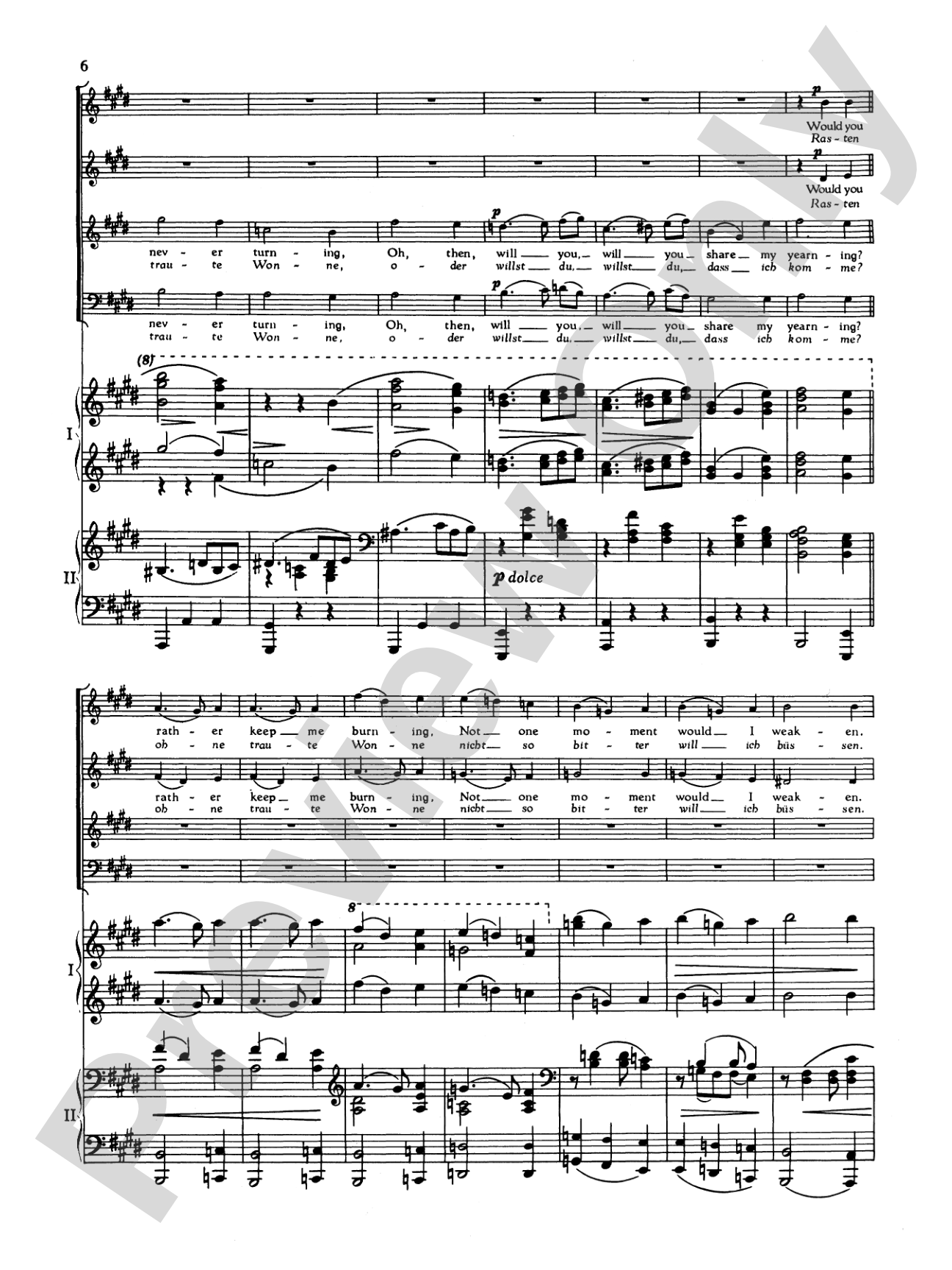
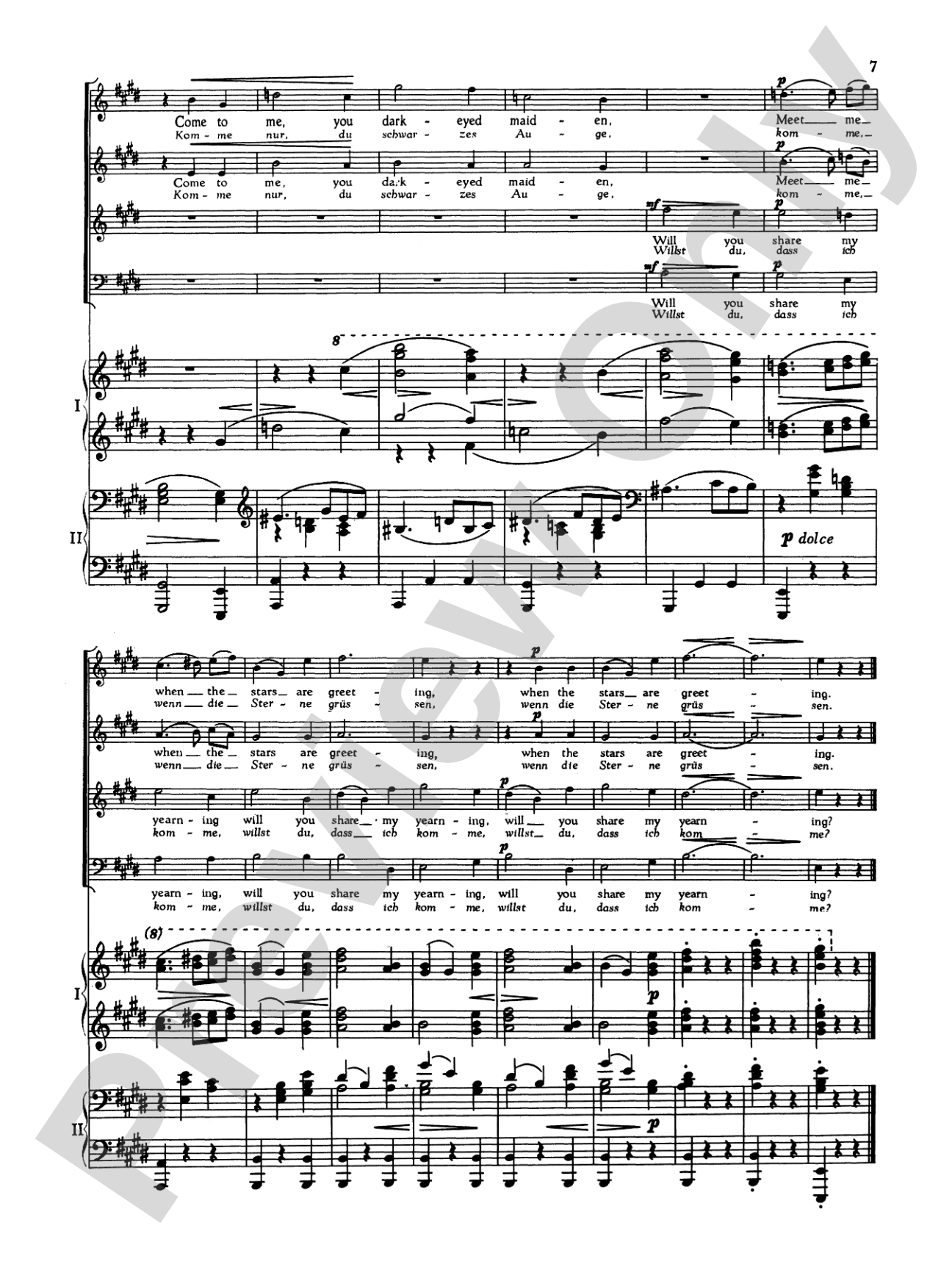
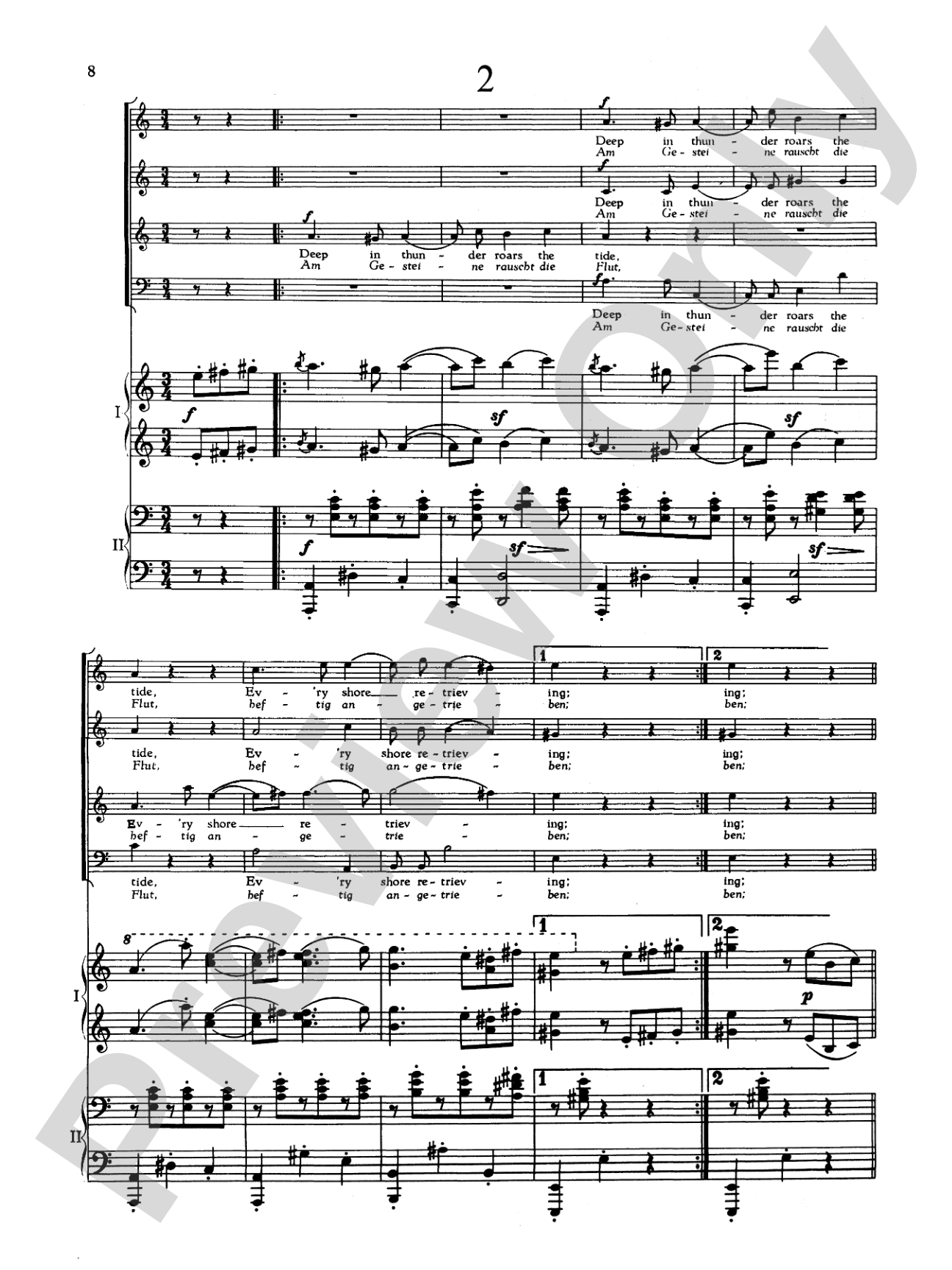

Liebeslieder Walzer, Opus 52: Choir
By Johannes Brahms / arr. Robert Shaw
Item: 00-PB-0001145
$8.99
Pickup currently not available
Related Items
Liebeslieder Walzer, Opus 52: SATB Choral |
$8.99
|
View |
Description


Liebeslieder Walzer, Opus 52: Choir isn't in MakeMusic Cloud just yet...but it could be. Let us know you'd like to see it, and you'll help shape what comes next. In the meantime, start a free trial and dive into thousands of interactive titles your students can play along with today.
Request This Title
Tell us you want it.
Start Your Free Trial
Explore everything that's ready to play right now.
Sample Audio
No sample audio found.
Sample Video
No sample videos found.
Additional Details
Series:
Lawson-Gould
Publisher:
Alfred Music
Page Count:
52
SKU:
00-PB-0001145
More about this title
About the Composer: Johannes Brahms
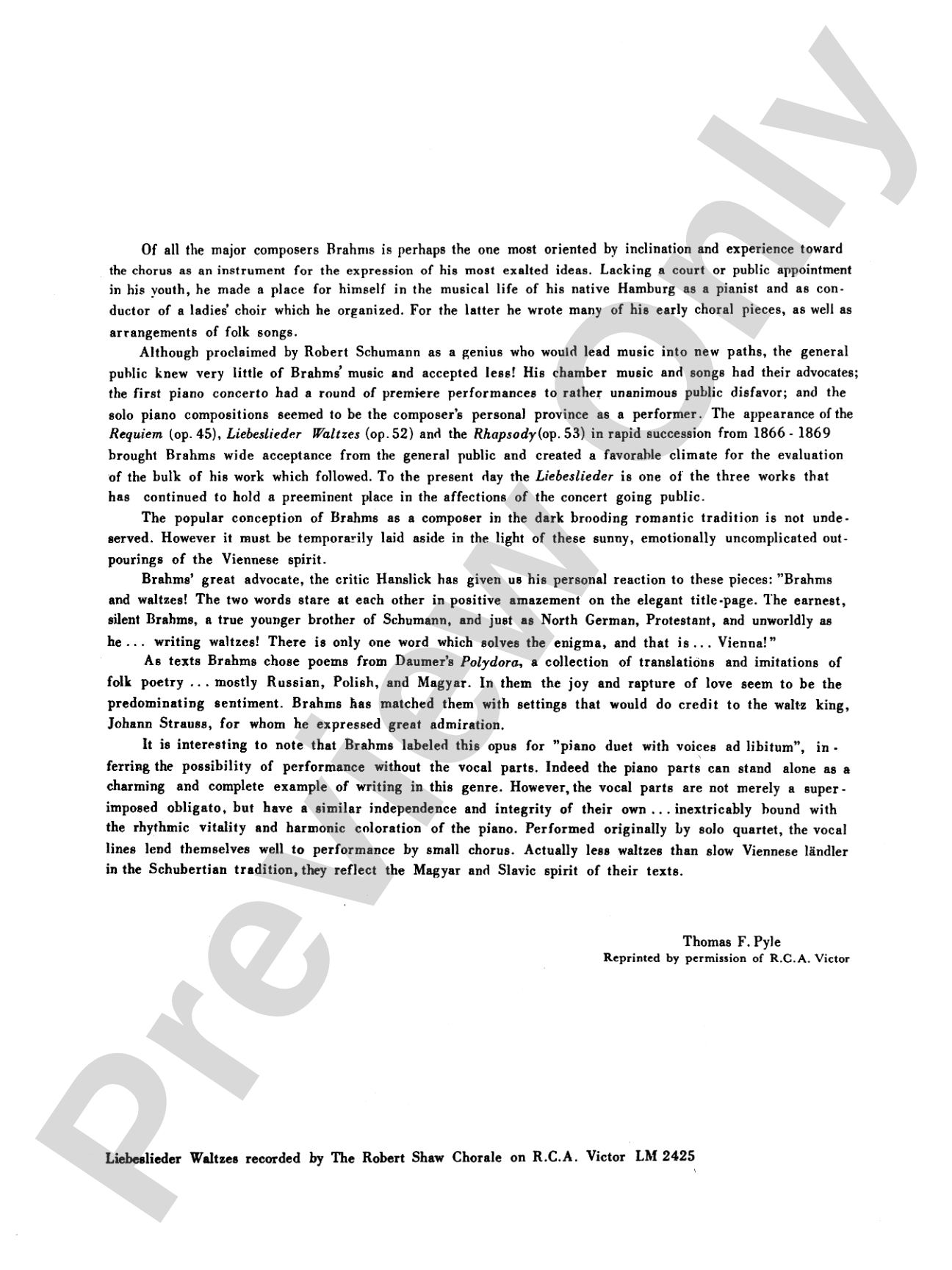
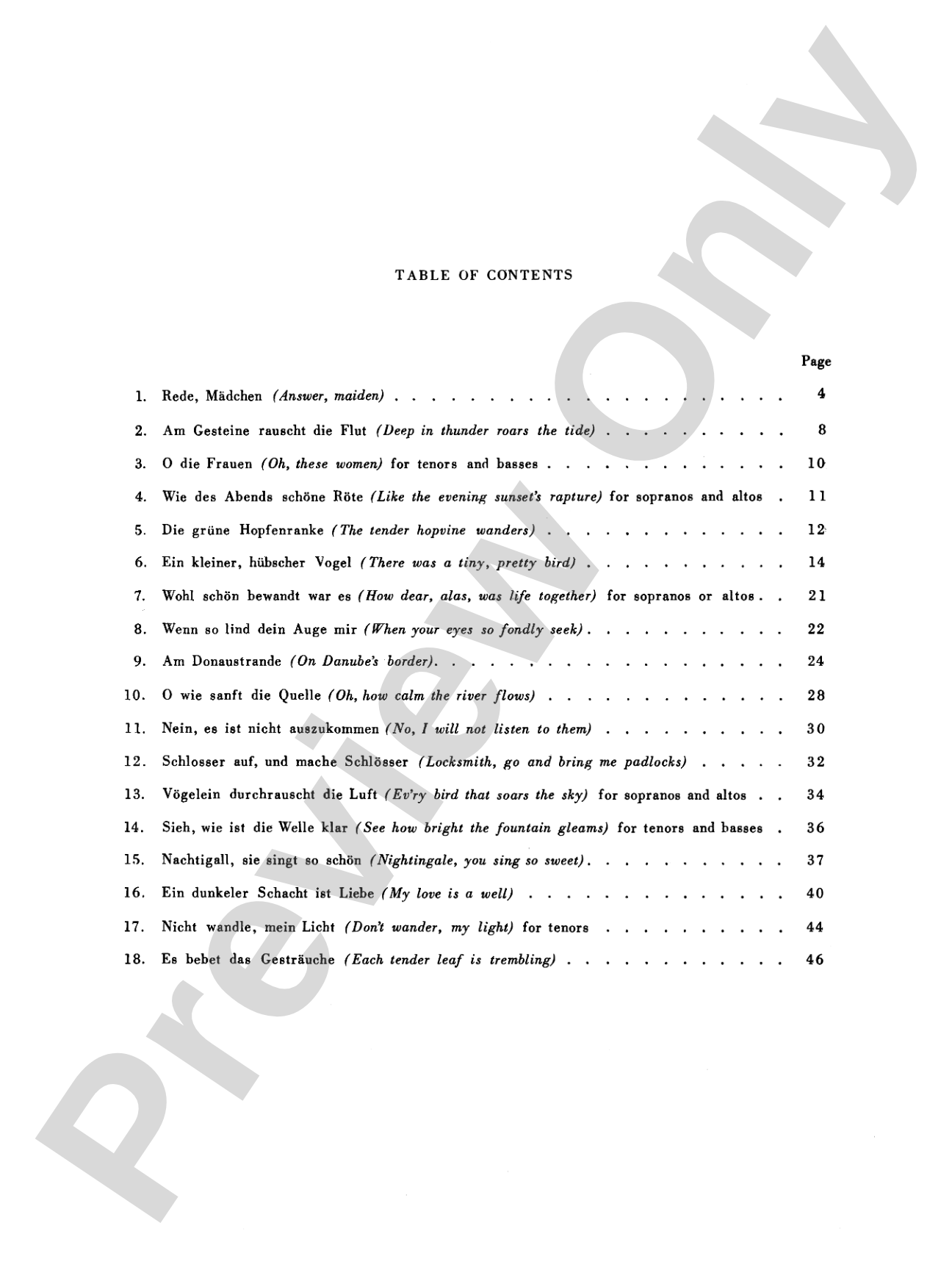
Johannes Brahms (1833–1897) composed the Liebeslieder Walzer during his early maturity, creating one of the most elegant and intimate works in the choral repertoire. Unlike the grand choral monuments of his era, Brahms wrote these 18 waltzes as songs for voices and piano, prioritizing lyrical beauty and emotional directness over virtuosic display. His mastery of the Romantic lied informs every phrase, making this cycle a masterclass in how to set poetry with restraint and sophistication.
Why we love this
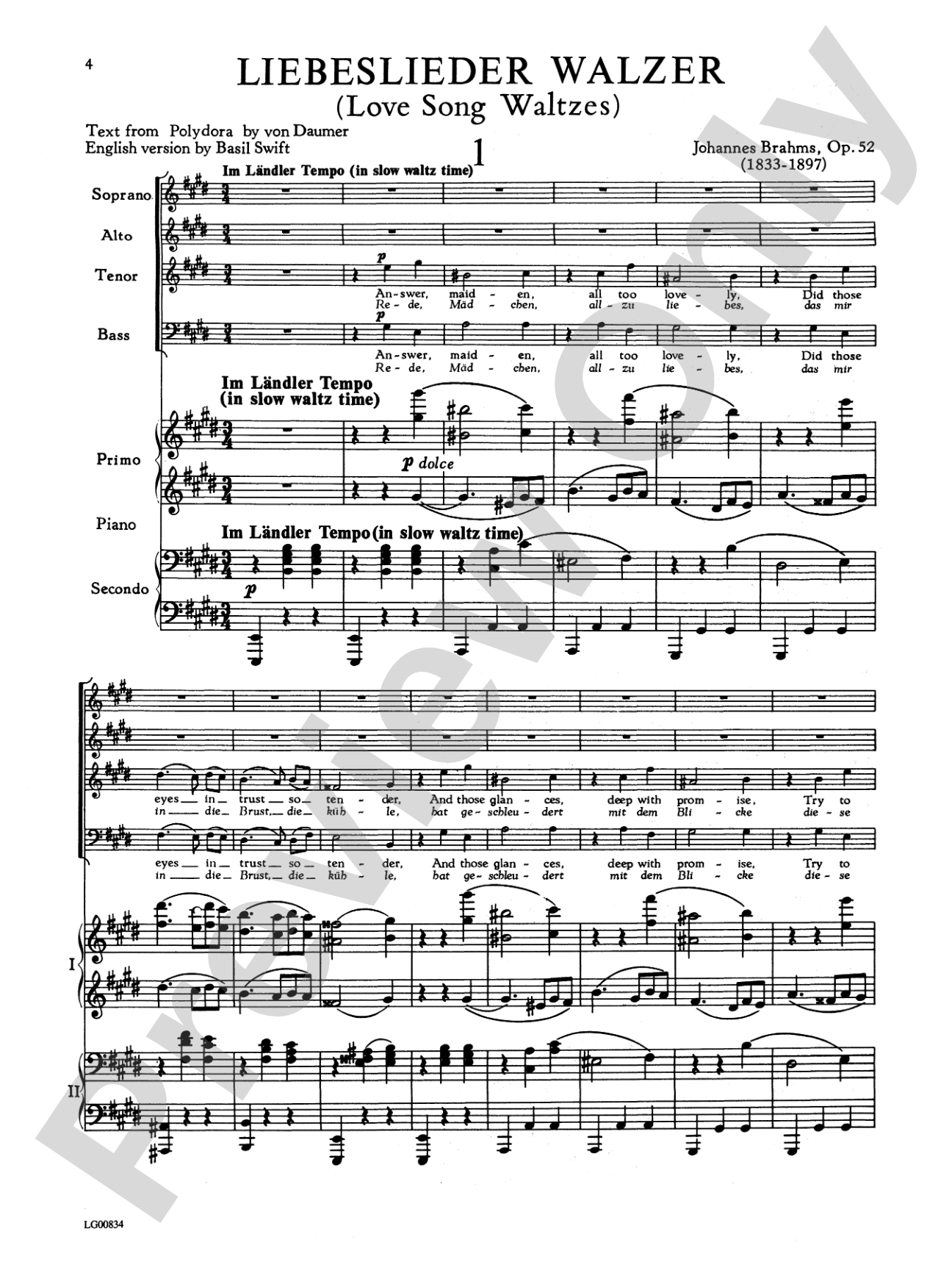
Robert Shaw's arrangement unlocks these waltzes for the choral ensemble, preserving Brahms's delicate orchestration while expanding the work's accessibility. Choirs at this level gain entry into a work that demands genuine musicianship without requiring a specialized soloist or complicated staging. The result is a substantial 52-page cycle that feels both intimate and grand, offering programmers a genuinely sophisticated alternative to pops or lighter concert fare.
What to expect
A series of intimate conversations about love, loss, and longing set to the most approachable of dance forms. The waltzes waltz genuinely—light on their feet, buoyant—yet beneath that grace lies surprising emotional complexity. Singing it feels like being invited into a drawing room where the guests are cultivated, witty, and quietly moving.
Who it's for
Accomplished SATB choirs with strong blend and the ability to sustain lyrical long lines. This cycle rewards singers who have developed confidence in German diction and can navigate moderate chromatic harmony without sacrificing ensemble cohesion. Conductors programming advanced repertoire but seeking works that don't demand soloists or dramatic staging will find a natural fit.
How to get the most out of it
- Keep the tempo conversational rather than strict; Brahms's waltzes flow most naturally when the conductor facilitates a gentle sway rather than rigidly metered beats.
- Balance the text intelligently across all movements. The poetry shifts from playful to tender to melancholic, and your choir's awareness of each poem's emotional weight will shape how audiences experience the arc.
- Shape phrases by text stress, not bar lines. Brahms frequently places important words off the beat, rewarding conductors who listen for language rather than counting measures.
- Allow rubato in the inner voices during sustained chords. The piano part (here orchestrated) often carries the harmonic heartbeat, freeing your singers to breathe with the melody.
How to use it
Position this as the centerpiece of a choral concert devoted to Romantic vocal music, pairing it with works by Schubert or Mendelssohn to create thematic coherence. Alternatively, use individual waltzes as encore material or as opening pieces for themed concerts. The cycle's length and sophistication make it ideal for spring concert programming when your ensemble has had the full season to develop ensemble refinement.
Skills your students will build
- Sustaining legit lyrical tone across extended phrases without fatigue
- Reading chromatic harmony and following voice leading through complex harmonic progressions
- German text intelligibility and the relationship between language stress and musical phrasing
- Ensemble balance in four-part writing with competing melodic lines
- Interpreting rubato and phrase shaping in the Romantic style
- Navigating shifting harmonic centers and key areas typical of mid-Romantic composition