Liberty: Piano/Vocal/Chords Digital Sheet Music

Liberty: Piano/Vocal/Chords Digital Sheet Music

Jerry Garcia, Grateful Dead

Item: 00-PS-0005771

Digital Download
$2.95
Description

Liberty: Piano/Vocal/Chords Digital Sheet Music isn't in MakeMusic Cloud just yet...but it could be. Let us know you'd like to see it, and you'll help shape what comes next. In the meantime, start a free trial and dive into thousands of interactive titles your students can play along with today.

Sample Audio
No sample audio found.
Sample Video
Additional Details
SKU: 00-PS-0005771

More about this title

About the Artist: Grateful Dead

The Grateful Dead emerged from the San Francisco Bay Area in the mid-1960s to become one of the most influential jam bands in American music history. Their improvisational approach to rock, combined with their eclectic musical influences ranging from blues and country to folk and classical music, created a sound that captivated audiences for five decades. The band's sophisticated harmonic language and rhythmic complexity have made their catalog a rich resource for musicians studying how to blend structure with spontaneity.

Beyond their studio recordings, the Grateful Dead are celebrated for their live performances and their deep connection to their audience. Their willingness to reinterpret songs night after night, combined with their instrumental virtuosity, demonstrates how rock musicians can treat standard repertoire with the same care and attention that classical musicians bring to their art.

Why we love this

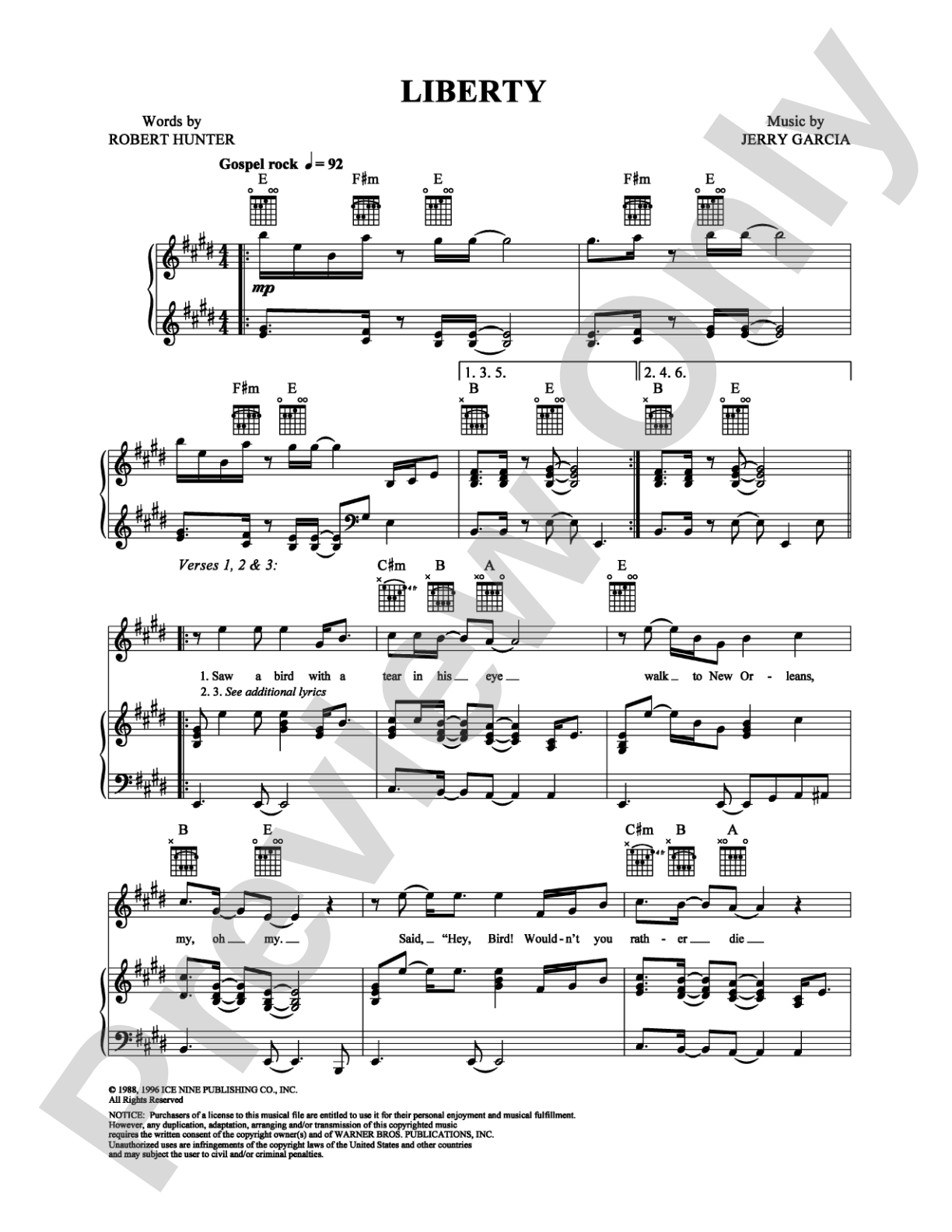
"Liberty" gives singers and pianists a chance to work with the Grateful Dead's sophisticated harmonic movement and emotional depth in an accessible digital format. The piano/vocal/chords layout makes it equally useful for solo recital preparation, classroom exploration of rock composition, or ensemble arrangements, and the song's deliberate pacing rewards close attention to lyrical nuance and chord voicing.

What to expect

"Liberty" unfolds with a contemplative quality, anchored by deliberate harmonic movement and introspective lyricism. The song balances accessibility with musical substance, inviting performers to find intimacy within a rock framework and rewarding careful listening with moments of quiet power.

Who it's for

This arrangement suits singers and pianists at the intermediate to advanced level who want to explore rock repertoire with harmonic sophistication and textural depth. It works well for students preparing recital material, voice teachers seeking songs that bridge popular and art music traditions, and pianists building a diverse solo repertoire.

How to get the most out of it

  • Pay attention to the relationship between the vocal melody and the harmonic movement; the Grateful Dead often use unexpected chord progressions that can shift the emotional weight of a phrase, so singing through the progression rather than over it creates greater resonance.
  • Let silence and space serve as part of the arrangement. Resist the urge to fill every beat, especially in the verses; the song's power often comes from restraint.
  • Explore the chord voicings on piano rather than playing them automatically. Different voicings of the same chord can change the color and emotional direction of a phrase.
  • Work with a recording of the song to understand its original phrasing and tempo, then make deliberate choices about how your interpretation might shift or emphasize different elements.

How to use it

Feature this on a recital or concert exploring the intersection of rock and vocal art music, or pair it with other songs from the American songwriting canon to demonstrate how rock musicians have grappled with similar themes of freedom, identity, and human connection. It also works well as a bridge piece in educational programming designed to show students that harmonic and melodic sophistication transcends genre.

Skills your students will build

  • Reading and interpreting chord symbols in a modern harmonic context
  • Shaping phrase contours over complex harmonic progressions
  • Understanding the relationship between vocal melody and piano accompaniment in rock and popular styles
  • Exploring voicing options and their expressive impact on the same harmonic material

You May Also Like