
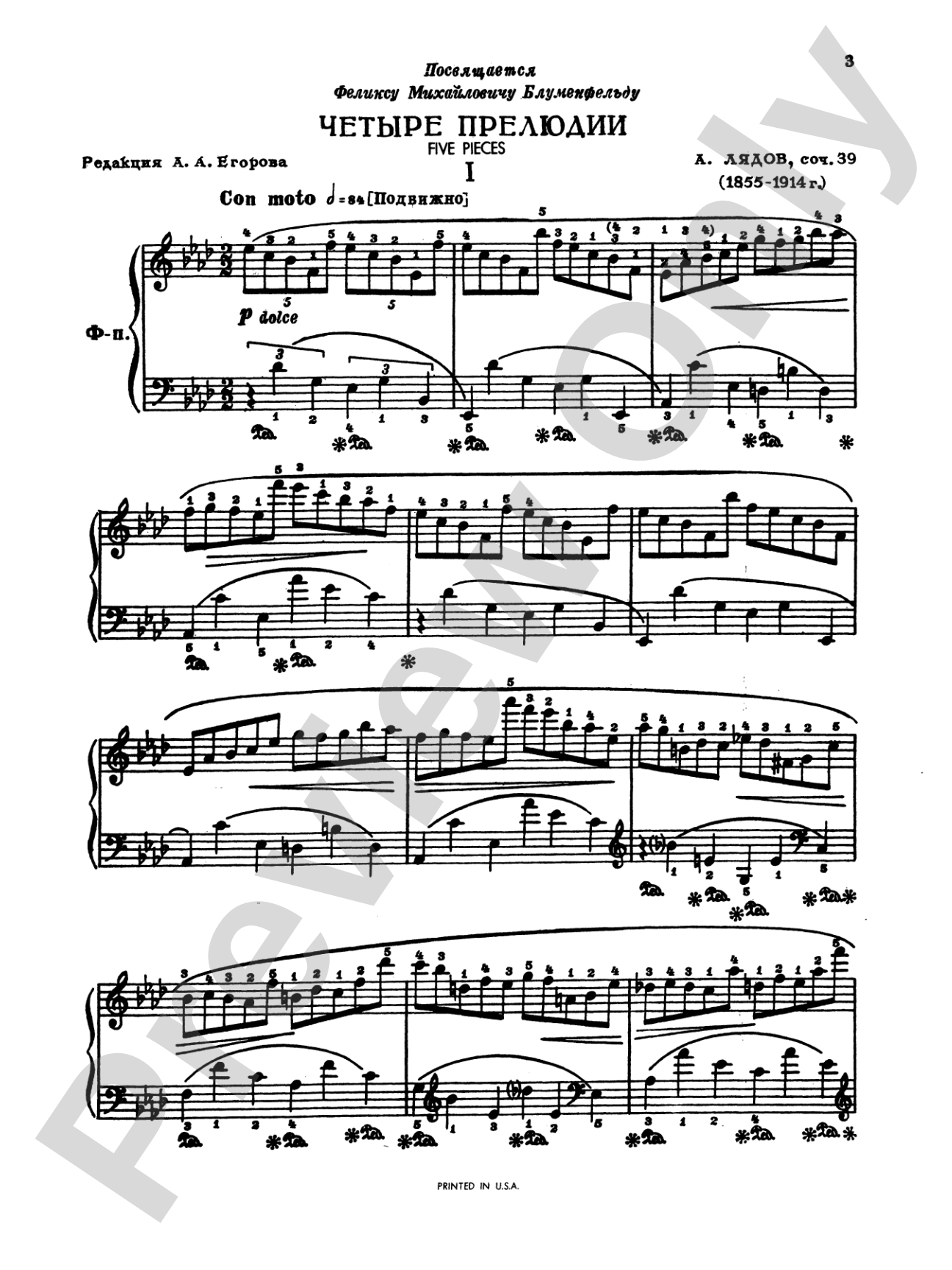
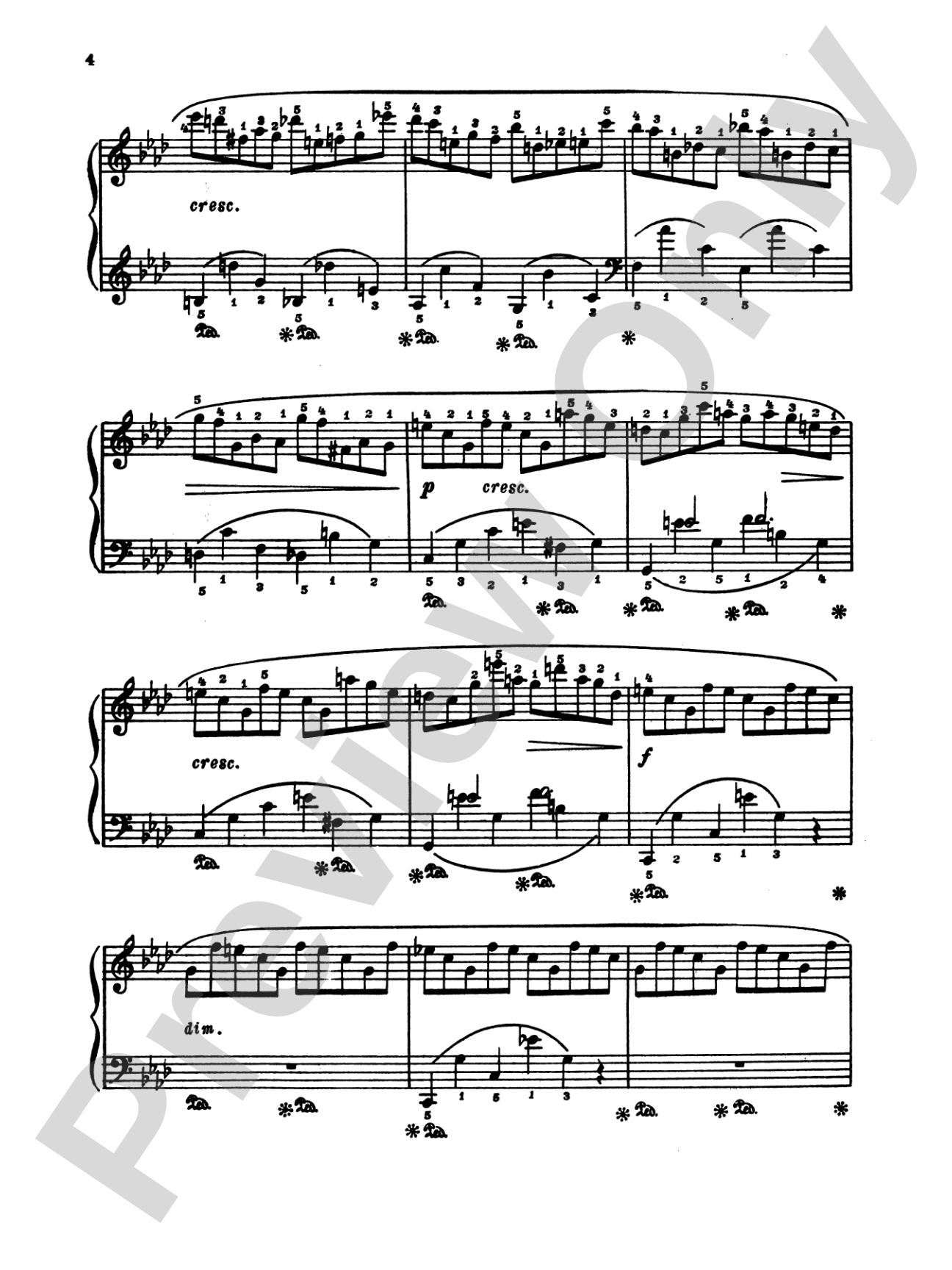
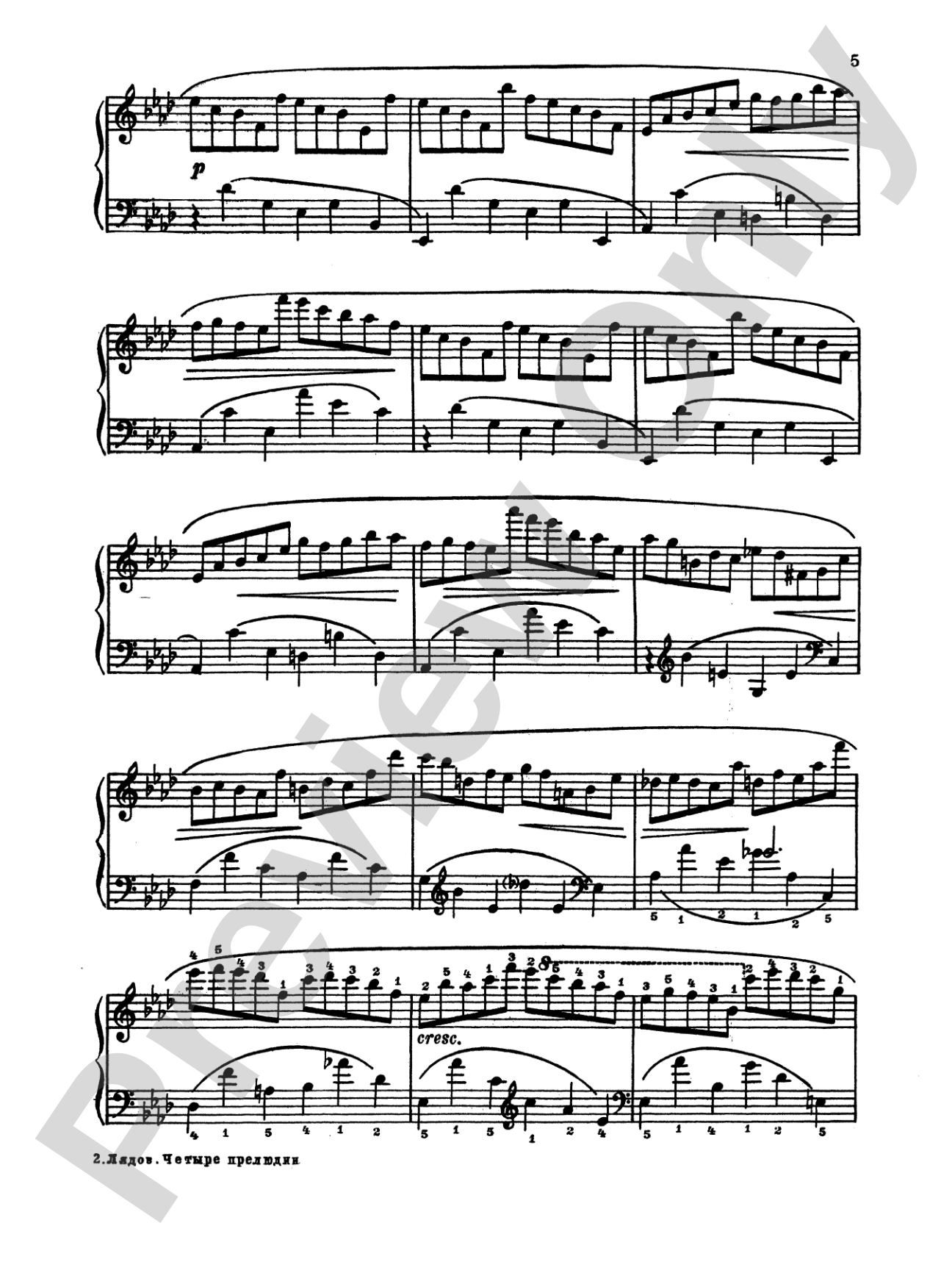
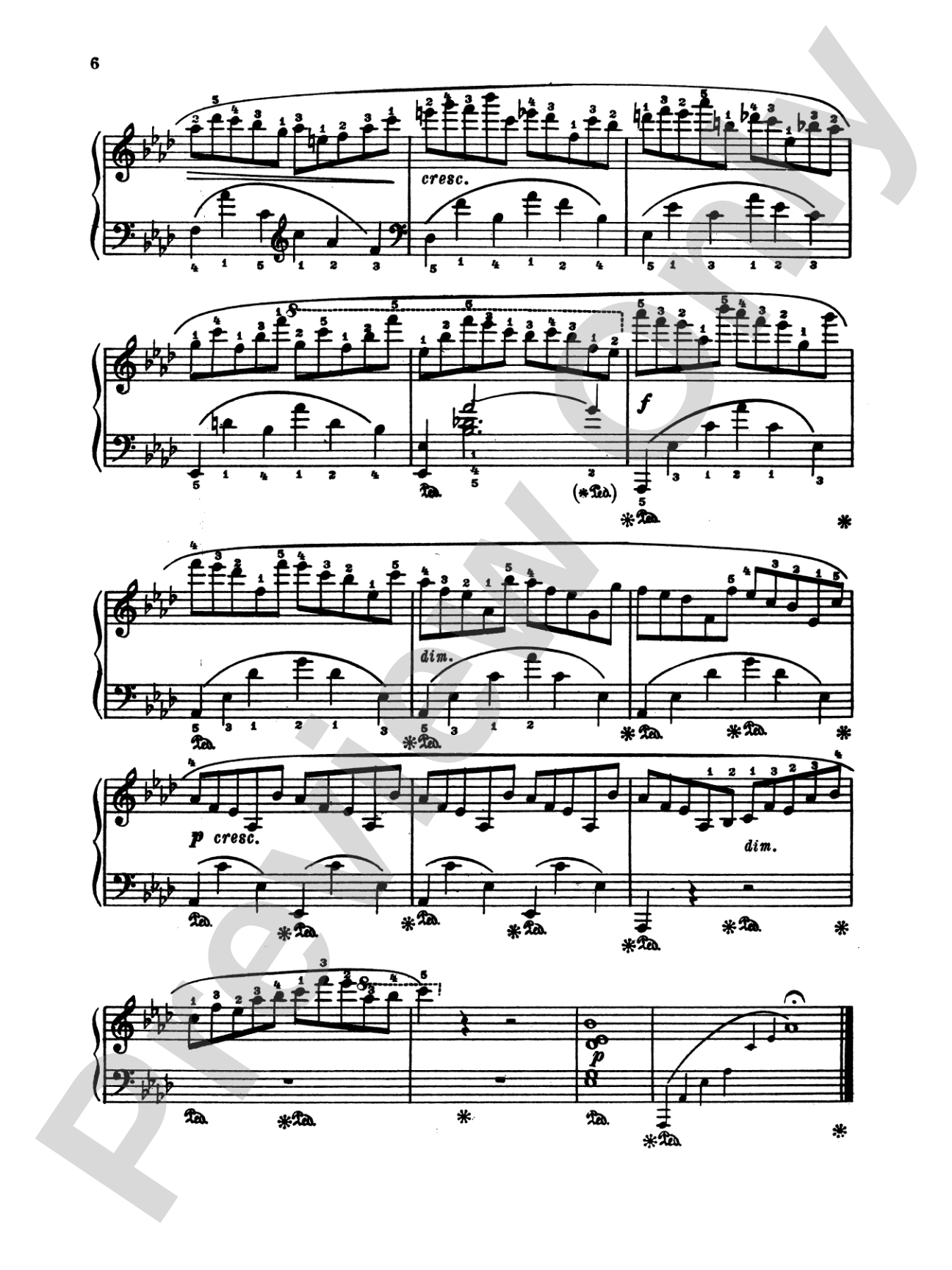

Liadov: Five Pieces, Op. 39: Piano
By Anatol Liadov
Item: 00-PK-0003799

$8.99
Pickup currently not available
Buy Extra Parts (Digital PDF Download)
| Product | Price | Quantity |
|---|---|---|
| Liadov: Five Pieces, Op. 39 | $0.99 | |
| Liadov: Five Pieces, Op. 39 | $0.99 | |
| Liadov: Five Pieces, Op. 39 | $0.99 | |
| Liadov: Five Pieces, Op. 39 | $0.99 | |
| Liadov: Five Pieces, Op. 39 | $0.99 |
Parts Added to Cart!
Related Items
Five Pieces, Opus 39: Piano |
$8.95
|
View |
Description
Expertly arranged piano solo from our Kalmus Edition.


Don't just read it, hear it, play along with it, and watch your students grow with it. In MakeMusic Cloud, Liadov: Five Pieces, Op. 39: Piano comes alive with professional accompaniment, adjustable tempo, and built-in practice tools that turn solo practice into real progress.
Open in the Player
Jump straight in and assign it today.
Start Your Free Trial
Open this title and explore the full library in minutes.
Sample Audio
No sample audio found.
Sample Video
No sample videos found.
Additional Details
Series:
Kalmus Edition
Publisher:
Alfred Music
Page Count:
24
SKU:
00-PK-0003799
More about this title
About the Composer: Anatol Liadov
Anatol Liadov (1855-1914) was a Russian composer and conductor whose gift for orchestration and harmonic refinement made him a master of miniature forms. Though he composed fewer large-scale works than his contemporaries, his concentrated output reveals a musician of exceptional taste and technical sophistication. His piano pieces showcase the same elegant restraint and coloristic imagination that distinguished his orchestral works.
Liadov's influence on Russian music education and composition proved lasting despite his relatively modest catalog. He taught at the St. Petersburg Conservatory and mentored composers who would shape the next generation. His preference for quality over quantity, and his meticulous approach to craftsmanship, made him a revered figure among musicians who valued precision and artistry.
Why we love this
These five pieces distill Liadov's gift for lyrical melody and delicate harmonic color into a compact, teachable set. Each piece stands alone yet they work beautifully as a suite, offering intermediate pianists their first real encounter with late Romantic Russian miniatures. The writing sits gratefully under the hands while demanding genuine musical maturity from the player.
What to expect
These five miniatures inhabit the reflective, sometimes wistful spaces of late Romantic thought. Liadov's melodies often turn inward, accompanied by shimmering harmonic textures that suggest impressionistic influence; the overall effect is intimate and sophisticated rather than virtuosic. Each piece feels like a small, perfectly formed jewel that rewards close listening and patient interpretation.
Who it's for
Intermediate to advanced pianists ready to move beyond the standard late-Romantic repertoire into more refined, coloristically subtle writing. Teachers seeking short concert pieces that reward genuine musicianship without technical excess will find these invaluable for recitals and exams. This collection appeals to students who have solid technique and are developing interpretive independence.
How to get the most out of it
- Shape each piece as a complete emotional arc rather than a collection of phrases; Liadov's brevity demands that every gesture land with intention.
- Listen closely to the harmonic shifts that give these miniatures their character; some pieces shift key centers subtly, and bringing out those moments transforms the texture.
- Balance the right-hand melody against restrained accompaniment figures; resist the urge to oversaturate the left hand, as Liadov's writing thrives on clarity.
- Use the sustain pedal sparingly and with awareness of harmonic rhythm; these pieces are too finely woven to blur into wash.
How to use it
Group these pieces strategically on a recital program to showcase range and mood without fatigue. Two or three can open a concert or fill the middle ground between larger works, letting audiences hear how beautifully Liadov compresses emotion into short forms. They also serve well as encore material or as supplementary pieces for piano students preparing for music school auditions or competitions that value artistic maturity.
Skills your students will build
- Harmonic analysis and voice leading in late Romantic idiom
- Pedal control and judicious use of resonance
- Shaping lyrical lines without excessive rubato
- Interpreting impressionistic color and texture at the keyboard
- Programming musical coherence in short forms