
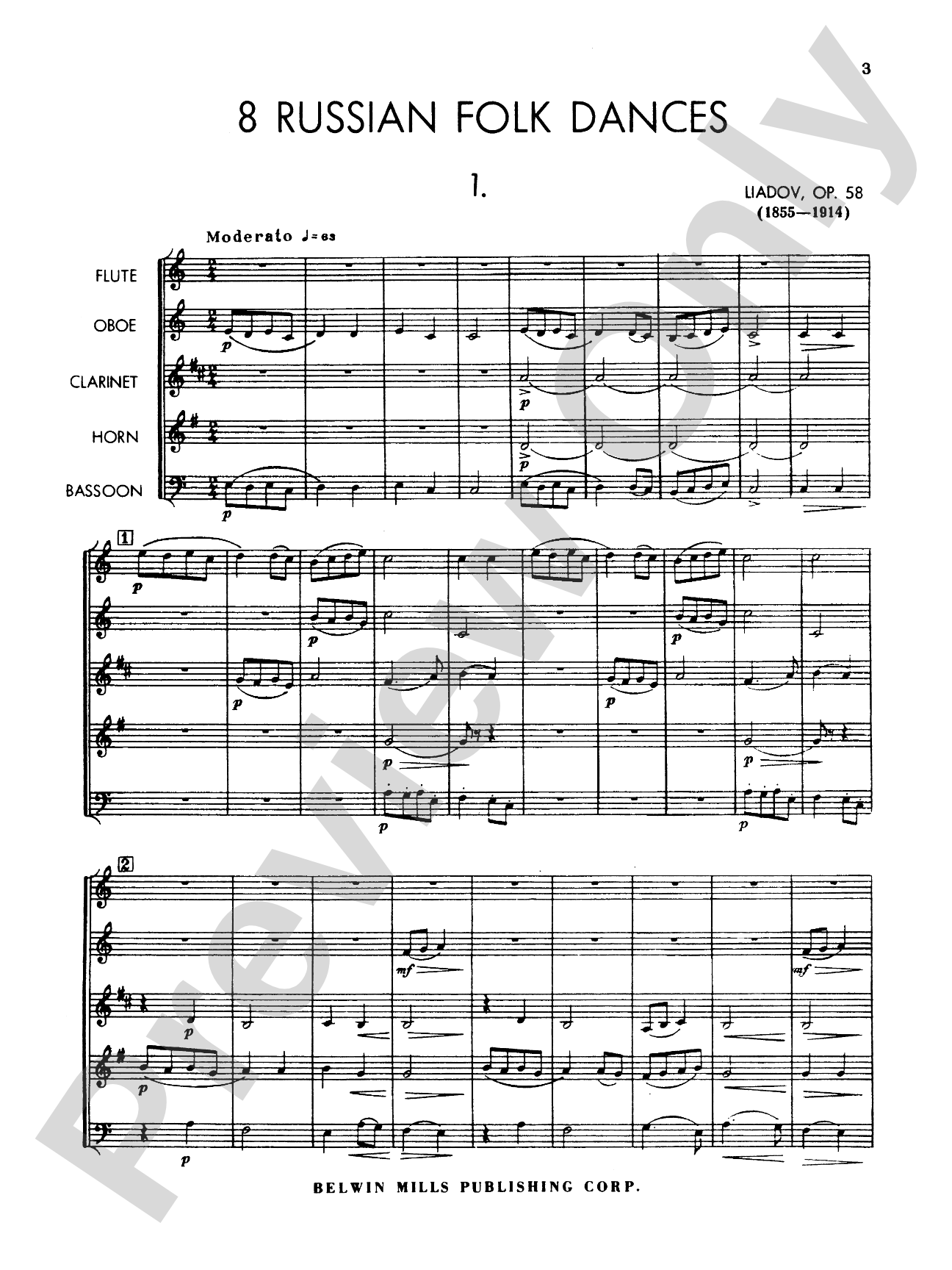
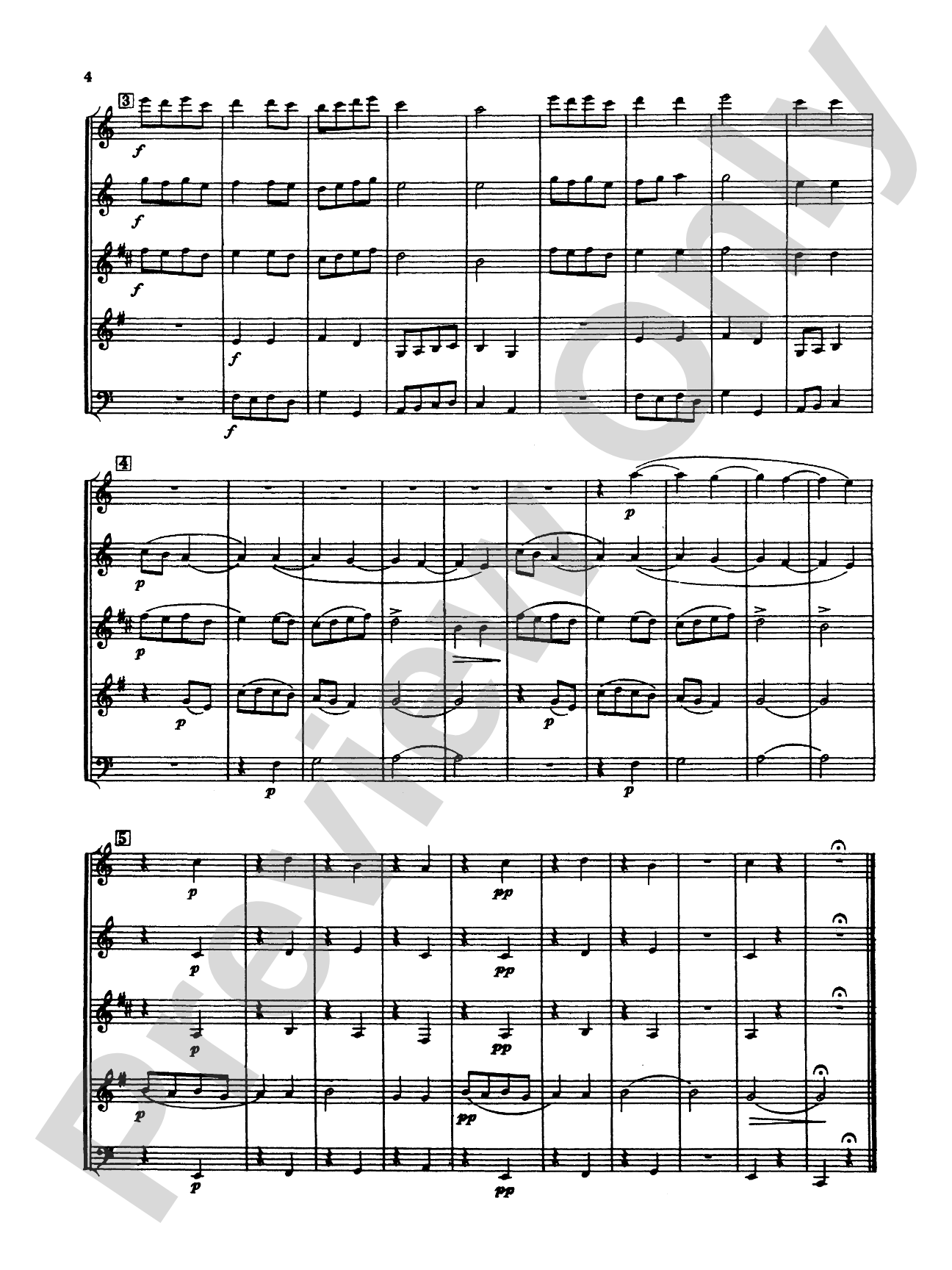

Liadov: Eight Russian Folk Dances, Op. 58: Woodwind Quintet Book
By Anatol Liadov
Item: 00-PK-0003738

$9.99
Pickup currently not available
Buy Extra Parts (Digital PDF Download)
Parts Added to Cart!
Related Items
Eight Russian Folk Dances, Opus 58: Woodwind Quintet Book |
$9.95
|
View |
Description
Expertly arranged Quintets for Flute, Oboe, Clarinet, Horn, and Bassoon by A.L. Dannhauser from the Kalmus Edition series. This is from the Romantic era.


Don't just read it, hear it, play along with it, and watch your students grow with it. In MakeMusic Cloud, Liadov: Eight Russian Folk Dances, Op. 58: Woodwind Quintet Book comes alive with professional accompaniment, adjustable tempo, and built-in practice tools that turn solo practice into real progress.
Open in the Player
Jump straight in and assign it today.
Start Your Free Trial
Open this title and explore the full library in minutes.
Sample Audio
No sample audio found.
Sample Video
No sample videos found.
Additional Details
Series:
Kalmus Edition
Publisher:
Alfred Music
Page Count:
68
SKU:
00-PK-0003738
Instrumentation:
Woodwind Quintet (Flute, Oboe, Clarinet, Horn, & Bassoon)
More about this title
About the Composer: Anatol Liadov
Anatol Liadov (1855-1914) was a Russian composer and conductor whose intimate, refined orchestral works earned him a lasting place in the Romantic repertoire. Though he composed fewer large-scale works than his contemporaries, Liadov's gift for orchestration and his deep connection to Russian folk traditions shaped a body of music marked by harmonic sophistication and pictorial beauty.
Liadov spent much of his career in St. Petersburg, where he taught at the Conservatory and conducted the Imperial opera. His arrangements and original compositions often drew on Russian folk melodies, transforming simple thematic material into richly layered musical tapestries. For musicians and educators, his work demonstrates how masterful orchestration can elevate folk material into concert repertoire of genuine artistic substance.
Why we love this
Liadov's Eight Russian Folk Dances arrive already arranged with keen sensitivity to woodwind textures by A.L. Dannhauser, sparing you the work of adaptation while preserving the composer's sophisticated harmonic language. The collection offers substantial concert material that sits comfortably in a woodwind quintet's range without demanding virtuosity beyond intermediate-to-advanced players. These dances bridge the gap between folk authenticity and artistic refinement, giving your ensemble repertoire with genuine character and audience appeal.
What to expect
These dances carry the warmth and rhythmic vitality of Russian folk music, yet Liadov's orchestration elevates them into something more elegant and introspective. You'll find moments of genuine lyricism alongside spirited, dance-like passages that invite precision and energy from the ensemble.
Who it's for
Advanced intermediate and advanced woodwind quintets seeking repertoire beyond the standard 20th-century canon. This collection works well for ensembles preparing for chamber music festivals or seeking to program something less frequently heard in competitions.
How to get the most out of it
- Balance the melodic line across the group rather than isolating it to one voice. Liadov distributes thematic material throughout the quintet, so listen for moments where the oboe, clarinet, or flute trade a phrase and adjust volume accordingly.
- Attend to harmonic color in slower sections by voicing the quintet as a true chord, not as individual lines. The sustaining power of five instruments creates resonance that a smaller ensemble cannot achieve; use that to your advantage.
- Shape each dance with clear character and tempo distinction. The pieces vary in mood and rhythm, so rehearse them as distinct movements rather than as a medley.
How to use it
Program one or two dances as contrasting pieces within a larger woodwind quintet concert, or use the full cycle as a substantial standalone work that demonstrates the ensemble's range and sensitivity. The folk-based material also pairs well with more contemporary or nationalist-era chamber works, creating thematic coherence around a folk-inspired program.
Skills your students will build
- Balancing and blending five independent lines into unified harmonic color
- Identifying and executing stylistic nuance in music rooted in folk traditions
- Shaping phrase contours across an ensemble rather than within a single part
- Reading and realizing chromatic and tertian harmonies characteristic of late Romantic orchestration
- Sustaining ensemble focus across multiple short, contrasting movements