
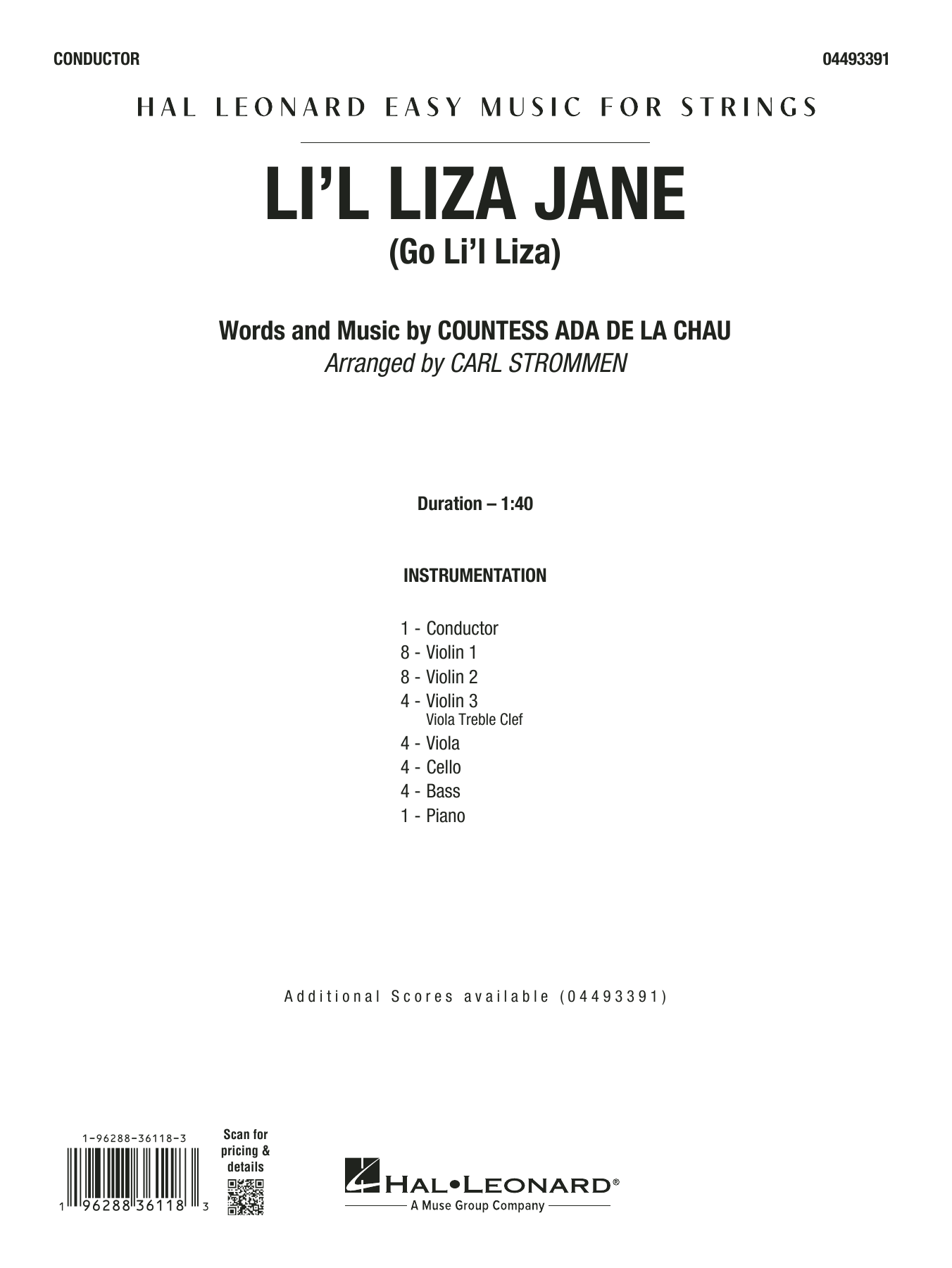

Li'l Liza Jane: String Orchestra Conductor Score & Parts
By Carl Strommen / As performed by Countess Ada De Lachau
Grade: 2
Item: 35-PK01776188
$50.00
Pickup currently not available
Buy Extra Parts (Digital PDF Download)
| Product | Price | Quantity |
|---|---|---|
| Li'l Liza Jane - Conductor Score (Full Score) | $7.50 | |
| Li'l Liza Jane - Violin 1 | $7.00 | |
| Li'l Liza Jane - Violin 2 | $7.00 | |
| Li'l Liza Jane - Violin 3 (Viola Treble Clef) | $7.00 | |
| Li'l Liza Jane - Viola | $7.00 | |
| Li'l Liza Jane - Cello | $7.00 | |
| Li'l Liza Jane - Bass | $7.00 | |
| Li'l Liza Jane - Piano | $7.00 |
Parts Added to Cart!
Description
A bright and cheerful arrangement of the beloved American folk song. The perfect opportunty to teach syncopation and articulations. All sections get an opportunity at the melody.


Li'l Liza Jane: String Orchestra Conductor Score & Parts isn't in MakeMusic Cloud just yet...but it could be. Let us know you'd like to see it, and you'll help shape what comes next. In the meantime, start a free trial and dive into thousands of interactive titles your students can play along with today.
Request This Title
Tell us you want it.
Start Your Free Trial
Explore everything that's ready to play right now.
Sample Audio
No sample audio found.
Sample Video
No sample videos found.
Additional Details
Publisher:
Hal Leonard
SKU:
35-PK01776188
More about this title
About the Composer: Carl Strommen

Carl Strommen stands among the most frequently performed composer/arrangers across band, orchestra, jazz ensemble, and choral settings in the United States and abroad. His work appears regularly in concert halls, on television, and in film, and he commands consistent demand as both a clinician and commission writer. His expansive catalog has earned him the ASCAP Standard Writers Award year after year.
A City College of New York alumnus, Strommen maintains active ties to academia as an adjunct professor of orchestration and composition at C.W. Post Campus of Long Island University. He resides on Long Island while maintaining close family connections to Colorado's Front Range.
Why we love this
Strommen's arrangement distributes the melody across all sections, ensuring every player feels ownership of the tune rather than sitting in accompaniment patterns. The syncopation and articulation work embedded in the score teaches real musical concepts without turning the piece into a technique exercise, and the Grade 2 level means your students can nail the sound without fighting the fundamentals.
What to expect
Picture a folk melody delivered with snap and personality. Every section gets a moment to shine, and the syncopated rhythms create forward motion and playfulness. The arrangement feels contemporary without losing the warmth of the original tune.
Who it's for
String orchestras at the elementary and early middle school level who are ready to tackle syncopation and style without getting bogged down in technical difficulty. This works perfectly for groups building foundational ensemble skills while playing a recognizable, uplifting tune.
How to get the most out of it
- Bring out the syncopated figures with clear articulation; exaggerated separation on the offbeats prevents the rhythm from sounding muddy and highlights what makes this arrangement distinctive.
- Rotate leadership of the melody among sections so each part of the orchestra gets a chance to lead a full phrase. This keeps ensemble members engaged and builds confidence across the group.
- Treat the accompaniment patterns with as much care as the melody line. Steady, even rhythmic support makes the syncopation land cleanly and keeps the piece feeling energetic rather than ragged.
- Balance the brightness of the arrangement by controlling vibrato in younger players; let the articulation and rhythm carry the character rather than compensating with excessive vibrato.
How to use it
Pair this with other Strommen arrangements or folk song settings to build a concert theme around American roots music. It works beautifully as a concert opener to set an energetic tone, or as the anchor of a suite exploring different regions and traditions.
Skills your students will build
- Reading and performing syncopated rhythmic figures
- Articulation styles and their impact on musical character
- Trading the melody across different sections and maintaining cohesion
- Supporting melody lines with steady, rhythmically secure accompaniment patterns
- Ensemble balance when all sections share equal musical importance