
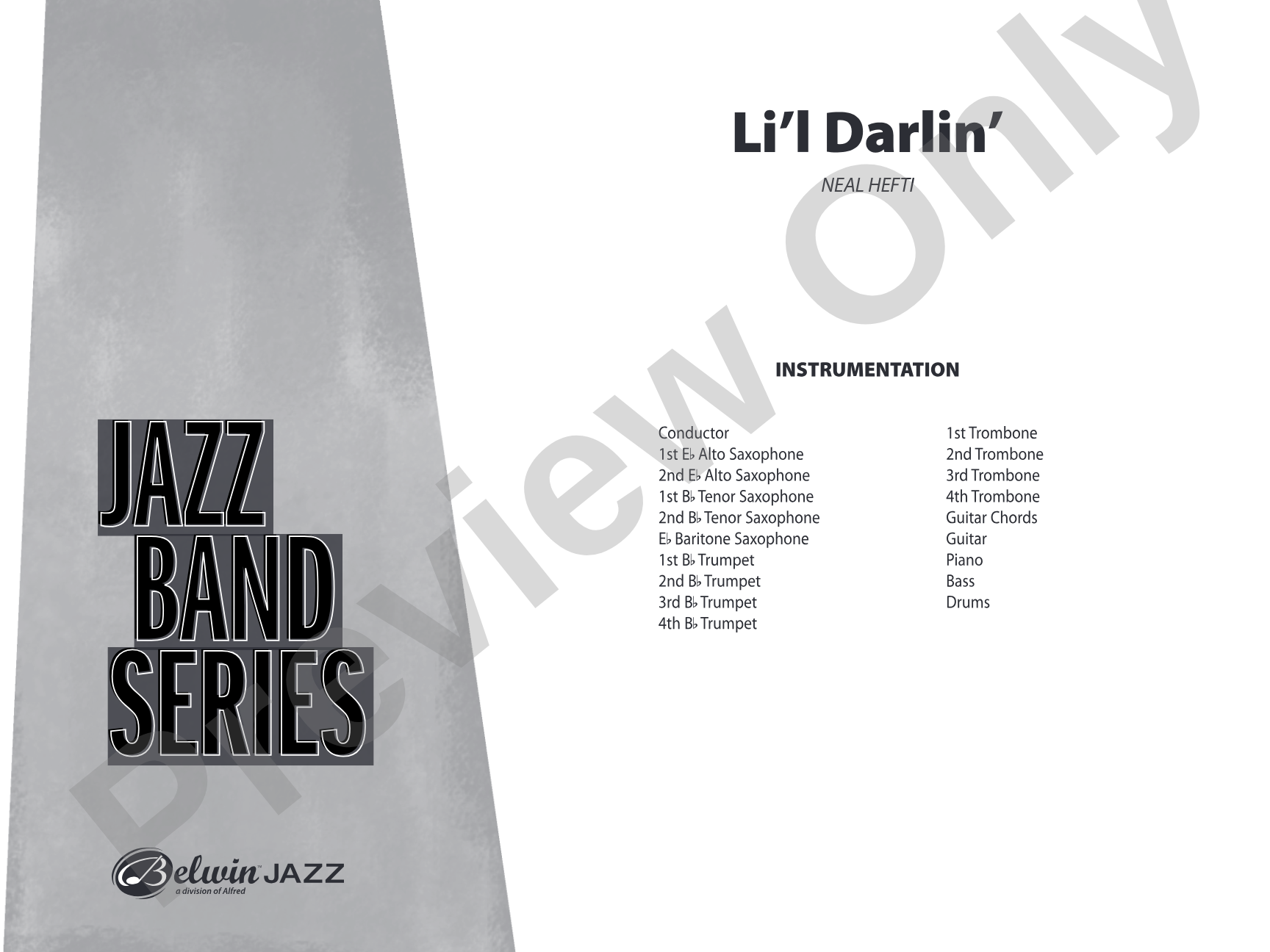

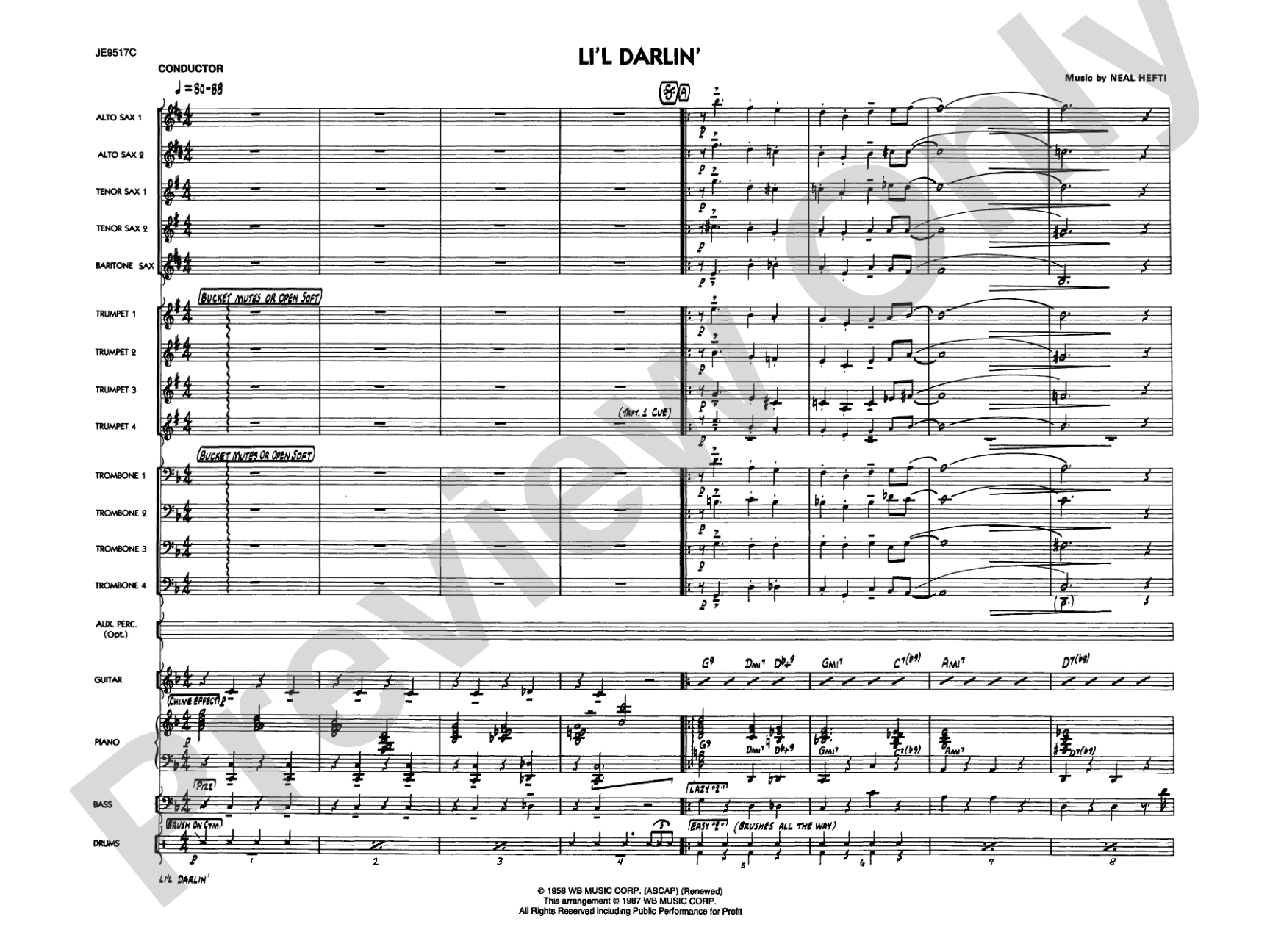
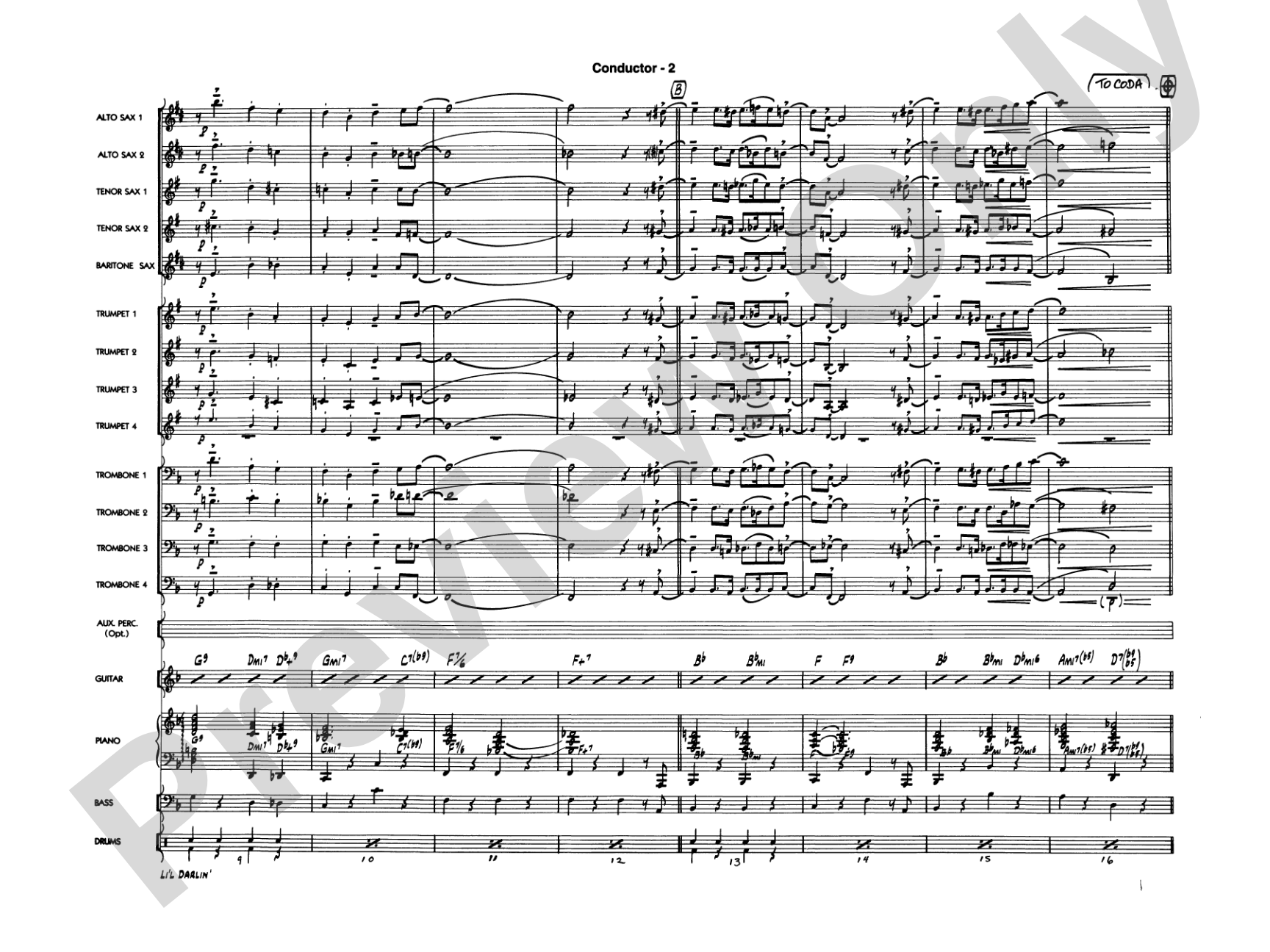
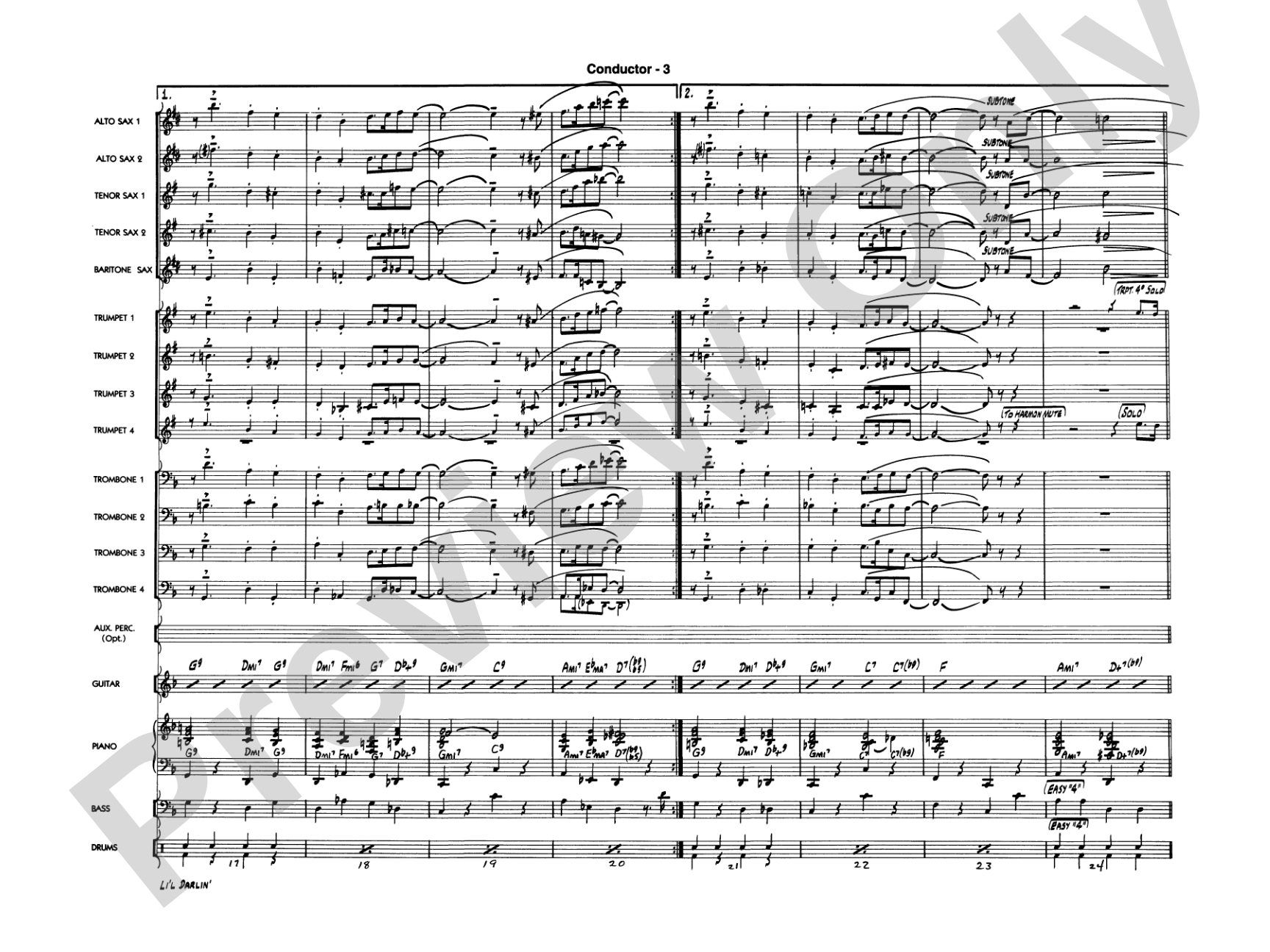
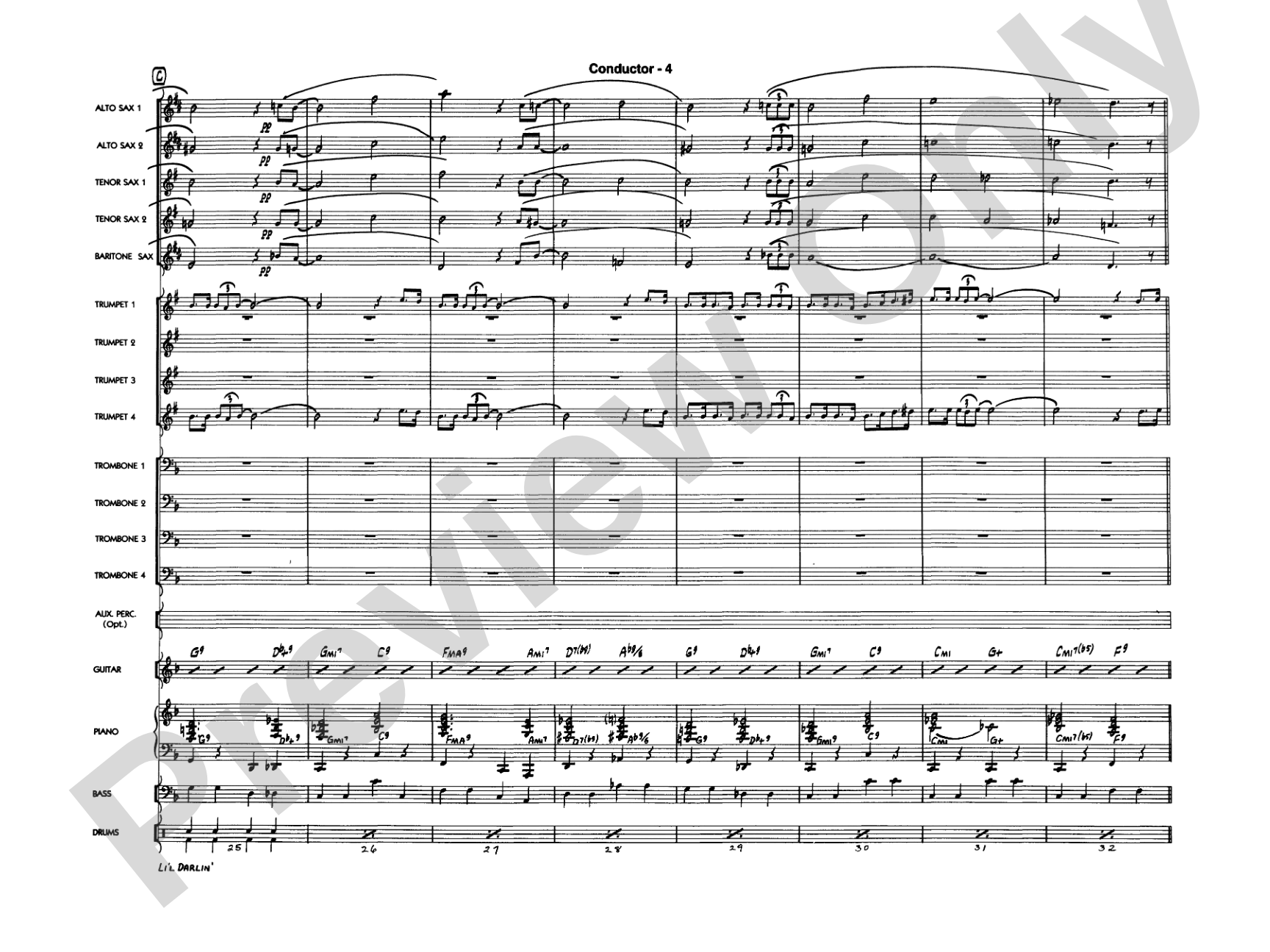
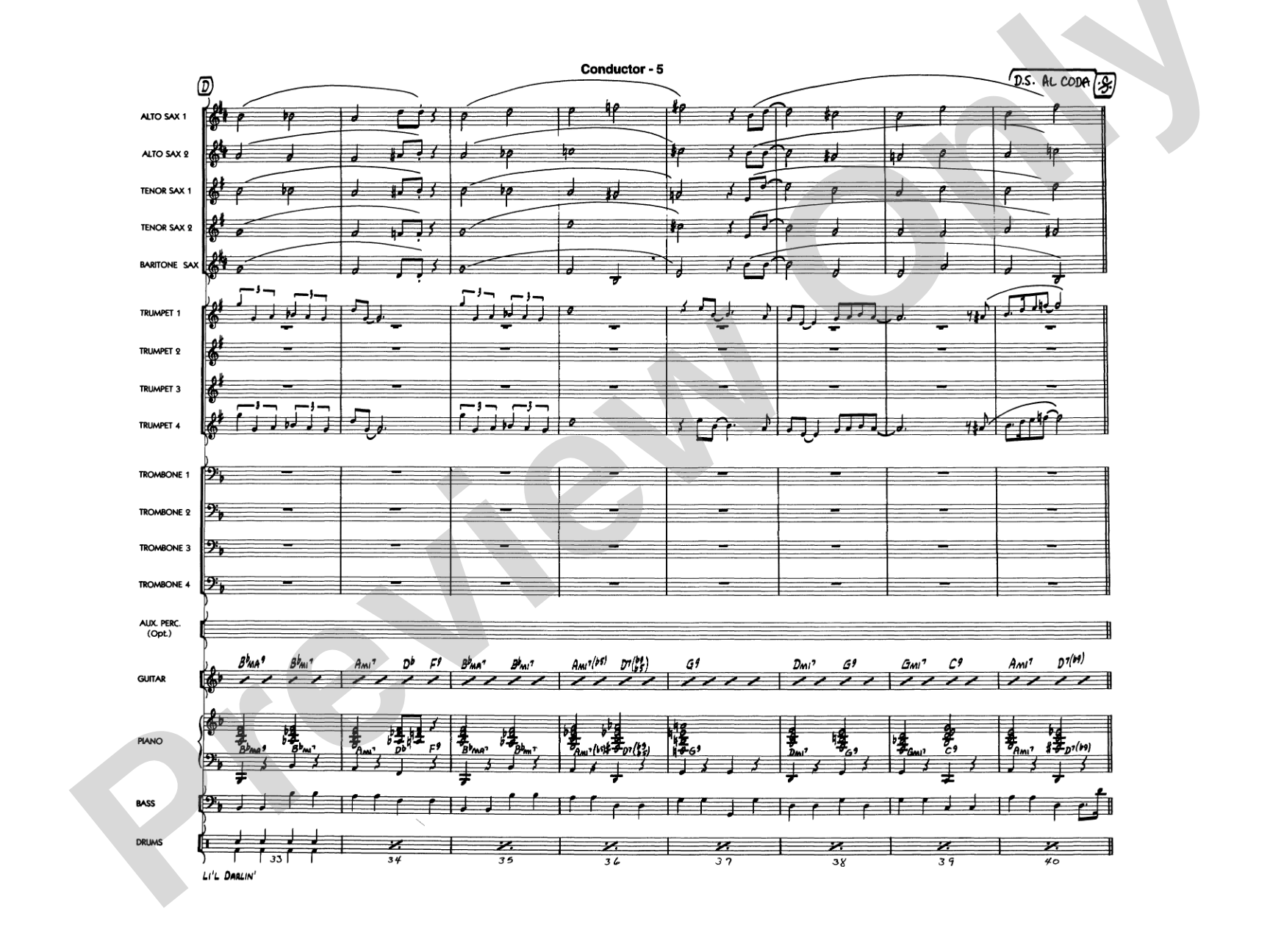
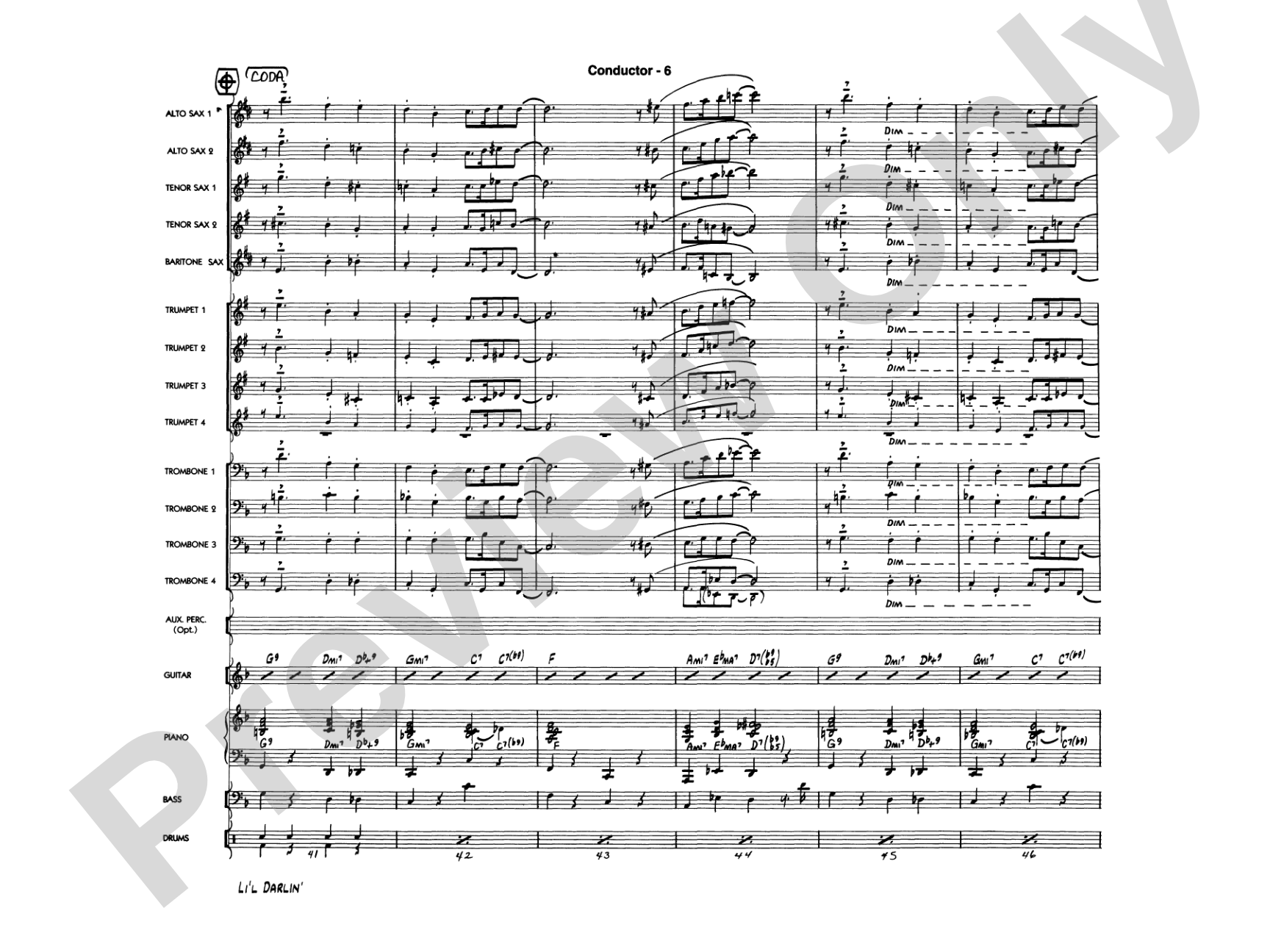
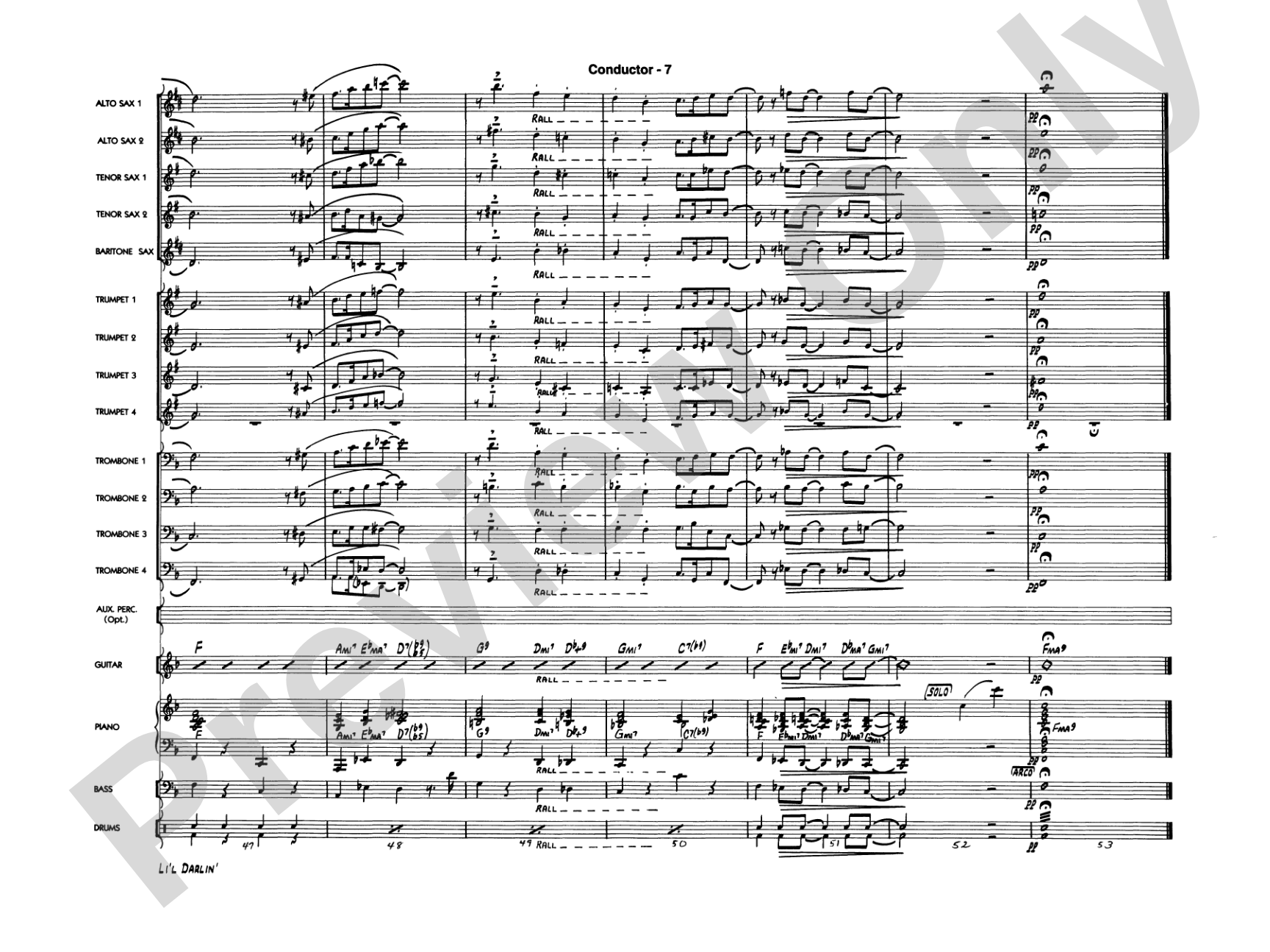




Li'l Darlin': Jazz Ensemble Conductor Score & Parts
By Neal Hefti
Grade: 2 (Medium Easy)
Item: 00-PK-0006850

$52.00
Pickup currently not available
Buy Extra Parts (Digital PDF Download)
| Product | Price | Quantity |
|---|---|---|
| Li'l Darlin': Score | $11.00 | |
| Li'l Darlin': E-flat Alto Saxophone | $3.00 | |
| Li'l Darlin': 2nd E-flat Alto Saxophone | $3.00 | |
| Li'l Darlin': B-flat Tenor Saxophone | $3.00 | |
| Li'l Darlin': 2nd B-flat Tenor Saxophone | $3.00 | |
| Li'l Darlin': E-flat Baritone Saxophone | $3.00 | |
| Li'l Darlin': 1st B-flat Trumpet | $3.00 | |
| Li'l Darlin': 2nd B-flat Trumpet | $3.00 | |
| Li'l Darlin': 3rd B-flat Trumpet | $3.00 | |
| Li'l Darlin': 4th B-flat Trumpet | $3.00 | |
| Li'l Darlin': 1st Trombone | $3.00 | |
| Li'l Darlin': 2nd Trombone | $3.00 | |
| Li'l Darlin': 3rd Trombone | $3.00 | |
| Li'l Darlin': 4th Trombone | $3.00 | |
| Li'l Darlin': Guitar Chords | $3.00 | |
| Li'l Darlin': Guitar | $3.00 | |
| Li'l Darlin': Drums | $3.00 | |
| Li'l Darlin': String Bass | $3.00 | |
| Li'l Darlin': Piano Accompaniment | $3.00 |
Parts Added to Cart!
Description
This is a re-issue of the famous title featured by Count Basie and others. This should be in EVERY school jazz ensemble library and performed at least once a week. Great for teaching rhythmic ensemble performance. You shouldn't miss this one! (4:30)


Don't just read it, hear it, play along with it, and watch your students grow with it. In MakeMusic Cloud, Li'l Darlin': Jazz Ensemble Conductor Score & Parts comes alive with professional accompaniment, adjustable tempo, and built-in practice tools that turn solo practice into real progress.
Open in the Player
Jump straight in and assign it today.
Start Your Free Trial
Open this title and explore the full library in minutes.
Sample Audio
No sample audio found.
Sample Video
No sample videos found.
Additional Details
Series:
Jazz Band Series
Publisher:
Alfred Music
Page Count:
38
SKU:
00-PK-0006850
More about this title
About the Composer: Neal Hefti
Neal Hefti (1922-2002) was a composer, arranger, and bandleader who shaped the sound of mid-century American jazz and popular music. His work with Count Basie's orchestra produced some of the most recorded big band arrangements in history, and his gift for accessible, swinging melody made his compositions immediate favorites in rehearsal rooms and concert halls alike.
Hefti's arrangements prioritize clarity and ensemble cohesion without sacrificing sophistication. His writing for younger ensembles demonstrates deep understanding of pedagogical needs: parts are idiomatic to each instrument, rhythmic figures sit naturally in the hand, and the overall architecture teaches musicians how sections lock together. His legacy rests not just on famous recordings but on charts that remain essential teaching tools decades after composition.
Why we love this
This is the standard against which medium-easy jazz ensemble charts are measured. The melody is instantly memorable, the harmonic language is sophisticated without being opaque, and the rhythmic foundation teaches students how to feel and play with genuine swing. Directors return to it year after year because it works: students improve audibly, audiences connect immediately, and the piece never wears out its welcome.
What to expect
Easygoing and propulsive. The tune settles into a relaxed groove that feels effortless once the ensemble finds the pocket, then opens up into moments of genuine swing energy. There's an unhurried confidence to the writing that invites students to breathe and play naturally rather than strain.
Who it's for
School jazz ensembles at the Grade 2 level looking for a reliable centerpiece that teaches swing fundamentals without oversimplifying. This score and parts set works equally well for students encountering big band jazz for the first time and for ensembles refining their section work and rhythmic precision.
How to get the most out of it
- Lock the rhythm section into a single pulse before adding horns. Have piano and bass find the pocket together, then bring in drums as the final layer. This sequence prevents the rhythm from drifting into a mechanical feel.
- Balance the saxophone section against the trumpet line in the opening statement. The melody lives in the trumpets, but the saxes must sit slightly behind without disappearing into the background.
- Resist rushing during the swing section. Take a tempo check at rehearsal to find the pocket, then trust that relaxed count. Younger ensembles often accelerate when the energy builds.
- Emphasize the tag ending. This closing figure is your chance to leave the audience with the tune in their ears; nail the ensemble precision and the groove stays intact.
How to use it
Program this as a concert opener or closer where you want the audience immediately engaged and the ensemble feeling grounded. It also pairs beautifully in a set with other classic big band material, anchoring a jazz history-focused concert or serving as the bridge between a traditional selection and something more contemporary.
Skills your students will build
- Swing feel and rhythm section entrainment
- Sectional balance and blend within trumpet and saxophone sections
- Reading lead sheet symbols and interpreting jazz articulation
- Ensemble precision in rhythmic figures and ensemble hits
- Dynamic control in a jazz context