
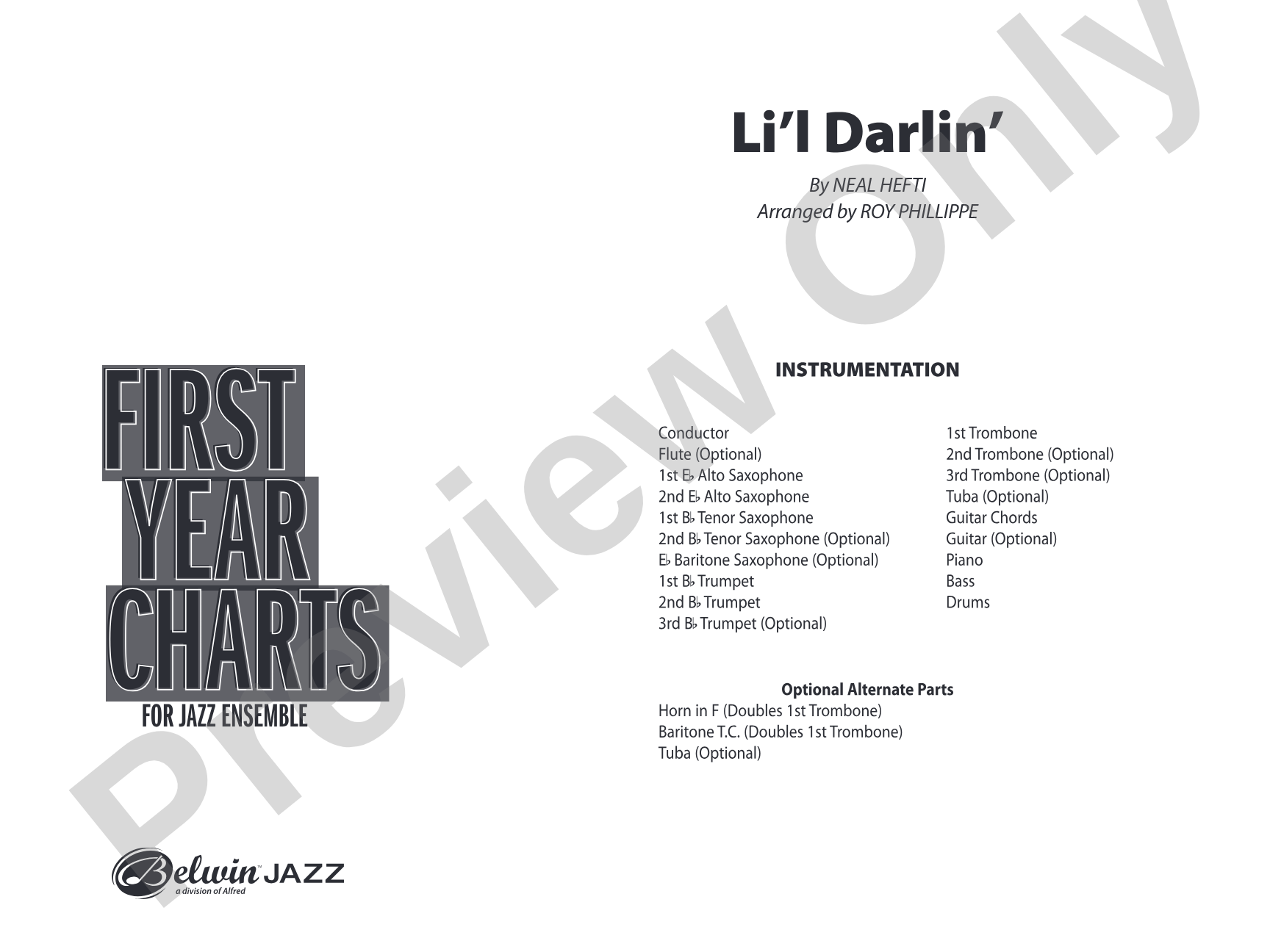

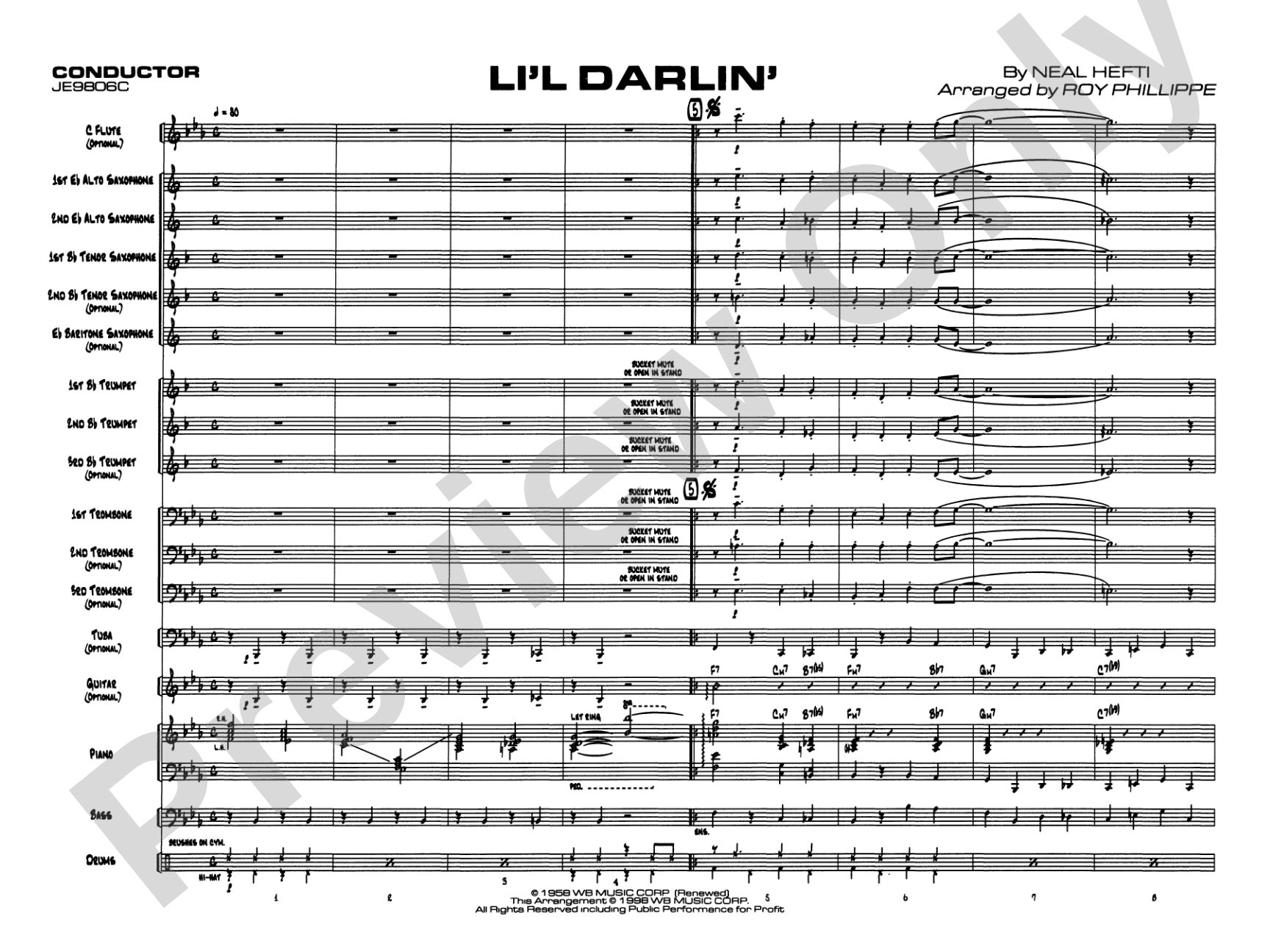
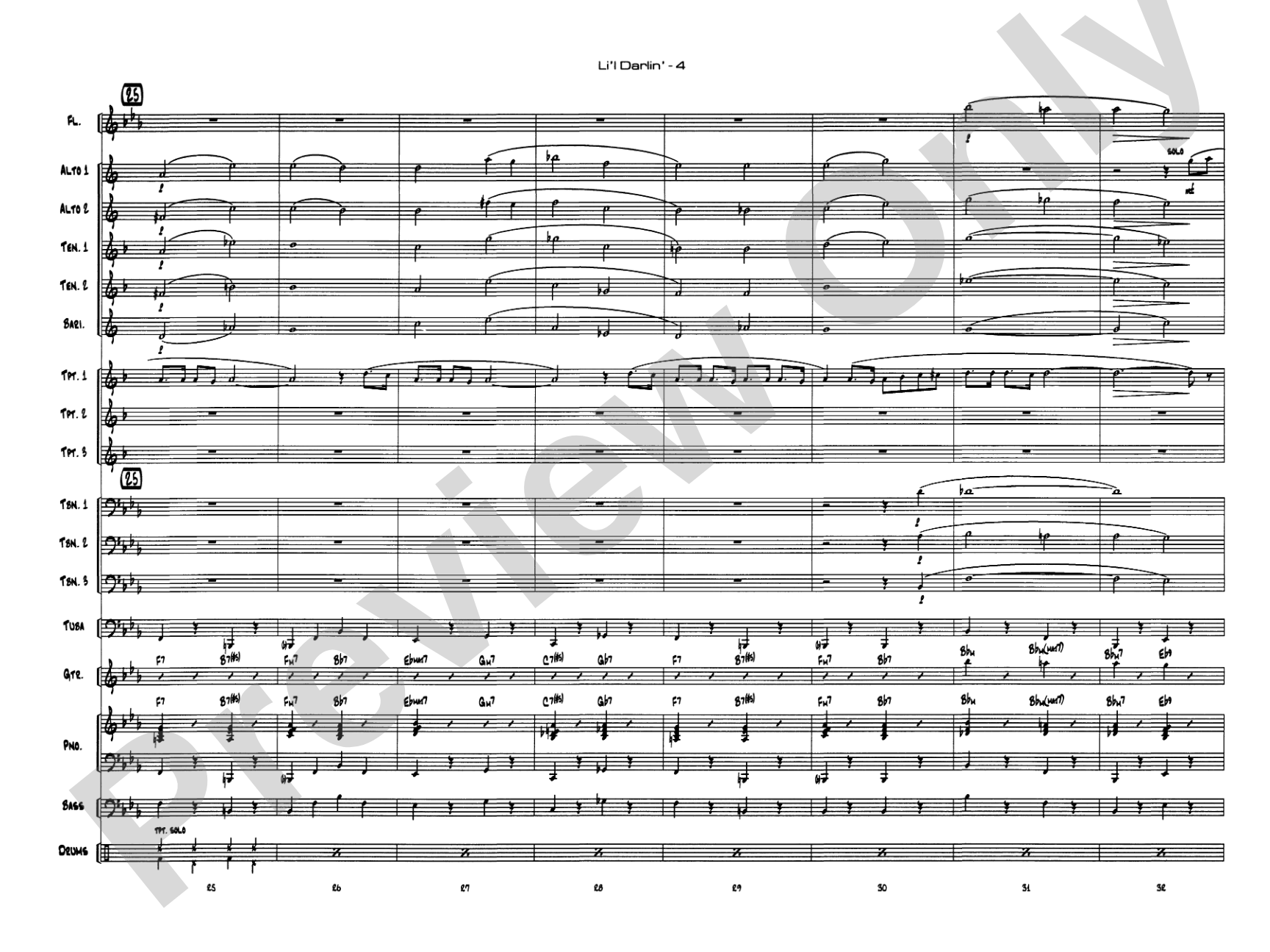
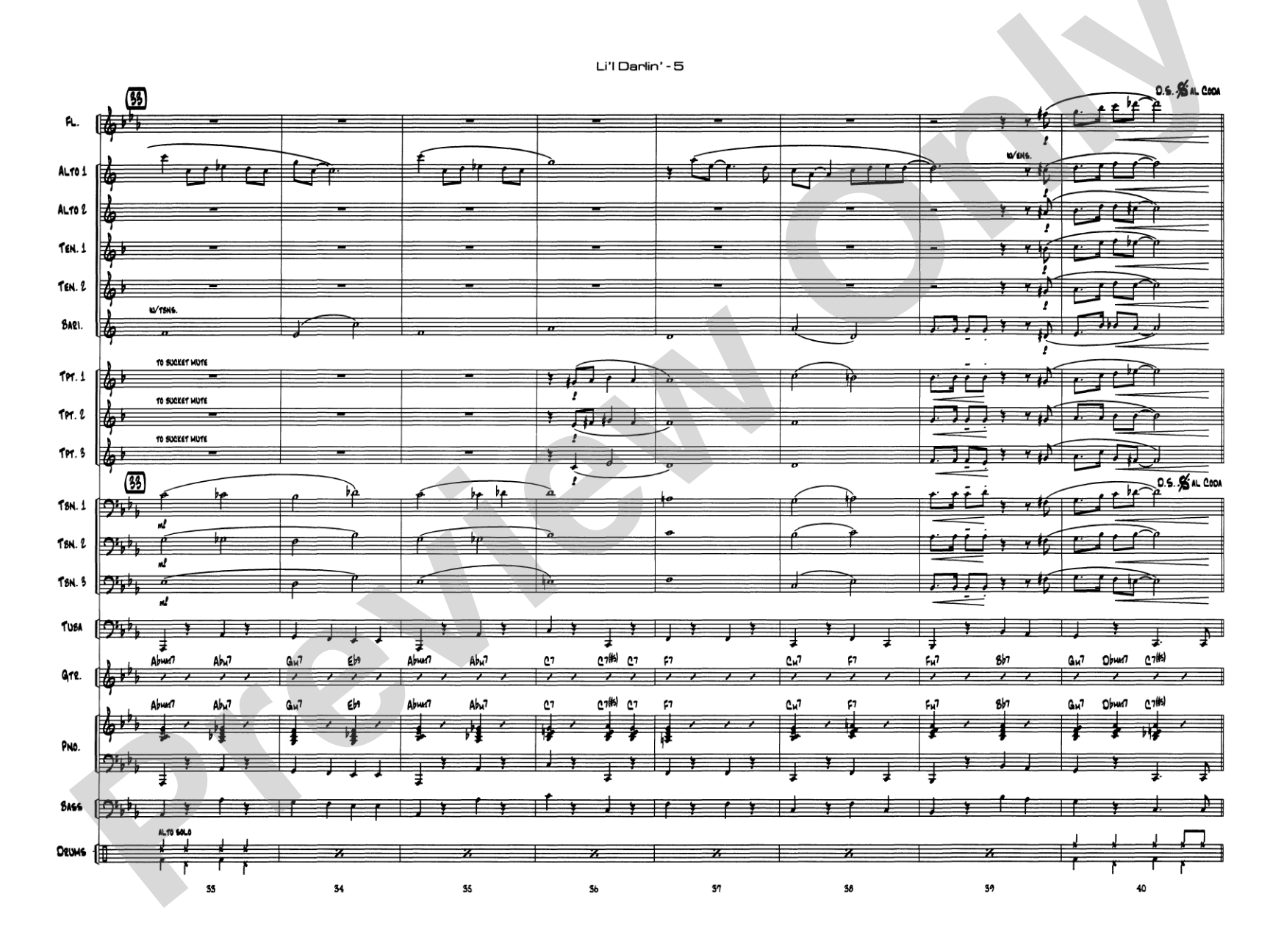
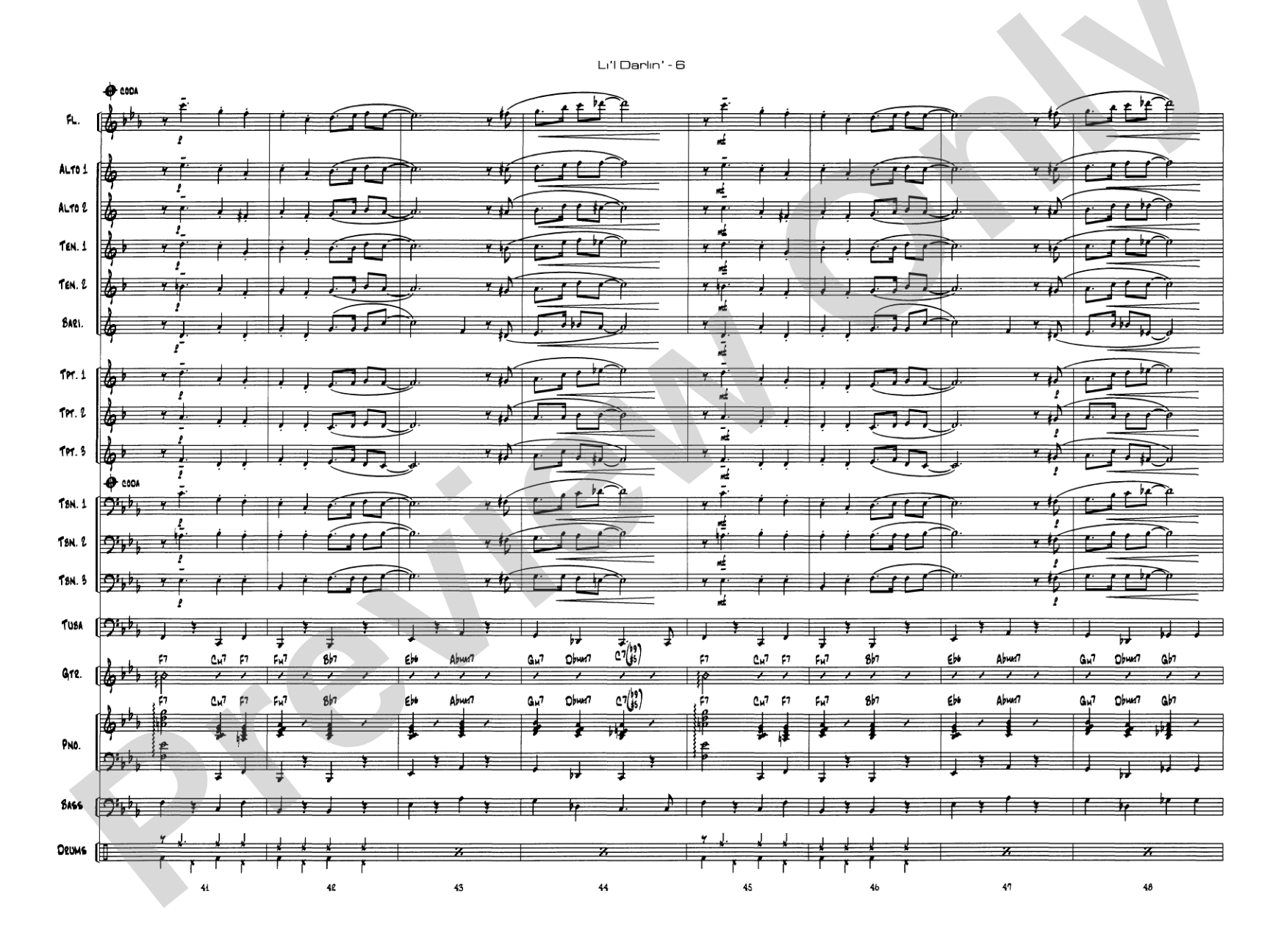
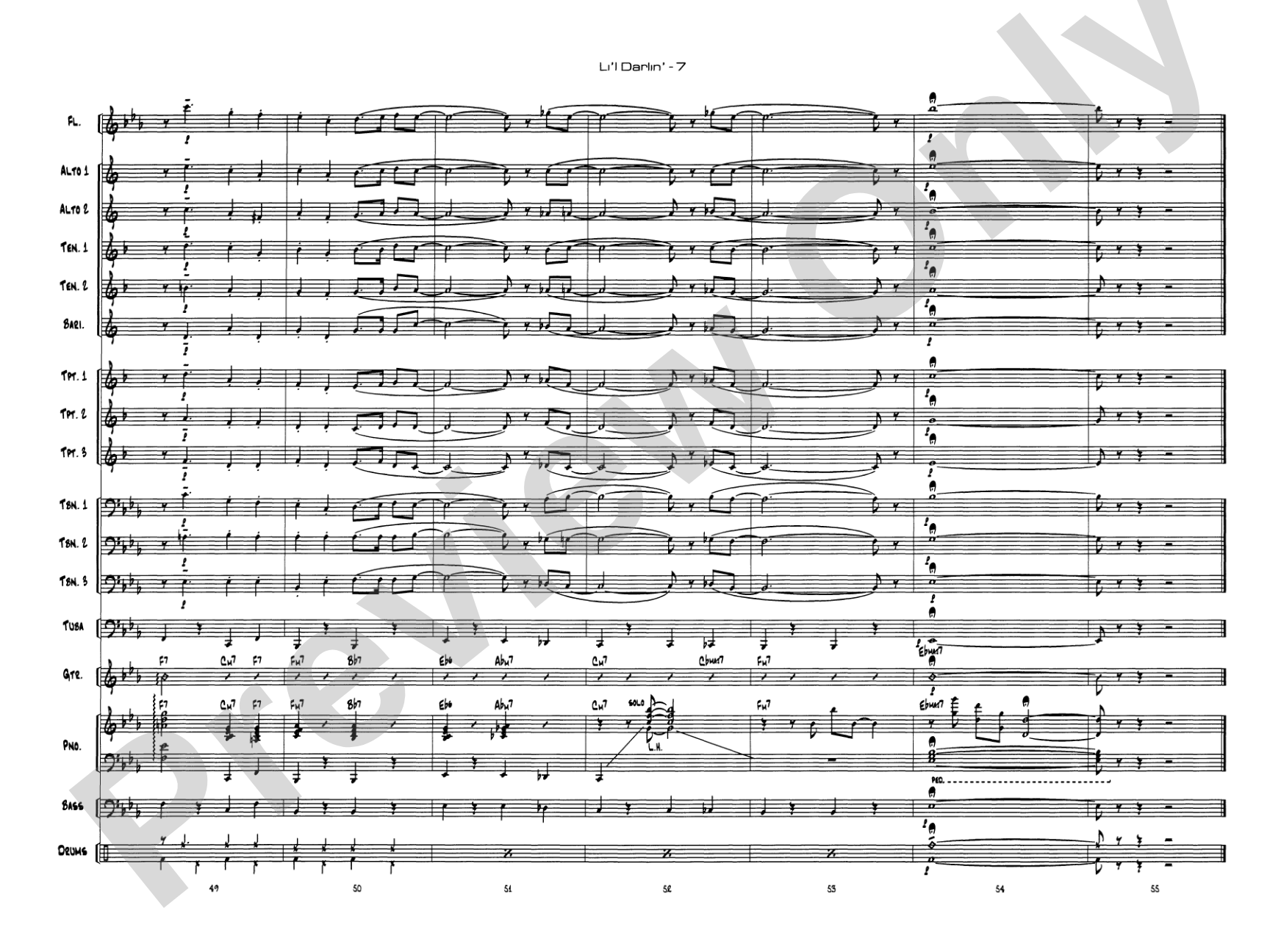




Li'l Darlin': Jazz Ensemble Conductor Score & Parts
By Neal Hefti / arr. Roy Phillippe
Grade: 1.5 (Easy)
Item: 00-PK-0005357

$42.00
Pickup currently not available
Buy Extra Parts (Digital PDF Download)
| Product | Price | Quantity |
|---|---|---|
| Li'l Darlin': Score | $6.00 | |
| Li'l Darlin': Flute | $3.00 | |
| Li'l Darlin': E-flat Alto Saxophone | $3.00 | |
| Li'l Darlin': 2nd E-flat Alto Saxophone | $3.00 | |
| Li'l Darlin': B-flat Tenor Saxophone | $3.00 | |
| Li'l Darlin': 2nd B-flat Tenor Saxophone | $3.00 | |
| Li'l Darlin': E-flat Baritone Saxophone | $3.00 | |
| Li'l Darlin': 1st B-flat Trumpet | $3.00 | |
| Li'l Darlin': 2nd B-flat Trumpet | $3.00 | |
| Li'l Darlin': 3rd B-flat Trumpet | $3.00 | |
| Li'l Darlin': 1st Trombone | $3.00 | |
| Li'l Darlin': 2nd Trombone | $3.00 | |
| Li'l Darlin': 3rd Trombone | $3.00 | |
| Li'l Darlin': Tuba | $3.00 | |
| Li'l Darlin': Guitar Chords | $3.00 | |
| Li'l Darlin': Guitar | $3.00 | |
| Li'l Darlin': Piano Accompaniment | $3.00 | |
| Li'l Darlin': String Bass | $3.00 | |
| Li'l Darlin': Drums | $3.00 | |
| Li'l Darlin': 1st F Horn | $3.00 | |
| Li'l Darlin': Baritone T.C. | $3.00 |
Parts Added to Cart!
Description
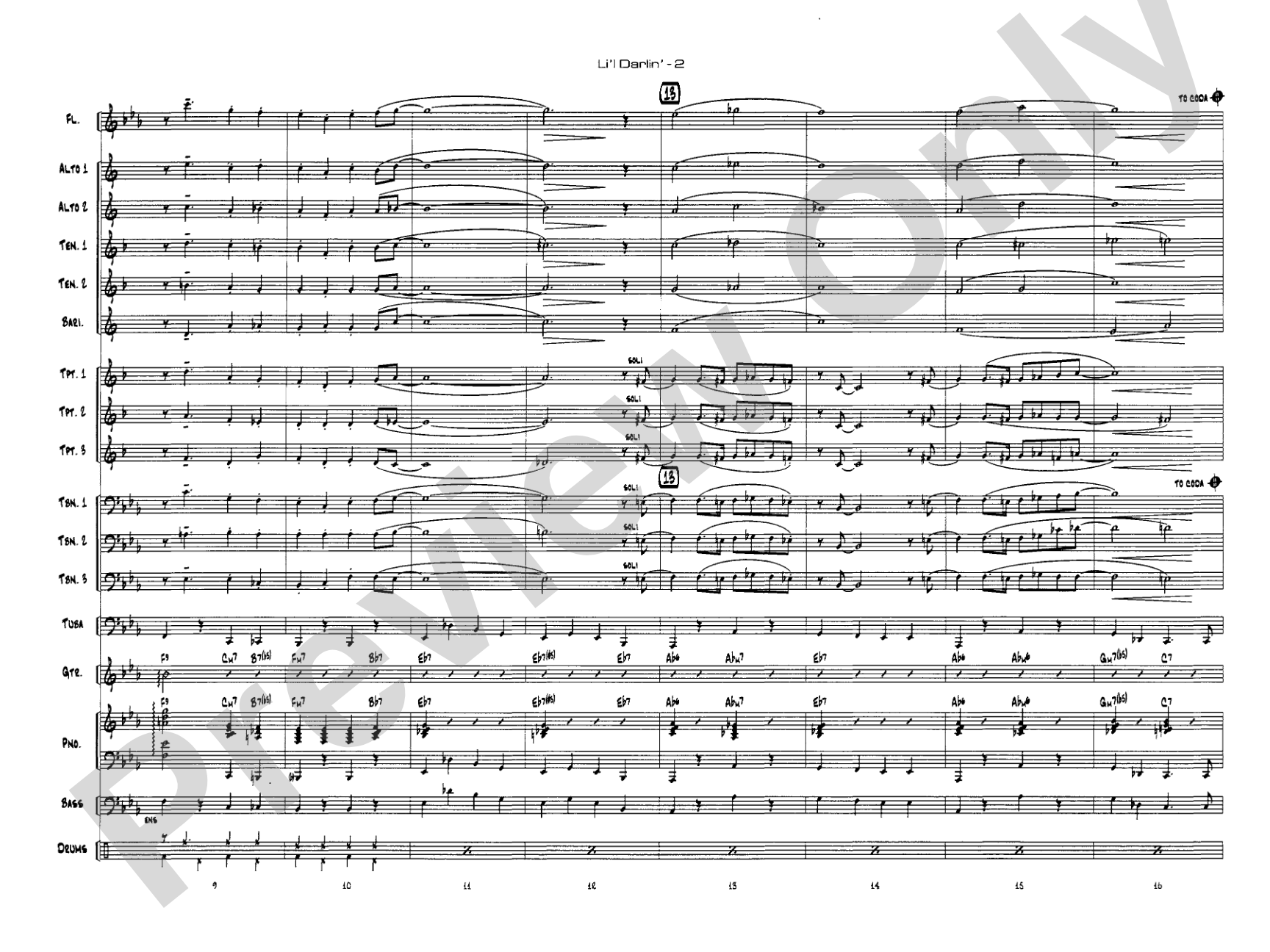
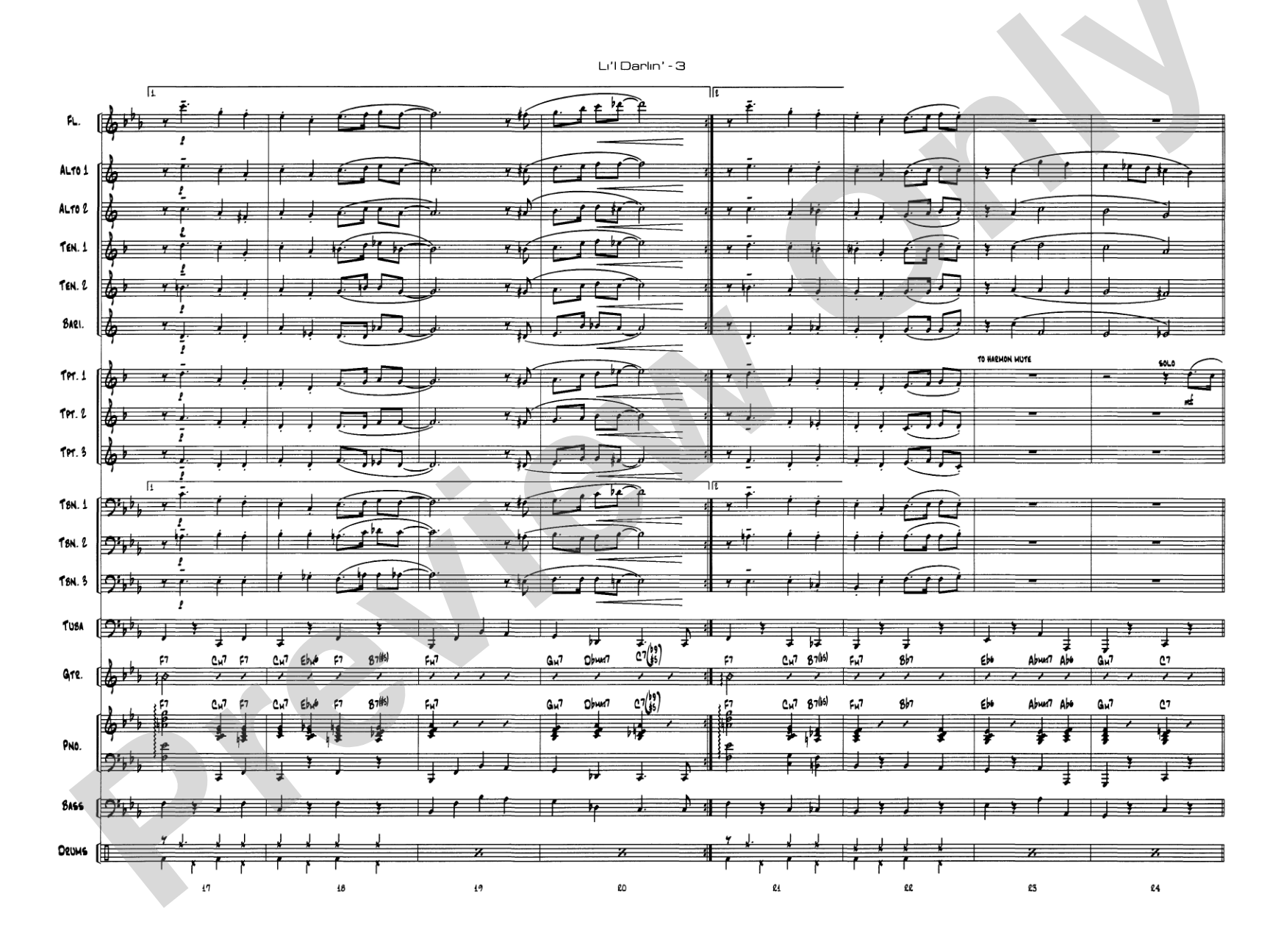
The best way to teach the laid-back 'Basie style' is by working on LI'L DARLIN', but up until now it was only playable by more advanced groups. Roy Phillippe has changed the key and reorchestrated this jazz band classic so it is playable by ensembles at any ability level, and with reduced instrumentation as well. Every developing jazz group must have this chart: classic jazz, wonderful teaching material, now made very easy to perform . . . it sounds like a guaranteed success! (4:12)


Don't just read it, hear it, play along with it, and watch your students grow with it. In MakeMusic Cloud, Li'l Darlin': Jazz Ensemble Conductor Score & Parts comes alive with professional accompaniment, adjustable tempo, and built-in practice tools that turn solo practice into real progress.
Open in the Player
Jump straight in and assign it today.
Start Your Free Trial
Open this title and explore the full library in minutes.
Sample Audio
No sample audio found.
Sample Video
No sample videos found.
Additional Details
Series:
First Year Charts for Jazz Ensemble
Publisher:
Alfred Music
Page Count:
44
SKU:
00-PK-0005357
More about this title
About the Composer: Neal Hefti
Neal Hefti (1922-2010) was a composer, arranger, and conductor who became one of the most important voices in big band and jazz orchestration during the 1950s and 1960s. His work with the Count Basie orchestra defined an era of accessible, swinging ensemble writing, and his gift for melody made standards like "Li'l Darlin'" and "Cute" enduring fixtures in jazz repertoire. Hefti's orchestrations balanced sophistication with clarity, a philosophy that made his charts work across different ability levels and ensemble sizes.
Why we love this
Roy Phillippe's adaptation opens the door to authentic Basie-style ensemble playing for groups that would never have attempted the original. The groove sits easily under developing musicians' fingers while preserving Hefti's melodic elegance and the laid-back sophistication that makes this tune so satisfying to play. Your students will feel like they're swinging at a real jazz gig from their first rehearsal.
What to expect
Easy to play but never easy-sounding. "Li'l Darlin'" glides along with the ease of a conversation between old friends, never rushing, never overreaching. The melody sits warmly in every section, and the harmony moves with gentle inevitability, creating that perfect Basie-era balance of sophistication and relaxation.
Who it's for
First and second-year jazz ensemble students, developing programs building their repertoire for contest or festival settings, and teachers who need standards-based repertoire that works at Grade 1.5 without losing musicality. Any director working with mixed-ability ensembles will appreciate that this chart gives students the genuine experience of playing a Basie-style standard without requiring advanced technical facility.
How to get the most out of it
- Let the rhythm section establish the tempo and pocket before bringing in the horns; this tune thrives on that relaxed, behind-the-beat feel that's harder to hear on the page than to feel in the room.
- Balance the melody with light comping in the horns during hits. The 'easy' here means accessible voices, not dynamics without shape. Keep the overall sound clean and open.
- Work dynamics section by section rather than as a whole ensemble. Rhythm players will find it easier to lock in swing feel when they're not fighting against pushed horn lines.
- Use the recorded accompaniment to lock the rhythm section before adding horns. Hearing a solid pocket makes the adjustment from reading to feeling nearly automatic for newer ensemble players.
How to use it
This works beautifully as a contest or festival selection for early-year ensembles looking to program a recognizable standard without the technical demands of the original. It pairs well with blues-based material or other accessible swing charts, letting you build a set list that teaches authentic jazz style in a single rehearsal season.
Skills your students will build
- Reading and executing concert Basie-style swing feel in a ensemble context
- Balancing section soli and horn hits with rhythm section groove
- Adjusting tone color and dynamics to support ensemble blend in a jazz setting
- Playing behind the beat and managing subdivisions within a relaxed tempo
- Understanding arranging choices through Phillippe's accessible reorchestration of a jazz standard