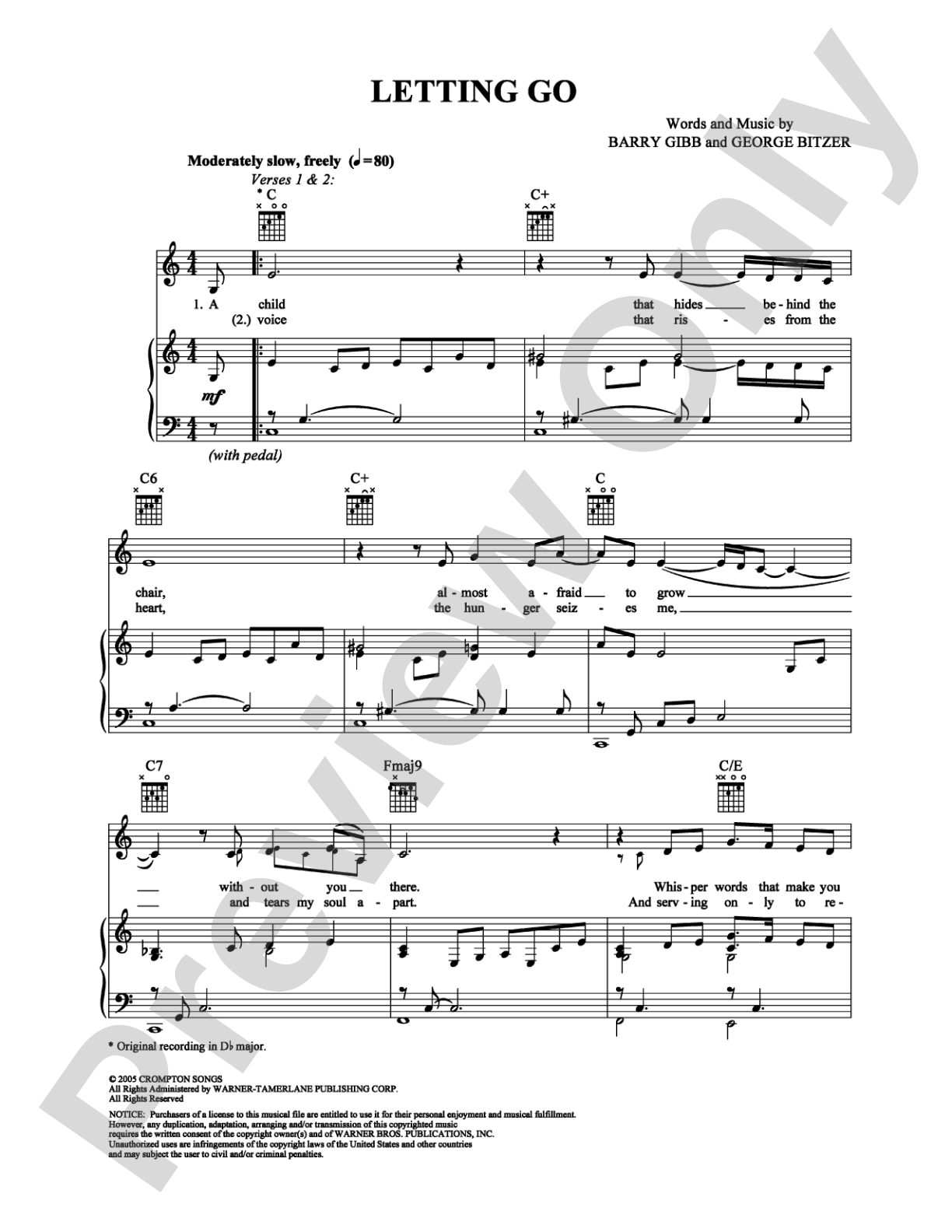
Letting Go: Piano/Vocal/Chords Digital Sheet Music

Letting Go: Piano/Vocal/Chords Digital Sheet Music

Barbra Streisand, Barry Gibb, George Bitzer

Item: 00-PS-0002755

Digital Download
$3.99
Description

Letting Go: Piano/Vocal/Chords Digital Sheet Music isn't in MakeMusic Cloud just yet...but it could be. Let us know you'd like to see it, and you'll help shape what comes next. In the meantime, start a free trial and dive into thousands of interactive titles your students can play along with today.

Sample Audio
No sample audio found.
Sample Video
Additional Details
SKU: 00-PS-0002755

More about this title

About the Artist: Barbra Streisand

Barbra Streisand stands as one of the most accomplished vocalists of the past six decades, with a career spanning Broadway, film, and popular music. Her interpretive depth and technical command have made her a reference point for singers across genres, and her recordings continue to teach lessons in phrasing, dynamics, and emotional communication.

Why we love this

Streisand's artistry in this piece offers singers a masterclass in restraint and nuance. The chord changes and vocal contours reward close listening and careful voice leading, making this a valuable study for intermediate to advanced vocalists who want to understand how a master communicates vulnerability through melody and harmony.

What to expect

The song carries a quiet intensity, with vocal melody that hovers over thoughtful harmonic progressions. The emotional terrain moves from resignation to acceptance, anchored by the kind of detailed musicianship that adult contemporary and pop-rock styles often demand.

Who it's for

Intermediate to advanced singers preparing for recitals, auditions, or performance classes will find rich material in this piece. Pianists accompanying singers will gain insight into supporting a vocal narrative with intelligent chord voicing and sensitive rhythm.

How to get the most out of it

  • Pay attention to Streisand's recorded phrasing, particularly her breath placement and the slight delays she uses to shape the melody. Singers often rush these moments; stealing time creates emotional space.
  • Anchor the left hand accompaniment with clear harmonic support rather than filling every moment. The power of this piece lives in what you leave unsaid.
  • Explore the relationship between vocal line and chord changes. Mark where the harmony shifts unexpectedly; these moments often need a slight lift in tone or a subtle dynamic shift to land.
  • Balance the vocal registration carefully as the melody moves between chest and head voice. Streisand's seamless blending in her recorded version comes from thinking about line continuity rather than technical mechanics.

How to use it

This works well in a recital set alongside other contemporary art songs or popular standards that reward interpretive maturity. It pairs naturally with other pieces exploring themes of change and emotional resolution, offering a moment of introspection within a broader program.

Skills your students will build

  • Interpreting jazz-influenced harmonic progressions in a pop-rock idiom
  • Coordinating vocal phrasing with piano accompaniment patterns
  • Shaping legit and contemporary vocal sound through a longer melodic arc
  • Reading and performing chord symbols with expressive voice leading

You May Also Like