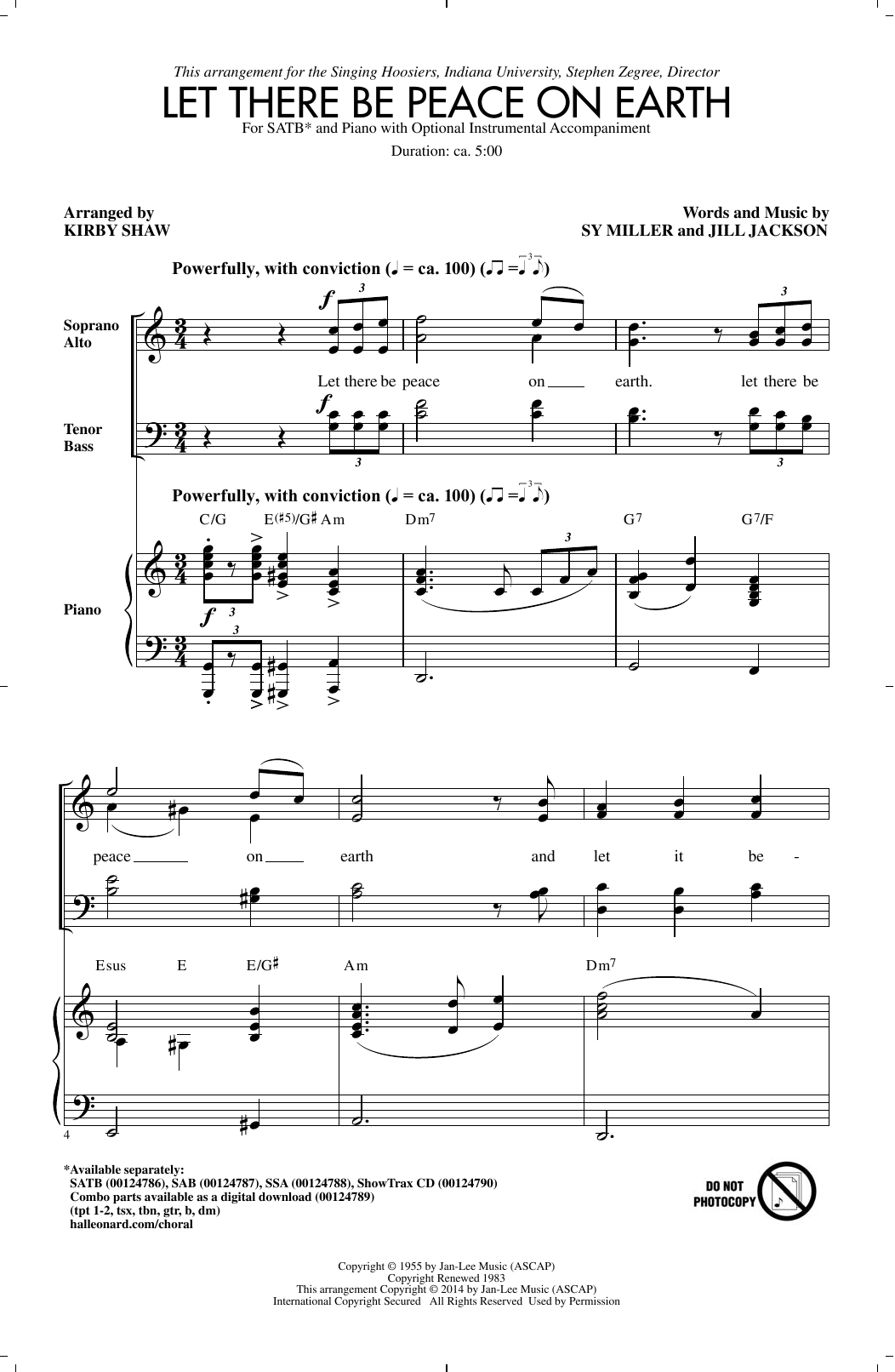
Let There Be Peace On Earth (arr. Kirby Shaw) Sheet Music Preview

Let There Be Peace On Earth (arr. Kirby Shaw): SATB Choral Octavo

Arranged by Kirby Shaw

Item: 35-DS01556065

Digital Download
$2.95

One moment…

Description

Let There Be Peace On Earth (arr. Kirby Shaw): SATB Choral Octavo isn't in MakeMusic Cloud just yet...but it could be. Let us know you'd like to see it, and you'll help shape what comes next. In the meantime, start a free trial and dive into thousands of interactive titles your students can play along with today.

Sample Audio
No sample audio found.
Sample Video
Additional Details
Publisher: Hal Leonard
Page Count: 15
SKU: 35-DS01556065

More about this title

About the Arranger: Kirby Shaw

Kirby Shaw

Kirby Shaw's influence extends across continents and decades. With formal training in choral conducting from the University of Washington and choral composition from San Jose State University, he has built a career defined by infectious energy and pedagogical insight. His work as a conductor and educator has taken him to 45 states and across multiple countries, while his collaborative history with jazz luminaries including Bobby McFerrin and Al Jarreau reflects his range as both a musician and mentor.

Shaw's catalog speaks for itself: over 2500 choral arrangements and compositions in print, generating nearly 20 million copies sold worldwide. He founded the acclaimed COS Vocal Jazz Ensemble at College of the Siskiyous and directed similar ensembles at Colorado State University and the University of Missouri at Kansas City. His prolific output includes hundreds of educational recordings, college and university albums, and a recent commission from the Mormon Tabernacle Choir. As a composer and arranger, he has earned multiple ASCAP awards and co-created the original musical Scroogical with his wife, Markita.

Why we love this

Shaw's treatment of this beloved peace anthem respects its contemplative message while providing the textural richness and singability his arrangements are known for. The 15-page score gives choirs room to shape the work with care, making it equally valuable for concert programming or festival competition. Audiences respond viscerally to this piece; it lands with genuine emotional weight rather than sentimentality.

What to expect

There is a quiet dignity to this arrangement. Shaw frames the text with harmonic language that feels both grounded and aspirational, creating space for singers to deliver the message with sincerity rather than empty gestures. The piece invites listeners into reflection rather than demanding applause.

Who it's for

This arrangement suits SATB choirs at the high school through community level who want a meaningful concert work with genuine musical substance. Directors preparing for festival competition, memorial services, or peace-themed programming will find this a strong choice. The moderate difficulty and 15-page length make it accessible without compromising musical sophistication.

How to get the most out of it

  • Balance the soprano line carefully in measures where it carries the primary melodic material; the alto, tenor, and bass parts should support rather than compete.
  • Find the natural breathing points in longer phrases before inserting breaths, allowing the text to flow conversationally and avoid choppy articulation.
  • Work the dynamic arc of the entire piece rather than treating each phrase in isolation; Shaw's arrangement builds purposefully toward its climax.
  • Invest in clear diction on words like 'peace' and 'earth' since they anchor the piece's central message and deserve crisp consonant definition.

How to use it

Consider placing this as a centerpiece in a thematic concert focused on peace, hope, or social responsibility. It works equally well as a closing number that sends audiences home with something substantive to contemplate. For festivals and competitions, this piece stands on its musical merit while maintaining the accessibility judges and audiences appreciate.

Skills your students will build

  • Blending SATB sonorities across four distinct lines
  • Sustaining legit, supported tone in longer phrases
  • Interpreting dynamic shape over extended musical statements
  • Conveying text meaning through deliberate articulation and phrasing

You May Also Like