

Let There Be Peace on Earth: SSA Choral Octavo
Music by Jill Jackson and Sy Miller / arr. Jay Althouse
Item: 00-PO-0006488
$2.25
Minimum order quantity: 20 copies
Pickup currently not available
Related Items
Let There Be Peace on Earth: SAB Choral Octavo |
$2.25
|
View | |
Let There Be Peace on Earth: 2-Part Choral Octavo |
$2.25
|
View | |
Let There Be Peace on Earth: TBB Choral Octavo |
$2.25
|
View | |
Let There Be Peace on Earth: Choral SoundPax |
$20.00
|
View | |
Let There Be Peace on Earth: SATB Choral Octavo |
$2.05
|
View | |
Let There Be Peace on Earth: SAB Choral Octavo |
$2.25
|
View | |
Let There Be Peace on Earth: SSA Choral Octavo |
$2.25
|
View | |
Let There Be Peace on Earth: 2-Part Choral Octavo |
$2.25
|
View | |
Let There Be Peace on Earth: TBB Choral Octavo |
$2.25
|
View | |
Let There Be Peace on Earth: Choral Octavo SoundTrax CD |
$27.99
|
View | |
Let There Be Peace on Earth: Choral SoundPax |
$20.00
|
View |
Description
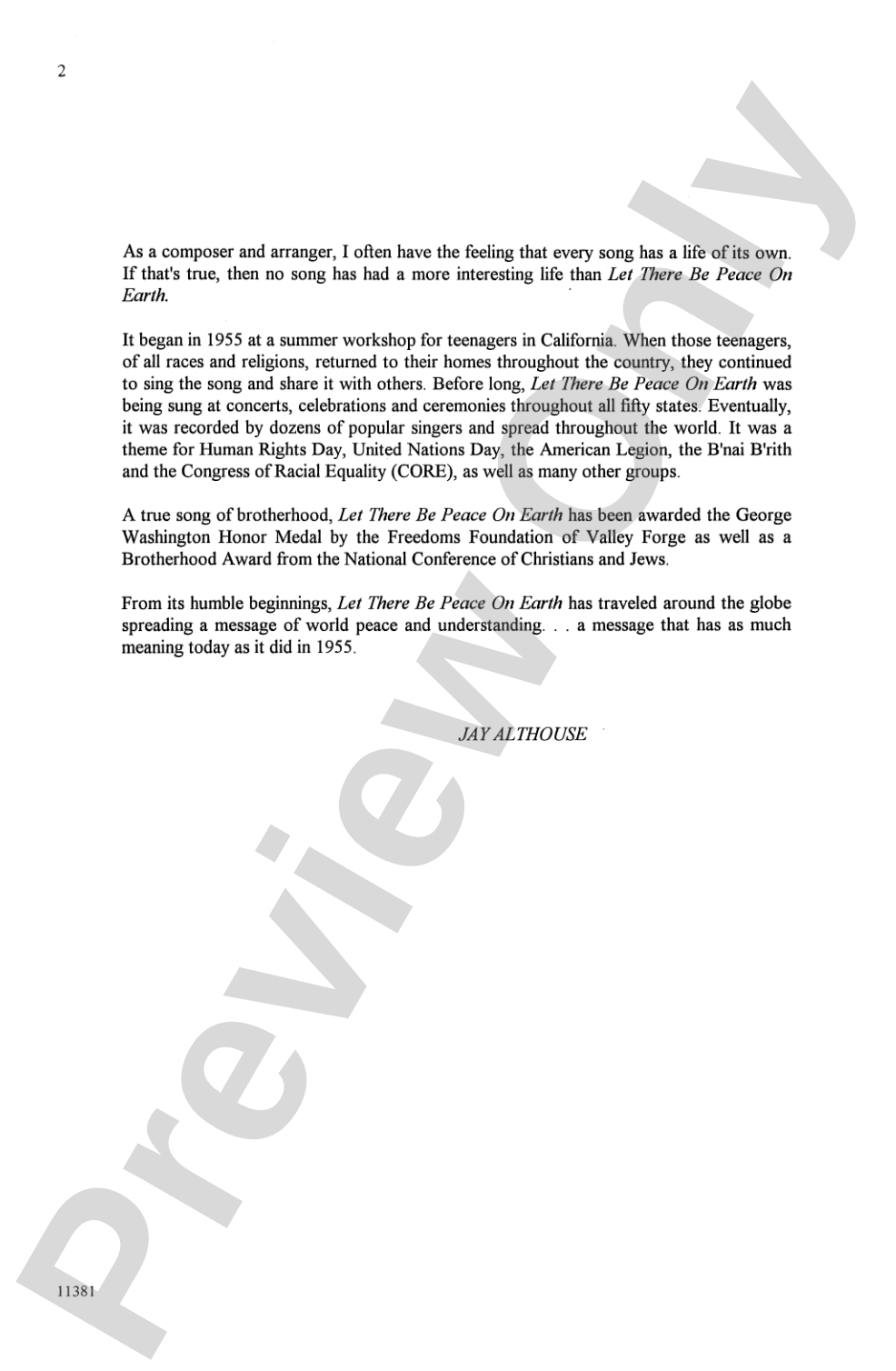
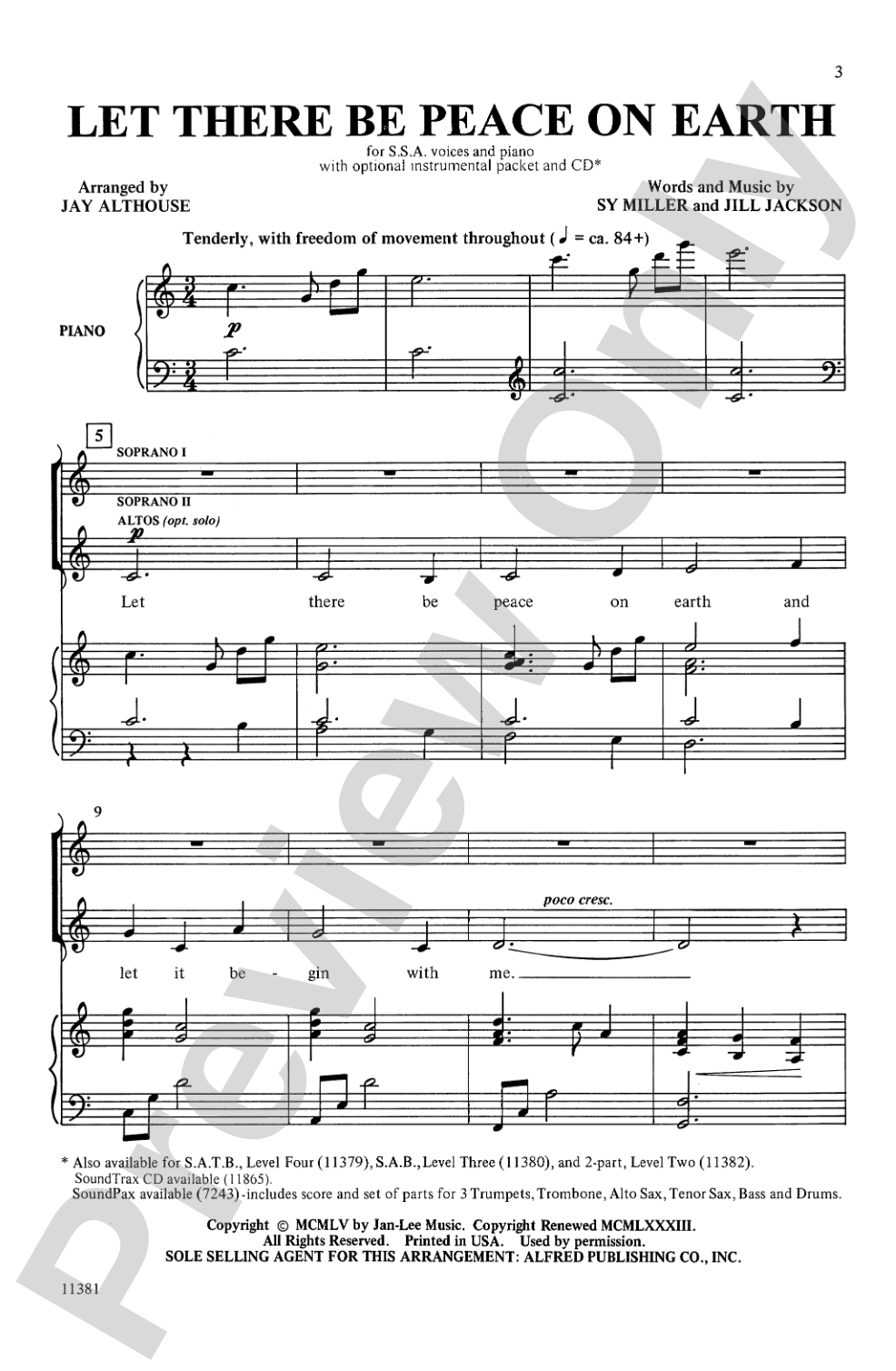
New for TBB voices! Jay's crystal clear arrangement begins tenderly, pensively, (with optional solos) then grows and grows to a powerful finish. The universal call for world peace is as relevant today as when this simple song spread around the world almost four decades ago. An impressive concert finale or festival piece, it's perfect any time of year, including Christmas. The easy, optional instrumental SoundPax or SoundTrax will provide an added dimension to your performance.


Let There Be Peace on Earth: SSA Choral Octavo isn't in MakeMusic Cloud just yet...but it could be. Let us know you'd like to see it, and you'll help shape what comes next. In the meantime, start a free trial and dive into thousands of interactive titles your students can play along with today.
Request This Title
Tell us you want it.
Start Your Free Trial
Explore everything that's ready to play right now.
Sample Audio
1
Audio File
--:--
0:00
0:00
Sample Video
No sample videos found.
Additional Details
Series:
Alfred Archive Edition: Alfred Choral Designs
Publisher:
Alfred Music
Page Count:
8
SKU:
00-PO-0006488
More about this title
About the Composer: Jill Jackson
Jill Jackson co-wrote "Let There Be Peace on Earth" with Sy Miller in 1955, creating one of the most enduring songs for peace advocacy in American popular music. The song has been performed by countless artists and at major peace rallies worldwide, becoming a standard in choral and educational settings. Jackson's gift for melody and message created a work that transcends genre and generation.
Why we love this
Jay Althouse's SSA arrangement respects the song's iconic simplicity while building genuine emotional architecture, moving from introspection to genuine power without ever feeling manipulative. The optional solo passages give you flexibility for featuring singers at different skill levels, and the built-in dynamic arc means your choir will naturally shape the piece well even in a single rehearsal. It works equally well as a concert climax or a standalone festival selection, which is rare for a piece this straightforward.
What to expect
The opening unfolds with quiet intention, almost conversational, then gradually accumulates voices and conviction until it reaches a joyful, unironic declaration of hope. There's no cynicism here, no winking at the audience; the arrangement asks singers and listeners to sit with genuine earnestness about something that matters.
Who it's for
Directors working with treble choirs who want a repertoire piece with genuine emotional weight and immediate sincerity. This arrangement serves singers ranging from middle school through adult community choirs, and the optional solos mean singers at different ability levels can all contribute meaningfully.
How to get the most out of it
- Start the opening passages with restraint and space around the notes; the power of this piece depends on the contrast with what comes later, so resist the urge to push early.
- If using the optional solos, choose singers comfortable with simplicity and directness rather than those who need ornamentation to feel secure.
- If you add the instrumental accompaniment, balance it carefully so it supports rather than overwhelms the voices; this song's strength is its accessibility, not orchestral texture.
- Shape the "let there be peace" text repetitions by varying the intensity subtly with each iteration rather than treating them as identical statements.
How to use it
Use this as a concert finale when you want your last impression to be one of unity and purpose rather than virtuosity. It also lands powerfully on peace-themed programs, Earth Day services, or any concert where you need a bridge between lighter opening selections and something that resonates beyond the moment.
Skills your students will build
- Singing with restraint and allowing silence to carry meaning
- Building dynamic shape across a long phrase without constant crescendo
- Balancing ensemble blend during text repetitions that require slight intensity variations
- Managing optional solo passages in a way that integrates rather than disrupts the choral sound