

Let Their Celestial Concerts All Unite (from Samson): SATB Choral Octavo
From Samson
Music by George Frideric Handel / arr. Patrick M. Liebergen
Item: 00-PO-0003960
$2.95
Minimum order quantity: 20 copies
Pickup currently not available
Related Items
Let Their Celestial Concerts All Unite: SATB Choral Octavo |
$2.95
|
View |
Description
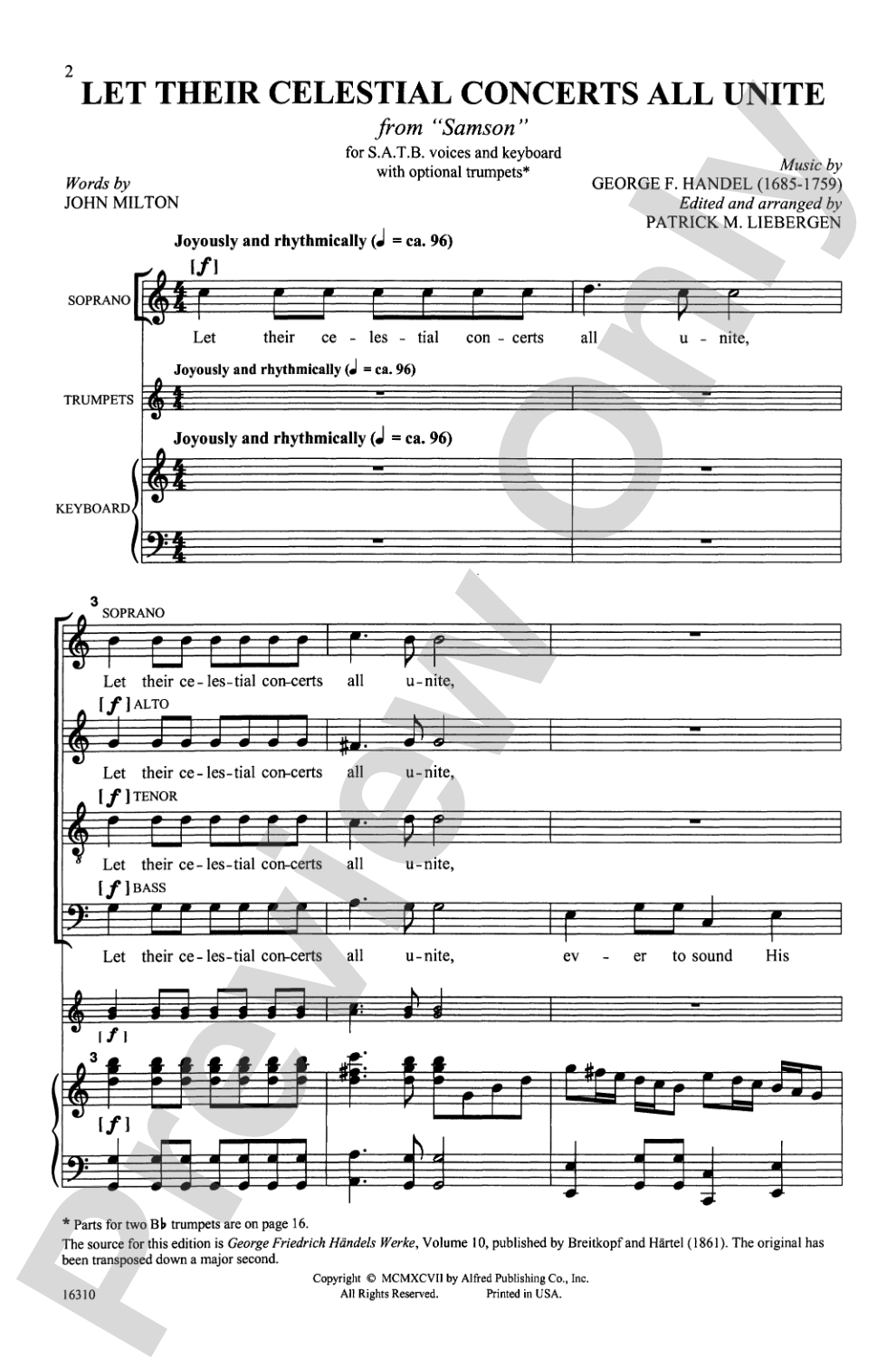
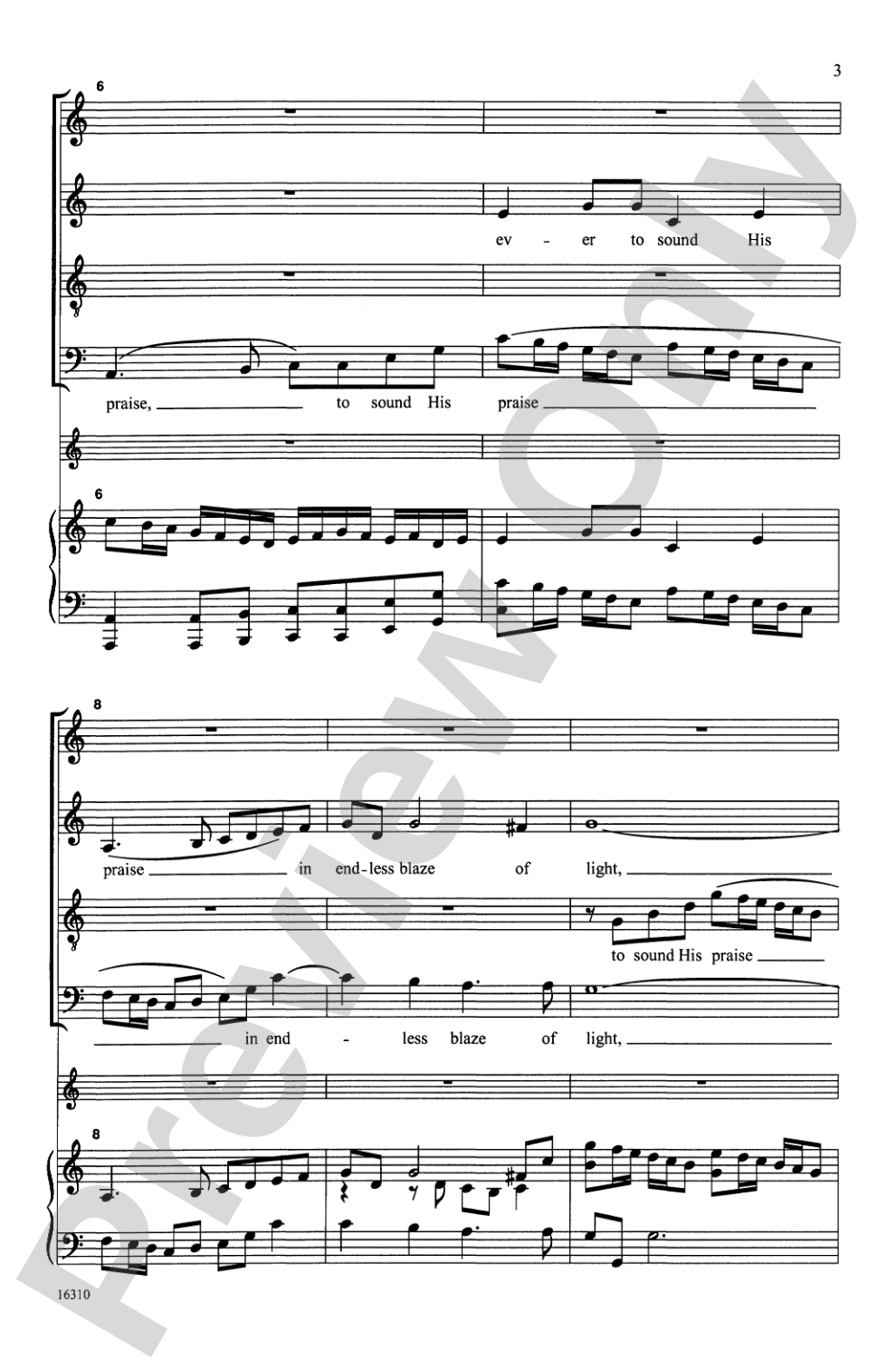
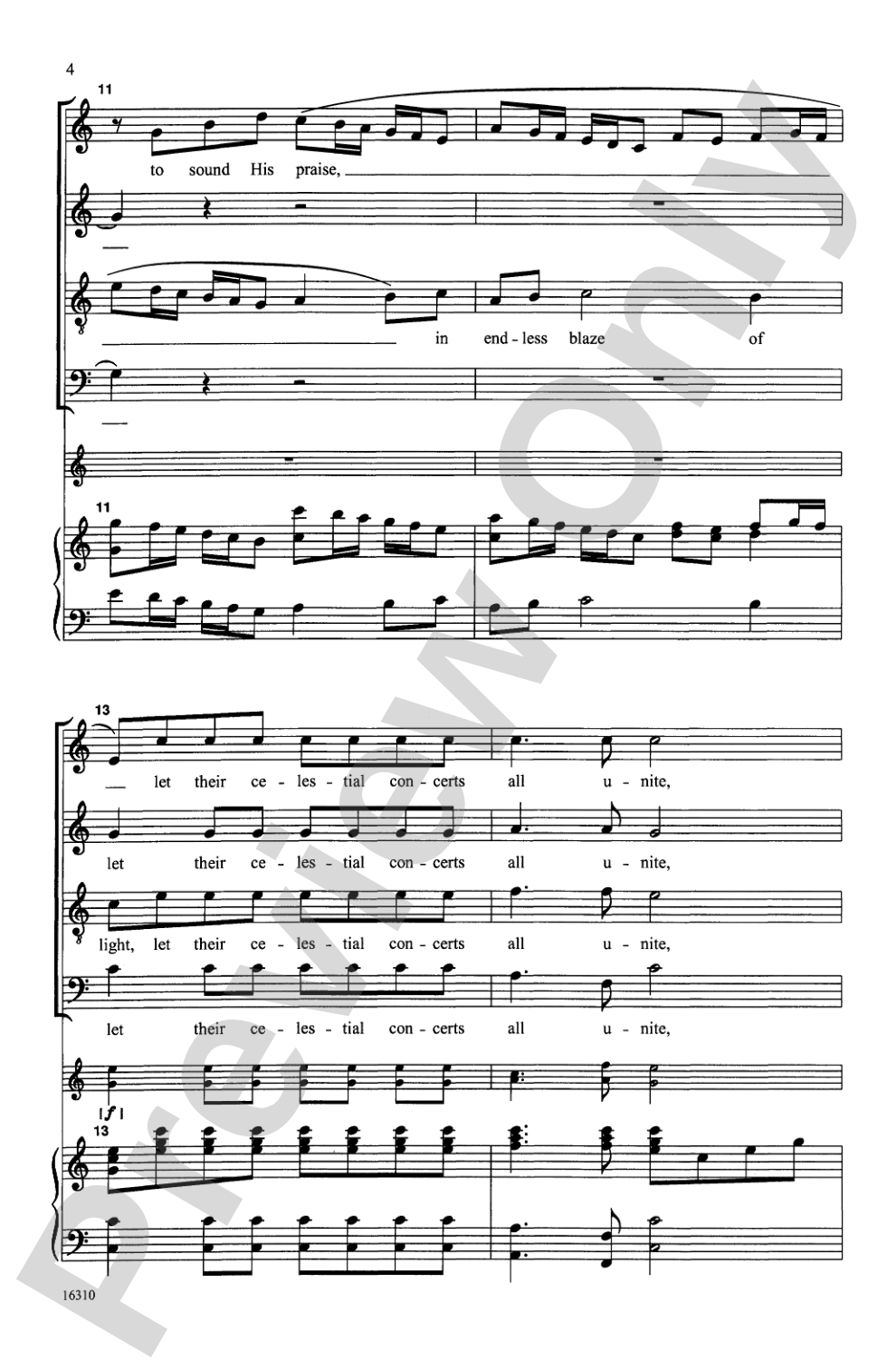
Energetic and joyous masterwork from Handel's 1743 oratorio featuring both homophonic and contrapuntal writing. Parts for two trumpets (optional) included in the publication. Keyboard accompaniment is effective on piano or organ.


Let Their Celestial Concerts All Unite (from Samson): SATB Choral Octavo isn't in MakeMusic Cloud just yet...but it could be. Let us know you'd like to see it, and you'll help shape what comes next. In the meantime, start a free trial and dive into thousands of interactive titles your students can play along with today.
Request This Title
Tell us you want it.
Start Your Free Trial
Explore everything that's ready to play right now.
Sample Audio
No sample audio found.
Sample Video
No sample videos found.
Additional Details
Series:
Alfred Archive Edition: Alfred Choral Designs
Publisher:
Alfred Music
Page Count:
16
SKU:
00-PO-0003960
More about this title
About the Composer: George Frideric Handel
George Frideric Handel (1685-1759) stands as one of the Baroque era's most prolific and celebrated composers. Born in Halle, Germany, he spent much of his career in England, where he became a dominant force in opera, instrumental music, and oratorio. His gift for memorable melody, sophisticated harmony, and dramatic timing made him a master of large-scale vocal works.
Handel composed 32 oratorios over his lifetime, establishing the genre as a major form of sacred and secular storytelling. Unlike opera, oratorios featured biblical or classical narratives performed in concert settings, often with elaborate choruses and instrumental writing. His works remain central to choral repertoire because they balance accessibility with musical sophistication, offering rewarding challenges for singers at multiple levels.
Why we love this
This movement captures everything that makes Handel's choral writing so irresistible: a soaring, singable melody that the entire choir can grab immediately, punctuated by moments of genuine contrapuntal craft that reward careful listening and preparation. The optional trumpet parts add ceremonial grandeur without becoming a barrier to performance, and the energy level is exactly what you need when you want the audience to feel the jubilation in every phrase.
What to expect
Radiant and celebratory, this movement radiates the kind of unforced joy that Baroque composers excelled at expressing. The writing moves fluidly between moments where all voices sing together in block harmony and passages where each voice dances independently, creating a sense of voices joining in collective praise. The overall effect is generous and uplifting without a trace of sentimentality.
Who it's for
This piece works beautifully for choirs with solid sight-reading skills and basic contrapuntal experience. It suits both concert choirs and festival ensembles looking for repertoire that sounds confident and assured without demanding extensive rehearsal time on technique alone.
How to get the most out of it
- Shape the homophonic sections with a single, unified dynamic arc rather than treating each phrase in isolation; the joyous character depends on momentum carrying forward through the text.
- Balance trumpet doublings with vocal lines by allowing the choir to lead; these instruments should enhance rather than overshadow the choral sound.
- Take care with the contrapuntal passages to maintain rhythmic precision across all four voices without sacrificing the lyrical quality of individual lines.
- Choose between piano and organ based on the acoustic of your performance space; organ provides richer harmonic support in larger venues, while piano offers clarity in more intimate settings.
How to use it
This excerpt sits naturally in concerts built around Baroque sacred music, pairing well with other oratorio choruses or motets from the period. Its energy and optimistic character make it an excellent closer for a concert half or a strong finale that leaves audiences genuinely moved. Consider programming it where you need both musical substance and immediate emotional impact.
Skills your students will build
- Singing balanced, integrated four-part harmony with independent voice leading
- Managing text underlay across both homophonic and contrapuntal sections
- Maintaining rhythmic precision when voices move at different rates
- Responding to optional instrumental doubling without losing choral independence
- Sustaining vocal lines through longer phrases with confidence and clarity