Let the Good Times Roll (arr. Michael Brown) Sheet Music Preview

Let the Good Times Roll (arr. Michael Brown): Marching Band Conductor Score & Parts

As performed by Ray Charles / Arranged by Michael Brown / Arranged by Will Rapp

Grade: 4

Item: 35-PK00463959

Digital Download
$65.00

One moment…

Description
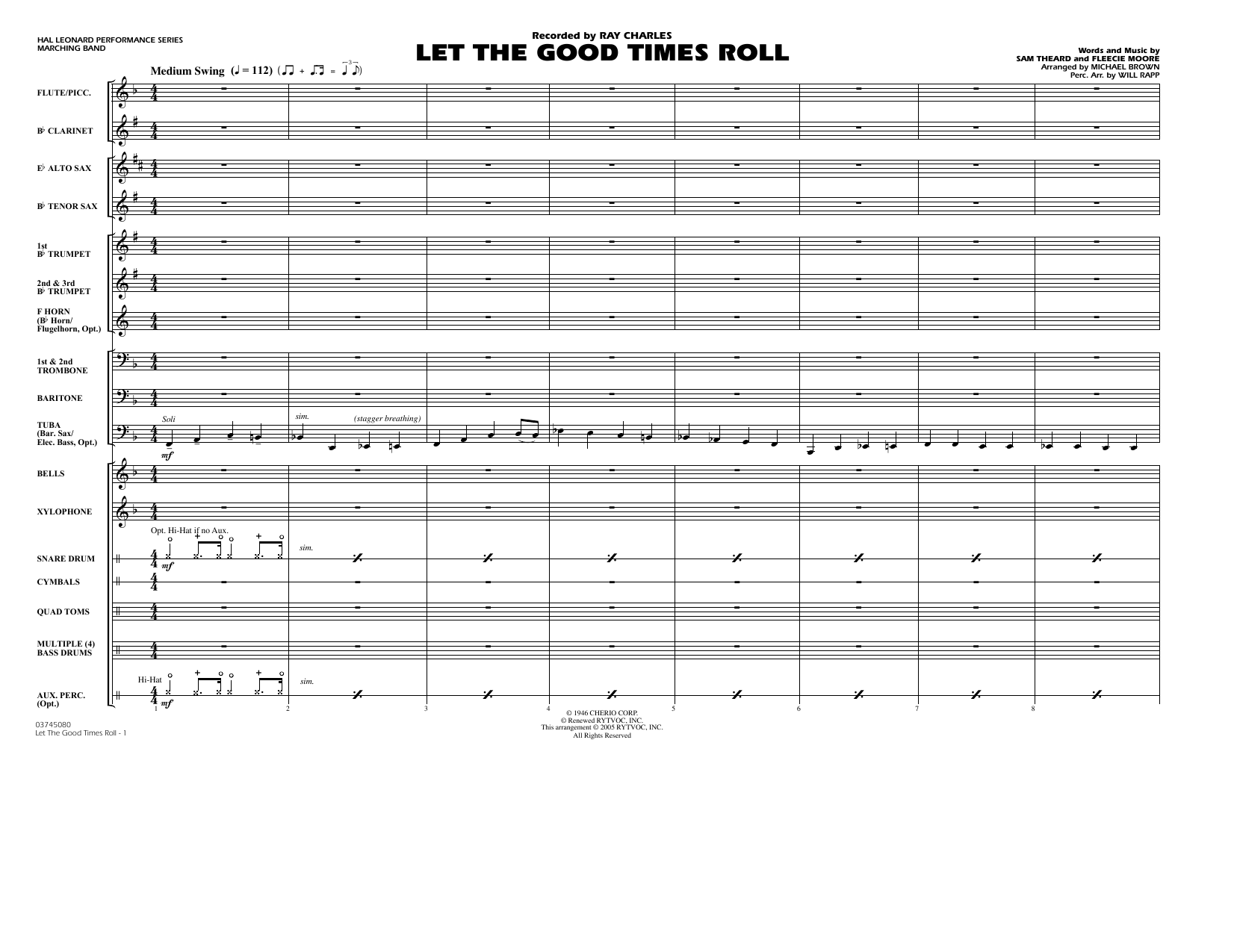
Put a swingin' big band on the field and pull out all the stops! That's the feel you get from this jazzy arrangement featuring hard-hitting full ensemble punches, a trombone soloist (opt. tenor sax), and brief percussion breaks. Great for dance lines as well!

Let the Good Times Roll (arr. Michael Brown): Marching Band Conductor Score & Parts isn't in MakeMusic Cloud just yet...but it could be. Let us know you'd like to see it, and you'll help shape what comes next. In the meantime, start a free trial and dive into thousands of interactive titles your students can play along with today.

Sample Audio
No sample audio found.
Sample Video
Additional Details
Publisher: Hal Leonard
SKU: 35-PK00463959

More about this title

About the Artist: Ray Charles

Ray Charles redefined American music by fusing gospel, blues, jazz, and country into a sound entirely his own. His ability to inhabit any genre while maintaining fierce artistic integrity made him one of the most influential musicians of the 20th century, and his catalog remains essential listening for understanding how different American musical traditions intersect.

For music educators, Charles represents the power of groove and feel in composition. His arrangements and interpretations teach students that technical precision means little without genuine swing and emotional commitment. Songs like "Let the Good Times Roll" showcase his gift for writing music that makes people move, whether on a dance floor or a football field.

Why we love this

Michael Brown and Will Rapp capture the infectious swagger of the original while building an arrangement that sits perfectly on the field. You get genuine big band energy without sacrificing the tight ensemble work marching bands need, and that optional trombone/tenor sax solo gives your section leader a real moment to shine.

What to expect

Straight-ahead joy wrapped in sophisticated jazz harmony. The hard-hitting ensemble moments feel celebratory rather than bombastic, while the laid-back groove underneath gives everything room to breathe. You're hearing a band that knows how to have fun without apology.

Who it's for

Grade 4 marching bands that want contemporary swagger without losing their heads. Directors programming dance line or sideline features will find this especially useful. It works equally well for groups that compete and groups that perform for community entertainment.

How to get the most out of it

  • Lock the backfield and front ensemble into a unified pulse early in rehearsals. This arrangement depends on everyone feeling the same groove, so establish that pocket before drilling individual section parts.
  • Balance the full ensemble punches with clarity rather than volume. The impact comes from precision and articulation, not from blowing harder.
  • Give your soloist freedom within the structure. A trombone or tenor sax solo needs space to breathe and swing, even within the constraints of marching field positions.
  • Shape the brief percussion breaks as punctuation marks. These moments define the arrangement's character, so rehearse them with the same care you'd give to the melodic passages.

How to use it

Drop this into a ballad or concert segment that needs immediate energy and crowd engagement. It pairs well alongside other contemporary pop or jazz charts, or stand it alone as a set opener that signals your group's modern sensibility. The optional instrumentation makes it flexible enough to feature different soloists across multiple performances throughout the season.

Skills your students will build

  • Executing syncopated rhythmic figures with precision
  • Sustaining a consistent groove across sections
  • Balancing dynamic control in forte ensemble textures
  • Responding to optional solo improvisation as an ensemble
  • Understanding big band voicing and sectional balance

You May Also Like