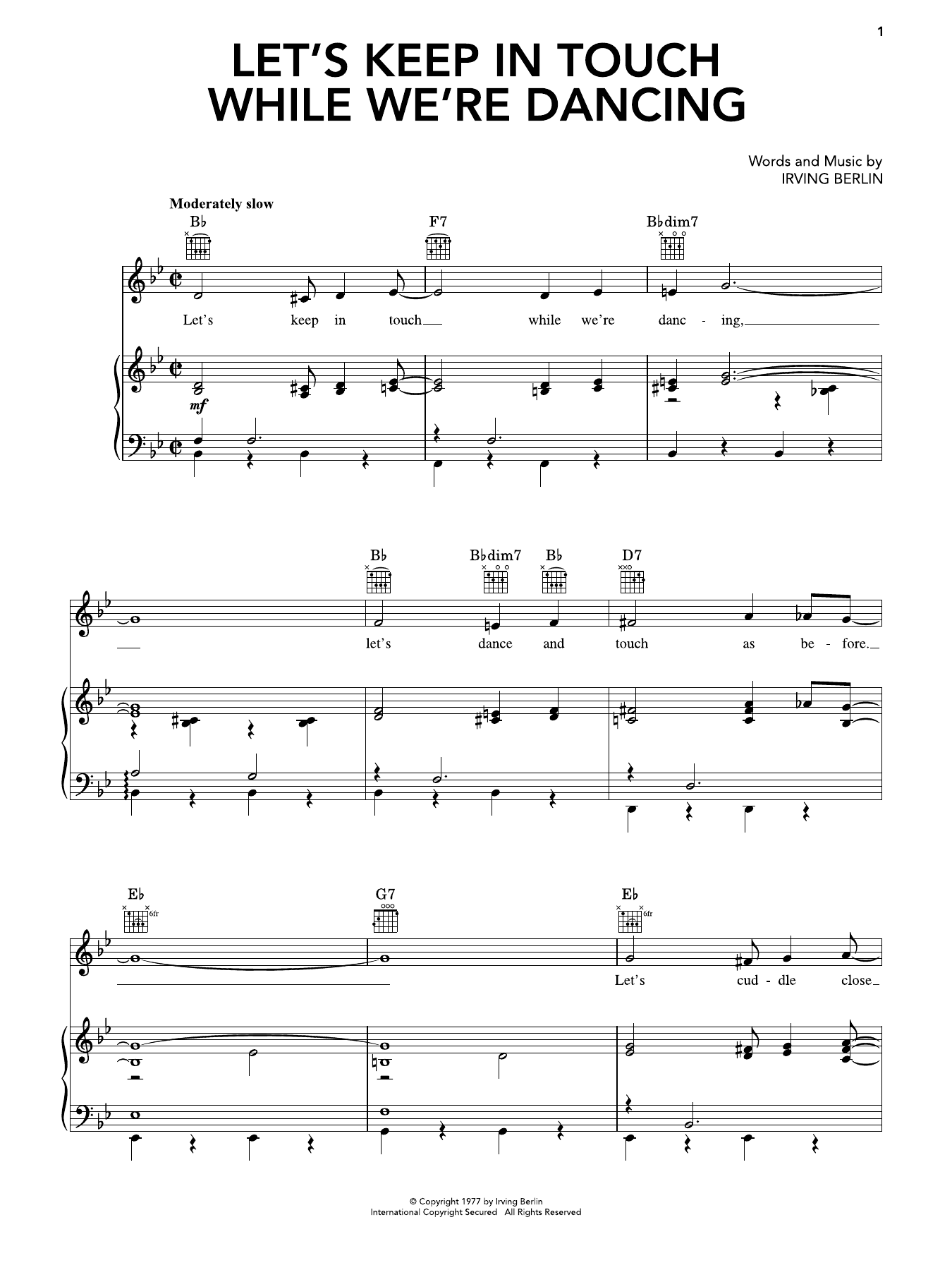
Let's Keep In Touch While We're Dancing: Piano/Vocal/Guitar Sheet

By Irving Berlin

Item: 35-DS01968224

Digital Download
$5.99
Description

Discover MakeMusic Cloud: thousands of interactive titles your students can play along with today.

Sample Audio
No sample audio found.
Sample Video
Additional Details
Publisher: Hal Leonard
Page Count: 3
SKU: 35-DS01968224

More about this title

About the Composer: Irving Berlin

Irving Berlin (1888-1989) stands as one of America's most prolific songwriters, composing over 1,000 songs across musical theater, film, and popular music. He shaped the Great American Songbook with his gift for memorable melodies and sophisticated yet accessible lyrics, working across multiple genres from ragtime to jazz standards. Berlin's influence on vocal music and popular song structure remains fundamental to music education and professional performance.

Why we love this

Berlin's vocal writing balances charm with harmonic sophistication, giving singers an accessible entry point into jazz standards without sacrificing musical interest. The piece sits comfortably in a classroom or performance setting where you need something that engages singers, pianists, and guitarists equally.

What to expect

Warm and conversational, like a late-night musical exchange between friends. The melody has the sing-along quality Berlin perfected, while the harmonic movement beneath it keeps performers thinking.

Who it's for

Singers exploring jazz standards, jazz ensembles building their vocal repertoire, and students learning how to accompany singing across multiple instruments. This arrangement serves pianists, guitarists, and vocalists working as a cohesive unit.

How to get the most out of it

  • Keep the accompaniment conversational rather than driving. The rhythm section should support the vocal line's phrasing, not push against it.
  • Pay attention to the lyrical content when shaping dynamics and articulation. Berlin's lyrics and melody move together intentionally.
  • Balance the three instrumental parts so none dominates. Piano, guitar, and voice form a partnership, not a hierarchy.

How to use it

Include this in a jazz or popular music concert alongside other standards from Berlin's catalog to build a thematic set. It works equally well as a teaching piece for accompaniment classes or small vocal jazz ensembles.

Skills your students will build

  • Jazz phrasing and rubato over a steady harmonic foundation
  • Coordinating multiple instrumental parts in vocal accompaniment
  • Interpreting the relationship between lyrics and melodic shape
  • Reading and voicing jazz chord symbols on guitar and piano

You May Also Like