Let's Duet Cover Image

Let's Duet: Piano Duet (1 Piano, 4 Hands) Book

$7.99 USD
Sale price  $7.99 USD Regular price 
Skip to product information
Let's Duet Cover Image

Let's Duet: Piano Duet (1 Piano, 4 Hands) Book

8 Piano Duets for Early-Level Pianists

By Elvina Pearce

Level: Elementary

Item: 00-EL03518A

$7.99
Shipped

One moment…

Description
Equal parts for elementary-level students will assure a successful duet experience for both partners. Primo and secondo use five-finger positions with minimal hand position changes. Rests have been removed, allowing the student to focus on the movement of the melodic line. The descriptive titles match the mood and style of the music: Rise and Shine * Stargazing * Lazy Day * Festive Dance * Easy Does It * Bigfoot Stomp * Singin' the Blues * Cradle Song. Correlates with Level One and Level Two method books.

Let's Duet: Piano Duet (1 Piano, 4 Hands) Book isn't in MakeMusic Cloud just yet...but it could be. Let us know you'd like to see it, and you'll help shape what comes next. In the meantime, start a free trial and dive into thousands of interactive titles your students can play along with today.

Sample Pages

No sample pages found.

Sample Audio
No sample audio found.
Sample Video
Additional Details
Publisher: Alfred Music
Page Count: 32
ISBN10: 0-7579-9305-2
ISBN13: 978-0-7579-9305-3
UPC: 654979034292
SKU: 00-EL03518A

More about this title

About the Composer: Elvina Pearce
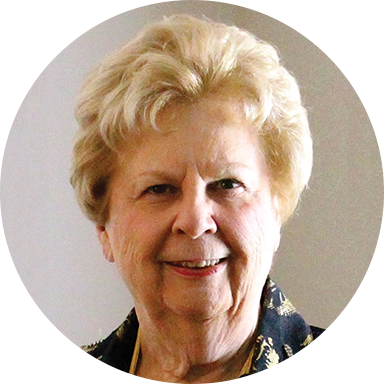
Elvina Pearce

Elvina Pearce trained under Isabelle Vengerova in New York, studying with a teacher whose studio shaped major twentieth-century composers including Samuel Barber and Leonard Bernstein. She was also a student of Frances Clark and co-founded both the New School for Music Study and the Frances Center for Keyboard Pedagogy in Princeton, New Jersey. Her teaching career spanned 14 years at Northwestern University and included editorial leadership of Keyboard Companion Magazine from 2000 to 2006.

Pearce has performed the Liszt Concerto in E-flat with the Chicago Symphony and given solo recitals at Carnegie Recital Hall and the National Gallery of Art in Washington, D.C. She has presented workshops across more than 40 states and internationally in Canada, Taiwan, and Australia. Her published output includes more than 25 collections of piano music, and she authored "The Success Factor in Piano Teaching: Making Practice Perfect." Recognition for her contributions includes a 2008 MTNA Foundation Fellowship nomination, the 2011 Lifetime Achievement Award from the National Conference on Keyboard Pedagogy, and her 2014 induction into the Illinois Fox Valley Arts Hall of Fame.

Why we love this

Pearce has engineered genuine equality between primo and secondo parts, rejecting the common trap of burying one partner in accompaniment figures. The removal of rests keeps both students engaged with the musical line itself rather than counting dead space, which fundamentally shifts how young pianists experience ensemble playing. Each piece's descriptive title invites interpretive thinking from the start, and the five-finger positioning with minimal hand shifts means students can actually listen to one another instead of wrestling with technical demands.

What to expect

The collection captures eight distinct moods, from the bright optimism of "Rise and Shine" to the gentle rocking of "Cradle Song." "Singin' the Blues" introduces bluesy inflection without complexity, while "Festive Dance" brings rhythmic energy. Each piece feels purposeful rather than formulaic, with character that invites young musicians to shape the music rather than simply read notes.

Who it's for

Elementary pianists who are ready for ensemble experience but need careful scaffolding to succeed. These duets work beautifully for students finishing Level One or moving through Level Two method books, giving them immediate application for concepts they're already learning in their lessons.

How to get the most out of it

  • Establish eye contact before each piece begins. Since both hands stay close to home position, students can glance at their partner without losing their place on the keyboard.
  • Balance the melodic material between primo and secondo by having the "non-melody" partner play slightly softer. This clarifies the musical architecture without requiring either student to play in a register they aren't comfortable hearing.
  • Take time during rehearsal to swap parts. Students who play secondo first will hear the piece from a completely different angle and develop stronger listening skills when they return to primo.
  • Pedal sparingly or not at all at this level. Let the clarity of two independent melodic lines be the focus, and introduce pedal work once hand independence is solid.

How to use it

Slot these duets into studio recitals where ensemble playing boosts confidence alongside solo work. They're also excellent for group lessons where you pair students at different paces, since the equal parts mean no one is silently accompanying. Consider programming one duet with contrasting solo pieces to show variety in how students apply their skills.

Skills your students will build

  • Reading two independent melodic lines simultaneously
  • Listening and adjusting balance in a two-person ensemble
  • Maintaining steady tempo while coordinating with a partner
  • Five-finger position fluency with minimal hand shifts
  • Stylistic interpretation through descriptive titles and musical context
  • Understanding left-hand and right-hand independence

You May Also Like