
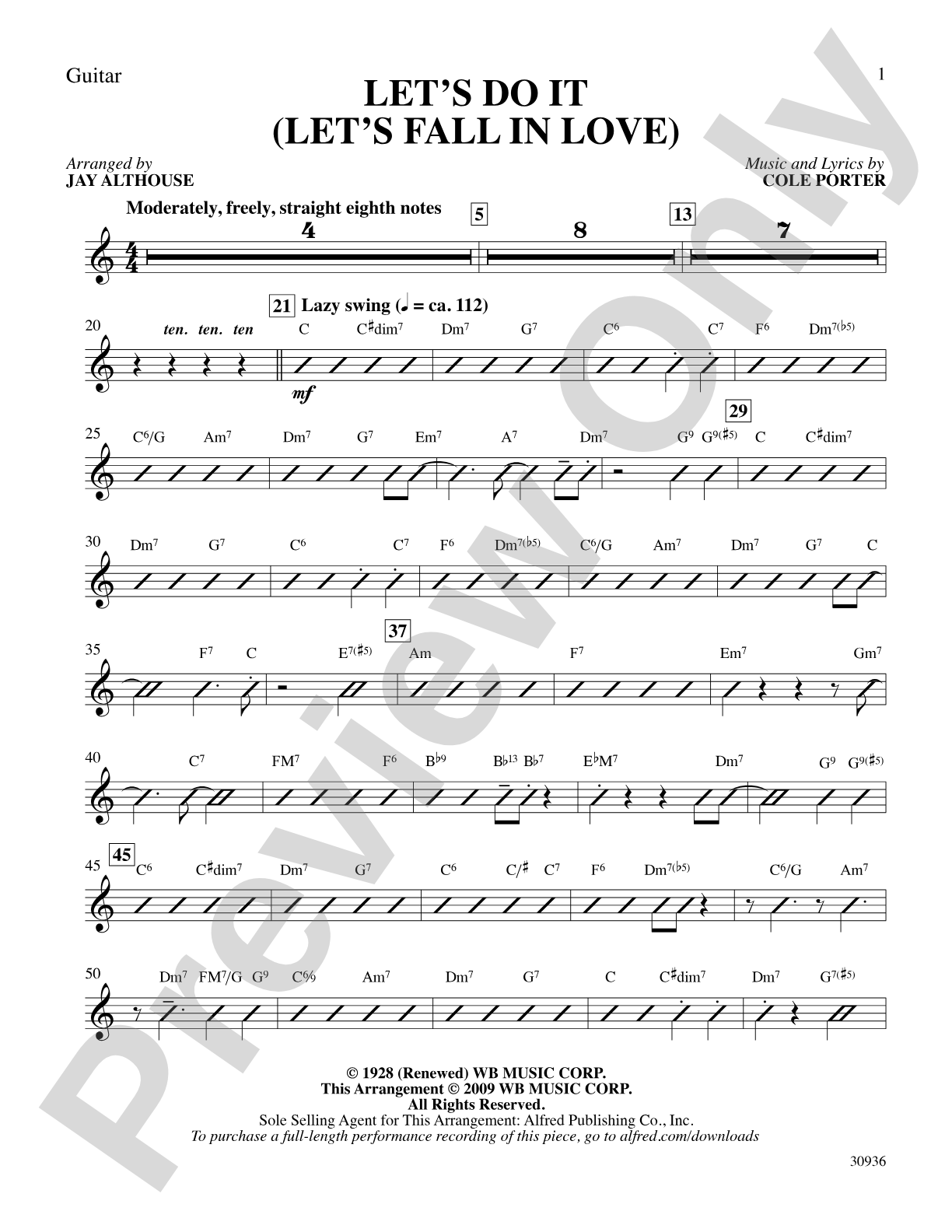

Let's Do It (Let's Fall in Love): Guitar: Choral SoundPax
Words and music by Cole Porter / arr. Jay Althouse
Item: 00-PC-0014830_G
$4.00
Pickup currently not available
Description
Cole Porter's most famous "list song" is offered here in an arrangement that pulls out all the stops. The sweet opening verse leads into the traditional swing, then finishes off with a rollicking kick-line "bring-em-home" tag. Just do it!


Don't just read it, hear it, play along with it, and watch your students grow with it. In MakeMusic Cloud, Let's Do It (Let's Fall in Love): Guitar: Choral SoundPax comes alive with professional accompaniment, adjustable tempo, and built-in practice tools that turn solo practice into real progress.
Open in the Player
Jump straight in and assign it today.
Start Your Free Trial
Open this title and explore the full library in minutes.
Sample Audio
1
Audio File
--:--
0:00
0:00
Sample Video
No sample videos found.
Additional Details
Series:
Alfred Pop Choral Series
Publisher:
Alfred Music
Page Count:
28
SKU:
00-PC-0014830_G
Instrumentation:
SoundPax
More about this title
About the Composer: Cole Porter
Cole Porter (1891–1964) composed some of the most sophisticated popular songs of the twentieth century. His work defined the American musical theater standard with wit, urbane lyrics, and melodies that balanced accessibility with harmonic complexity. Porter's songs became jazz standards and remain central to both vocal and instrumental repertoires in educational settings.
Porter's genius lay in his ability to layer clever wordplay and social commentary into seemingly simple songs. "Let's Do It" exemplifies this approach: a catalog song that catalogs animals and activities falling in love across the globe, it functions simultaneously as comedy, social observation, and a vehicle for vocal expression. His influence on music education extends beyond performance; his songs teach musicians how to balance sophistication with entertainment.
Why we love this
Jay Althouse's arrangement honors Porter's original wit while giving choirs the structural variety they need to keep an audience engaged. The progression from sweet verse through swing to a high-energy finale feels earned rather than manufactured, and the written-out tag at the end gives your choir a satisfying and theatrical way to land the piece. This is the kind of arrangement that makes singers smile while they're singing, which usually means the audience will too.
What to expect
The piece opens with a conversational warmth that draws listeners into Porter's clever world. When the swing kicks in, the mood shifts to effervescent and rhythmically playful. The finale has the energy of a vaudeville closer, with the kind of tailored fun that feels both scripted and genuinely joyful.
Who it's for
Directors programming jazz or popular standards who want a piece with genuine theatrical polish and musical substance. Choirs with singers who enjoy character work and rhythmic clarity will thrive with this arrangement. The SoundPax format makes it accessible for groups exploring contemporary choral sound design alongside traditional repertoire.
How to get the most out of it
- Shape the opening verse with clear dynamic control; let the lyrical quality establish Porter's sophistication before the swing section takes over.
- Lock the rhythmic precision in the swing section by emphasizing the backbeat with your accompaniment; the recorded track will help define groove.
- Commit fully to the character and comedy of the list song; the humor lives in clarity of diction and rhythmic specificity, not oversinging.
- Build momentum steadily through the kick-line tag; the arrangement's "bring-em-home" energy only lands if you trust the propulsive energy rather than rush it.
How to use it
This works beautifully as a second-half opener following more classical material, or as the centerpiece of a jazz or American songbook concert. Its theatrical finality makes it suitable as a finale if your program needs to end on high spirits rather than introspection. Consider pairing it with other Porter standards or mid-century American songs to build a cohesive concert narrative.
Skills your students will build
- Swing rhythm and jazz articulation
- Managing dynamic contrast between lyrical and rhythmic sections
- Clarity of diction in fast text-driven passages
- Theatrical presence and character interpretation
- Synchronization with recorded accompaniment tracks