
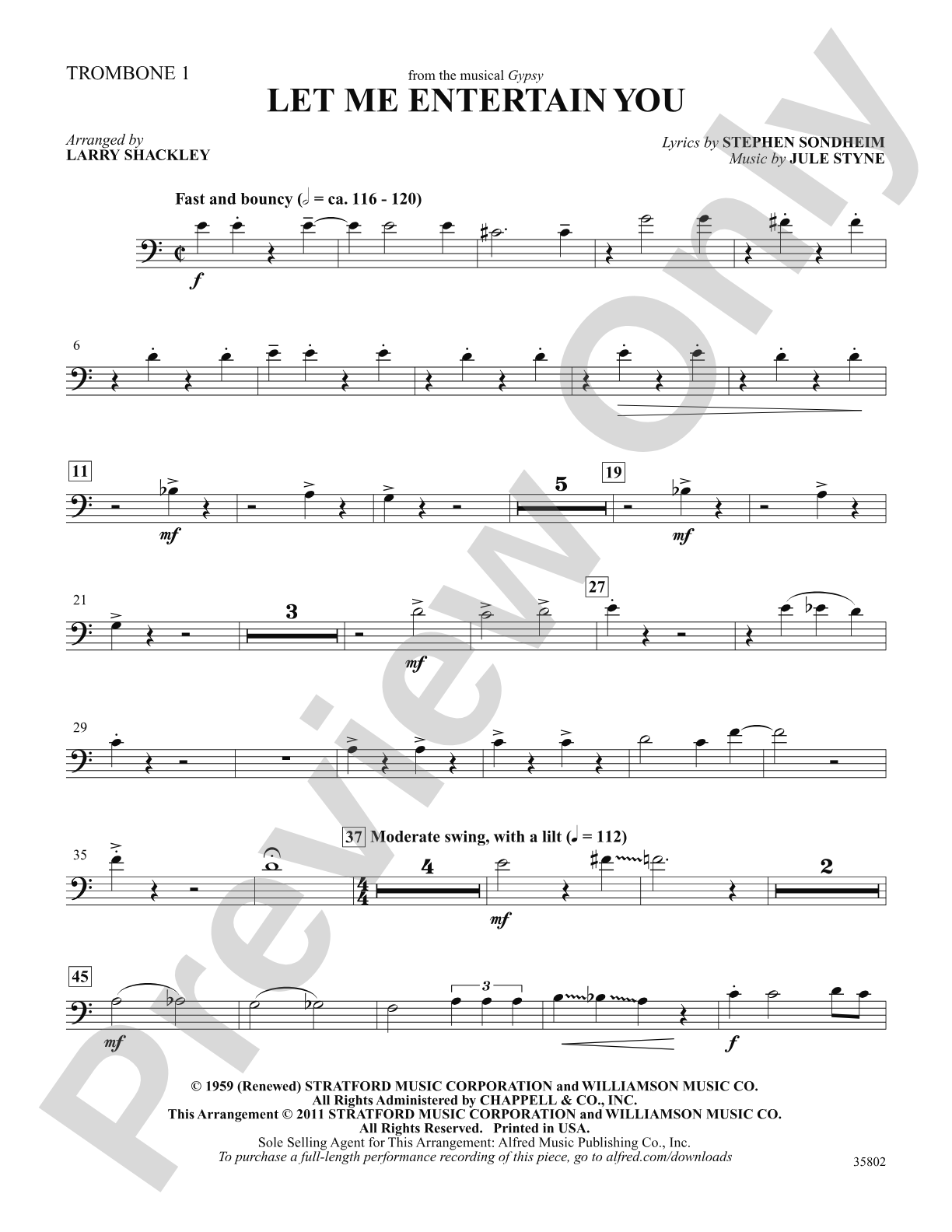

Let Me Entertain You (from Gypsy): 1st Trombone: Choral SoundPax
From the Musical Gypsy
Lyrics by Stephen Sondheim, music by Jule Styne / arr. Larry Shackley
Item: 00-PC-0014973_TN1
$4.00
Pickup currently not available
Description
During a performance of the Tony-award winning musical Gypsy, this song is presented in many different styles. And our choral arrangement incorporates them all---from an opening 2-beat, to a gentle swing, to a lilting waltz, and then finishes with a raucous kick line! Parts include Score, Clarinet, Alto Saxophone, Trumpet 1, Trumpet 2, Trombone 1, Trombone 2, Guitar, Bass, Drumset. Featured on Showbiz! choral movement DVD (00-35858).


Don't just read it, hear it, play along with it, and watch your students grow with it. In MakeMusic Cloud, Let Me Entertain You (from Gypsy): 1st Trombone: Choral SoundPax comes alive with professional accompaniment, adjustable tempo, and built-in practice tools that turn solo practice into real progress.
Open in the Player
Jump straight in and assign it today.
Start Your Free Trial
Open this title and explore the full library in minutes.
Sample Audio
1
Audio File
--:--
0:00
0:00
Sample Video
No sample videos found.
Additional Details
Series:
Alfred Pop Choral Series
Publisher:
Alfred Music
Page Count:
36
SKU:
00-PC-0014973_TN1
Instrumentation:
SoundPax
More about this title
About the Composer: Jule Styne
Jule Styne (1905-1975) composed the scores for some of Broadway's most enduring musicals, including Gypsy, Funny Girl, and Bells Are Ringing. His melodic gift and theatrical instinct made him a master of the Broadway song, blending accessibility with genuine sophistication. In the classroom and on stage, his work continues to engage singers and audiences alike with infectious energy and memorable hooks.
Styne's understanding of ensemble writing and character-driven storytelling shaped how show music is taught and performed in educational settings. His collaborations with lyricists like Stephen Sondheim and Adolph Green produced songs that reward careful musical preparation while remaining joyfully performable by student singers.
Why we love this
Larry Shackley's arrangement captures the kaleidoscopic nature of this number without losing sight of what makes it singable for a student ensemble. The progression through distinct musical styles (2-beat, swing, waltz, kick line) keeps the energy dynamic and gives singers multiple musical contexts to explore within a single piece. It's the kind of arrangement that teaches musical flexibility and style awareness while delivering the theatrical payoff students crave.
What to expect
Pure theatrical joy. The piece sparkles with vaudeville charm, swings with casual confidence, waltzes with unexpected grace, and erupts into raucous celebration. It's the musical equivalent of a variety show, capturing the showmanship at the heart of Gypsy while inviting singers to inhabit each style fully.
Who it's for
Choirs with access to at least a small jazz or show-style instrumental ensemble (or the ability to use recorded accompaniments). The vocal writing is accessible to intermediate singers, but the stylistic demands and ensemble coordination require directors comfortable coaching multiple performance styles within one arrangement.
How to get the most out of it
- Study the style shifts as distinct moments rather than abrupt changes. Each section has its own character: the opening 2-beat should feel crisp and vaudeville-inflected, the swing section wants laid-back phrasing, and the waltz moves with lilt and lightness.
- The kick line finale demands rhythmic precision from the ensemble. Lock the rhythm section (bass and drumset) so the choir can commit fully to the choreography without losing their pulse.
- Balance the instrumental soloists with the vocal texture. The clarinet, saxophones, and trumpets are integral to the arrangement's personality, not accompaniment; give them room to breathe while maintaining choral clarity.
- Rehearse the transitions between styles explicitly. Mark tempo changes and style cues in the score and sing through them repeatedly so they feel intentional and seamless rather than jolting.
How to use it
This works beautifully as a concert opener or a show-within-a-show moment on a pop music or musical theatre program. Its variety makes it stand alone effectively, or pair it with other Styne selections or Broadway numbers for a revue-style set. The built-in movement and staging appeal makes it equally at home in a concert or a fully staged production.
Skills your students will build
- Singing in multiple styles (2-beat, swing, waltz) within a single piece
- Responding to conductor cues and style changes mid-performance
- Ensemble coordination with instrumental soloists
- Rhythmic precision in a kick line finale
- Understanding theatrical character and showmanship in vocal performance