
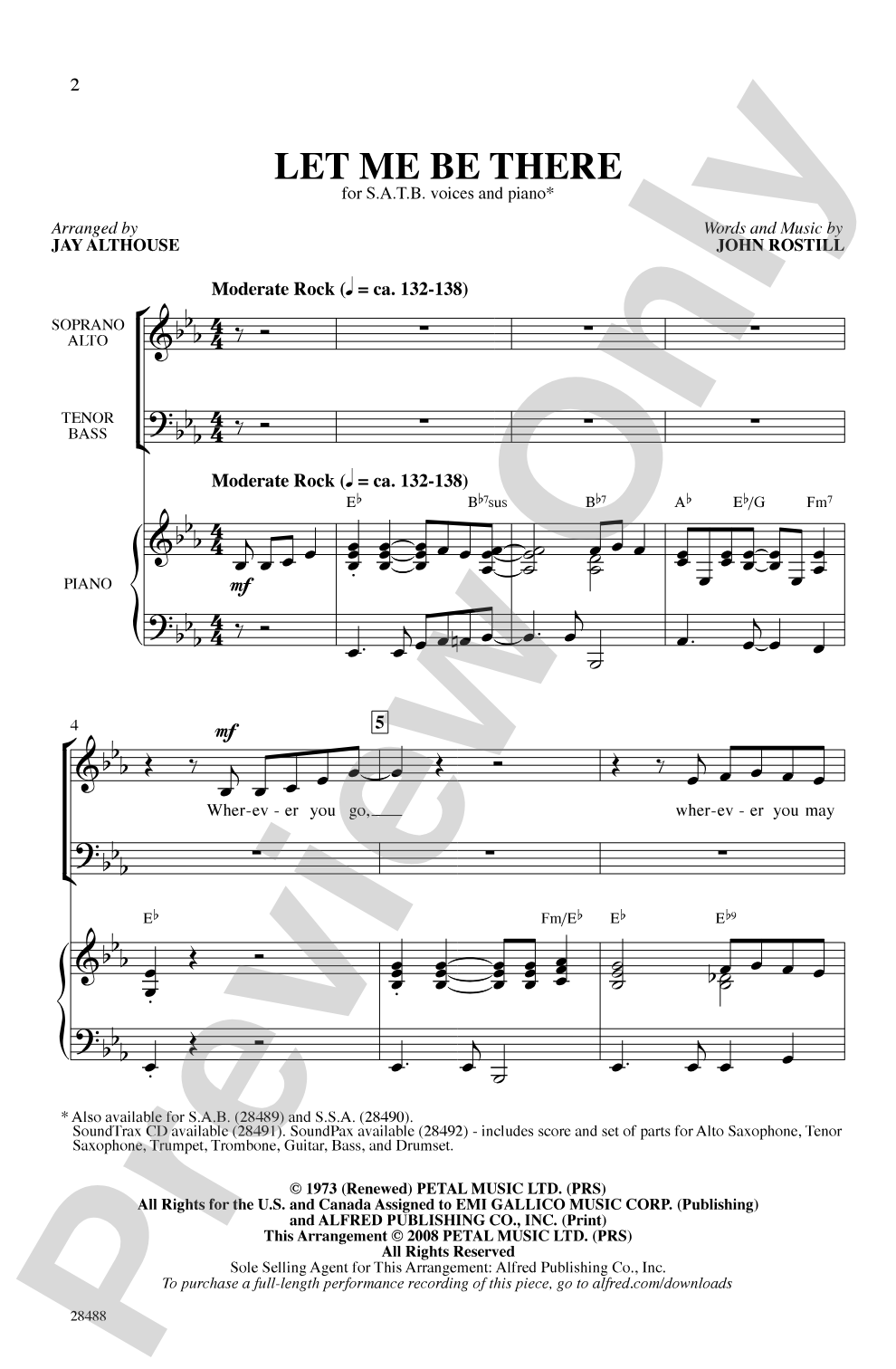
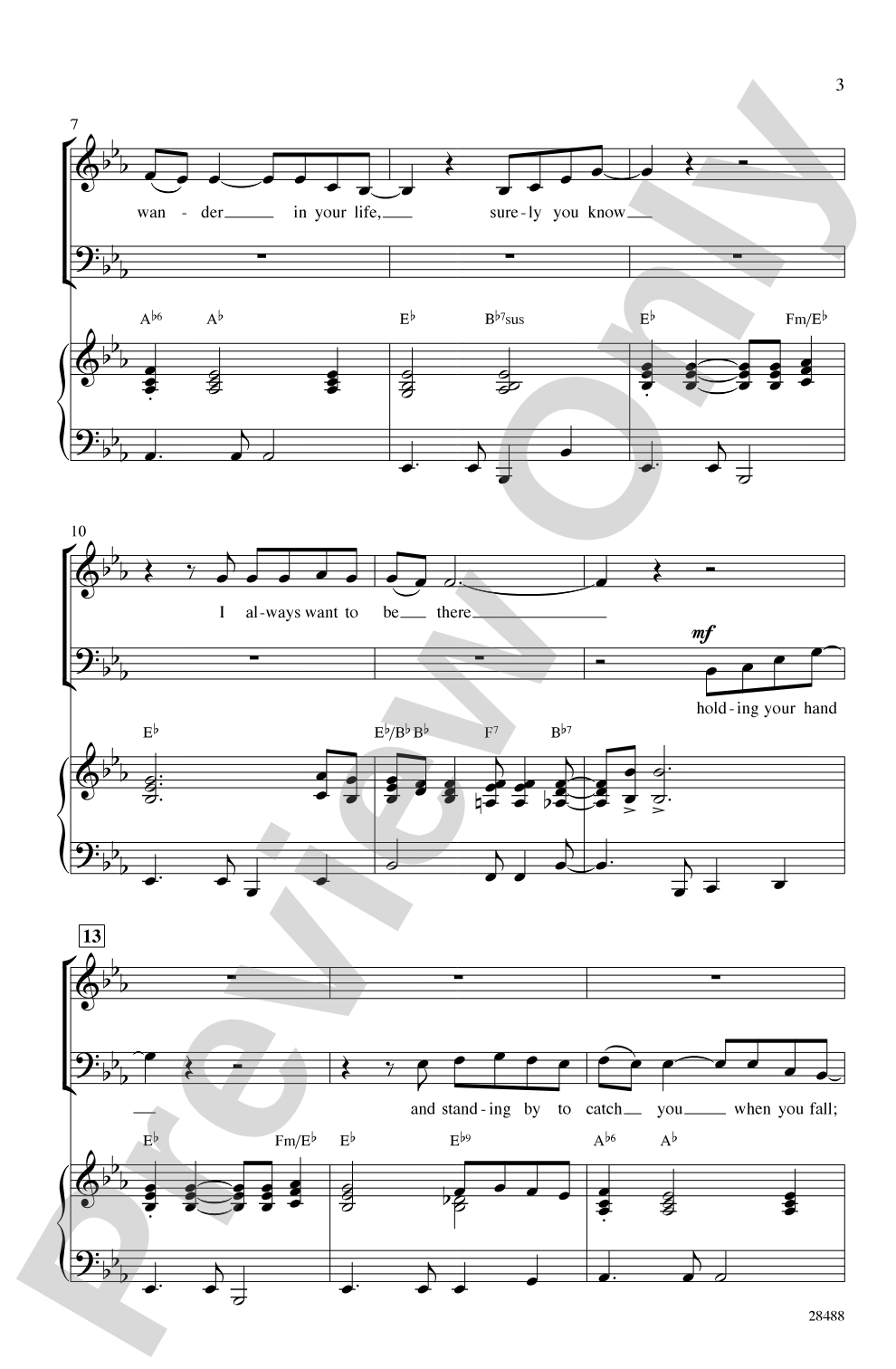
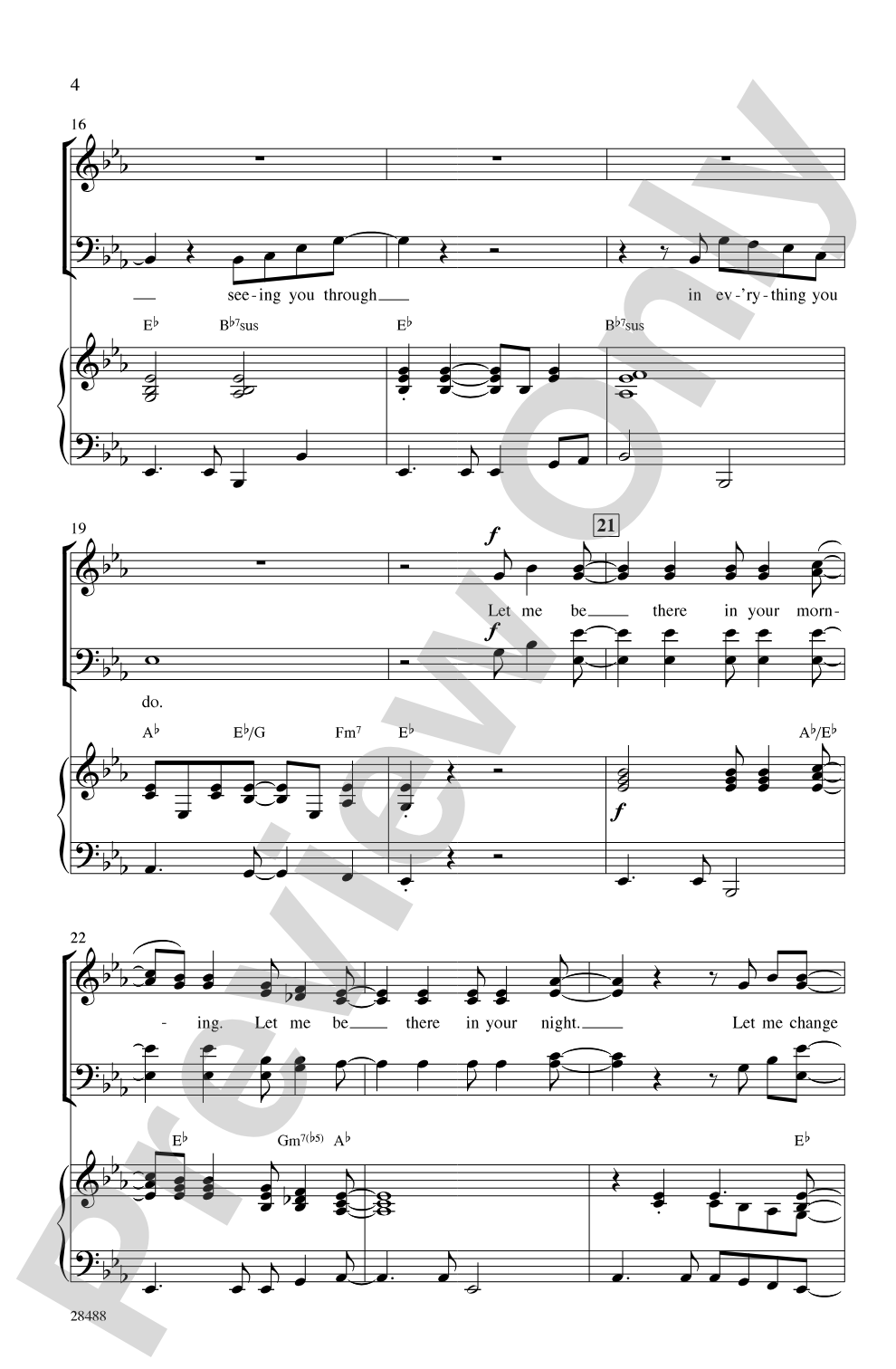

Let Me Be There: SATB Choral Octavo
Words and music by John Rostill / arr. Jay Althouse
Item: 00-PO-0007984
$1.85
Minimum order quantity: 20 copies
Pickup currently not available
Related Items
Let Me Be There: SoundTrax Digital Audio Download |
$24.95
|
View | |
Let Me Be There: Choral SoundPax |
$30.00
|
View | |
Let Me Be There: SATB Choral Octavo |
$1.85
|
View | |
Let Me Be There: SAB Choral Octavo |
$1.85
|
View | |
Let Me Be There: SSA Choral Octavo |
$1.85
|
View | |
Let Me Be There: Choral Octavo SoundTrax CD |
$24.95
|
View | |
Let Me Be There: Choral SoundPax |
$30.00
|
View |
Description
This Olivia Newton-John hit from the '70s translates perfectly as a gospel-edged pop piece for today's choirs. There's a little hint of Elvis, too. Well-crafted choral writing combines with rhythmic drive to make your group come alive. There's a brief hand clapping a cappella section as the piece builds toward the big finish.


Let Me Be There: SATB Choral Octavo isn't in MakeMusic Cloud just yet...but it could be. Let us know you'd like to see it, and you'll help shape what comes next. In the meantime, start a free trial and dive into thousands of interactive titles your students can play along with today.
Request This Title
Tell us you want it.
Start Your Free Trial
Explore everything that's ready to play right now.
Sample Audio
1
Audio File
--:--
0:00
0:00
Sample Video
No sample videos found.
Additional Details
Series:
Alfred Pop Choral Series
Publisher:
Alfred Music
Page Count:
12
SKU:
00-PO-0007984
More about this title
About the Composer: John Rostill
John Rostill was a British songwriter and bass guitarist who shaped the sound of 1970s pop music as a member of The Shadows. His gift for crafting memorable melodies and his understanding of what makes a song resonate across audiences made him a prolific writer for some of the era's biggest artists, including Olivia Newton-John. Rostill's compositions balance accessibility with musicality, a quality that translates beautifully when his work reaches choral arrangements.
Why we love this
Jay Althouse captures the warmth and sincerity of the original while giving your choir genuine rhythmic momentum and moments of textural variety that keep the piece engaging for both singers and listeners. The hand clapping section functions as a real turning point in the arrangement, transforming what could be a straightforward pop tune into something with genuine performance energy and audience connection.
What to expect
Nostalgic and immediate at once. The '70s DNA runs through every phrase, yet the arrangement feels fresh because it trusts the simplicity of the melody and builds excitement through texture and rhythm rather than complexity. There's a sincerity to this piece that invites your singers to commit emotionally, not just technically.
Who it's for
Intermediate to advancing high school and college choirs looking to expand beyond traditional standards into contemporary pop repertoire. Directors seeking a piece with genuine charm and accessibility that doesn't sacrifice musicality or challenge will find the writing here serves both goals.
How to get the most out of it
- Build the hand clapping section with intention. Start soft and let the dynamic grow as more voices drop out; this creates the illusion of the rhythm becoming more insistent rather than just louder.
- Anchor the rhythm section (rhythm parts are available separately). The groove depends on locking the eighth note patterns and swing feel, which means your accompaniment player becomes as essential as your conducting.
- Shape the phrases with the original recording's phrasing in mind, but avoid a note-for-note imitation. Find what feels natural in your singers' voices while honoring the song's conversational, intimate quality.
- Balance the gospel inflection without caricature. The harmonic touches hint at gospel idiom, but the piece stays true to its pop roots; let your interpretation reflect both influences without overselling either one.
How to use it
Place this after an uptempo spiritual or gospel number to shift the concert's tone, or use it as an intermission closer that leaves the audience smiling. The approachable melody and recorded accompaniment make it an excellent choice for mixed repertoire concerts where you're balancing classical selections with something contemporary and fun.
Skills your students will build
- Rhythmic precision in pop idiom (syncopation, swing feel, eighth-note patterns)
- Blend and balance across SATB texture in close-harmony passages
- Call-and-response coordination between sections
- Interpretation of groove-based accompaniment and ensemble cohesion
- Confidence singing pop repertoire with appropriate stylistic phrasing