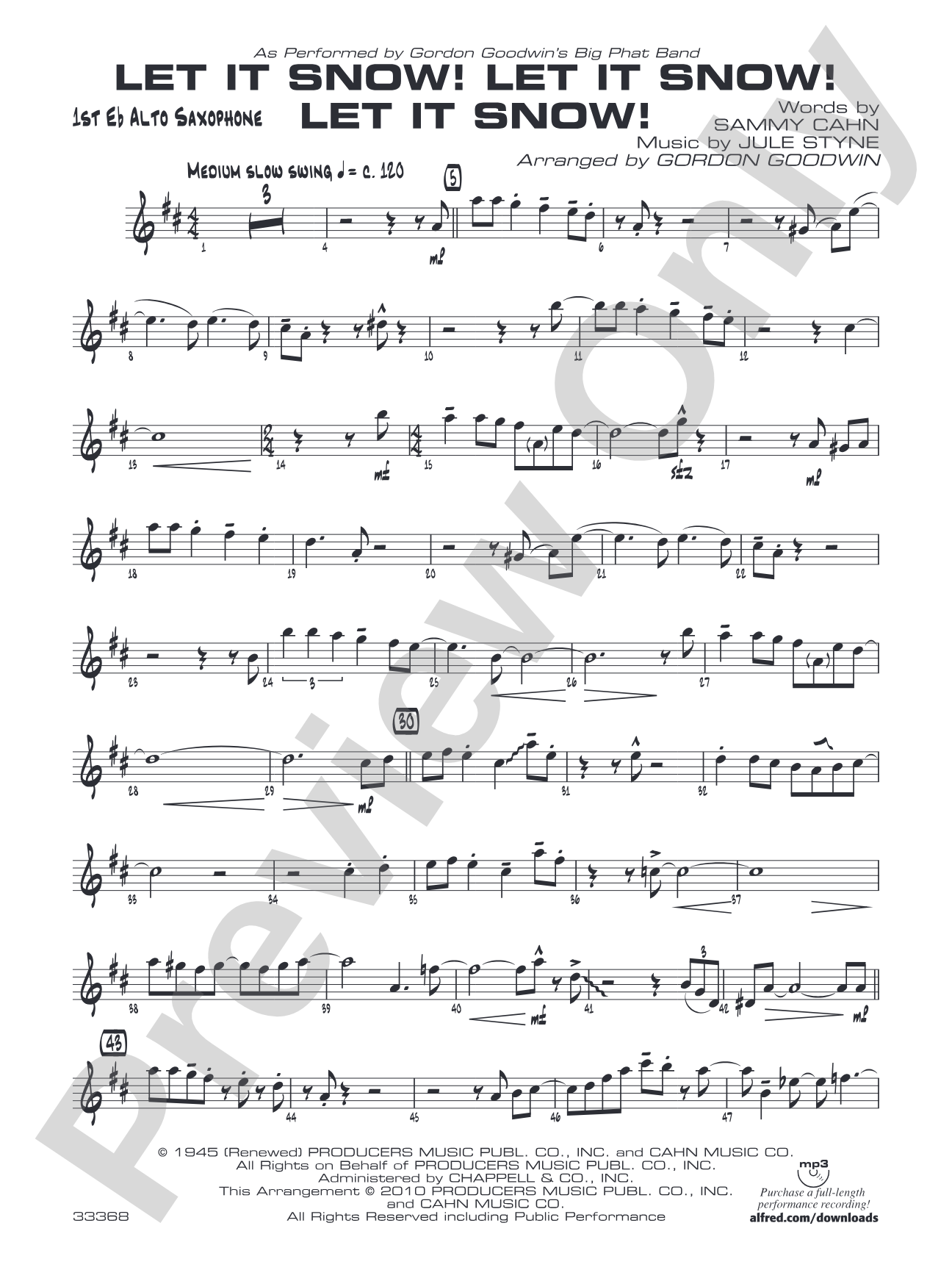
A medium swing chart in the style of Basie and Hefti, you'll love this Goodwin adaptation of the wonderful holiday classic. Not a drum showcase, but the drummer has plenty of solo space beginning on brushes then to sticks and the intensity rises. There is a flute part on second alto (can be omitted) and a percussion part for vibes. Optional solo space for alto, tenor, trumpet and trombone, lead trumpet range is to written high E plus a nice sax soli round out this excellent chart. This chart is so nice, you'll want to play it all twelve months a year!
Discover MakeMusic Cloud: thousands of interactive titles your students can play along with today.
Jule Styne (1905-1975) was a prolific composer whose gift for melody shaped American musical theater for five decades. Trained classically but drawn to popular idiom, he wrote scores for stage and screen that balanced sophistication with immediate appeal. His holiday standards, including "Let It Snow! Let It Snow! Let It Snow!," remain central to seasonal repertoire across all genres and skill levels.
Why we love this
Gordon Goodwin's arrangement captures the swagger and wit of mid-century big band writing without requiring a massive instrumentation. The chart balances featured solo space across the section with tight ensemble passages that reward rhythmic precision and blend, making it equally valuable as a concert piece or a teaching moment about small-group voicing.
What to expect
A crisp, sophisticated take on a familiar standard; the Basie/Hefti idiom brings casual confidence and smart rhythmic displacement to what could be saccharine material. The piece swings with energy and intelligence, never winking at the audience, yet remains rooted in the warmth of the original melody.
Who it's for
Advanced jazz ensembles comfortable reading complex rhythms and managing multiple optional solo spaces. Directors seeking a holiday chart with genuine substance, strong pedagogical content, and the flexibility to showcase soloists without compromising the ensemble's sound.
How to get the most out of it
Lock the rhythm section early. The swing feel depends on secure time from the bass and drums; establish that groove in sectional rehearsals before layering the ensemble parts.
Shape the drummer's brush-to-sticks transition as a dramatic moment rather than a casual switch. Cue it clearly and let the intensity build deliberately from that point forward.
Balance the sax soli passages so the melody cuts through without the section overwhelming the texture. These moments are the chart's emotional anchor and deserve careful voicing work.
Mark solo entries (alto, tenor, trumpet, trombone) during initial rehearsal so everyone knows who plays when, even if you haven't assigned soloists yet. This prevents confusion during runs.
How to use it
Program this as the opener or closer of a winter concert where you want to signal both musicianship and holiday spirit without relying on novelty. It pairs well alongside other swing-era charts or straight-ahead jazz repertoire, and its 78-page span suggests a substantial, substantive piece rather than a filler selection.
Skills your students will build
Medium-swing articulation and feel (brush to stick technique in percussion)
Reading and balancing multiple solo opportunities within ensemble context
Sax section voicing and blend across soprano/alto/tenor/baritone parts
Rhythmic precision in syncopated ensemble passages characteristic of Basie-style writing
Dynamics control to feature soloists while maintaining textural clarity
You May Also Like
Scan to Complete Your Purchase
Use your phone's camera to scan the code below
You'll log in on your phone and the order will be added to your account