
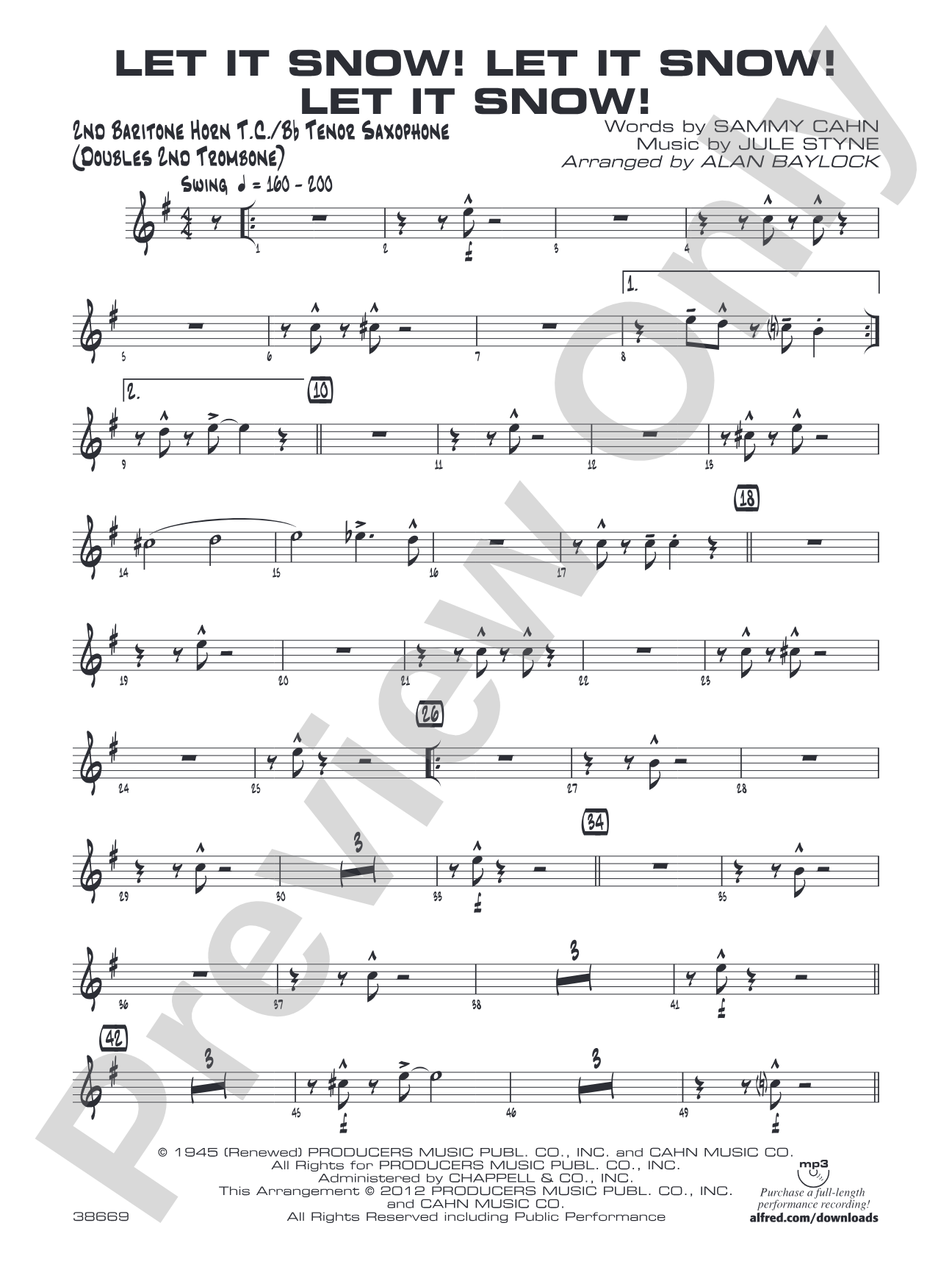

Let It Snow! Let It Snow! Let It Snow!: 2nd Baritone T.C.
Words by Sammy Cahn, music by Jule Styne / arr. Alan Baylock
Grade: 3 (Medium)
Item: 00-PC-0017217_BTC2
$3.00
Pickup currently not available
Description
This swinging holiday arrangement was adapted from the chart originally written for the USAF Airmen of Note. The saxes are featured with lots of section work and solos space for all five including written-out solos for each. Lead trumpet range is to written B above the staff. (4:19)


Don't just read it, hear it, play along with it, and watch your students grow with it. In MakeMusic Cloud, Let It Snow! Let It Snow! Let It Snow!: 2nd Baritone T.C. comes alive with professional accompaniment, adjustable tempo, and built-in practice tools that turn solo practice into real progress.
Open in the Player
Jump straight in and assign it today.
Start Your Free Trial
Open this title and explore the full library in minutes.
Sample Audio
1
Audio File
--:--
0:00
0:00
Sample Video
Additional Details
Series:
Jazz Band Series
Publisher:
Alfred Music
Page Count:
98
SKU:
00-PC-0017217_BTC2
More about this title
About the Composer: Jule Styne
Jule Styne (1905–1975) composed some of the most enduring melodies in American musical theater. His gift for writing singable, memorable tunes made him a favorite collaborator with lyricists including Sammy Cahn, Stephen Sondheim, and Betty Comden. Beyond Broadway, Styne's work has proved remarkably durable in jazz and pop contexts, with musicians and arrangers continually finding new life in his harmonic vocabulary and rhythmic sophistication.
For music educators, Styne's catalog offers accessible entry points into jazz standards and popular song. His melodies sit naturally in many instrumental ranges and his harmonies reward both straight-ahead and adventurous interpretations. Teachers working with jazz ensembles find his compositions particularly valuable because they balance immediate appeal with enough musical substance to sustain student interest through rehearsal.
Why we love this
Alan Baylock's chart gives this beloved standard genuine ensemble weight without overwhelming a Grade 3 band. The saxophone section gets meaningful work throughout with written-out solos that sound impressive and are actually playable at this level. Adding this to a winter concert brings energy and elegance that purely classical holiday fare cannot match.
What to expect
Bright and buoyant, with the effortless sophistication of a big band golden age arrangement. The piece breathes with natural swing and includes moments where the saxophones shine together before pulling back to let soloists step forward. It feels celebratory without being cartoonish.
Who it's for
Jazz ensemble directors working with intermediate players who want a holiday standard with real ensemble writing and solo opportunities. This works equally well for groups that read chord charts and those working from written parts, since the full score provides clarity while individual parts encourage personalizing the solos.
How to get the most out of it
- Balance the lead trumpet against the ensemble in tutti passages; the written B above the staff is achievable for most Grade 3 lead players but benefits from monitoring blend so the section doesn't overshadow the melody.
- Treat the saxophone solos as features, not accompaniment. Even the written-out solo passages should have space and air around them so each voice registers clearly.
- Lock the rhythm section early and often. The swing feel depends entirely on the drums, bass, and piano working as a unit; rehearse them separately if needed.
- Shape phrases across bar lines rather than hitting each downbeat equally. This arrangement swings hardest when players think in longer melodic arcs, not just measures.
How to use it
Place this early in a winter concert to set an energetic tone, or use it as a closer if you want audiences leaving with a groove in their step. It pairs well with a mix of jazz standards and other holiday material, and the reasonable run time (4:19) makes it flexible for concert structure.
Skills your students will build
- Reading and executing swing rhythms with control
- Phrasing within sections and as soloists
- Balancing written melody against ensemble harmonic movement
- Listening across the ensemble to maintain rhythmic cohesion
- Interpreting lead sheets and concert pitch notation in a jazz context