
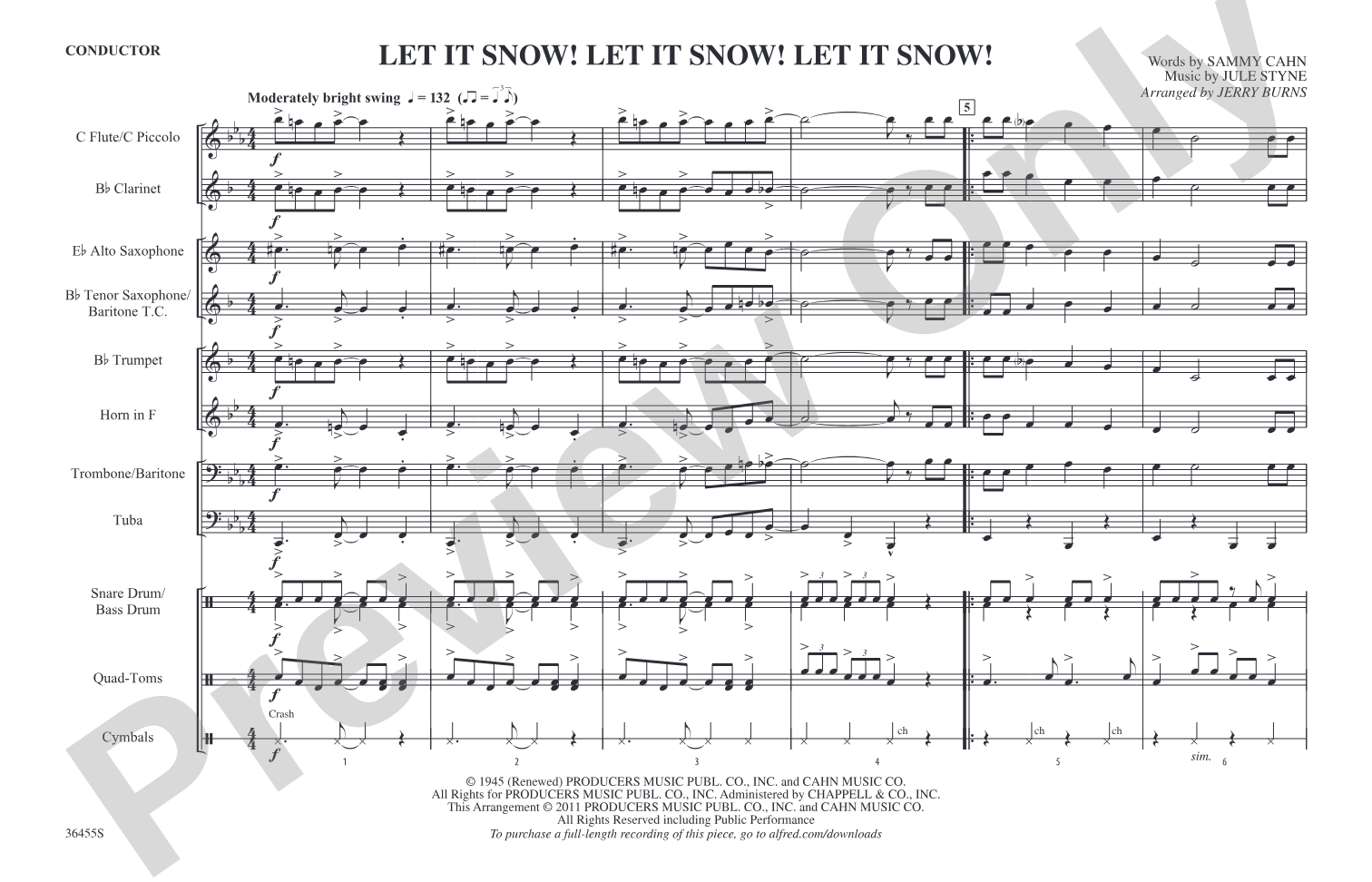
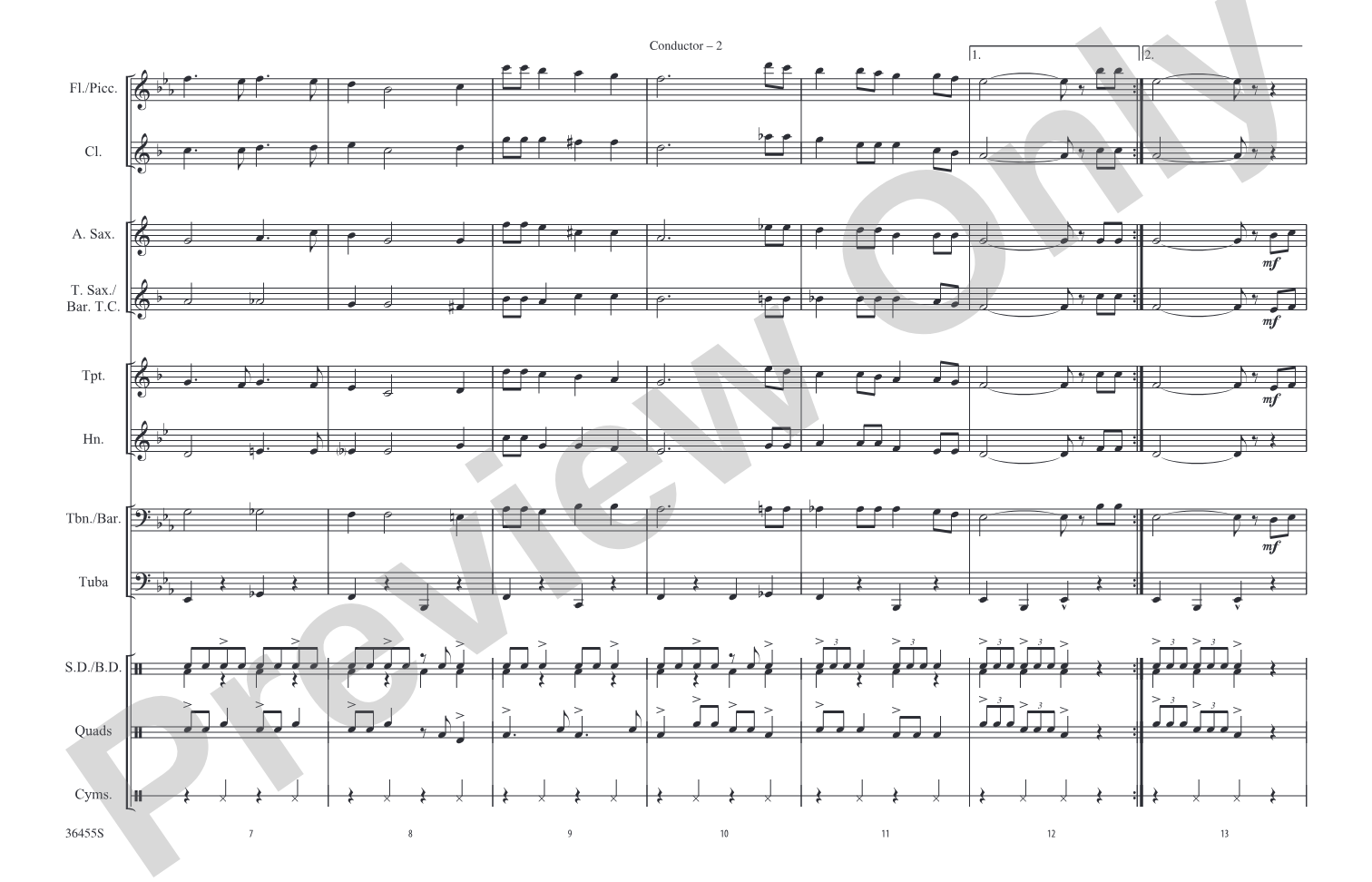
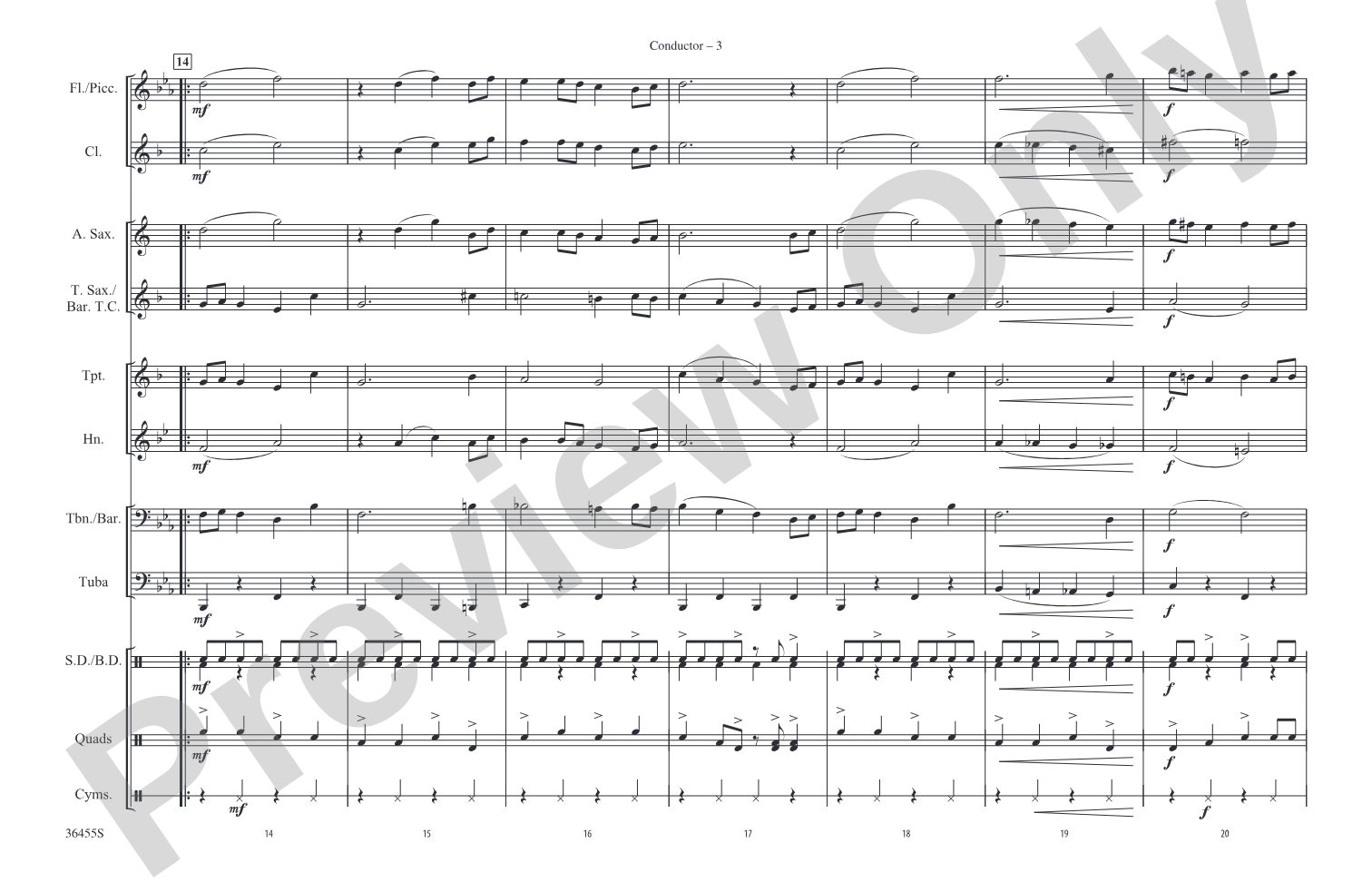
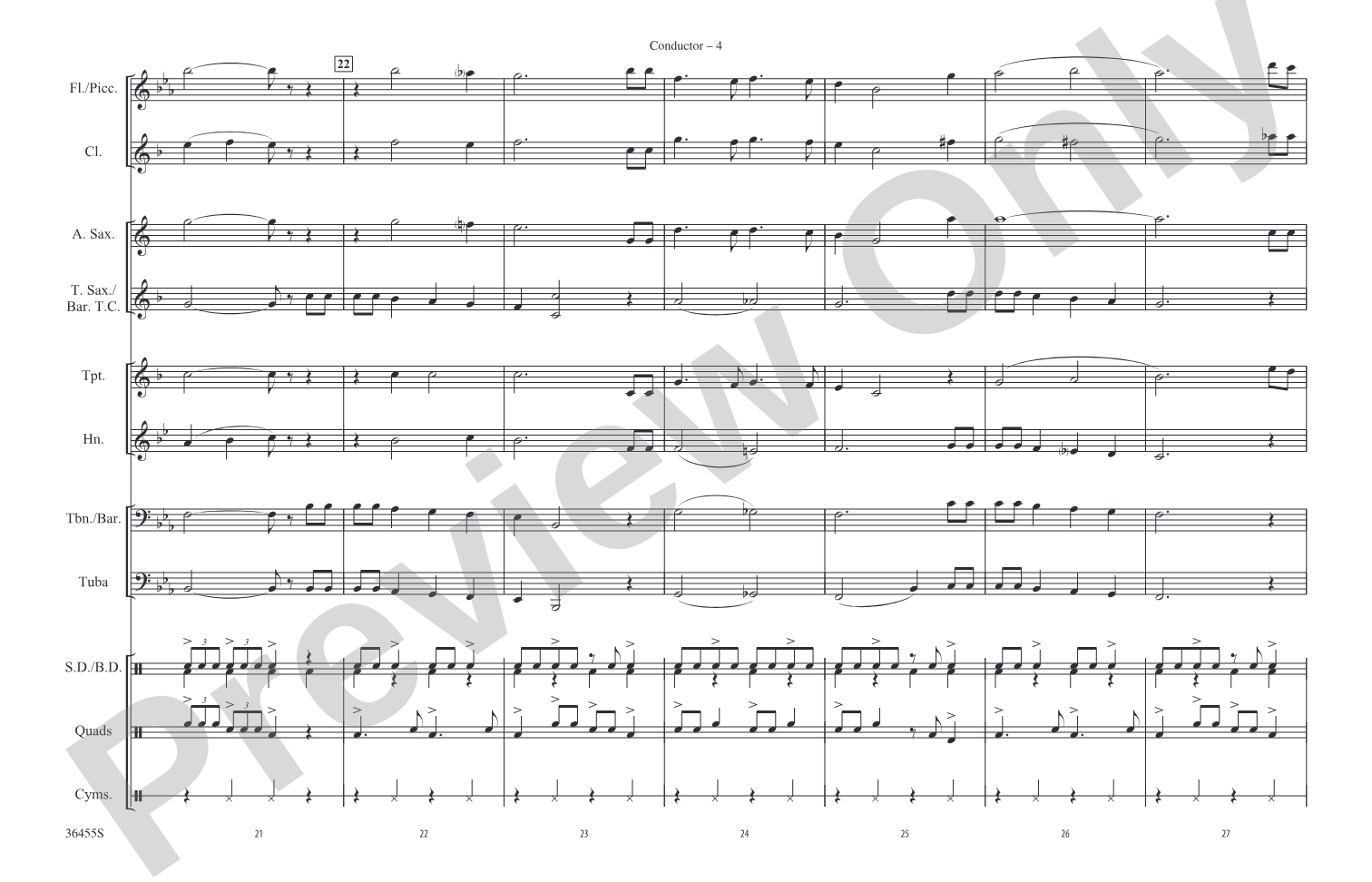
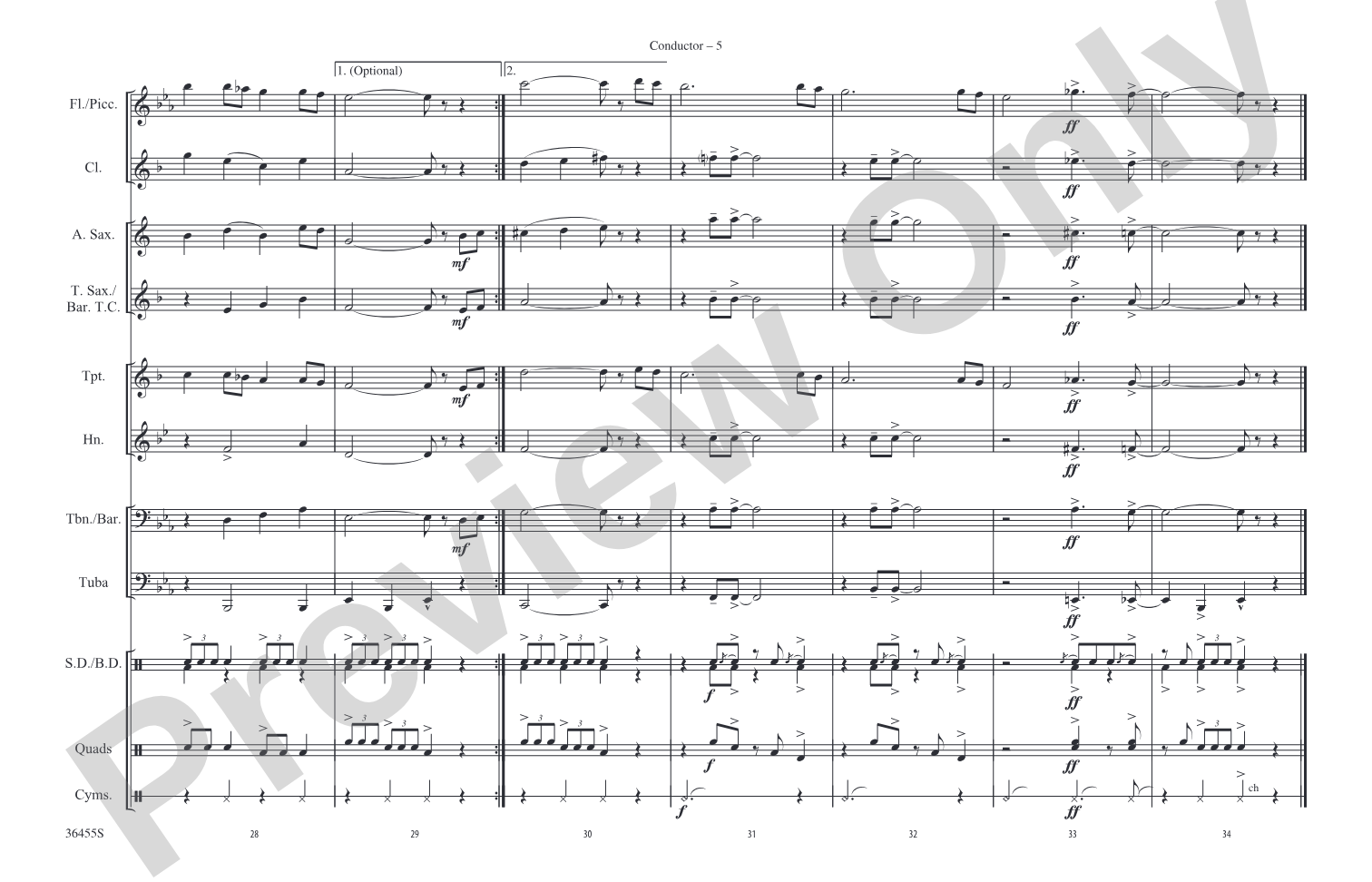

Let It Snow! Let It Snow! Let It Snow!: Marching Band Conductor Score & Parts
Words and music by Sammy Cahn, music by Jule Styne / arr. Jerry Burns
Grade: 1.5 (Very Easy)
Item: 00-PK-0007945

$50.00
One moment…
Description
If you are looking for an easy Christmas chart this year, this is the one you want. It's perfect for holiday parades, stands, or pep bands. Another easy, great sounding chart from Jerry Burns! (1:10)


Don't just read it, hear it, play along with it, and watch your students grow with it. In MakeMusic Cloud, Let It Snow! Let It Snow! Let It Snow!: Marching Band Conductor Score & Parts comes alive with professional accompaniment, adjustable tempo, and built-in practice tools that turn solo practice into real progress.
Open in the Player
Jump straight in and assign it today.
Start Your Free Trial
Open this title and explore the full library in minutes.
Sample Audio
1
Audio File
--:--
0:00
0:00
Sample Video
Additional Details
Series:
Very Easy Pops for Marching Band
Publisher:
Alfred Music
Page Count:
86
SKU:
00-PK-0007945
More about this title
About the Composer: Sammy Cahn
Sammy Cahn was a prolific lyricist who shaped American popular music across radio, film, and theater for nearly seven decades. His partnership with composer Jule Styne produced some of the most enduring standards in the American songbook, including "Let It Snow! Let It Snow! Let It Snow!" (1945), which has become a winter holiday staple performed by countless artists and ensembles.
Cahn's gift for singable, memorable melodies paired with clever, conversational lyrics made his work accessible to performers and audiences alike. His influence extends well beyond his era; his compositions remain classroom and performance repertoire because they balance musical substance with immediate appeal.
Why we love this
Jerry Burns' arrangement captures the charm and momentum of this perennial favorite without demanding technical complexity from your ensemble. At grade 1.5, students stay focused on secure fundamentals (consistent tone, clean entrances, and steady time) rather than wrestling with the chart, which means the band actually sounds polished from day one. The familiar melody works instantly with audiences at parades and holiday performances, giving even developing musicians the confidence of delivering something that lands.
What to expect
Bright, cheerful, and immediately recognizable, this arrangement captures the nostalgic warmth of a classic holiday standard. The straightforward harmonic language and clear orchestration give the familiar melody room to sing, creating the kind of crowd-pleasing moment that reminds people why they love marching band at holiday time.
Who it's for
Marching bands looking for a chart that sounds polished and seasonal without requiring weeks of rehearsal time. Holiday pep bands, parade ensembles, and groups performing at community events will find this accessible enough for mixed ability levels while still delivering genuine musicality and audience appeal.
How to get the most out of it
- Maintain a steady, comfortable tempo that lets the melody breathe; resist the urge to rush, especially through the opening statement
- Balance the tutti passages so the main theme stays centered; this is about straightforward, warm delivery, not aggressive dynamics
- Articulate the eighth-note figures with lightness and precision to keep the chart's energy moving without heaviness
- Let the accompaniment parts sit underneath the melody naturally; over-blending will flatten the tune's character
How to use it
Program this for holiday parades, pre-game performances during December, or winter concert stands where you want something both seasonally fitting and audience-accessible. It pairs well alongside other very easy fare and gives less experienced players a chance to contribute meaningfully to a recognizable, well-loved piece without extended prep time.
Skills your students will build
- Maintaining steady tempo in straightforward duple meter
- Executing clear, unified articulation across the ensemble
- Balancing melody and accompaniment in tutti textures
- Reading and executing dynamic shaping within a simple harmonic framework