Let Evening Come Sheet Music Preview

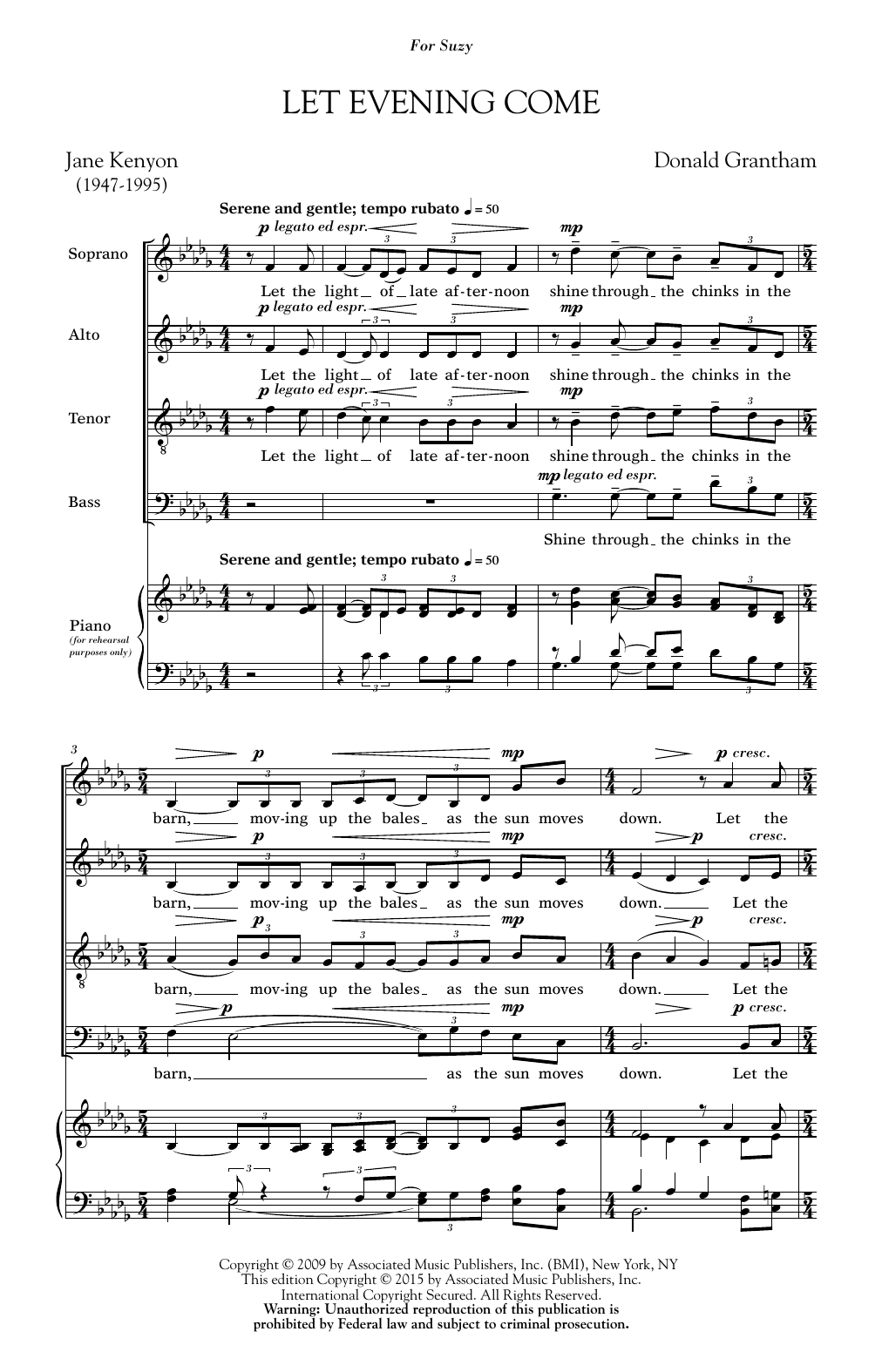
Let Evening Come: SATB Choral Octavo

By Donald Grantham / As performed by Jane Kenyon

Item: 35-DS00309283

Digital Download
$2.99
Description

Let Evening Come: SATB Choral Octavo isn't in MakeMusic Cloud just yet...but it could be. Let us know you'd like to see it, and you'll help shape what comes next. In the meantime, start a free trial and dive into thousands of interactive titles your students can play along with today.

Sample Audio
No sample audio found.
Sample Video
Additional Details
Publisher: Hal Leonard
Page Count: 8
SKU: 35-DS00309283

More about this title

About the Composer: Donald Grantham

Donald Grantham is an American composer with a gift for setting poetry to music that respects both the text and the human voice. His choral works are staples in concert repertoires across the country, prized for their accessibility without sacrificing musical substance and their ability to engage singers at multiple levels of experience.

Why we love this

Grantham's treatment of Jane Kenyon's poem creates an intimate soundscape that doesn't require a large choir to resonate with an audience. The piece builds emotional depth through restrained harmonic language and careful text painting, making it ideal for choirs seeking repertoire that communicates directly without bombast.

What to expect

There is a quiet contemplation here, a sense of witnessing something precious and fleeting. The harmonic language feels both familiar and gently unsettled, creating a reflective mood that lingers after the final chord.

Who it's for

This octavo works well for high school and college choirs, as well as community ensembles seeking concert repertoire with literary weight. The piece rewards singers who engage thoughtfully with poetry and audiences who appreciate introspection in choral music.

How to get the most out of it

  • Pay close attention to the text underlay and allow the natural speech rhythms of Kenyon's words to shape your phrasing rather than imposing strict metric pulse on emotionally charged moments.
  • Balance the inner voices carefully; many passages depend on hearing secondary melodic lines that support but never overshadow the overall arc.
  • Approach dynamic markings as expressive gestures rather than absolute volume levels. The most moving moments often arrive at softer dynamic levels where breath and articulation become primary concerns.

How to use it

Position this as a centerpiece for a concert exploring themes of twilight, transience, or acceptance. Its subdued character makes it an excellent counterweight to more energetic repertoire, allowing audiences a moment of collective pause and reflection.

Skills your students will build

  • Singing sustained tones with consistent vowel placement across phrase lengths
  • Balancing ensemble blend in four-part texture with independent inner voice movement
  • Interpreting text inflection and word stress within set rhythmic patterns
  • Managing breath support and dynamic control in passages with sparse accompaniment

You May Also Like