
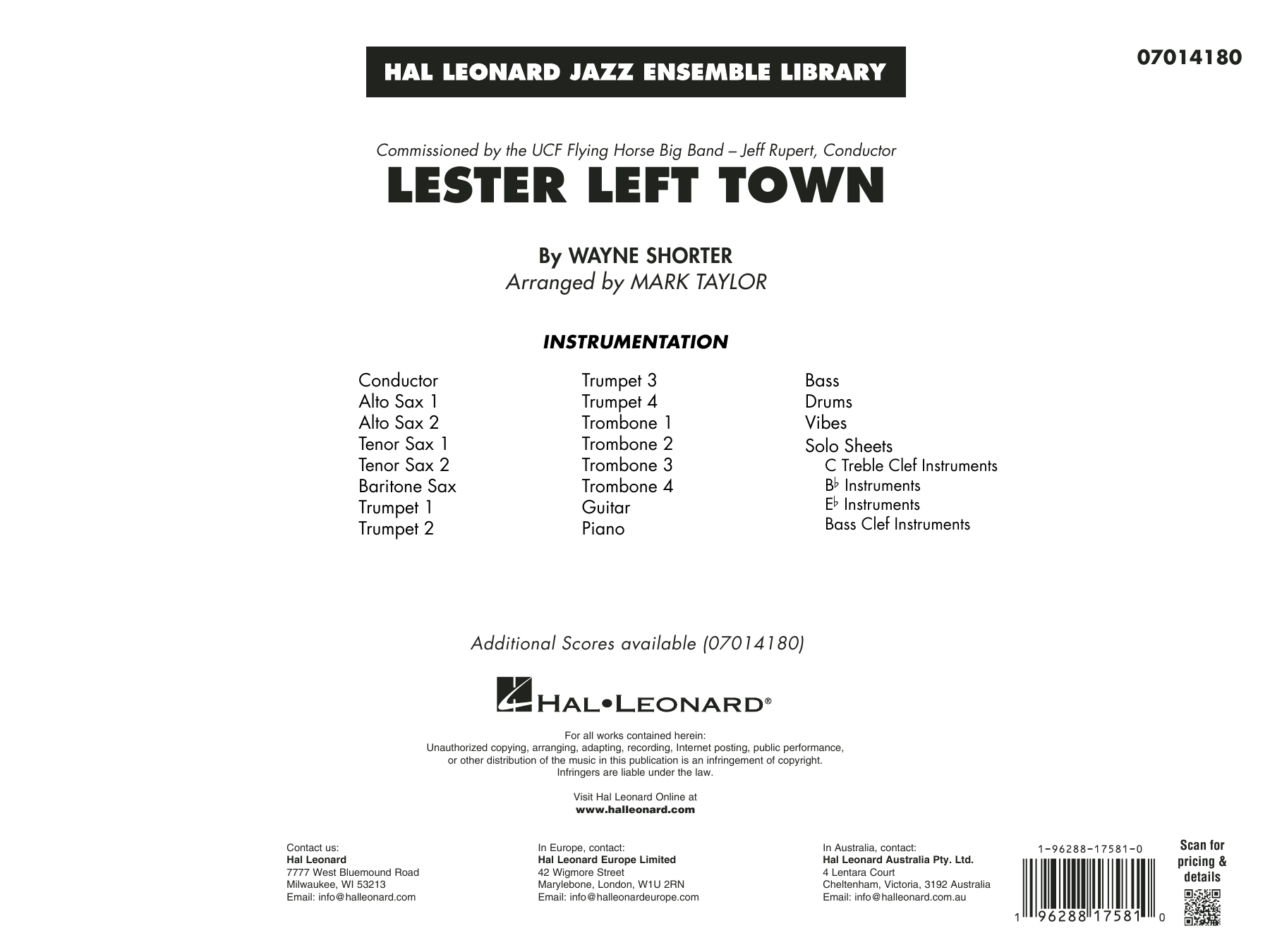

Lester Left Town (arr. Mark Taylor): Jazz Ensemble Conductor Score & Parts
Arranged by Mark Taylor
Grade: 4
Item: 35-PK01371847
$55.00
Pickup currently not available
Buy Extra Parts (Digital PDF Download)
Parts Added to Cart!
Description
Originally recorded by Art Blakey The Jazz Messengers in 1960, this Wayne Shorter classic was written in honor of Lester Young and swings hard from beginning to end. Mark Taylor's exciting chart opens with the melody carried by the trombones and tenors, and closes with a dramatic building section leading to a powerful finish. Along the way are inventive twists and turns, and solo space for trombone and tenor sax.


Lester Left Town (arr. Mark Taylor): Jazz Ensemble Conductor Score & Parts isn't in MakeMusic Cloud just yet...but it could be. Let us know you'd like to see it, and you'll help shape what comes next. In the meantime, start a free trial and dive into thousands of interactive titles your students can play along with today.
Request This Title
Tell us you want it.
Start Your Free Trial
Explore everything that's ready to play right now.
Sample Audio
No sample audio found.
Sample Video
No sample videos found.
Additional Details
Publisher:
Hal Leonard
SKU:
35-PK01371847
More about this title
About the Arranger: Mark Taylor
Mark Taylor has shaped the landscape of jazz education through arrangements that honor the idiom's sophistication while remaining accessible to student ensembles. His charts consistently balance technical challenge with musical authenticity, giving young players genuine insight into how jazz professionals approach repertoire.
Why we love this
Taylor's treatment of this Shorter composition captures the essence of the original's swagger without overwhelming Grade 4 players. The arrangement builds genuine energy through its structural arc, and the solo opportunities for trombone and tenor sax give your section leaders a chance to step into the spotlight with material that actually swings.
What to expect
The chart radiates the kind of confident groove that defined the 1960s Jazz Messengers sound. It swings hard from the first measure, builds intelligently through its phrase structure, and delivers a satisfying climax that leaves audiences energized.
Who it's for
Jazz ensembles at the high school level or advanced middle school groups looking to program a piece with genuine historical roots and contemporary energy. Directors seeking a chart that teaches the fundamentals of swing style while delivering an exciting concert moment will find this piece rewarding to develop.
How to get the most out of it
- Balance the opening trombone and tenor melody carefully; these voices should lock in unison so the theme lands with clarity before harmonies thicken.
- The dramatic building section near the end needs intentional dynamic control from your rhythm section and brass. Resist the urge to rush; let the tension accumulate naturally.
- Solo sections benefit from a comping style that leaves air around the soloist. Encourage your piano and guitar to listen actively rather than fill every beat.
- Articulation consistency across the ensemble matters enormously in the opening melody. Establish clear tonguing preferences at rehearsal so the phrasing reads as one voice.
How to use it
Pair this with other Wayne Shorter compositions or classic hard bop standards to build a cohesive jazz history segment in your concert. It works equally well as a mid-program piece that lifts energy or as a closing number that sends the audience out with genuine swing momentum.
Skills your students will build
- Swing articulation and phrasing in ensemble context
- Reading jazz chord changes and responding to harmonic movement
- Balancing unison melody lines without losing individual tone quality
- Comping and accompaniment roles that support rather than overshadow
- Solo development within a structured arrangement
- Dynamic control in building sections and climactic moments