
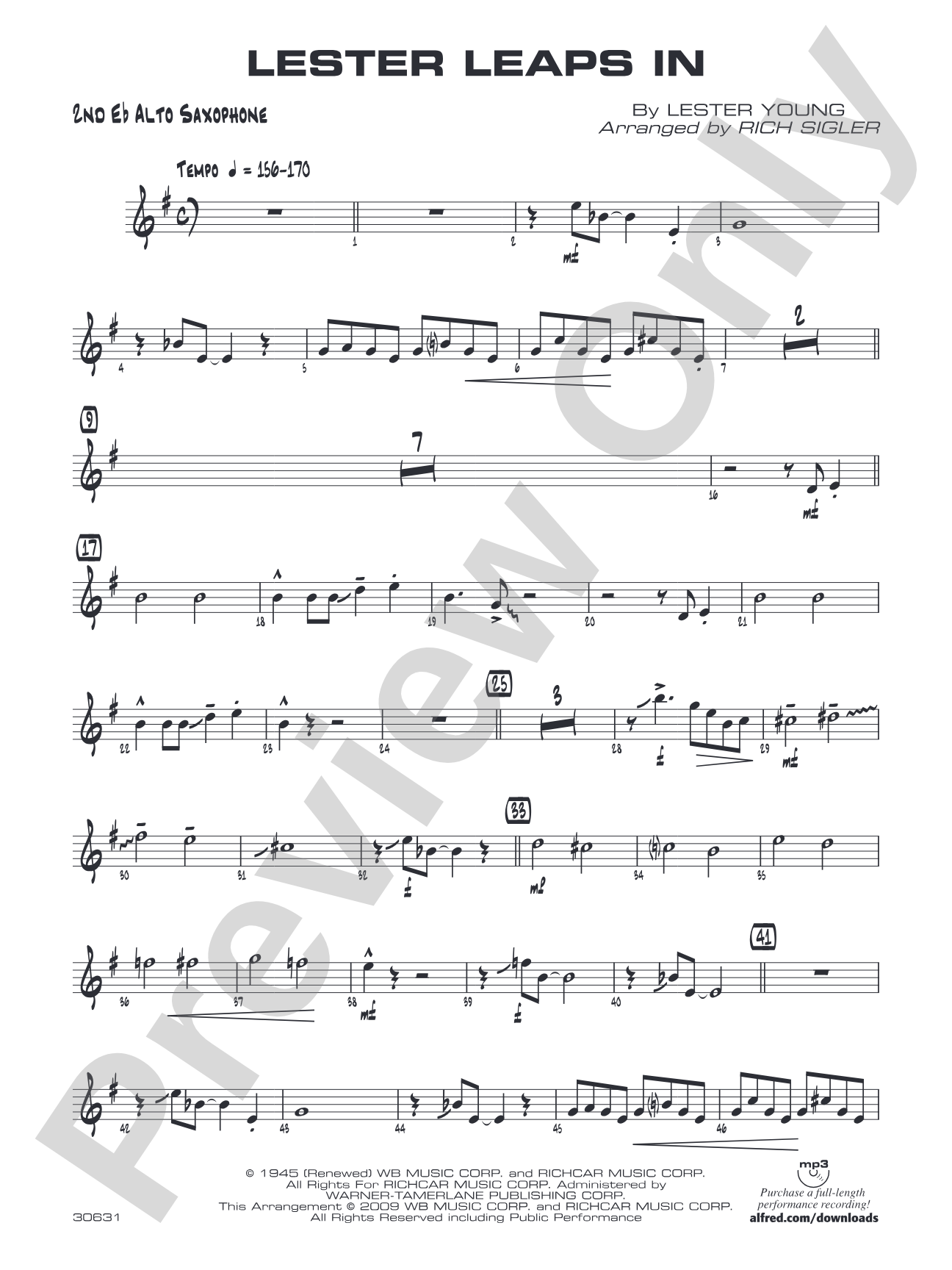

Lester Leaps In: 2nd E-flat Alto Saxophone
By Lester Young / arr. Rich Sigler
Grade: 2 (Medium Easy)
Item: 00-PC-0016678_AX2
$3.00
Pickup currently not available
Description
This great tune by legendary saxophonist Lester Young is a simple and familiar melody that lends itself to many well known jazz quotes and licks. A tenor sax solo is written out and the lead trumpet range is written to G on top of the staff. Arranger Rich Sigler incorporates some clever musical devices to create an interesting yet accessible chart. (3:58) This title is available in MakeMusic Cloud.


Don't just read it, hear it, play along with it, and watch your students grow with it. In MakeMusic Cloud, Lester Leaps In: 2nd E-flat Alto Saxophone comes alive with professional accompaniment, adjustable tempo, and built-in practice tools that turn solo practice into real progress.
Open in the Player
Jump straight in and assign it today.
Start Your Free Trial
Open this title and explore the full library in minutes.
Sample Audio
1
Audio File
--:--
0:00
0:00
Sample Video
Additional Details
Series:
Young Jazz Ensemble
Publisher:
Alfred Music
Page Count:
94
SKU:
00-PC-0016678_AX2
More about this title
About the Composer: Lester Young
Lester Young was a tenor saxophonist and composer whose improvisational style fundamentally shaped the sound of swing jazz. His light tone, harmonic sophistication, and rhythmic fluidity influenced generations of musicians across all instruments, and his compositions remain central to the jazz repertoire.
Young's melodic gifts shine in "Lester Leaps In," a tune that balances accessibility with enough harmonic and rhythmic interest to reward serious listening. For student ensembles, his work offers a direct entry point into authentic swing vocabulary and the art of soloistic phrasing within an ensemble context.
Why we love this
Rich Sigler's arrangement strips away nothing essential while keeping the chart playable for developing ensembles. The written tenor solo and high trumpet voicing give students concrete models to learn from rather than leaving them to improvise over changes, and the clever musical devices Sigler adds keep the ensemble engaged without overwhelming them.
What to expect
"Lester Leaps In" swings with a buoyant, conversational quality. The melody feels both simple and sophisticated, the kind of tune that sounds effortless but reveals new details with each rehearsal. It's energetic without being frenetic, perfect for that moment when an ensemble discovers the feeling that separates swing from straight eighths.
Who it's for
This arrangement serves emerging jazz ensembles ready to tackle idiomatically written parts without needing chord chart interpretation. Trumpet players benefit from the clear lead voicing, saxophonists engage with both ensemble and solo sections, and rhythm sections have a straightforward groove to lock into.
How to get the most out of it
- Ground the swing feel in a relaxed, behind-the-beat sensibility rather than driving hard. Young's style was light and conversational, not forceful.
- Balance the written tenor solo so it speaks clearly over the ensemble without sacrificing blend in the ensemble sections. This is a showcase moment, but not a solo-plus-accompaniment texture.
- Pay attention to the articulation markings in the lead trumpet line. The range up to G invites bright, clear phrasing that cuts through without hardening.
- Use the 3:58 timing as a guide for tempo and pacing, but let the ensemble breathe through phrase endings. Swing is about space as much as forward motion.
How to use it
This works exceptionally well as a contest or festival submission at the Grade 2 level, where it showcases ensemble balance and swing articulation without technical overreach. It pairs naturally with other Young-era swing standards in a concert program, or as a centerpiece when you want to celebrate the ensemble's growth in feel and stylistic control.
Skills your students will build
- Swing articulation and phrasing (light tonguing, phrase shaping over changes)
- Reading written jazz solos and adapting them across different horn voicings
- Ensemble balance in a full-section texture with a featured soloist
- Listening to and responding to tempo and harmonic movement in a jazz context
- Playing with rhythmic independence while maintaining group cohesion