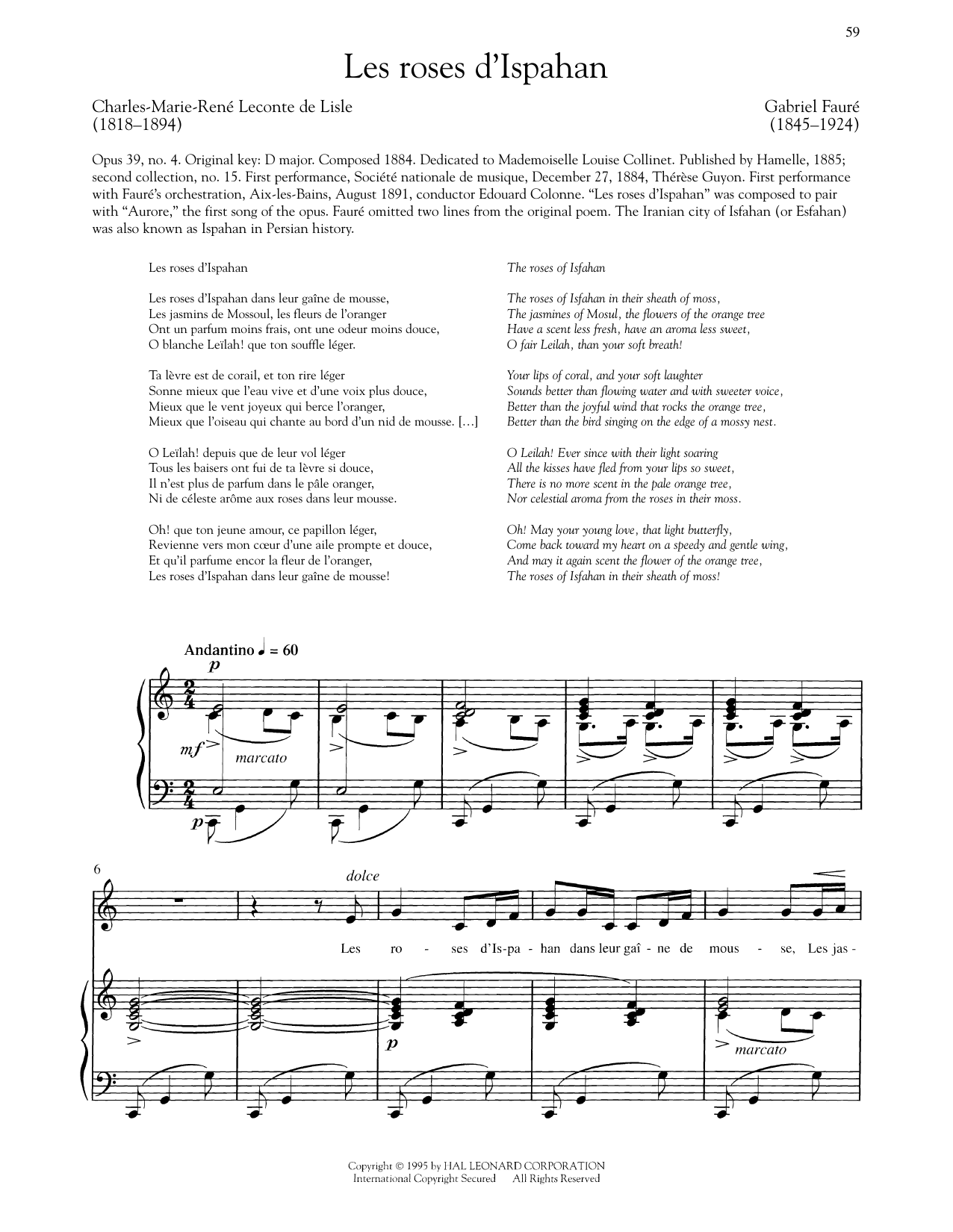
Gabriel Fauré (1845-1924) shaped French musical aesthetics for nearly five decades, moving the art song far beyond its Romantic predecessors through harmonic innovation and refined restraint. His gifts for melody and subtle structural development made him a master of the mélodie, and his influence on twentieth-century composition runs as deep as his commitment to composition pedagogy at the Paris Conservatoire, where he taught the next generation of French musicians.
Fauré's vocal works remain central to the repertoire not because they showboat technique but because they reward singers and pianists who commit to expressive depth. His voice writing sits naturally for the human voice while asking for genuine musical maturity; his piano parts are equally sophisticated, refusing to fade into accompaniment.