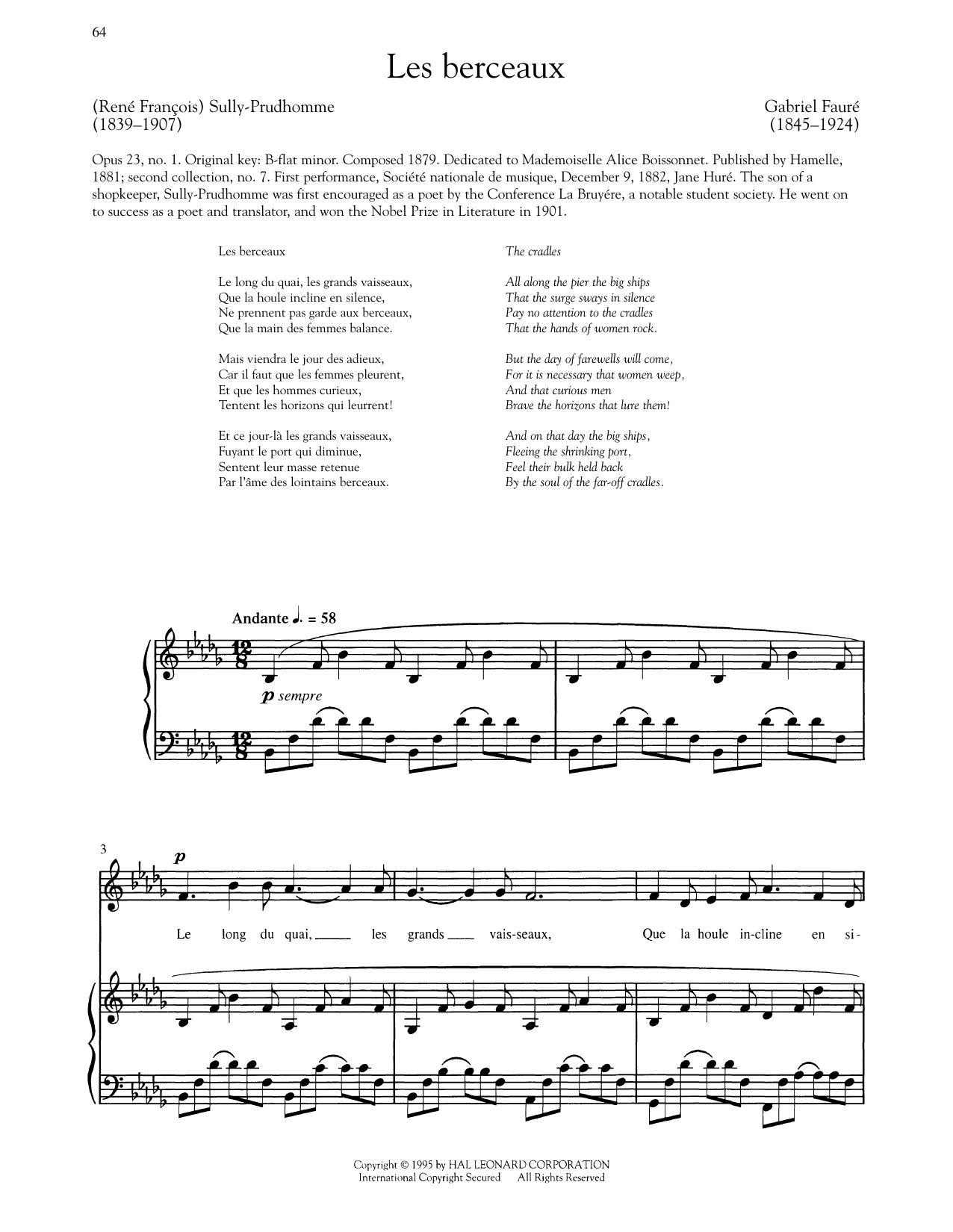
Les Berceaux (Low Voice) Sheet Music Preview

Les Berceaux (Low Voice): Piano Vocal

By Gabriel Fauré

Item: 35-DS01827441

Digital Download
$5.99
Description

Les Berceaux (Low Voice): Piano Vocal isn't in MakeMusic Cloud just yet...but it could be. Let us know you'd like to see it, and you'll help shape what comes next. In the meantime, start a free trial and dive into thousands of interactive titles your students can play along with today.

Sample Audio
No sample audio found.
Sample Video
Additional Details
Publisher: Hal Leonard
Page Count: 4
SKU: 35-DS01827441

More about this title

About the Composer: Gabriel Fauré

Gabriel Fauré (1845-1924) shaped French music across five decades, from the salons of Paris to his position as director of the Conservatoire. His gift for melodic refinement and harmonic sophistication influenced an entire generation of composers, yet his vocal music remains among his most direct and affecting works. Fauré's songs reveal a composer equally at home with intimate lyricism and structural rigor, making his catalog essential study for anyone teaching art song.

Why we love this

Fauré's harmonic language here feels fresh and personal even after repeated hearings, avoiding the rhetorical weight that can burden some French art songs. The low voice transposition sits naturally in the range where vulnerability and resonance coexist, giving singers room to shape the melodic line with genuine expressivity rather than technical strain.

What to expect

Tenderness without sentimentality. The harmonic language creates an atmosphere of quiet reflection, something between lullaby and meditation. Fauré's melodic gift ensures the song never feels introspective to the point of withdrawal; there is warmth here, and connection.

Who it's for

Solo vocalists preparing recital repertoire or art song study. Teaching pianists who need accessible yet musically substantial repertoire for vocal coachings. Students exploring the French mélodie tradition at the intermediate level.

How to get the most out of it

  • Shape the opening melody to breathe naturally between phrases; the accompaniment can flex slightly to support your phrasing rather than drive it forward relentlessly.
  • Attend to the text setting closely. Fauré's prosody rewards careful syllable weight and the distinction between open and closed vowels that French poetry demands.
  • Balance lyrical singing with the harmonic sophistication underneath. The piano part is not merely accompaniment but conversation; leave space for it to be heard clearly.
  • Allow silence and space to matter as much as sound. Fauré often achieves his greatest effects through what he leaves out.

How to use it

Place this on a recital alongside other Fauré mélodies to show the breadth of his output, or program it as a moment of repose between more dramatic works. The four-page format makes it an ideal choice for student recitals or informal salon-style performances where refined simplicity speaks louder than virtuosity.

Skills your students will build

  • French diction and text-painting
  • Phrasing across harmonic change
  • Collaboration with an independent piano part
  • Singing in a low, comfortable tessitura with lyrical intention
  • Recognizing phrase structure in melodic writing

You May Also Like