
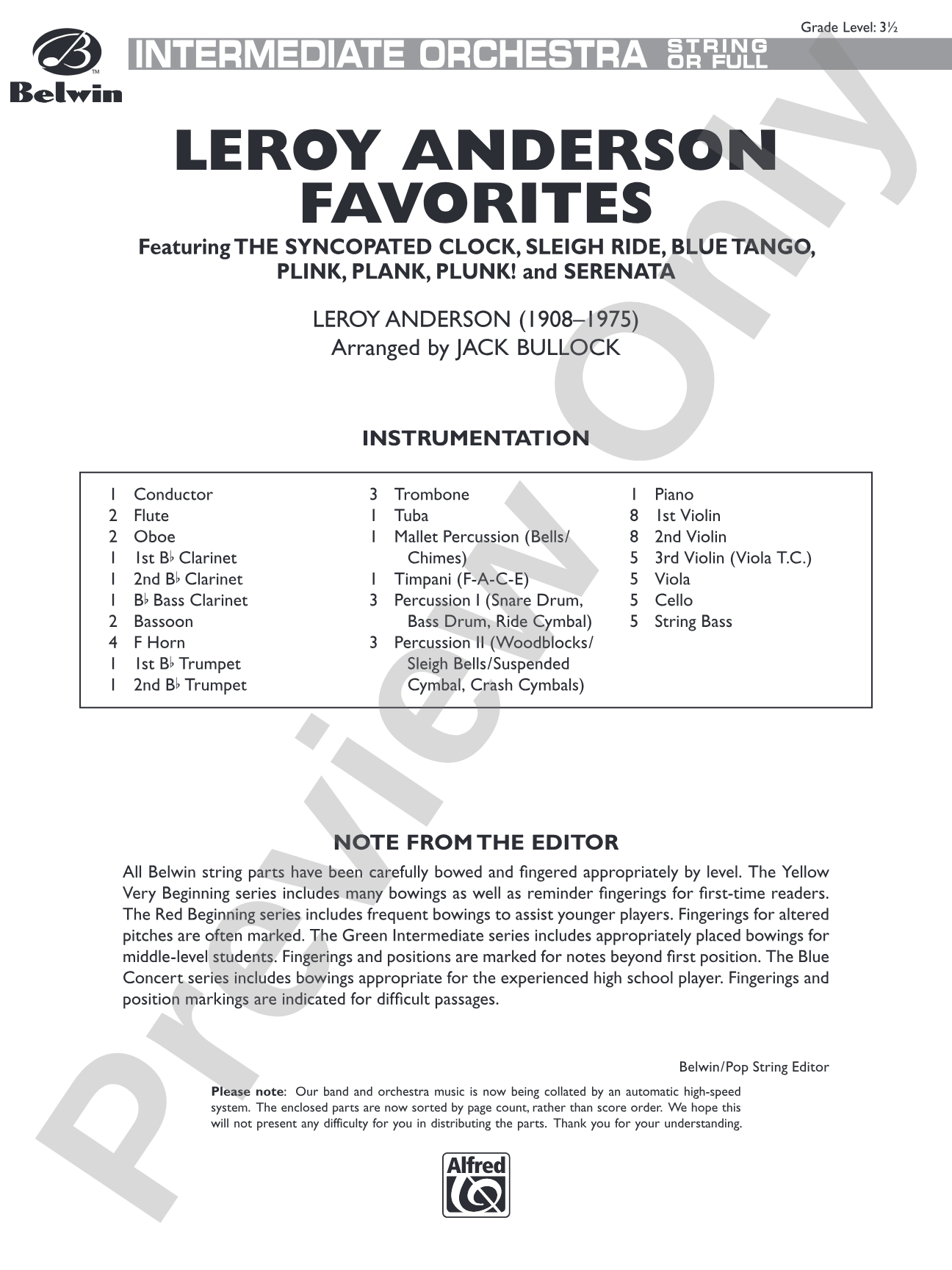
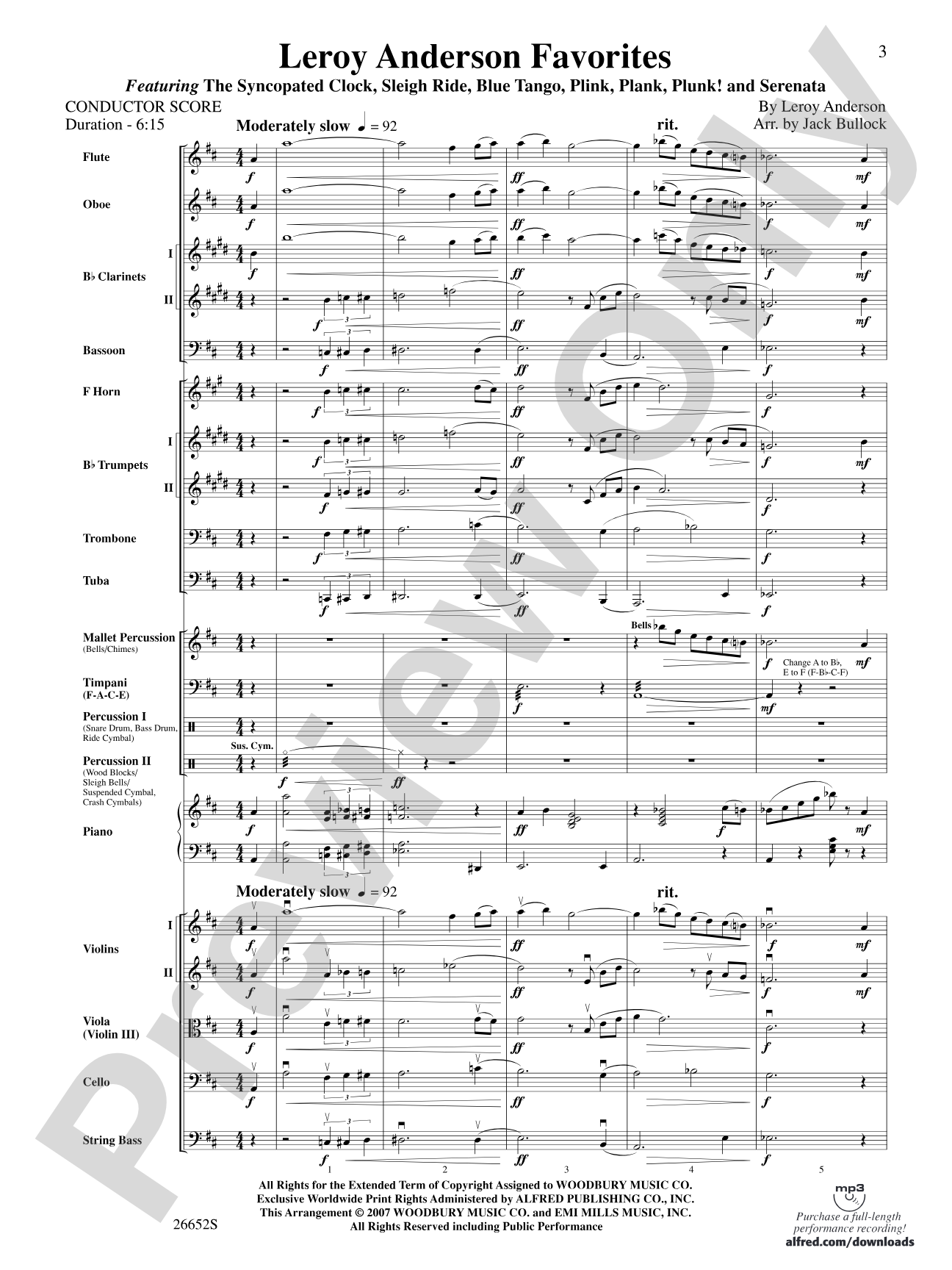
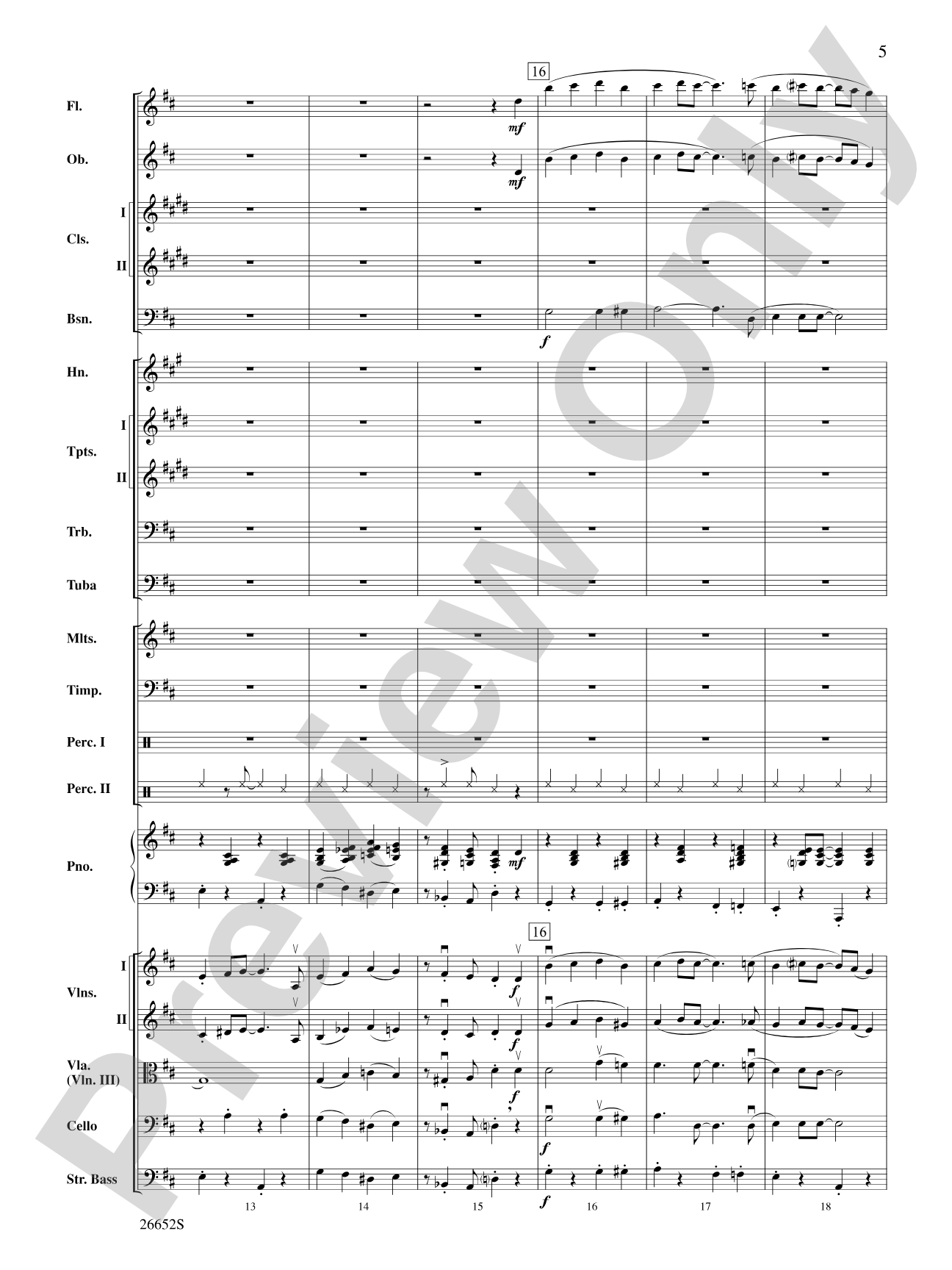
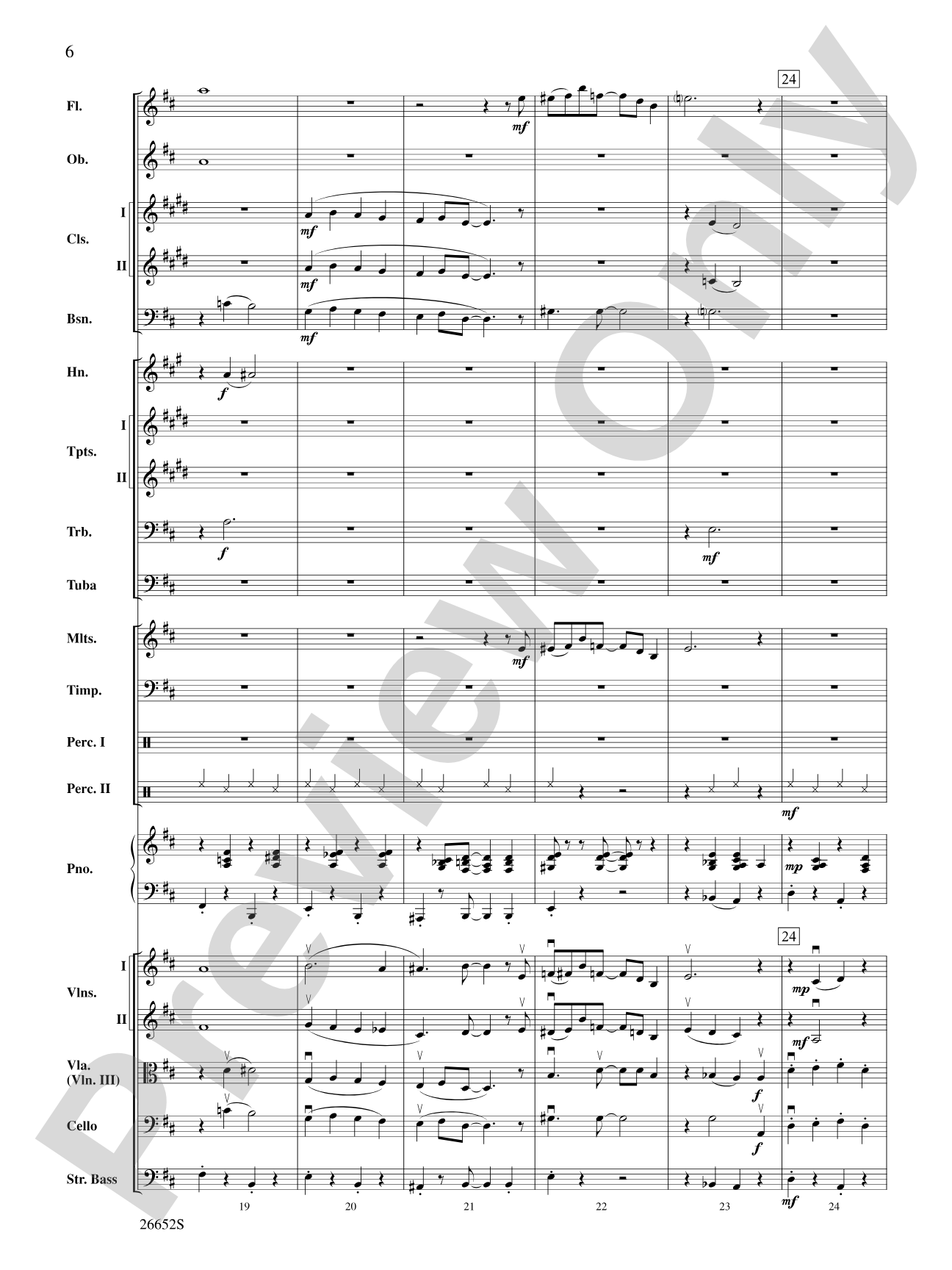
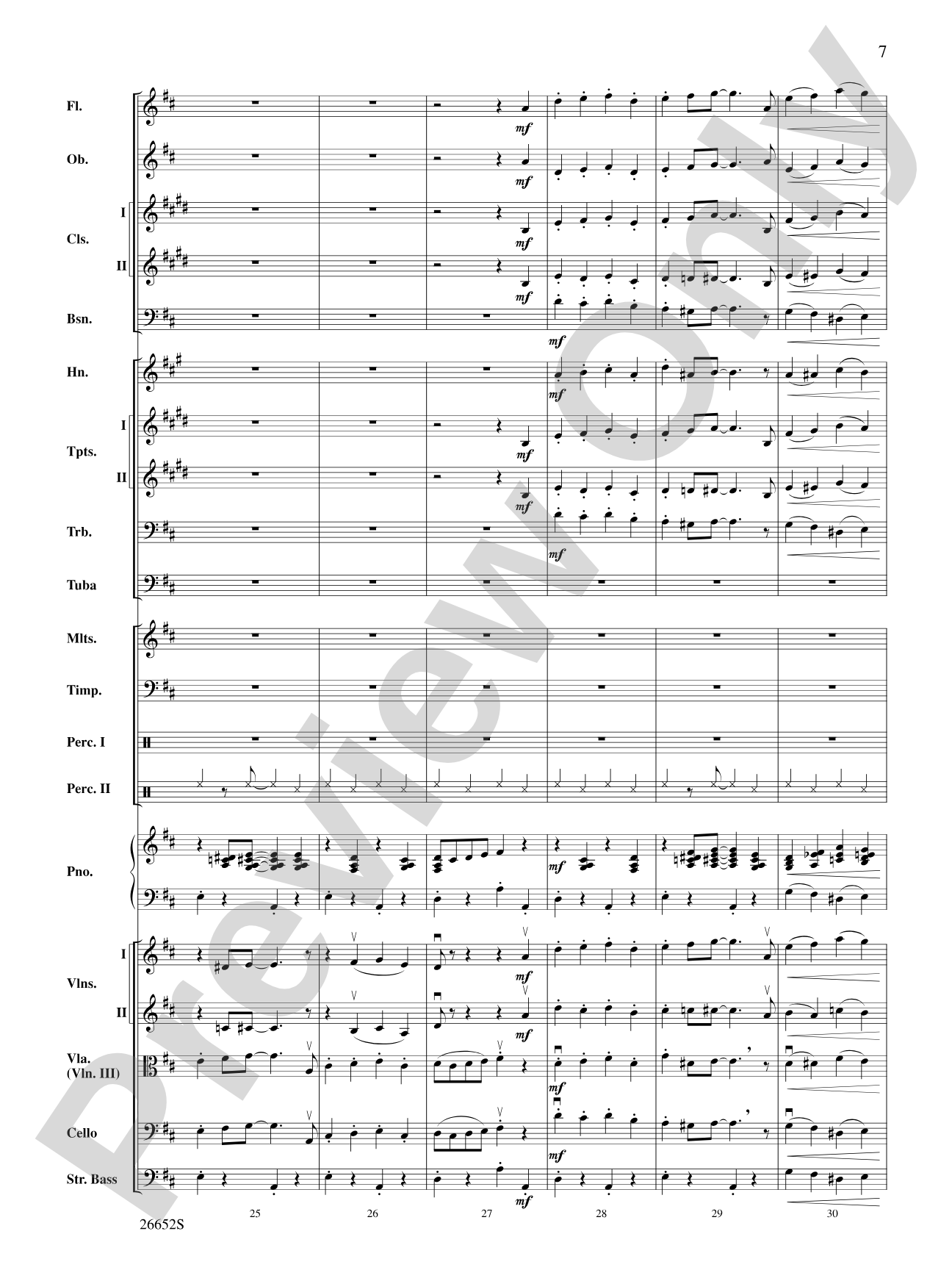
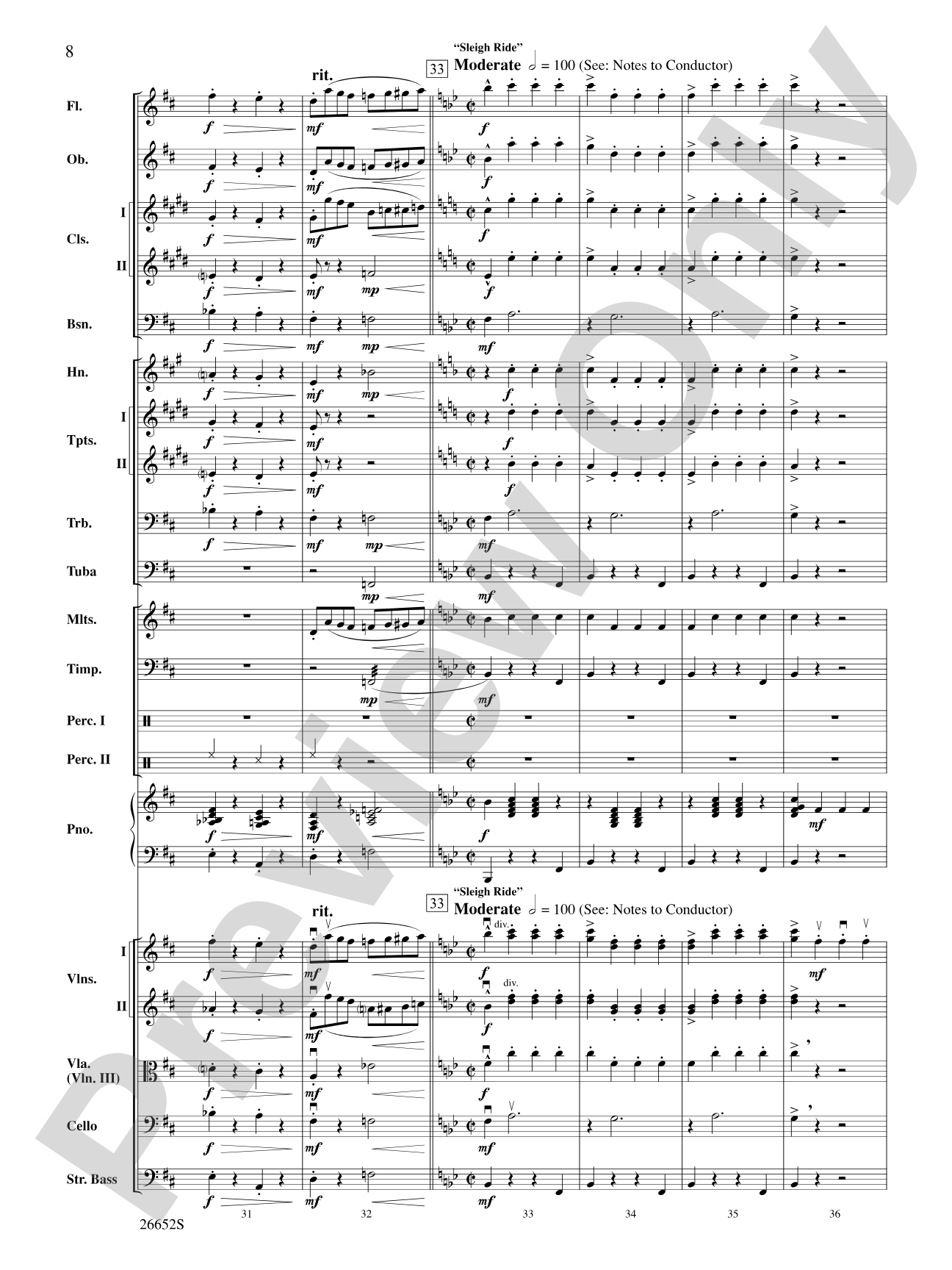
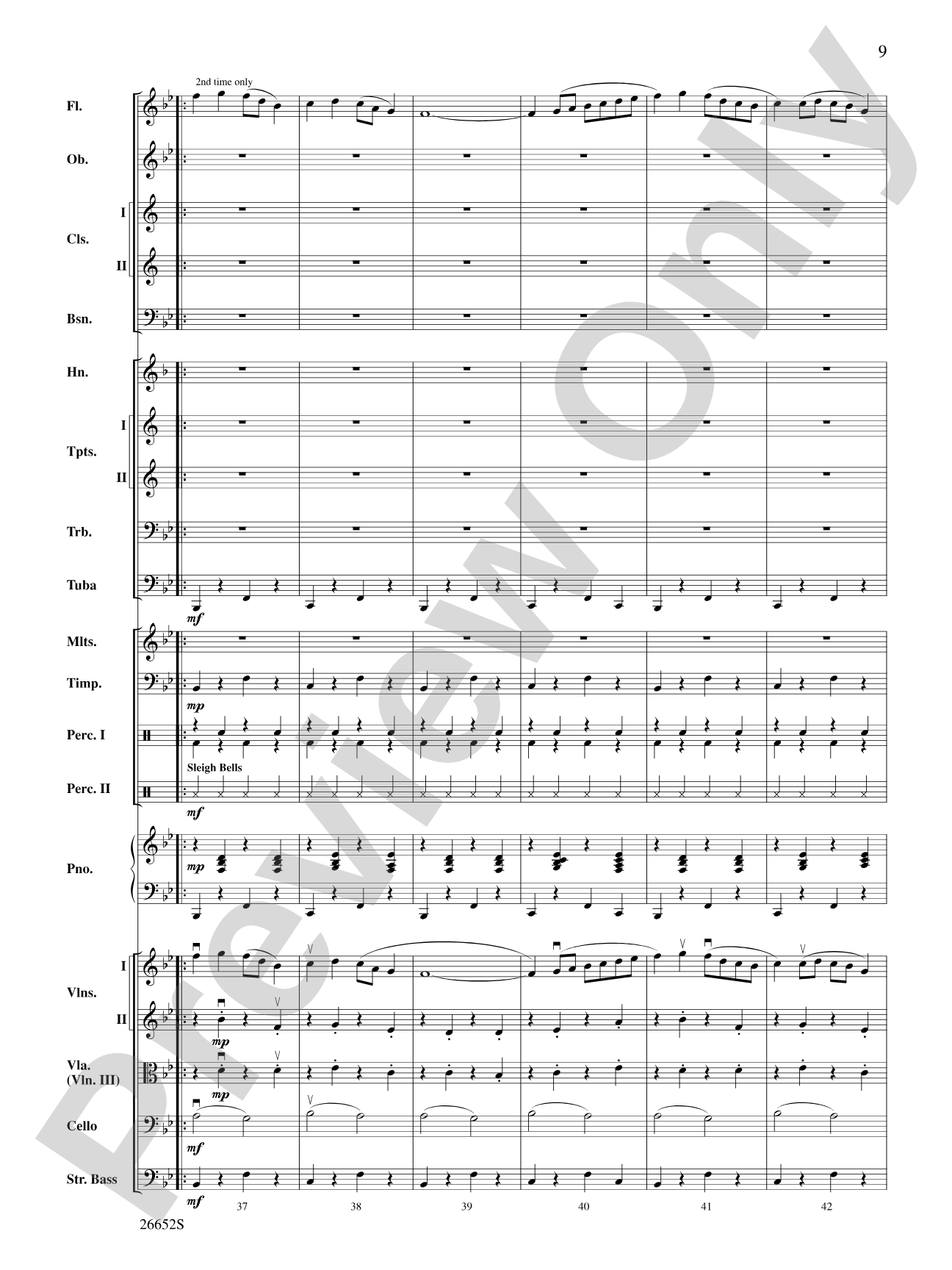
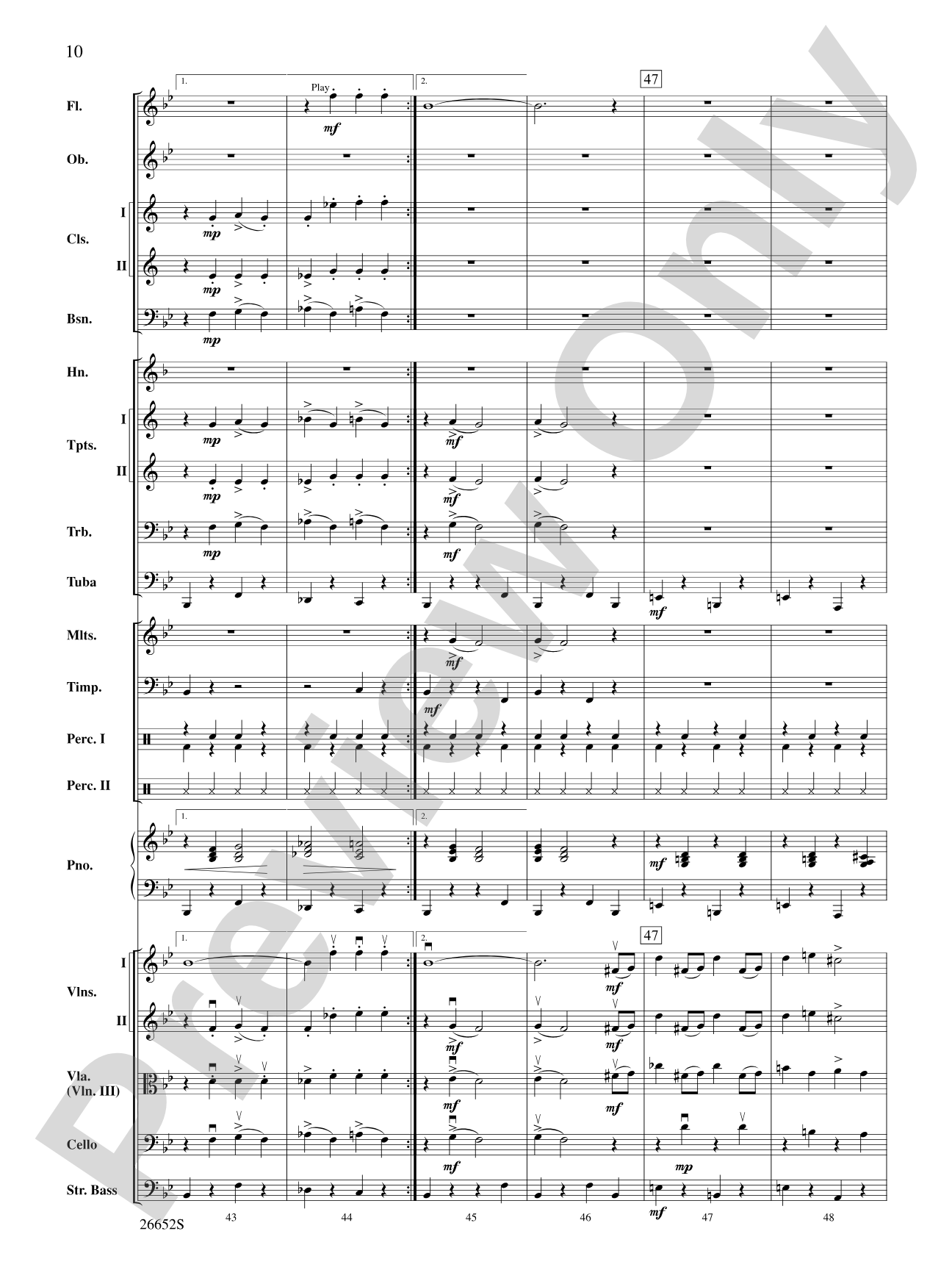
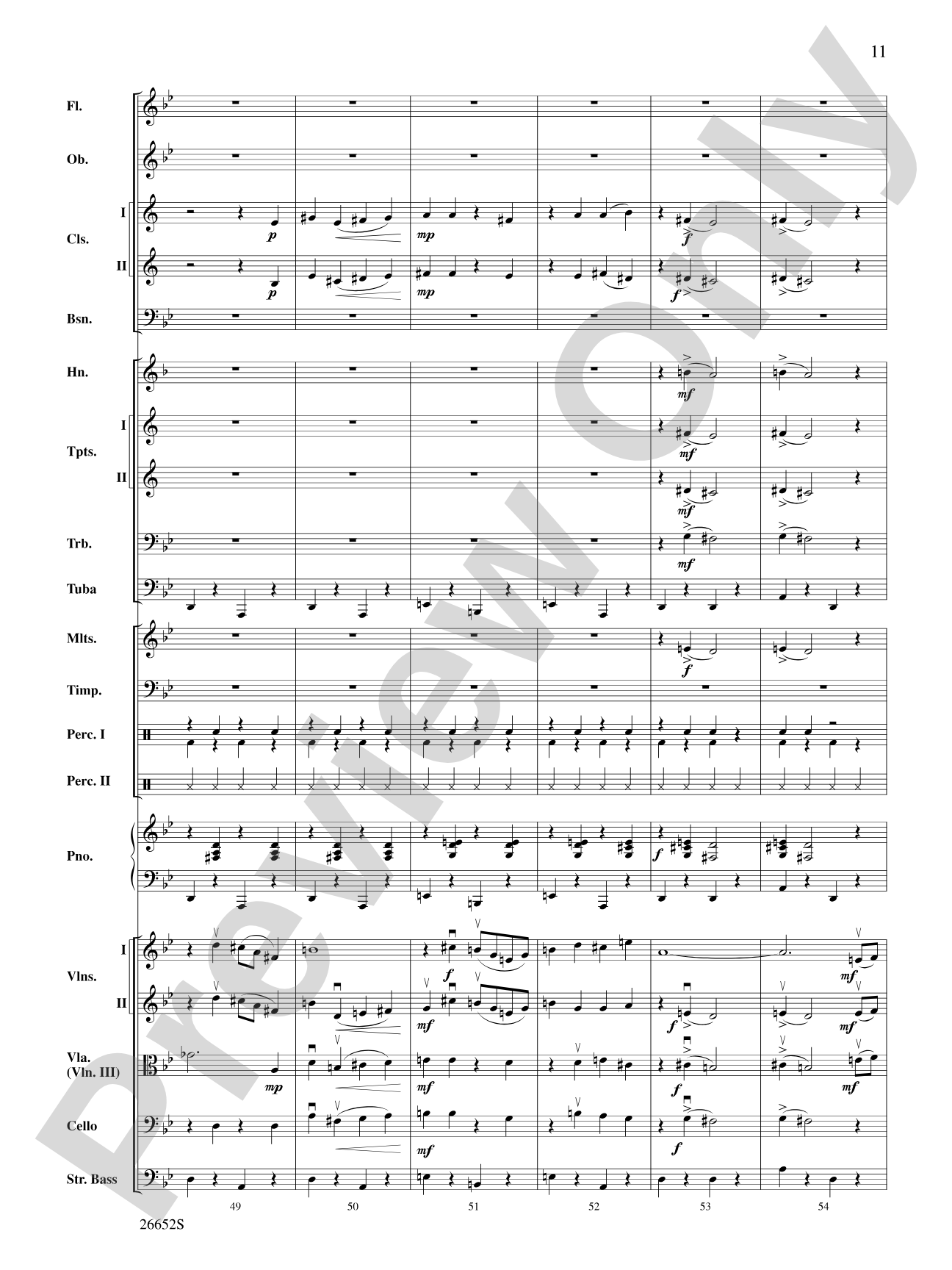
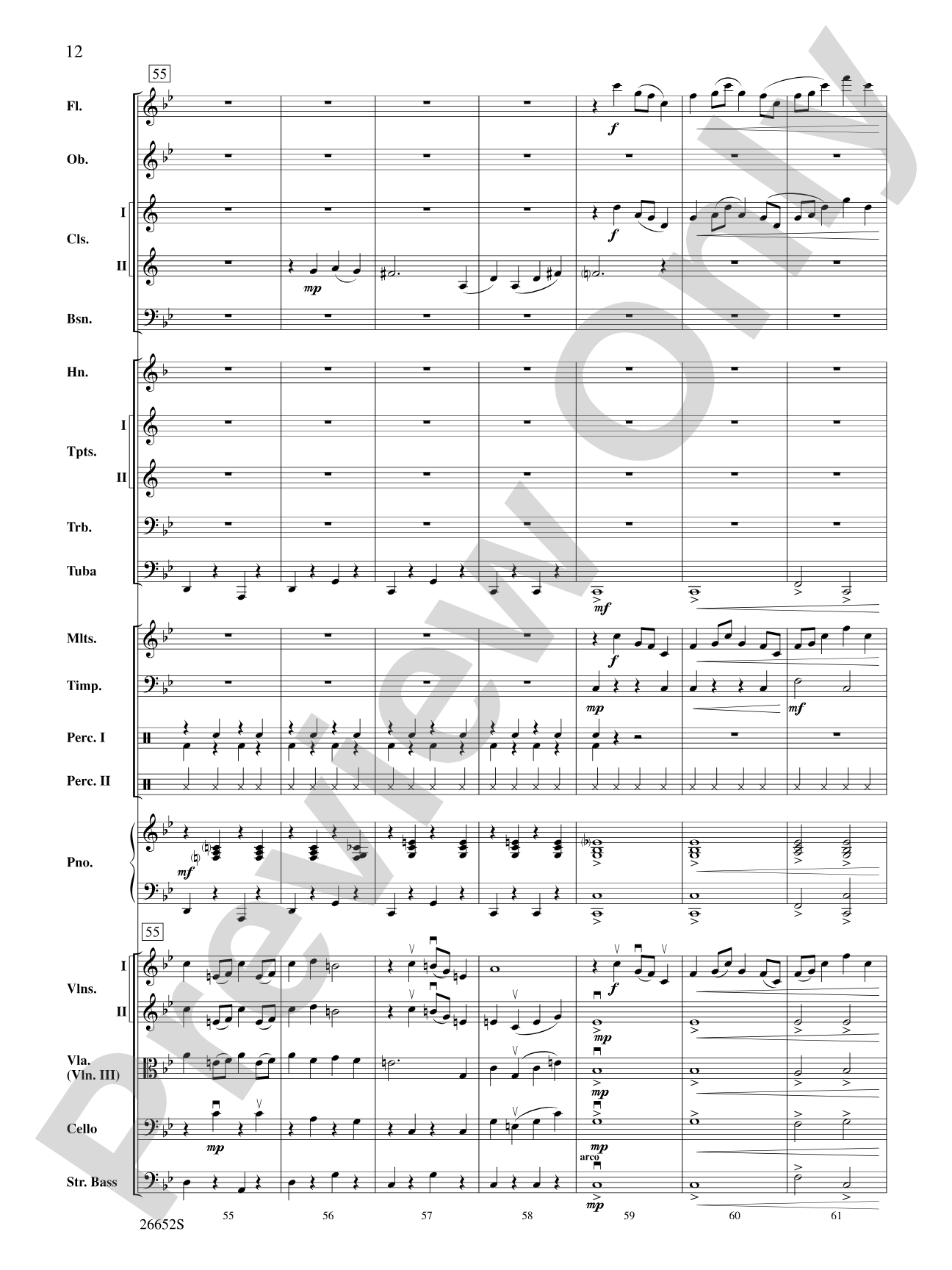
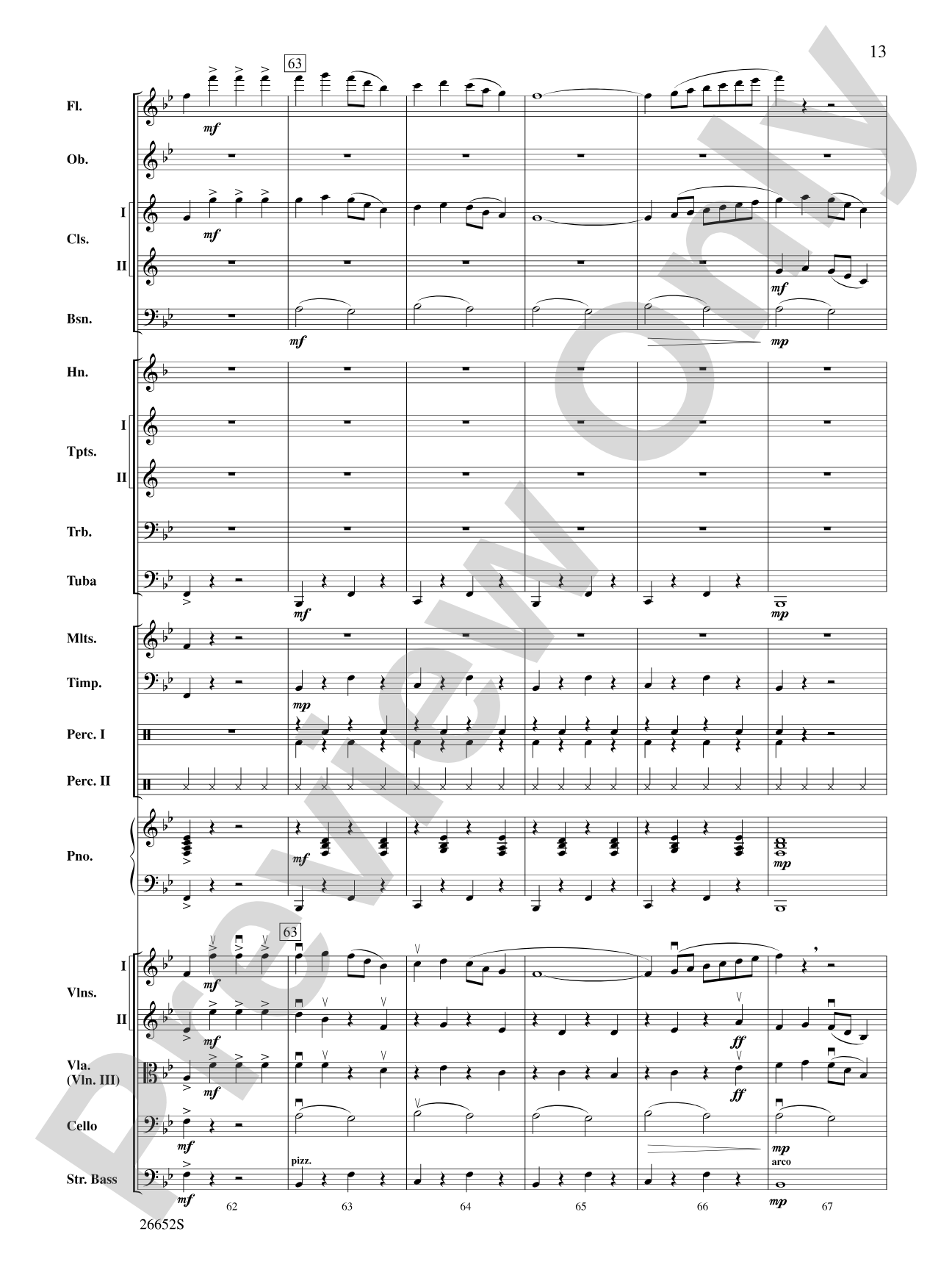
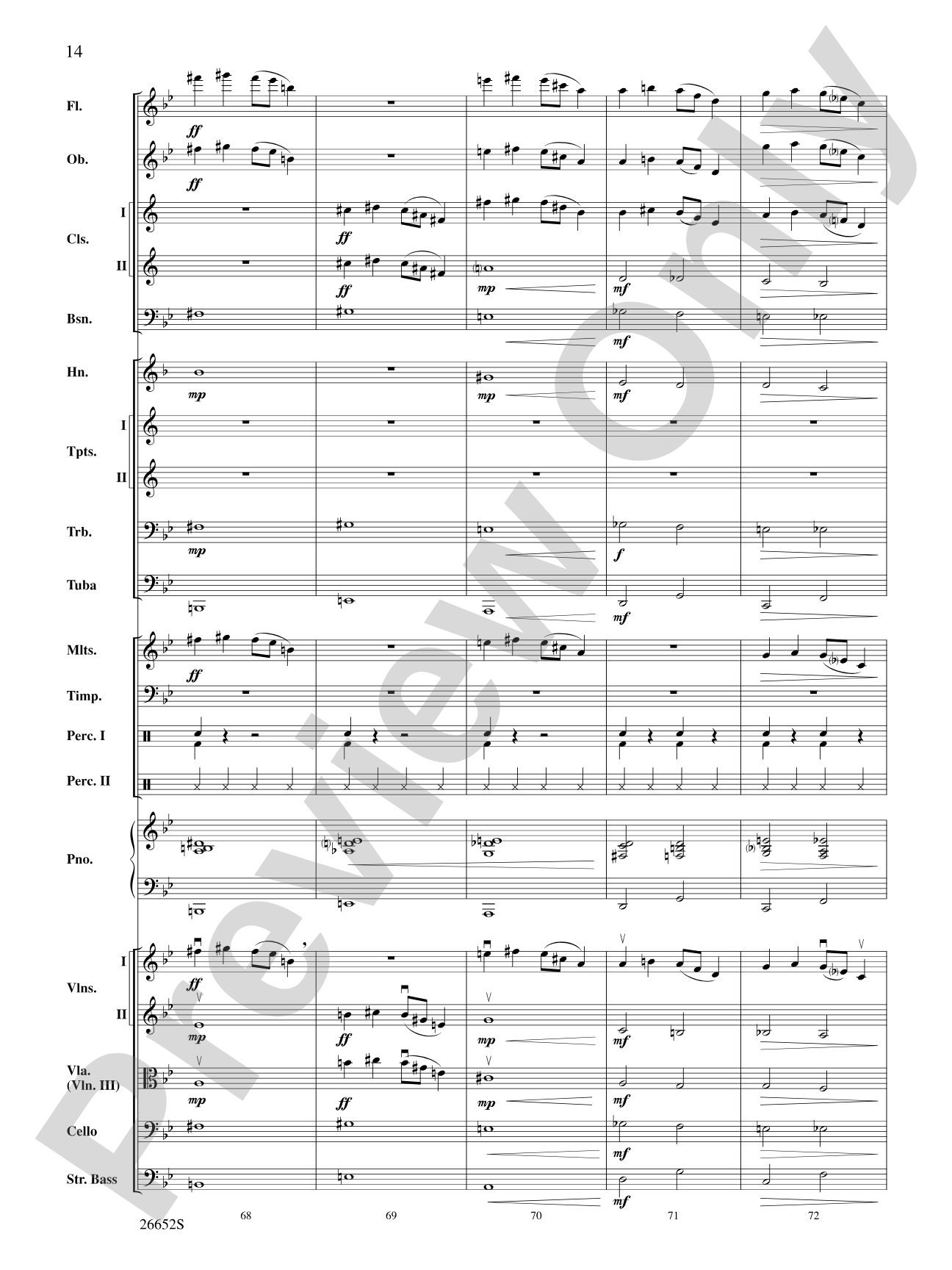
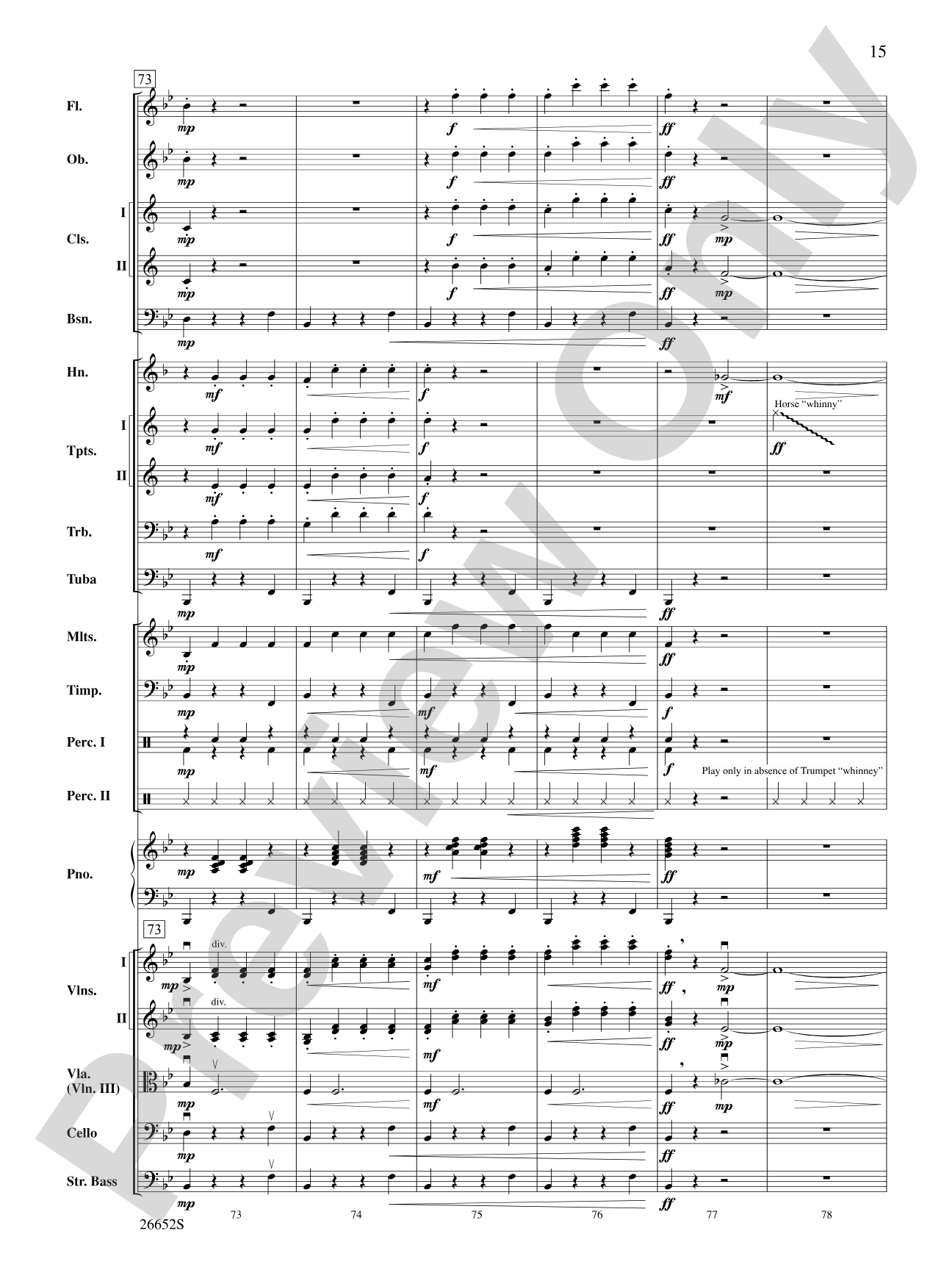
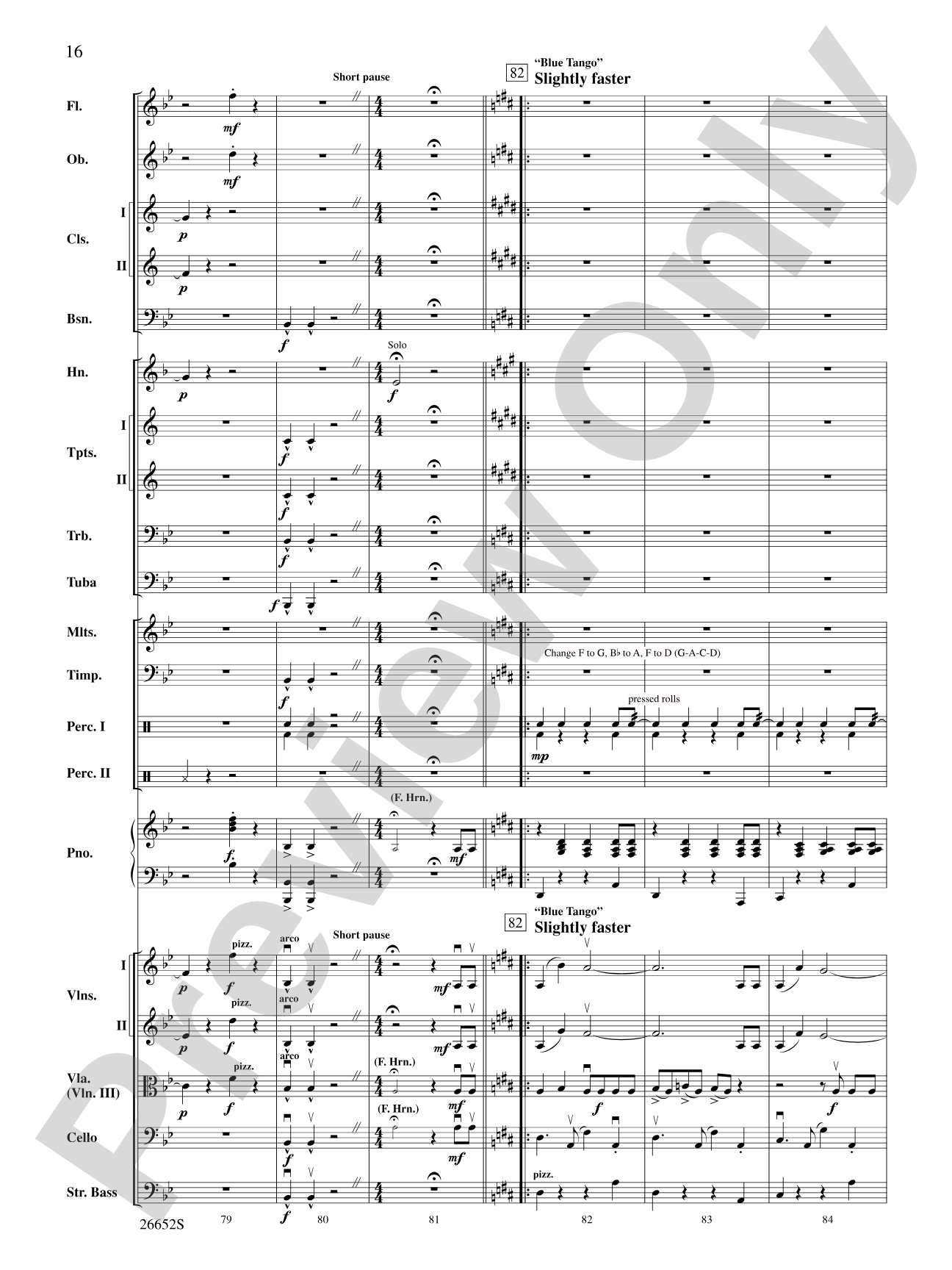
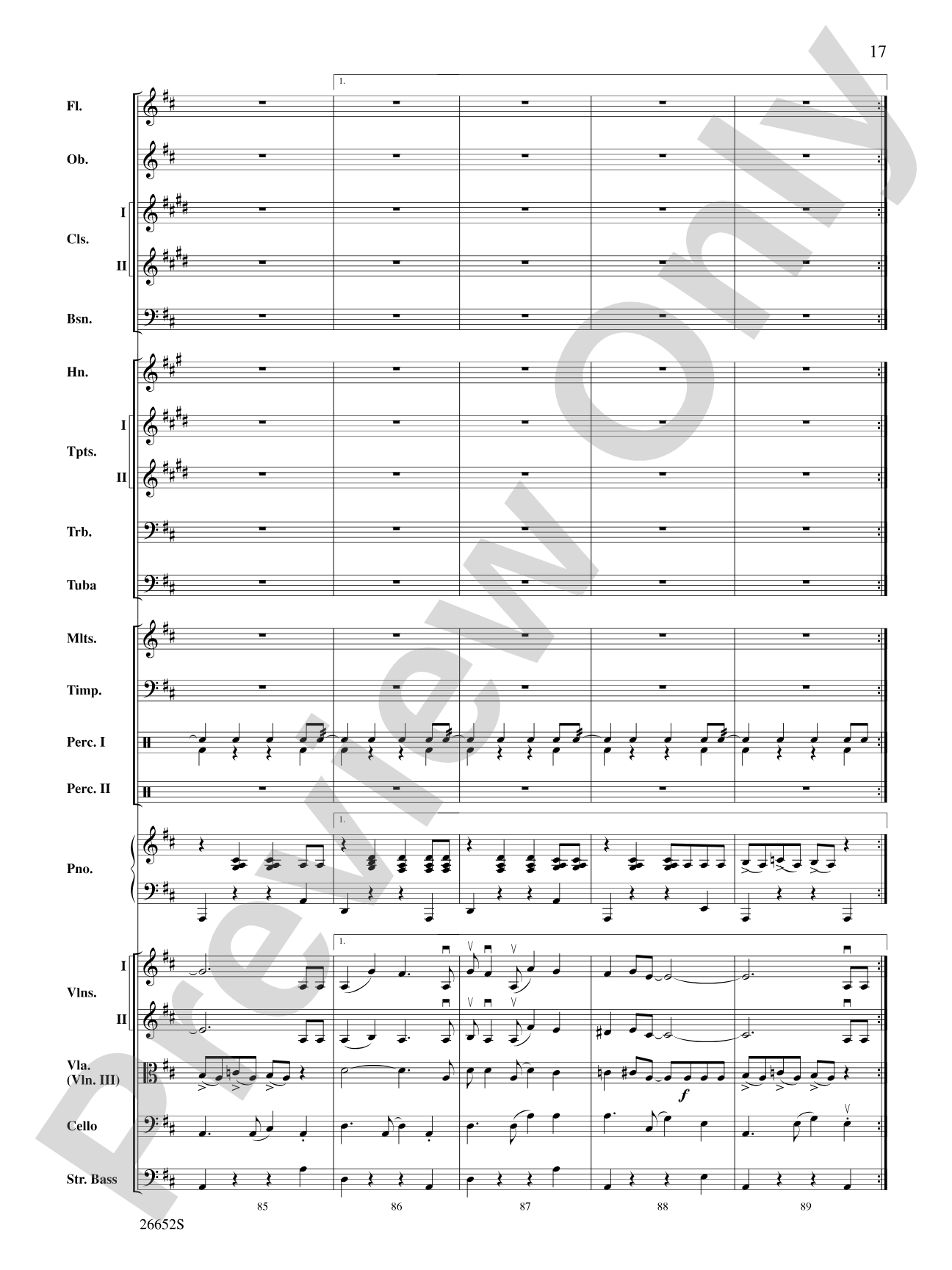
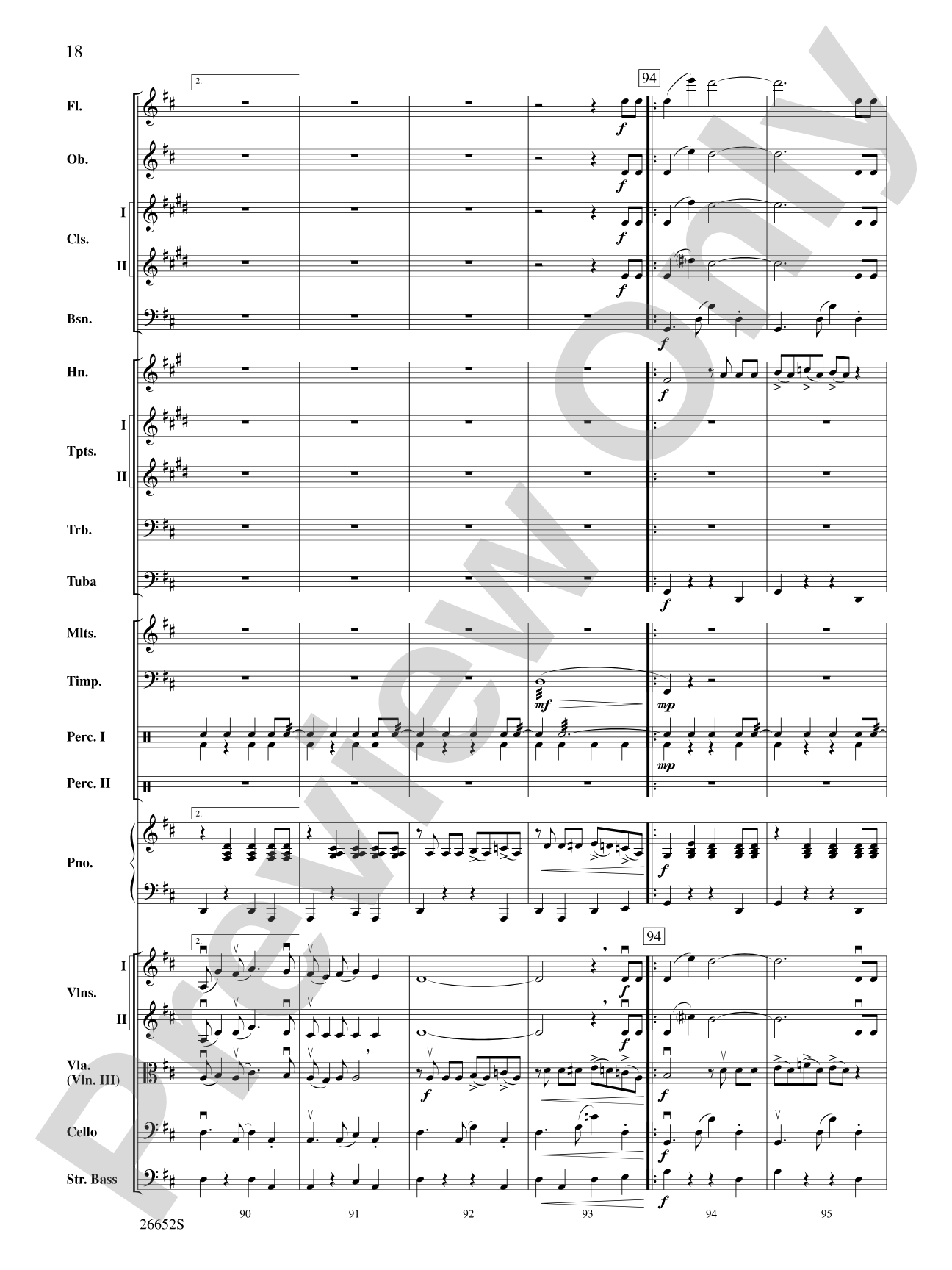
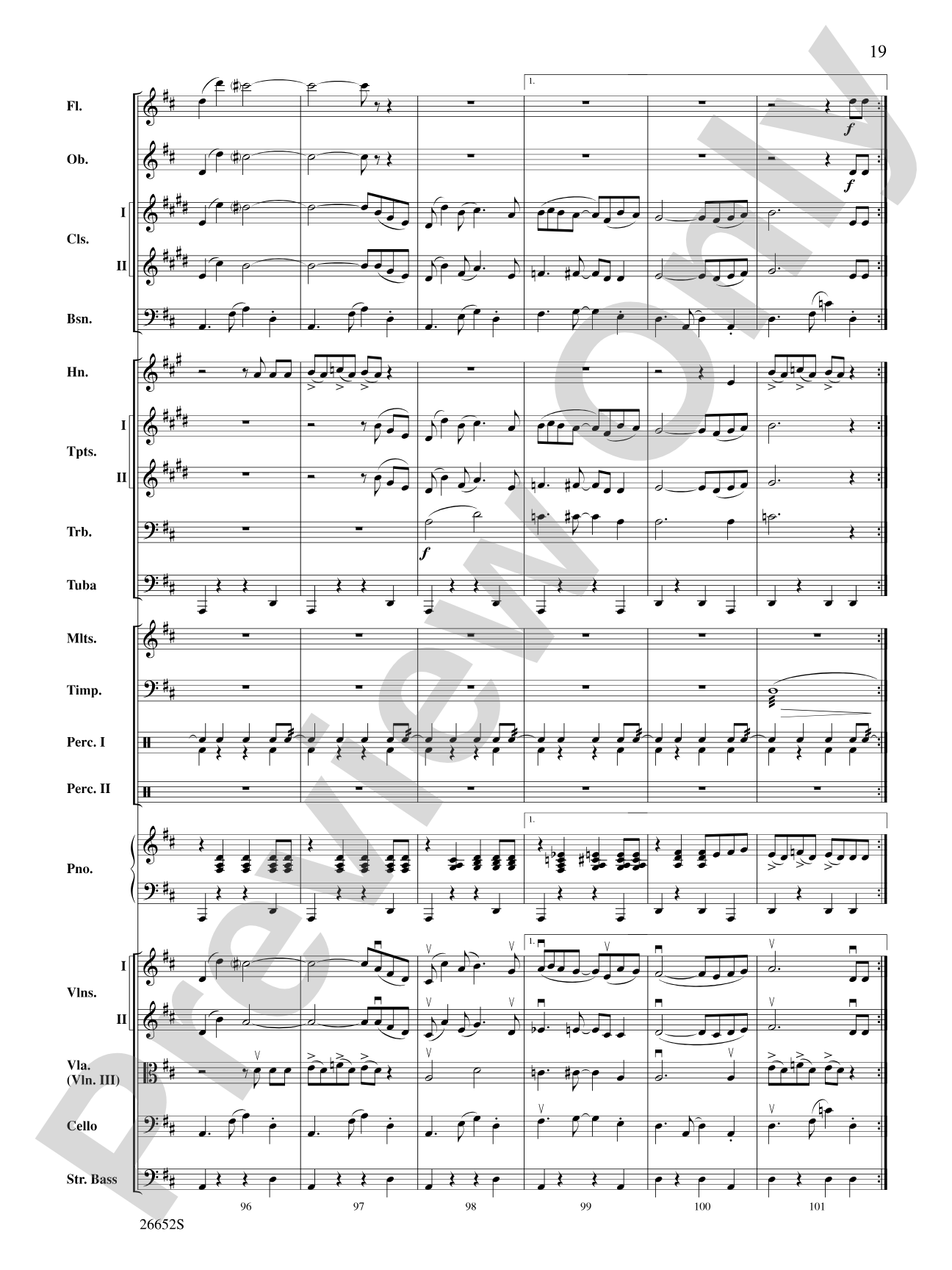
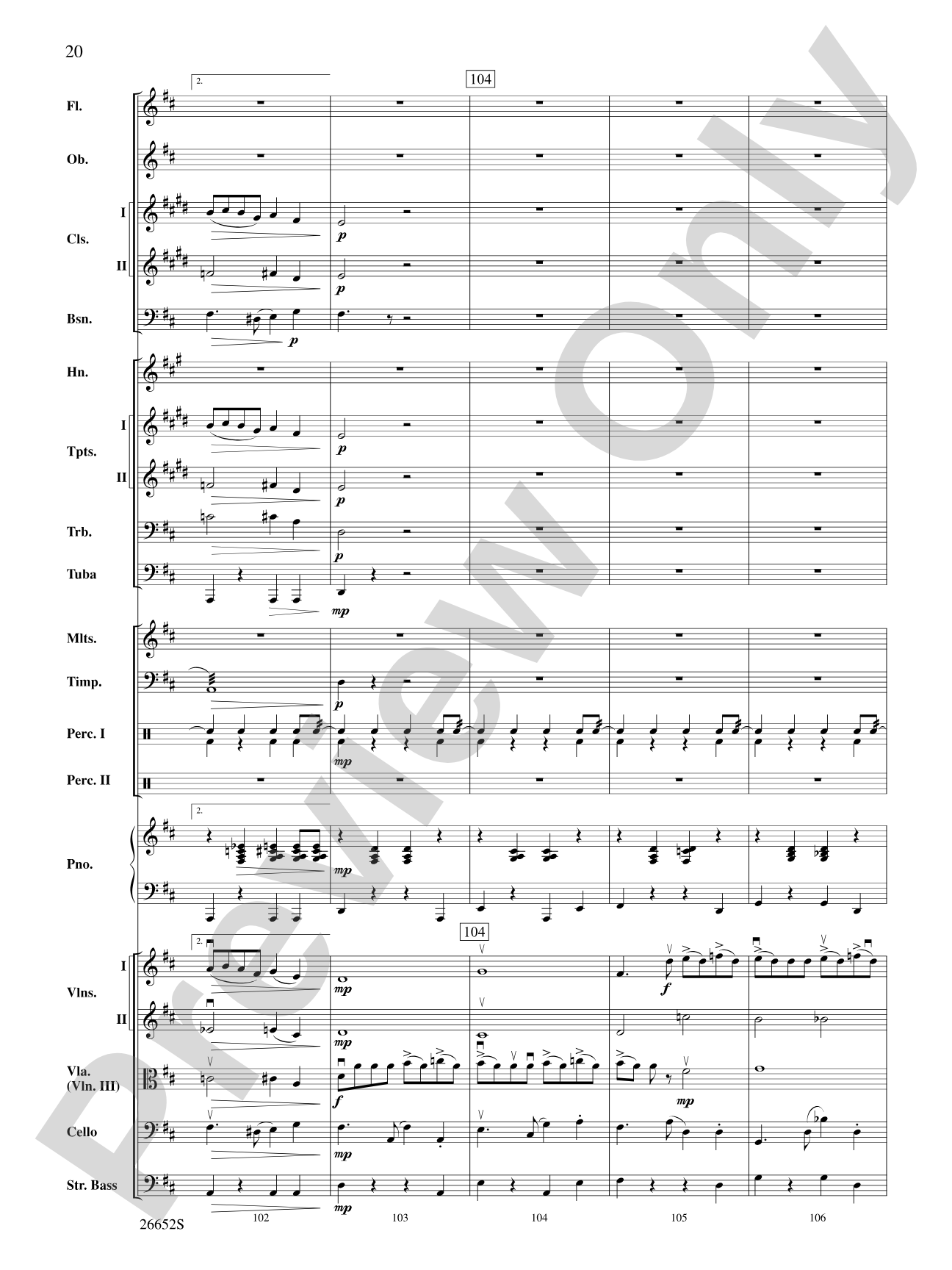
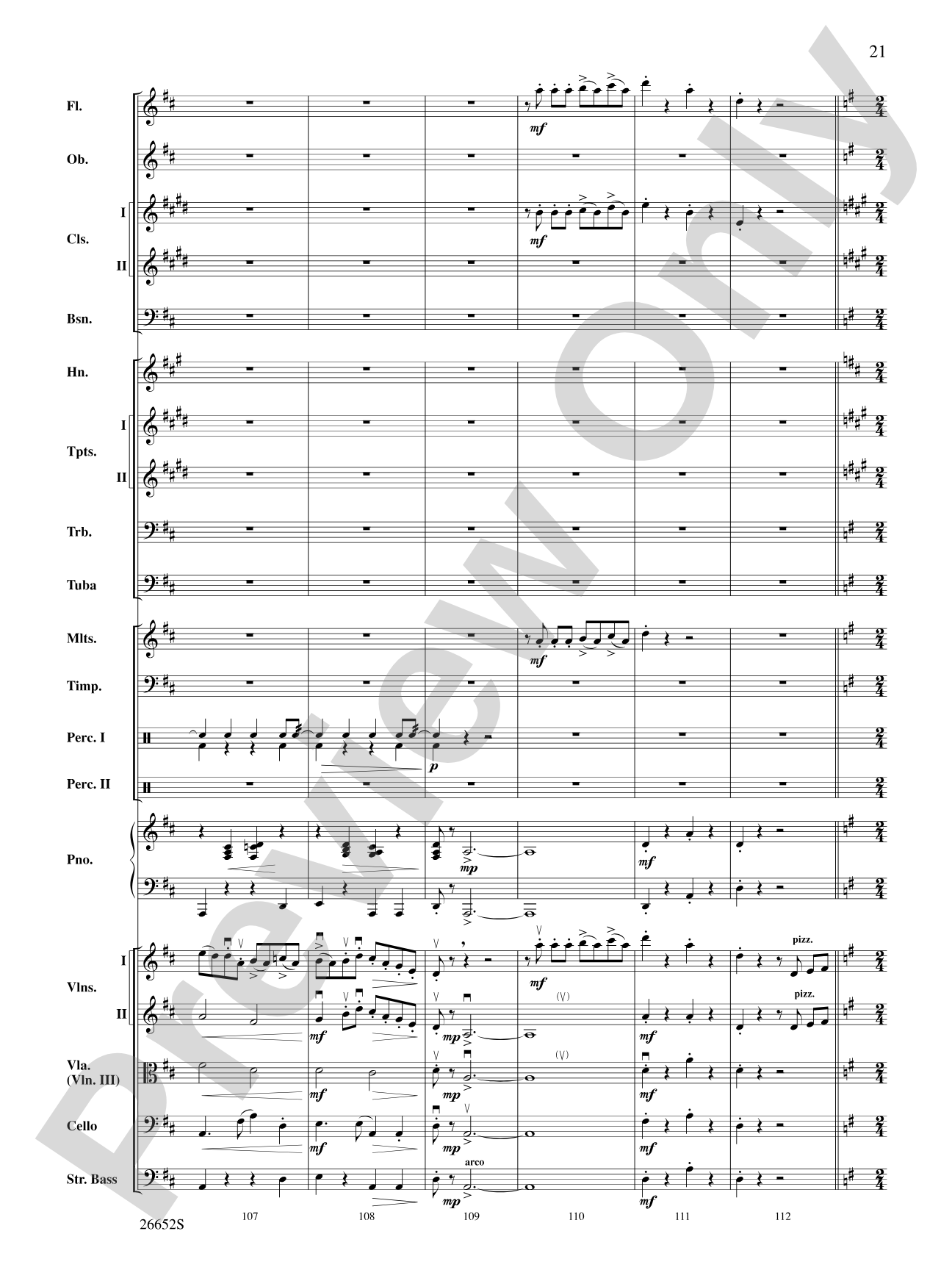
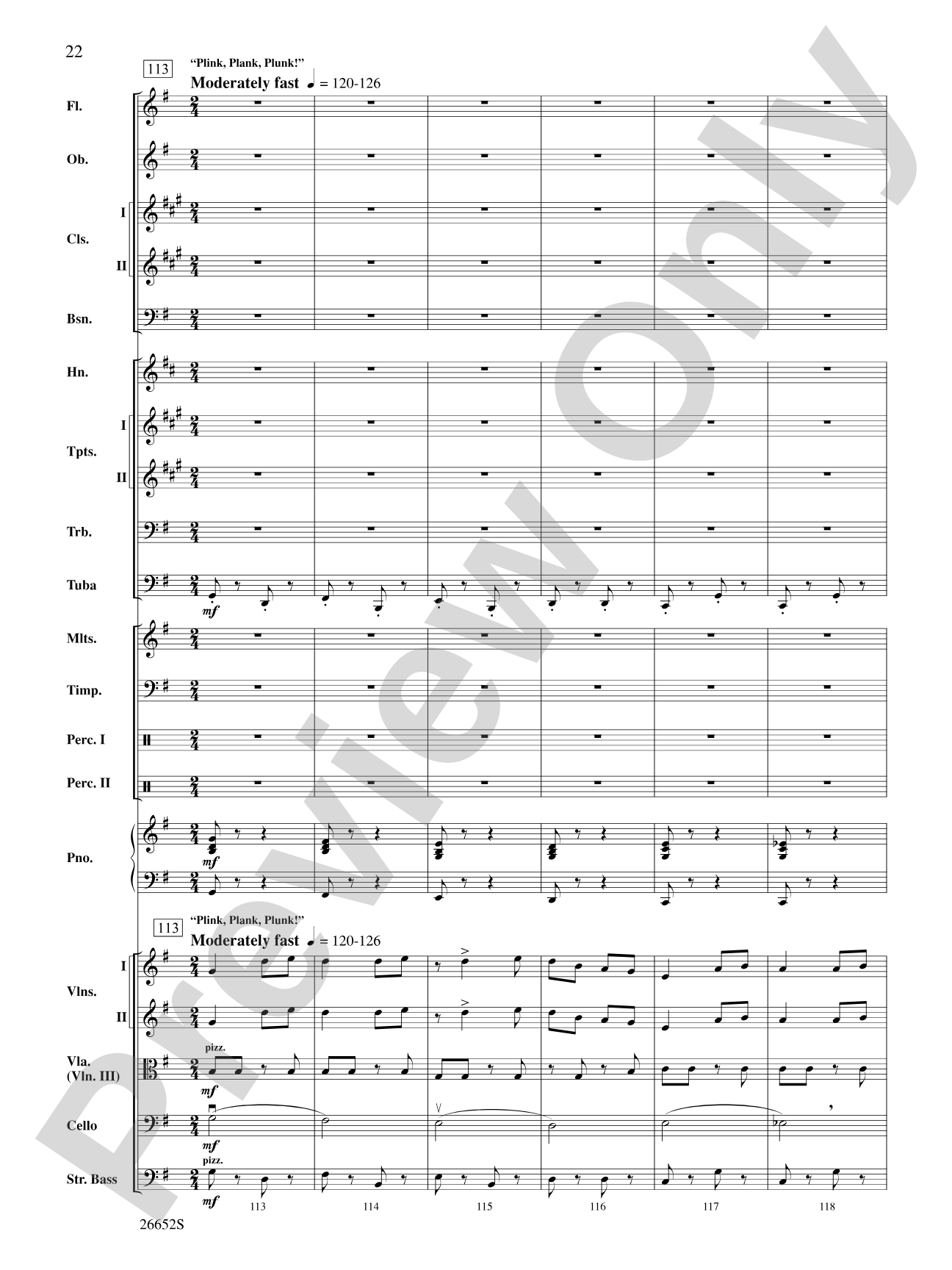
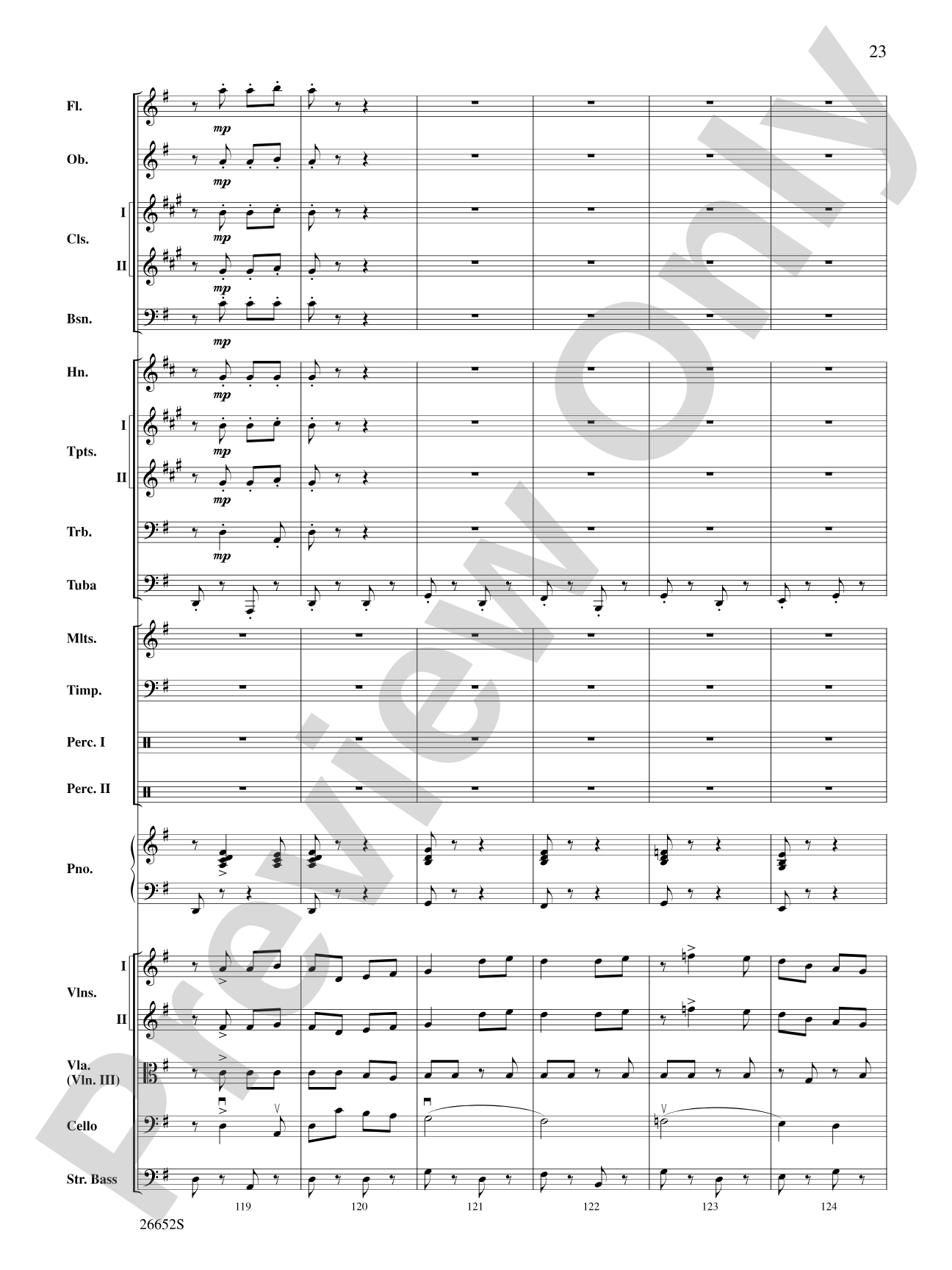
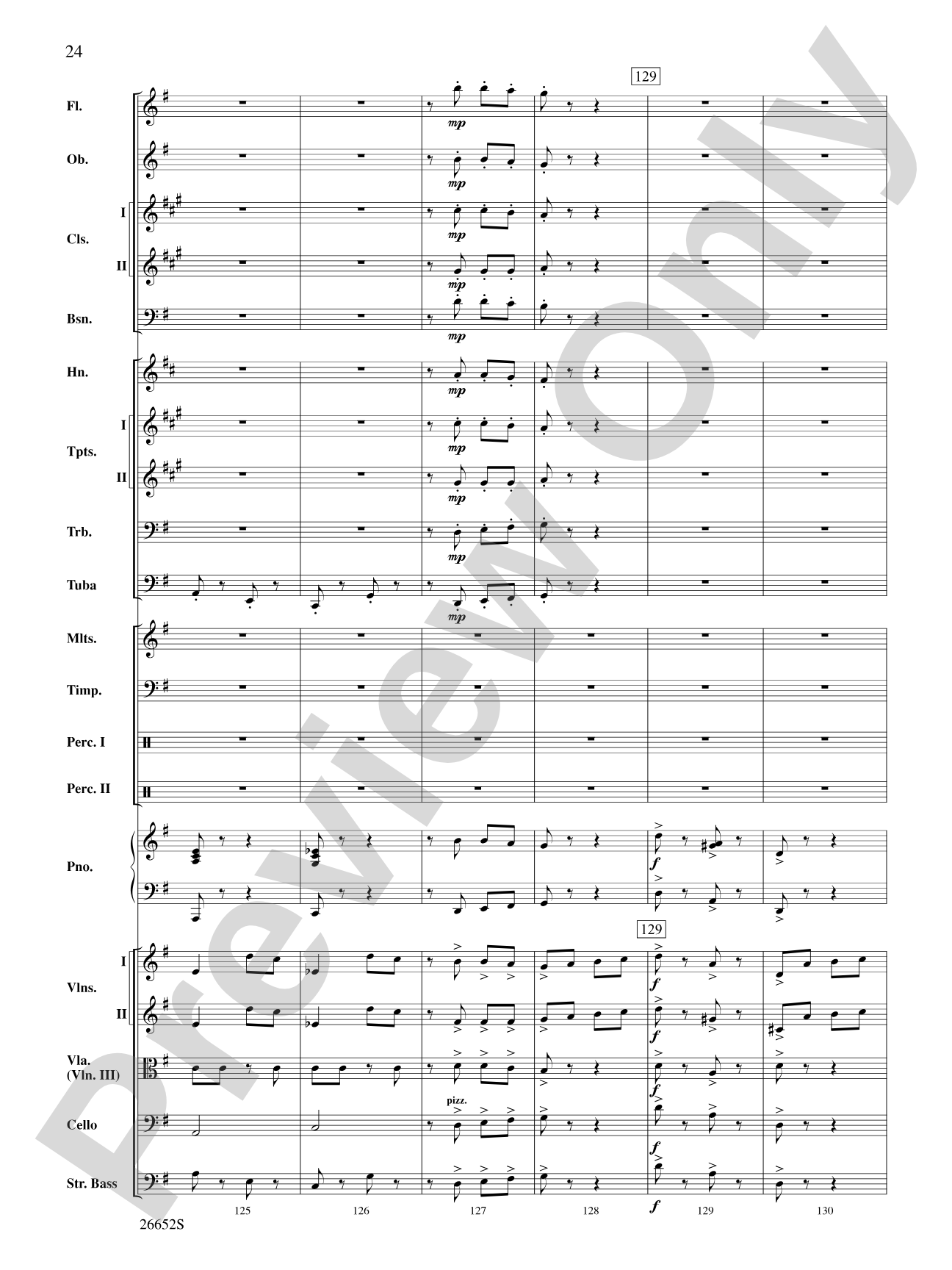
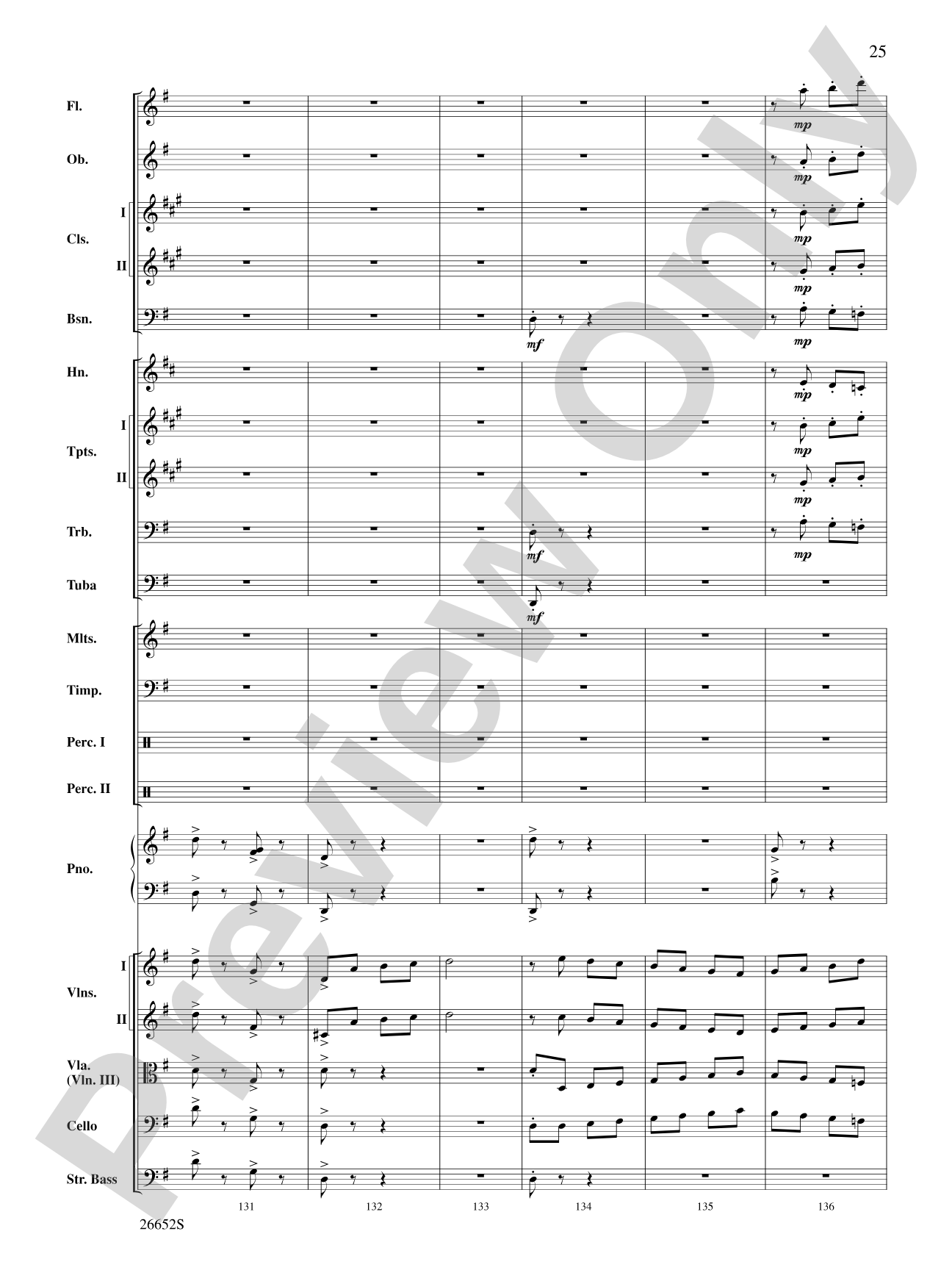
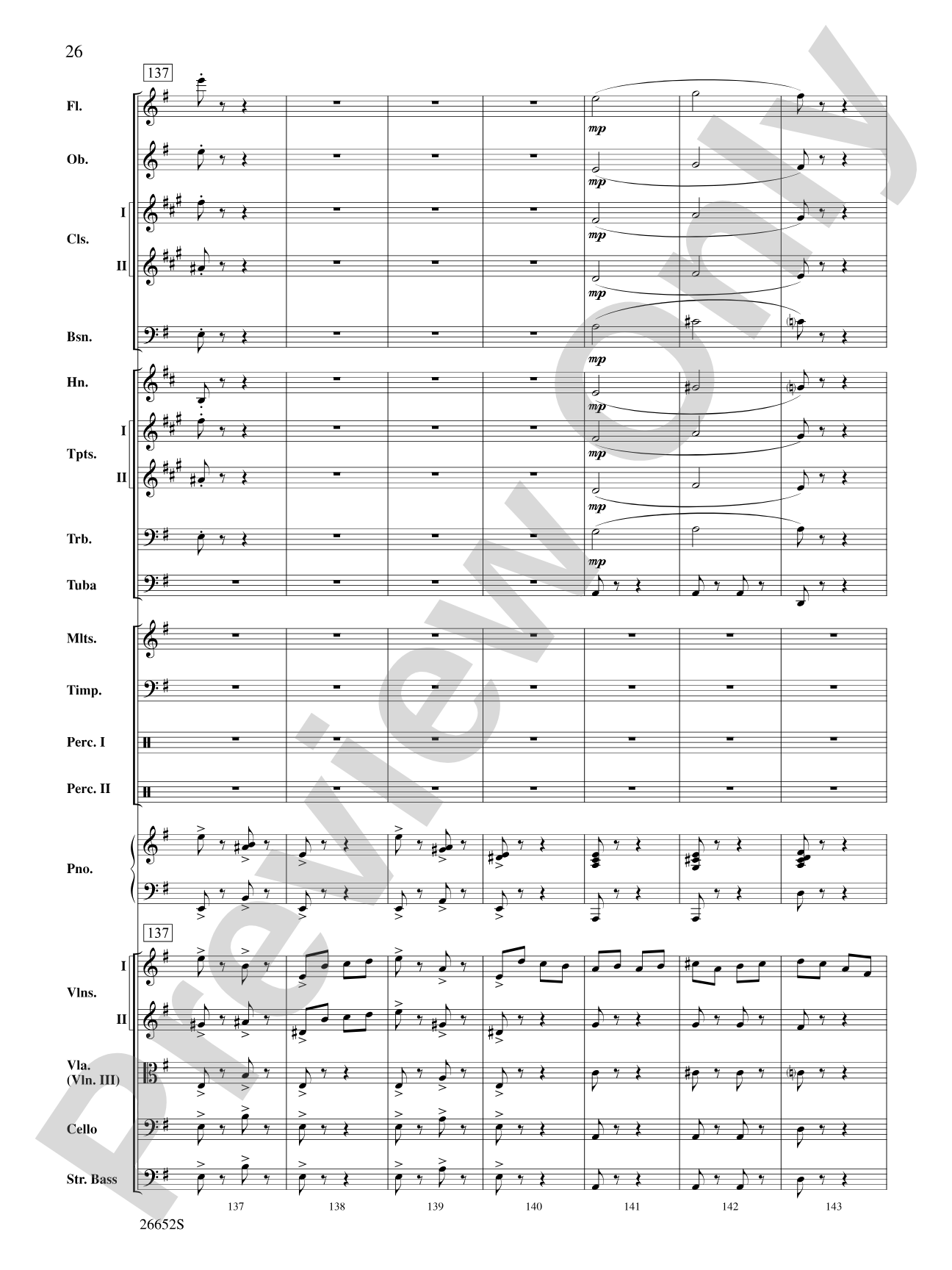
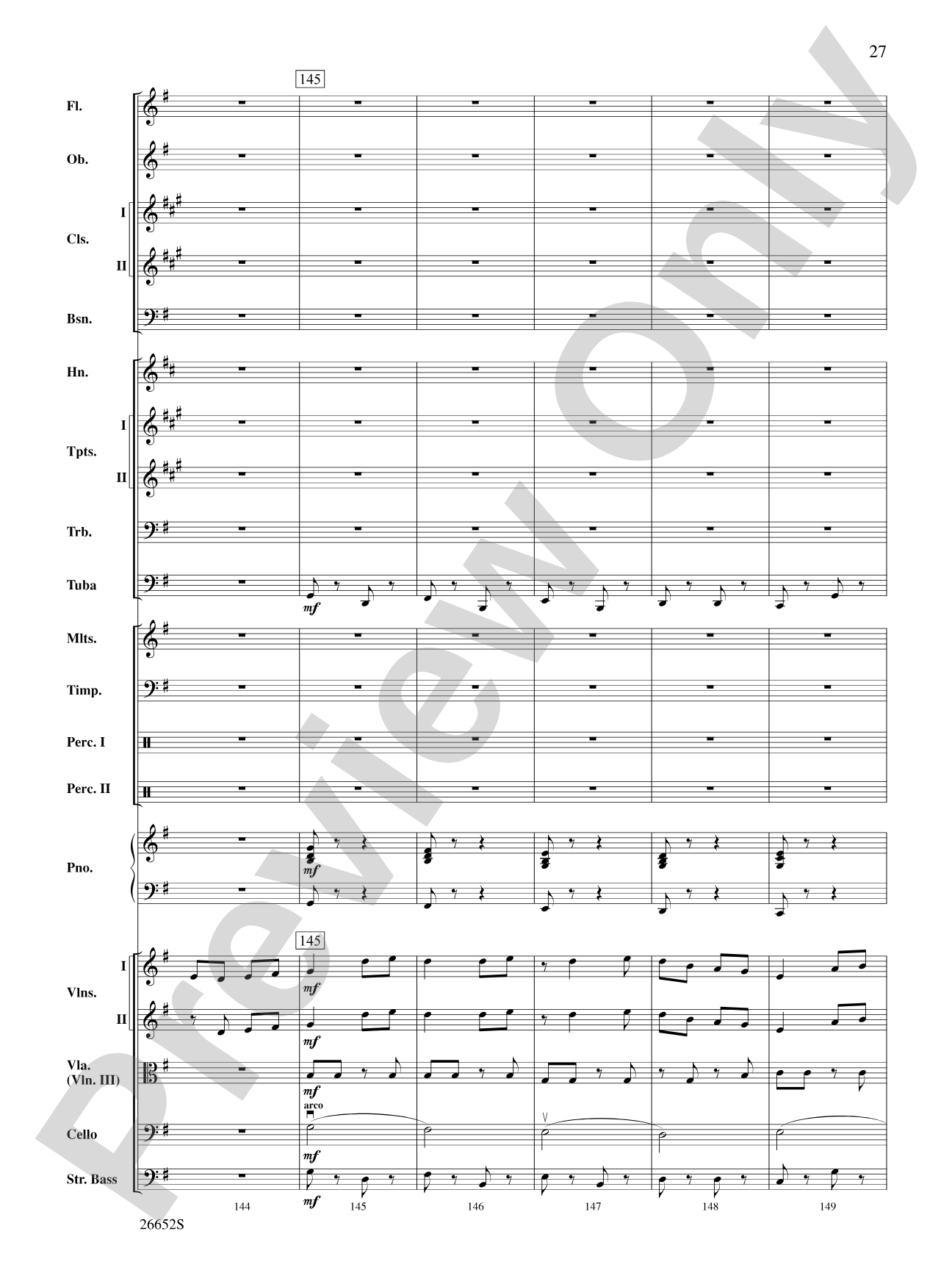
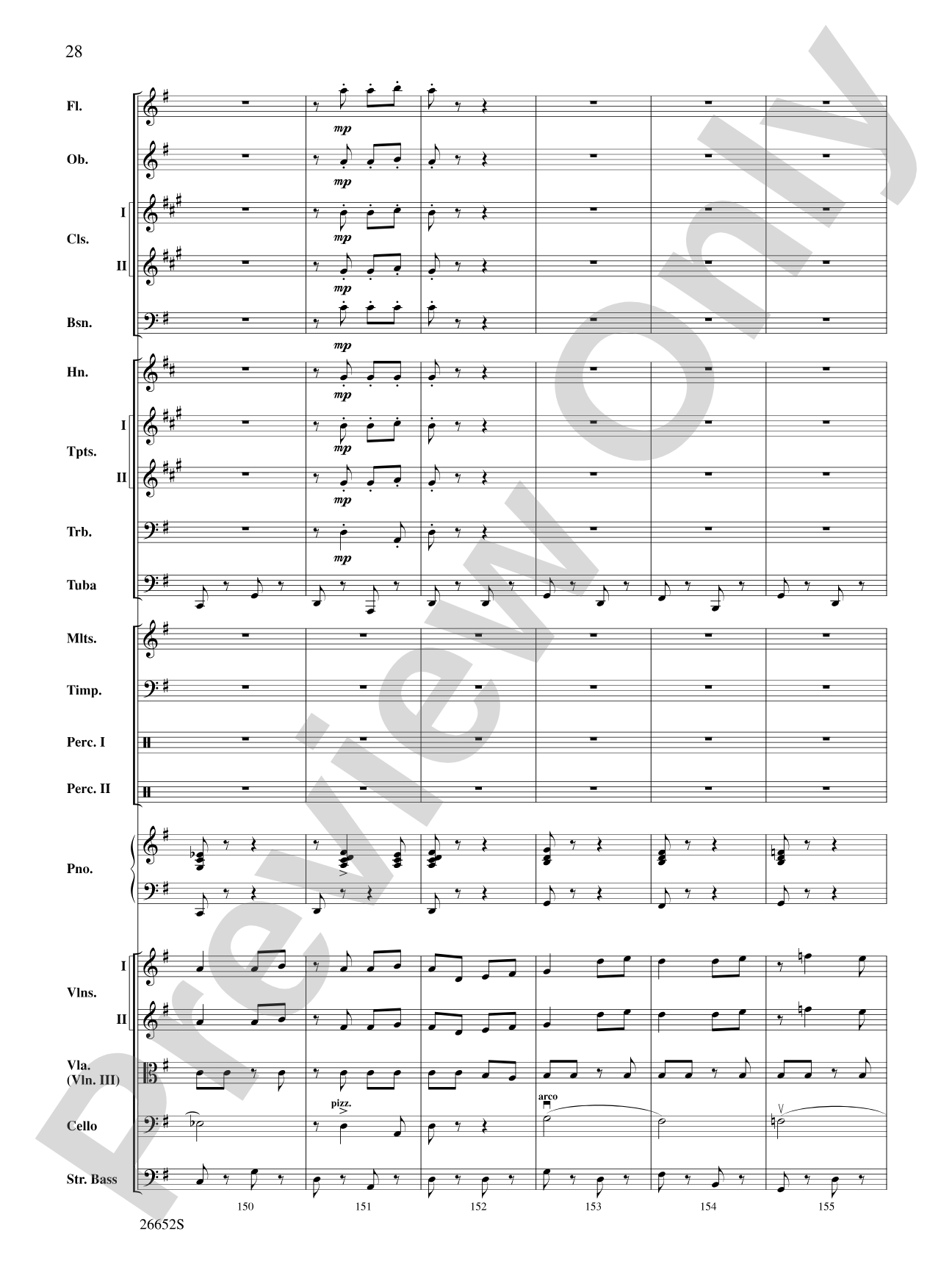
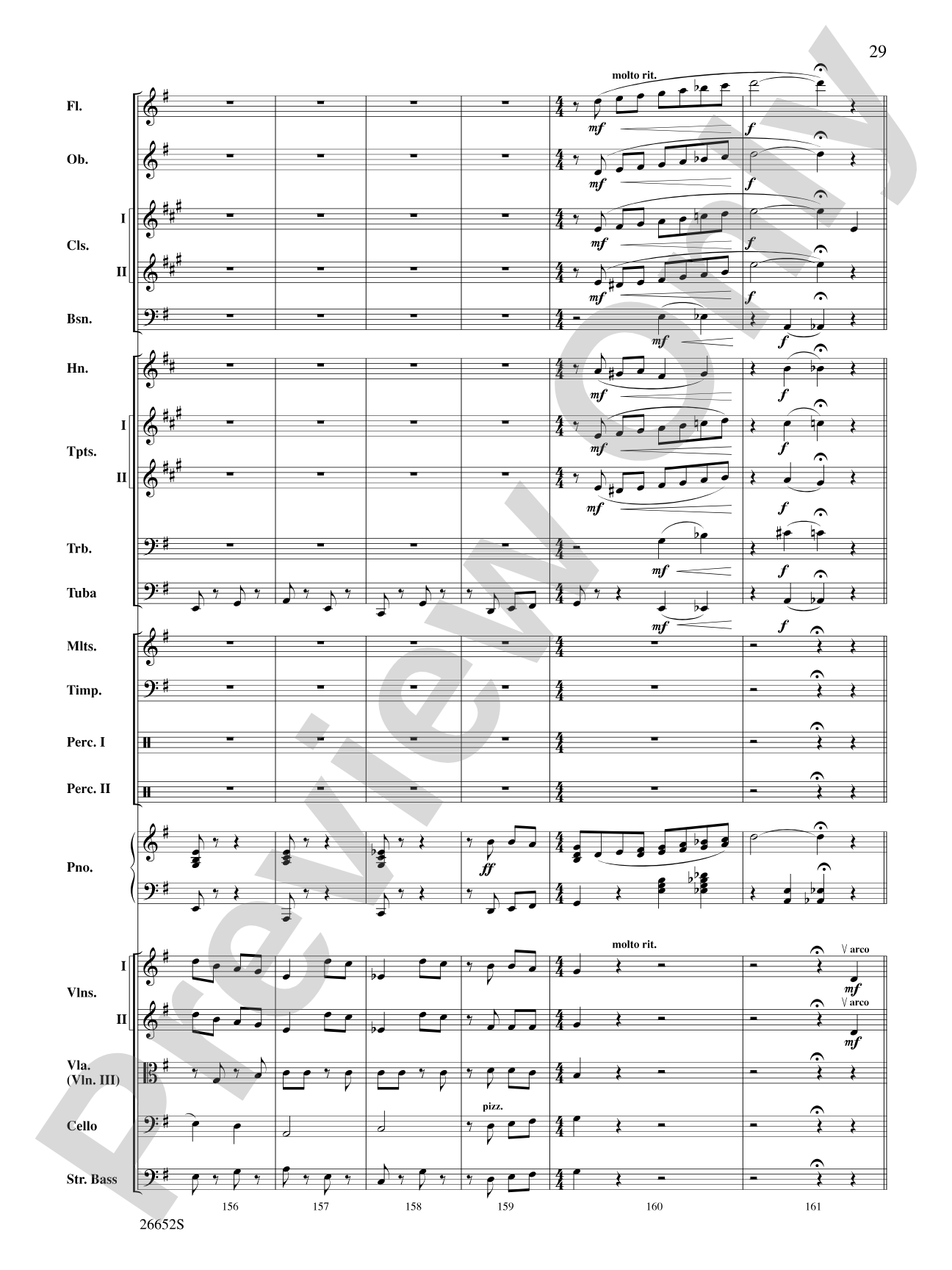
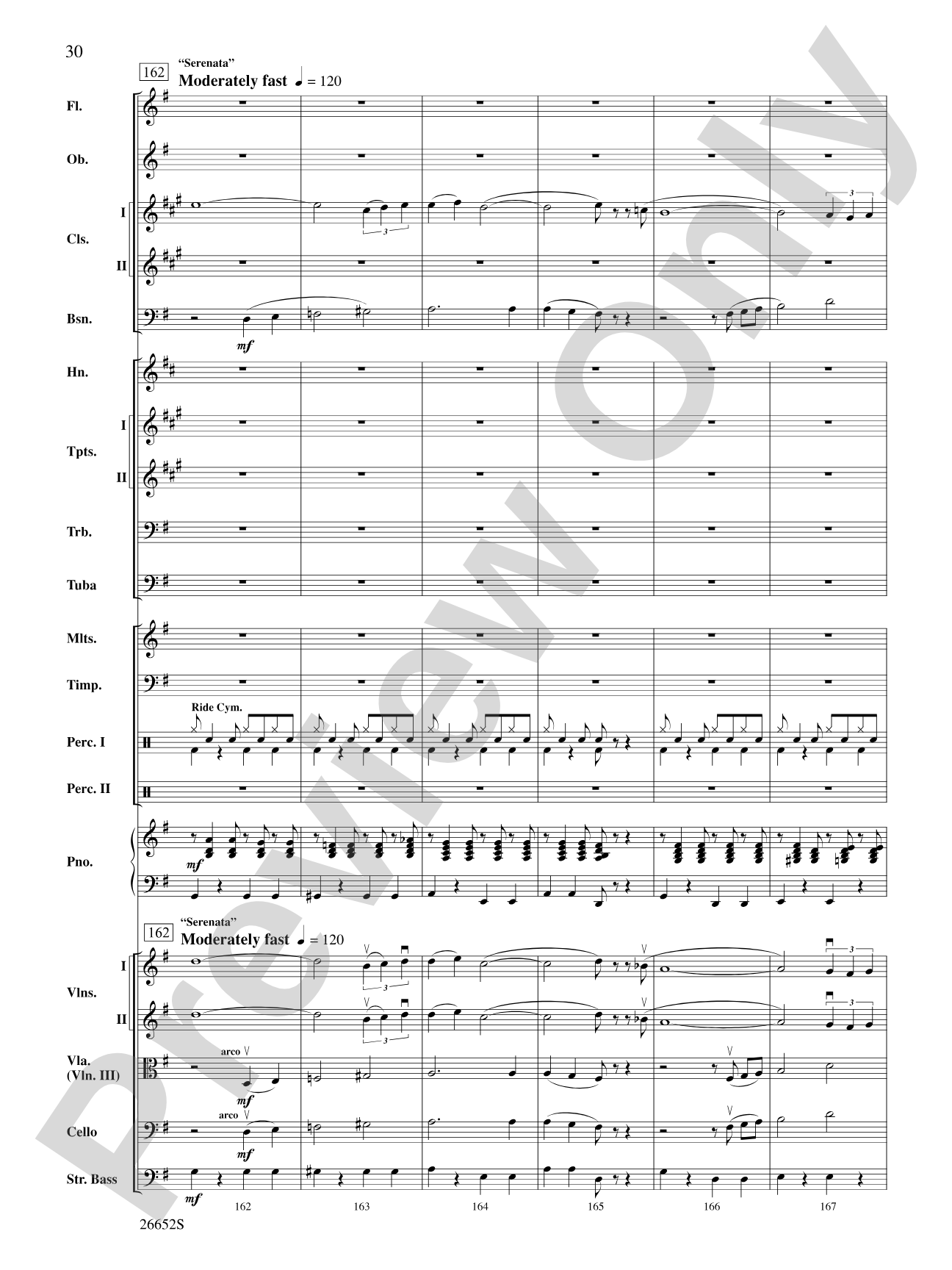
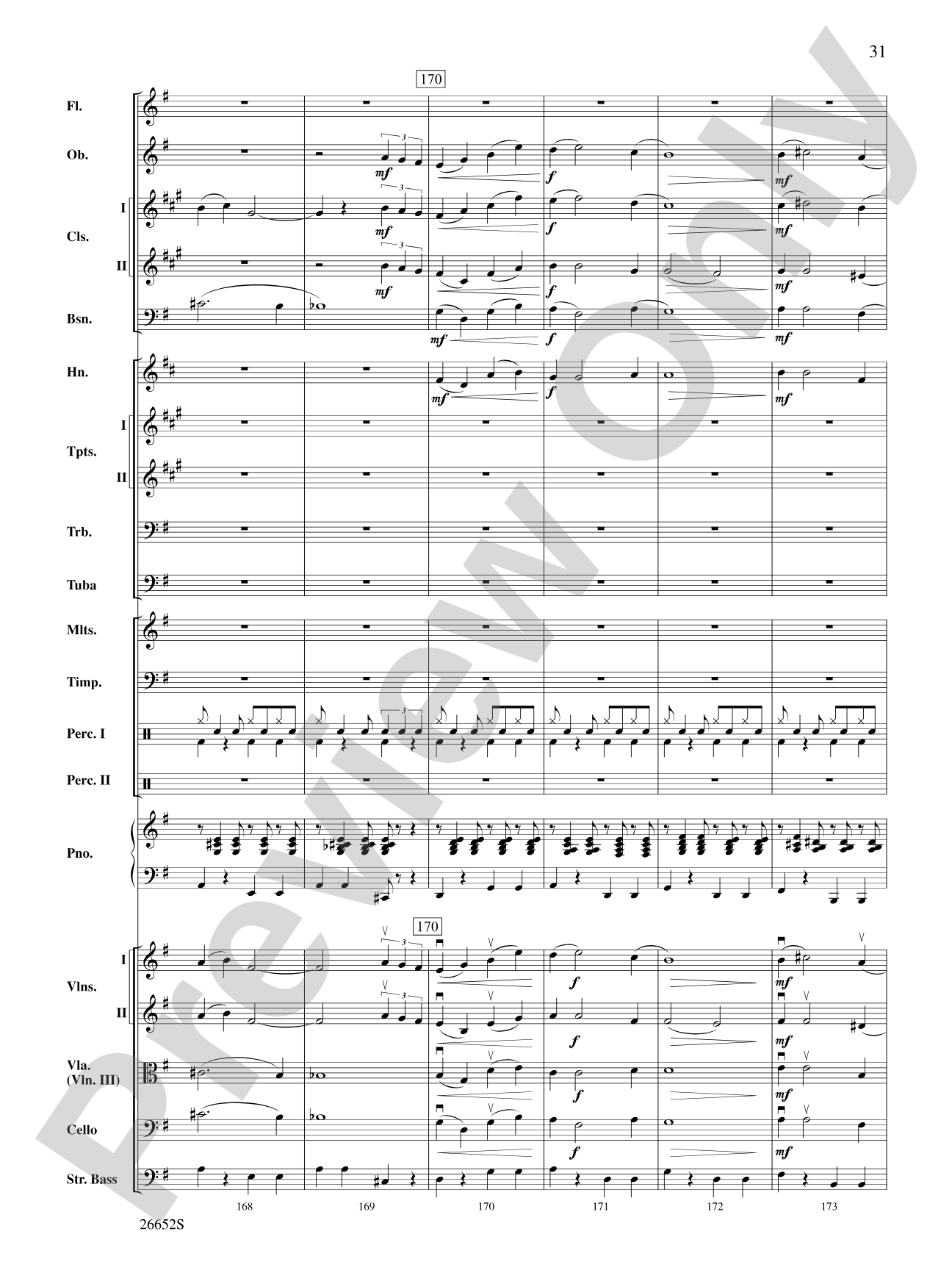
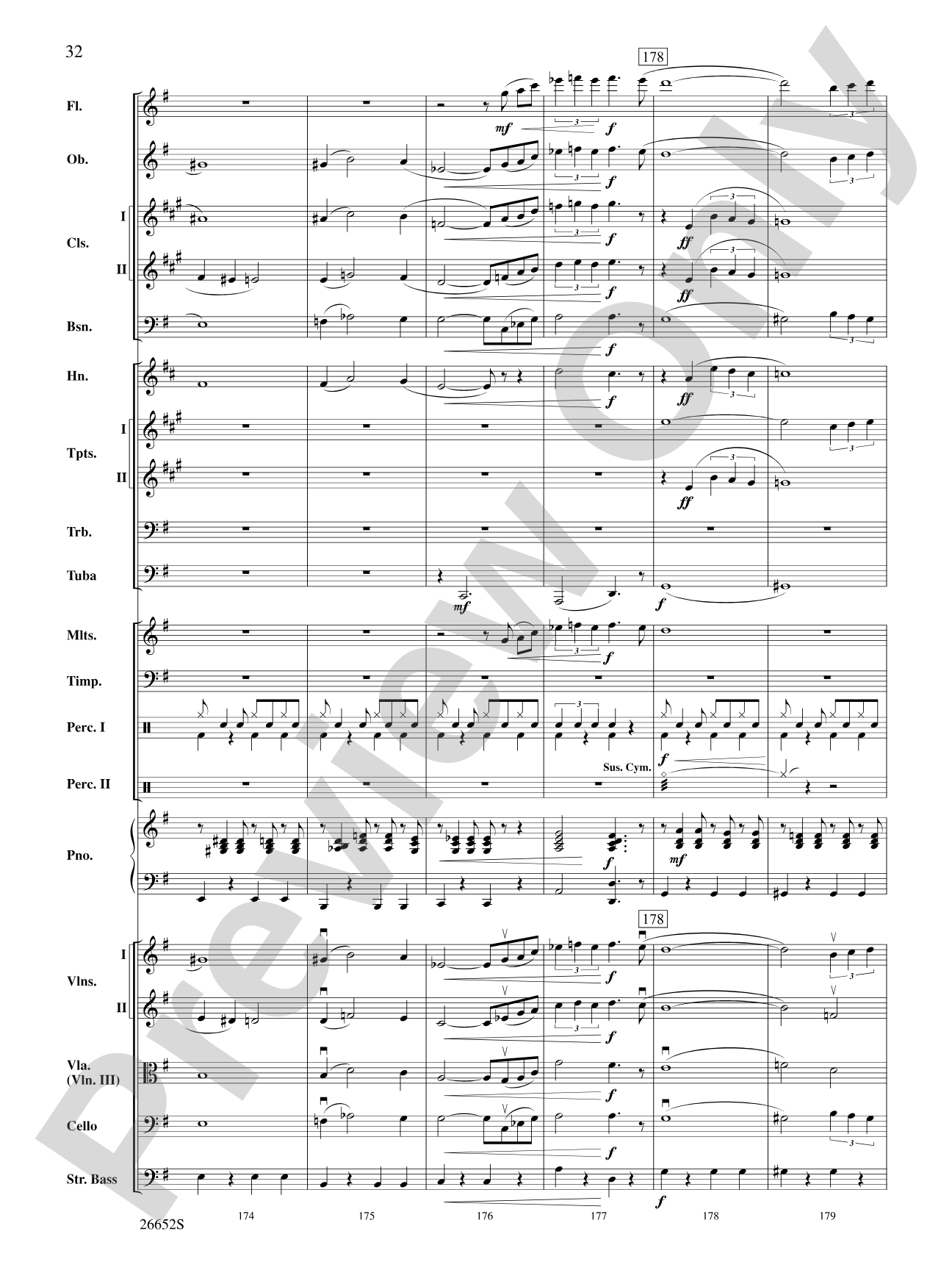
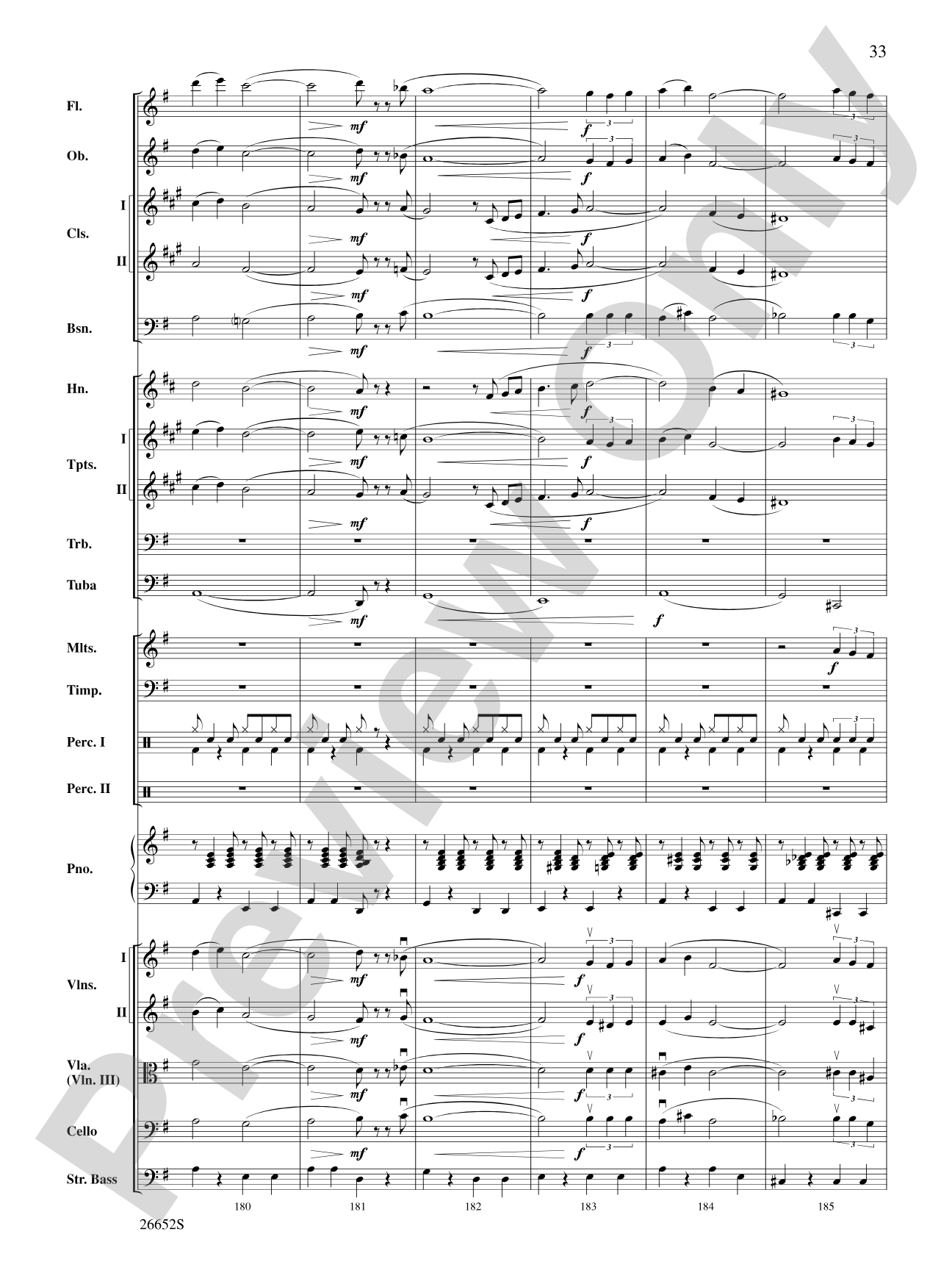
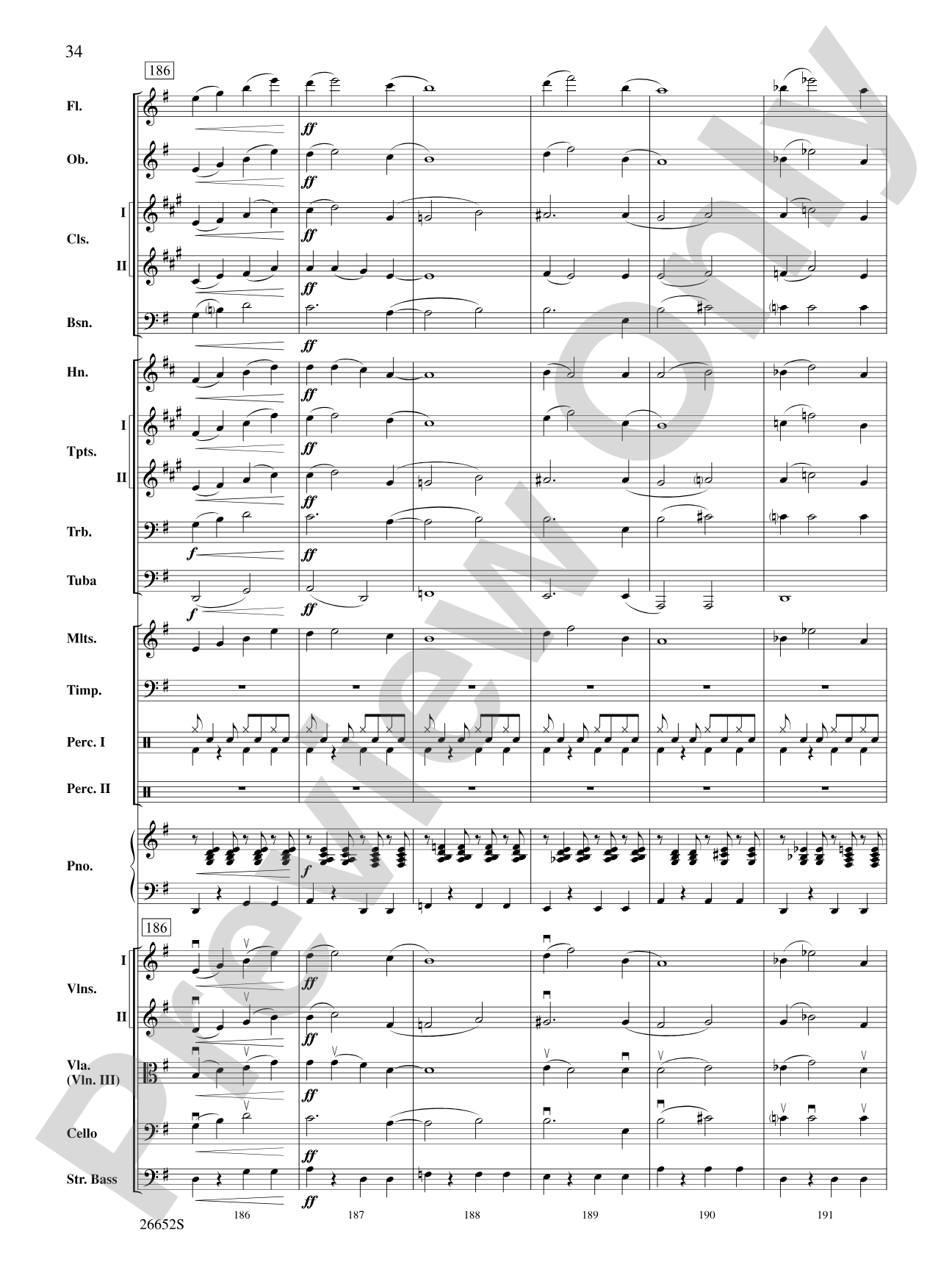
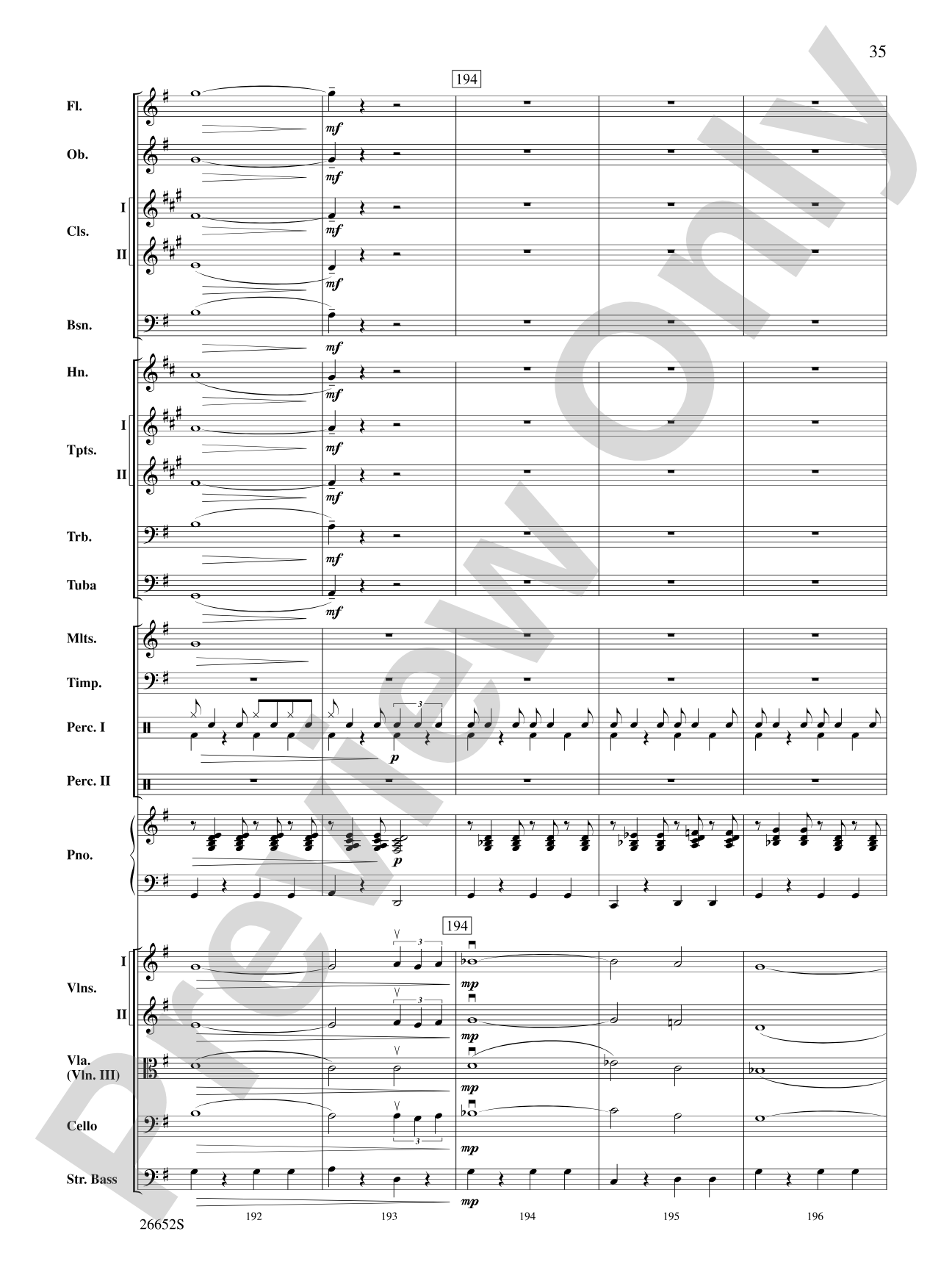
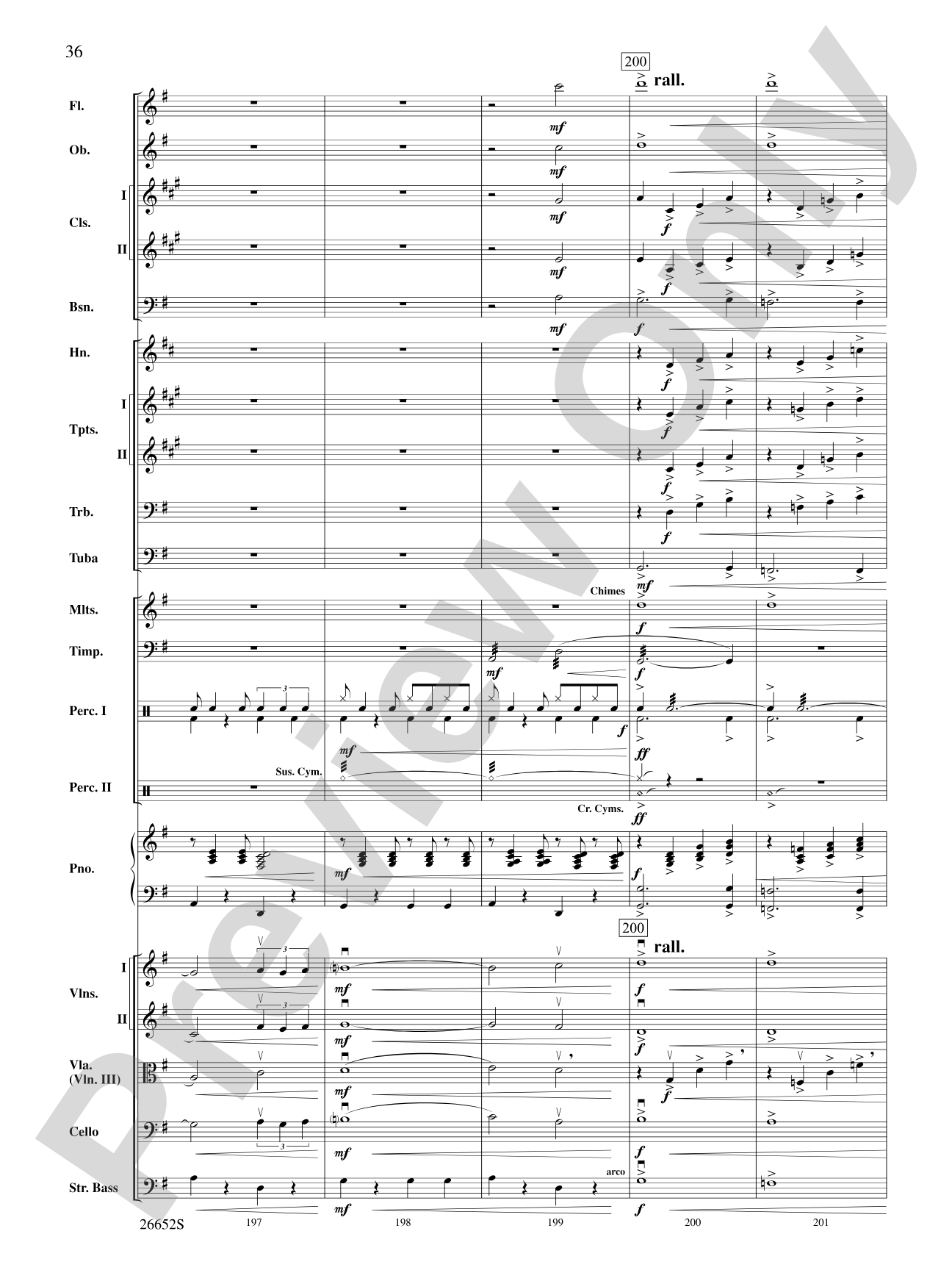
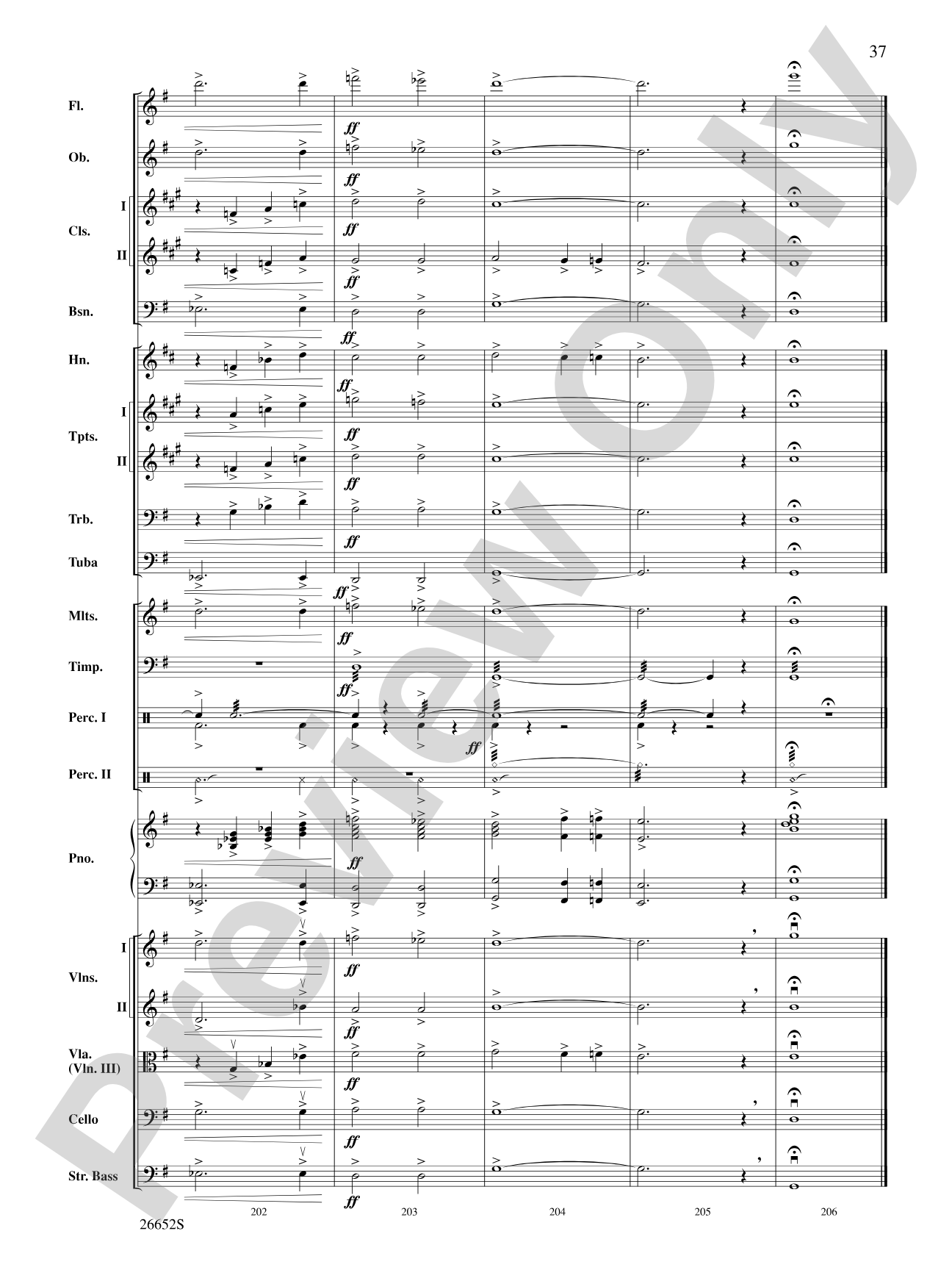




Leroy Anderson Favorites: Score
Featuring: The Syncopated Clock / Sleigh Ride / Blue Tango / Plink, Plank, Plunk! / Serenata
By Leroy Anderson / arr. Jack Bullock
Grade: 3.5
Item: 00-PR-0003983
$9.00
Pickup currently not available
Description
This collection of five of Anderson's famous melodies is a must for all orchestras who study American composers, and a favorite for any concert. The arrangement is orchestrated at the intermediate level, but advanced ensembles will also find it enjoyable. Perform it using string orchestra with piano accompaniment or with the addition of winds. Featuring "The Syncopated Clock," "Sleigh Ride," "Blue Tango," "Plink, Plank, Plunk!," and "Serenata." (6:15) This title is available in MakeMusic Cloud.


Don't just read it, hear it, play along with it, and watch your students grow with it. In MakeMusic Cloud, Leroy Anderson Favorites: Score comes alive with professional accompaniment, adjustable tempo, and built-in practice tools that turn solo practice into real progress.
Open in the Player
Jump straight in and assign it today.
Start Your Free Trial
Open this title and explore the full library in minutes.
Sample Audio
1
Audio File
--:--
0:00
0:00
Sample Video
Additional Details
Series:
Pop Intermediate String/Full Orchestra
Publisher:
Alfred Music
Page Count:
234
SKU:
00-PR-0003983
More about this title
About the Composer: Leroy Anderson
Leroy Anderson (1908-1975) composed some of the most recognizable light orchestral music in the American concert repertoire. His gift for memorable melody and clever orchestration made works like "Plink, Plank, Plunk!" and "The Syncopated Clock" staples of pops concerts and school orchestras for generations. Anderson's ability to blend classical sophistication with genuine humor and accessibility earned him respect from both professional orchestras and student ensembles.
As a composer who understood the orchestra intimately, Anderson wrote instrumental music that rewarded careful listening while remaining immediately engaging. His scores demonstrate how effective orchestration at the intermediate level can sound polished and professional, making his works ideal models for student musicians learning how a composer shapes ensemble color and texture.
Why we love this
This collection captures five of Anderson's most beloved works in a single, conductor-friendly package that works equally well on a spring pops concert or festival program. The arrangement by Jack Bullock preserves the charm and orchestrational clarity of the originals while keeping the technical demands accessible to high school orchestras. Directors appreciate that these pieces engage audiences and students alike without sacrificing musicianship or rehearsal efficiency.
What to expect
These five Anderson favorites bubble with charm and wit. Each piece dances with carefully crafted rhythms and unexpected orchestral touches that delight both players and listeners. From the playful percussion writing to the singing melodic lines, the collection radiates the kind of sophisticated good humor that makes orchestral music fun without ever feeling trivial.
Who it's for
This collection serves orchestras in grades 9-12 looking for reliable, audience-friendly concert material that allows musicians to experience orchestration and ensemble balance at an intermediate technical level. Advanced middle school orchestras will also find the pieces rewarding, particularly if seeking repertoire that combines musical substance with immediate appeal.
How to get the most out of it
- Balance the melody prominently in whichever section carries it, whether strings, winds, or solo instruments. Anderson's voice-leading is clear when each strand of the arrangement can be heard distinctly.
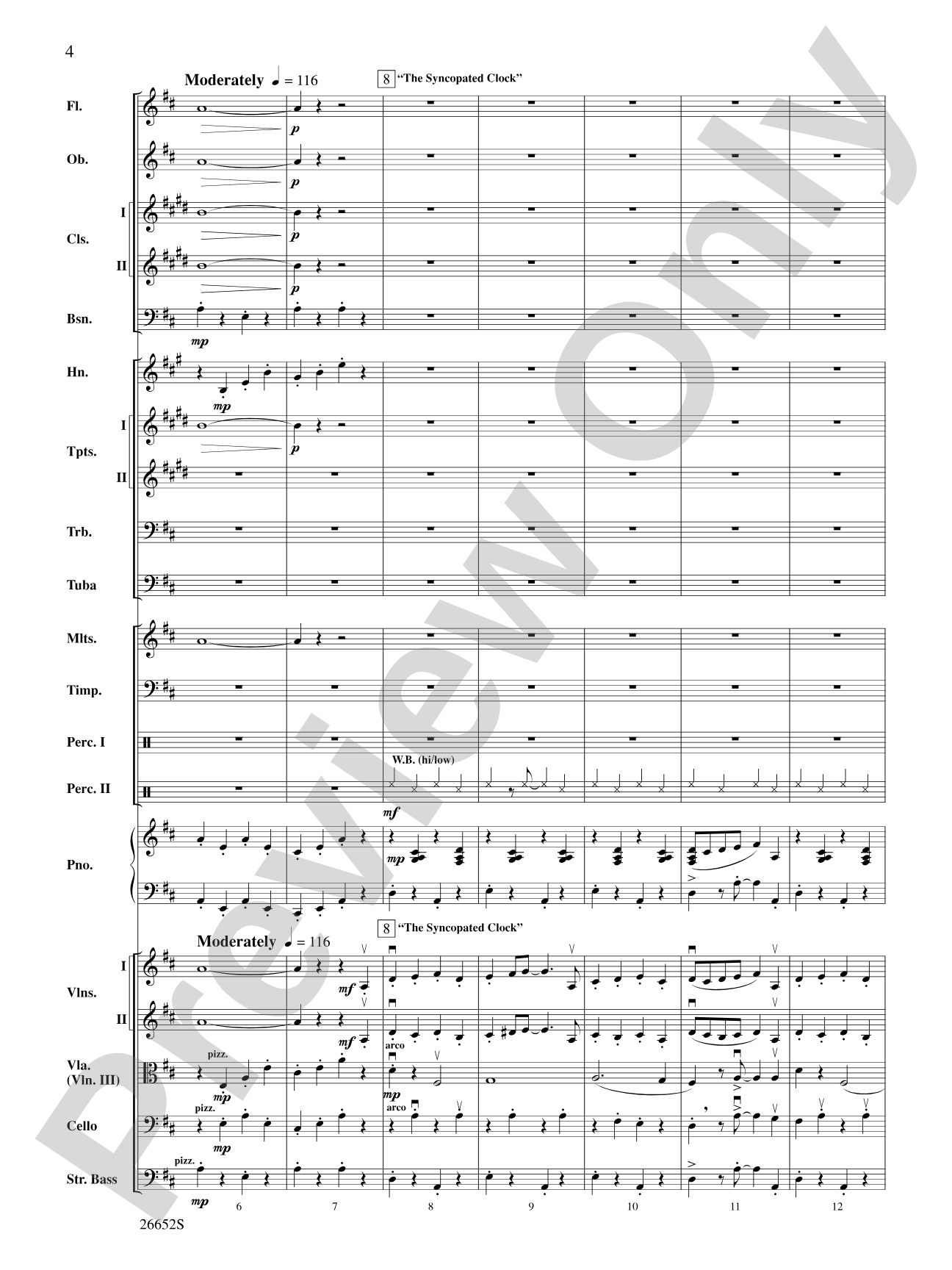
- Observe the rhythmic precision in syncopated passages, particularly in "The Syncopated Clock." Light music demands exact coordination; slight rushes or drags become immediately obvious.
- Shape each piece's phrasing generously. Anderson's melodies sing best when conducted with flowing, musical gestures rather than metronomic precision.
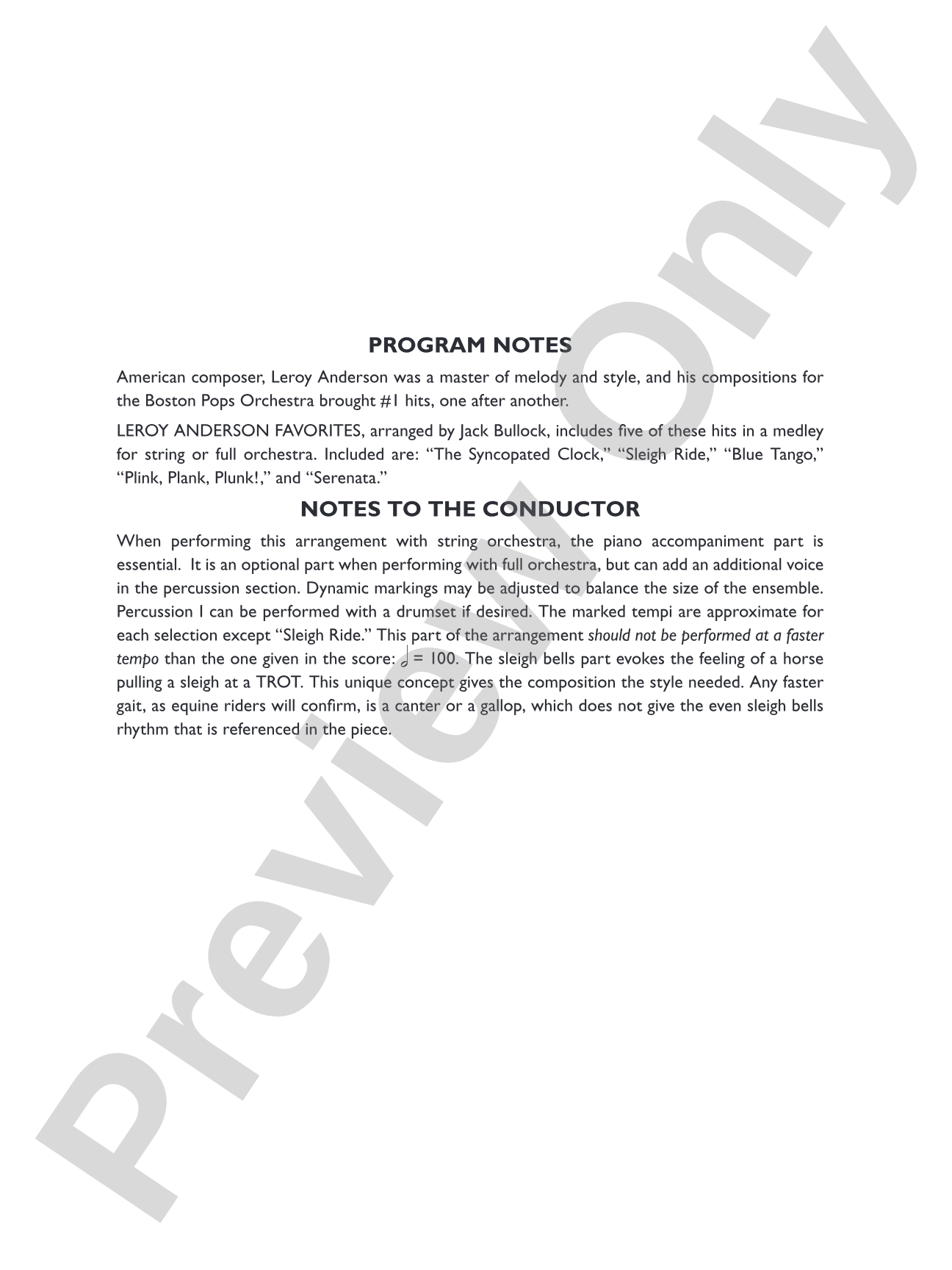
- Use the optional wind parts flexibly based on your instrumentation. String orchestra with piano creates an intimate sound; adding winds broadens color and presence without diminishing the original character.
How to use it
Program this collection as the centerpiece of a pops or light concert, or distribute individual pieces across multiple programs throughout the season. The total duration of 6:15 makes it ideal for a concert opener or closer, and the variety in character means you can select individual titles to complement more substantial works on a mixed program.
Skills your students will build
- Balancing independent melodic and accompaniment lines within an orchestral texture
- Executing syncopated rhythms with precision and style
- Responding to flexible, singing conducting gestures across extended phrases
- Reading and coordinating parts across multiple sections (strings, winds, percussion)
- Adjusting ensemble color and blend through dynamic control and articulation
- Understanding how orchestral arrangement shapes a melody's character and emotional impact