
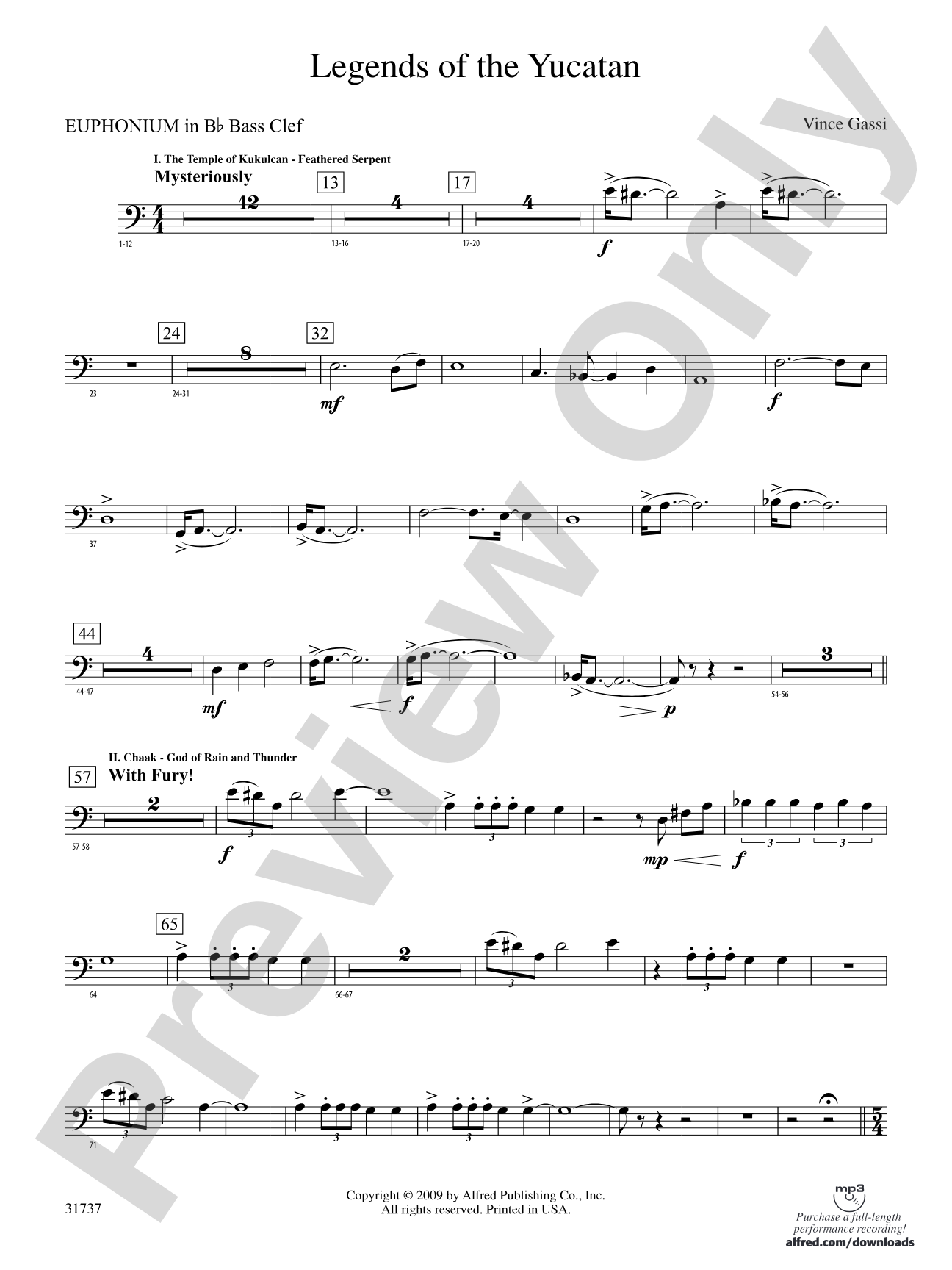
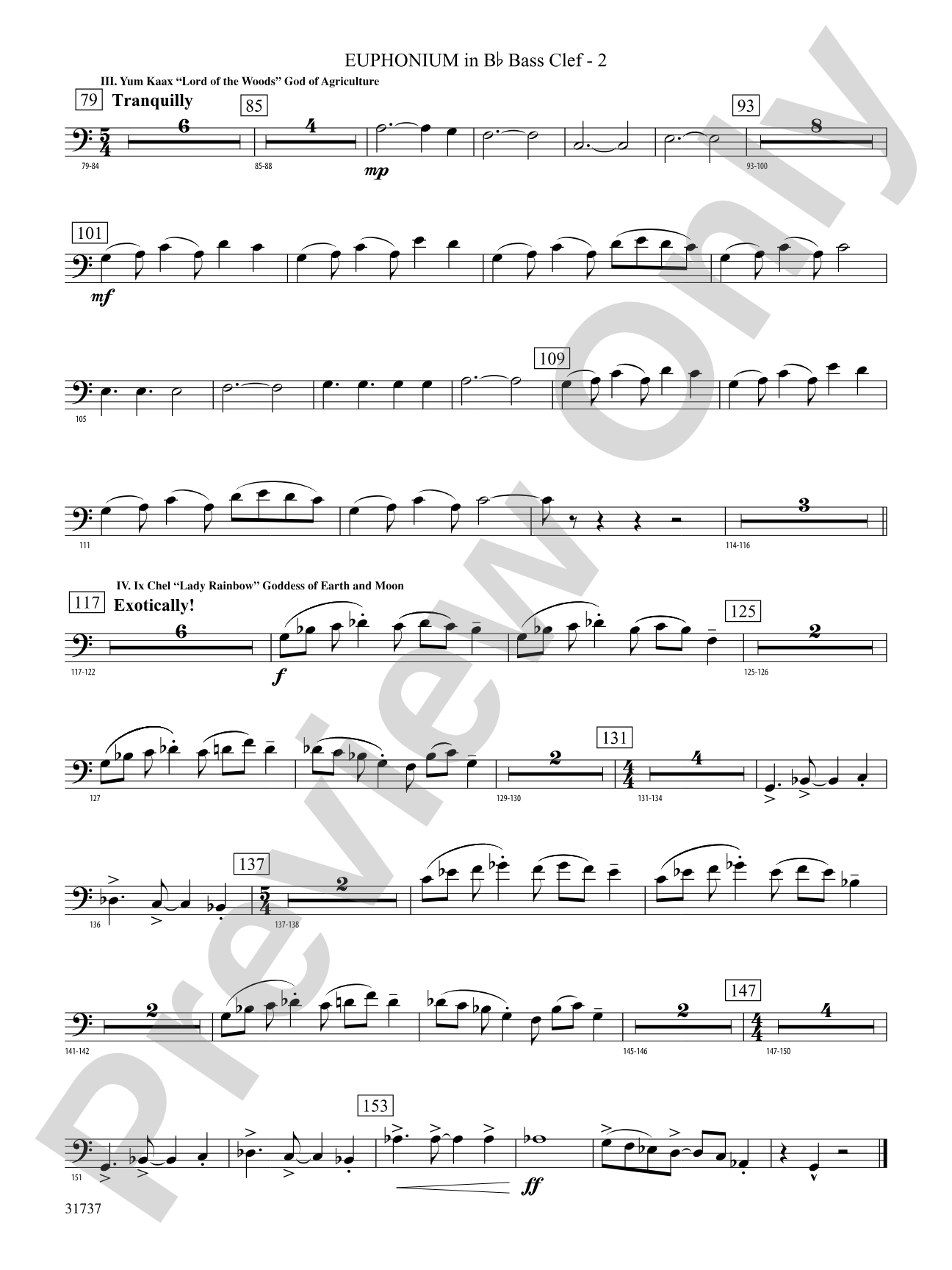

Legends of the Yucatan: (wp) B-flat Baritone B.C.
By Vince Gassi
Grade: 4 (Medium Difficult)
Item: 00-PC-0001825_wpBBBC
$3.00
Pickup currently not available
Description
Feathered Serpent, God of Rain and Thunder, Lord of the Woods (God of Agriculture), and Lady Rainbow (Goddess of Earth and Moon) are deities featured in this portrait of Mayan mythology. Inspired by a recent trip to the Mayan village of Chichen Itza, Legends of the Yucatan is written in four sections, each one descriptive of a different Mayan God. Expanded percussion and exotic rhythms and harmonies are heard throughout.


Don't just read it, hear it, play along with it, and watch your students grow with it. In MakeMusic Cloud, Legends of the Yucatan: (wp) B-flat Baritone B.C. comes alive with professional accompaniment, adjustable tempo, and built-in practice tools that turn solo practice into real progress.
Open in the Player
Jump straight in and assign it today.
Start Your Free Trial
Open this title and explore the full library in minutes.
Sample Audio
1
Audio File
--:--
0:00
0:00
Sample Video
No sample videos found.
Additional Details
Series:
Alfred Concert Band
Publisher:
Alfred Music
Page Count:
288
SKU:
00-PC-0001825_wpBBBC
More about this title
About the Composer: Vince Gassi
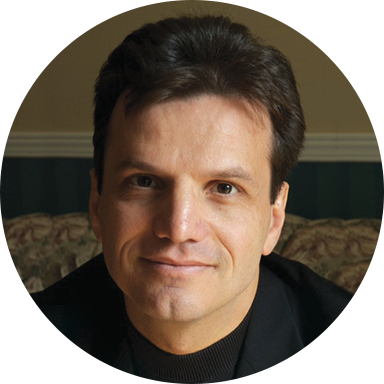
Vince Gassi has established himself as a prolific voice in concert band composition, with more than 100 published works spanning multiple genres and difficulty levels. Trained at the University of Western Ontario and the Dick Grove School of Music in Los Angeles, he later earned his Ph.D. from York University in Toronto. His approach balances compositional craft with direct knowledge of what works in rehearsal, refined through 25 years teaching instrumental music at elementary and secondary levels.
Gassi's reputation extends far beyond the page. He serves regularly as a guest conductor, adjudicator, and clinician across North America, and his pieces have been performed internationally as well as at prestigious venues like the Midwest Clinic. His workshop sessions on creative engagement and digital workflows for music directors reflect his commitment to helping teachers and students find fresh energy in the rehearsal room.
Why we love this
Gassi anchors this piece in genuine cultural imagery without relying on surface-level exoticism. Each of the four sections inhabits a distinct sonic world while maintaining coherent ensemble writing, giving your students something substantial to sink their teeth into. The expanded percussion and rhythmic variety keep the ensemble engaged while remaining accessible to Grade 4 musicians.
What to expect
Immersive and vividly orchestrated, Legends of the Yucatan conjures the landscape and spiritual presence of Chichen Itza through expanded color and rhythmic motion. The piece pulses with energy and mystery, moving between moments of driving intensity and more atmospheric passages that allow the exotic harmonies and percussion textures to bloom.
Who it's for
Concert bands at the Grade 4 level looking for repertoire with cultural substance and textural variety. This works equally well for groups preparing for festival adjudication or a concert program that celebrates non-Western musical traditions.
How to get the most out of it
- Balance the expanded percussion section so it colors the harmony rather than overpowering the ensemble. Emphasize the dialogue between pitched and unpitched percussion in each movement.
- Shape the exotic harmonies with attention to phrase contour. These non-traditional sonorities reward precise intonation and articulation from all sections.
- Investigate the rhythmic patterns that recur across sections. Building awareness of these callbacks helps musicians understand the architecture beneath the descriptive surface.
How to use it
Position this as a centerpiece in a concert exploring world music and mythology, or program it during a season where your band is building cultural awareness. The four-movement structure and dramatic scoring make it ideal for adjudicated festivals where judges reward both technical challenge and interpretive depth.
Skills your students will build
- Tuning and balancing non-traditional harmonic sonorities
- Precision with complex rhythmic patterns, including syncopation across multiple parts
- Ensemble texture and balance with expanded percussion
- Stylistic interpretation informed by cultural context